This post is the continuation of a series documenting our travels to the countries of Belgium & Netherlands in the Spring of 2023. We were based in the beautiful city of Bruges for the first 4 days of our trip. We had walked around the pretty centre of Bruges on our first day (First Taste of Bruges – Belgium & Netherlands family trip, Part 1 ), walked to the Windmills at the edge of town on our second morning there ( A morning walk to the St Janshuis Windmill – Belgium & Netherlands, Part 3 ) & done a short but sweet day trip to Ghent ( A Day trip to Ghent – Belgium & Netherlands Part 4 ). I had walked around the old town every dawn and night after dark giving me some of my most memorable photos of the trip (Bruges at Dawn & Dusk – A tranquil beauty – Belgium & Netherlands, Part 2 ).
Even though the pretty streets of Bruges are its main draw Bruges also has some great indoor sights. There are some beautiful churches, the famous belfry which was our mandatory tower climb & the Town Hall (More on that in a later post – you will realise why as you read along!). Bruges also has some great Flemish art museums but I had promised the better half and parents a museum free trip since they aren’t interested in spending hours looking at stuff that is of no interest to them (Yes, I have spent hours in museums in my previous trips and dragged the better half with me). This post will describe our visit to some of the famous churches in Bruges ( I’m not the least bit religious but I enjoy the churches for the symmetry in architecture, the art that lines the walls of most churches and most of all the stained glass windows! – It makes me and my ultra wide lens feel like a kid in a candy shop) and our climb up the Belfry to see Bruges from high above.
The most famous church in Bruges for religious purposes in the Basilica of the Holy blood as it is supposed to house a vial with a drop of the blood of Jesus Christ. It’s an unassuming building in the corner of the Town Hall square that you could easily miss if you didn’t know it was there.
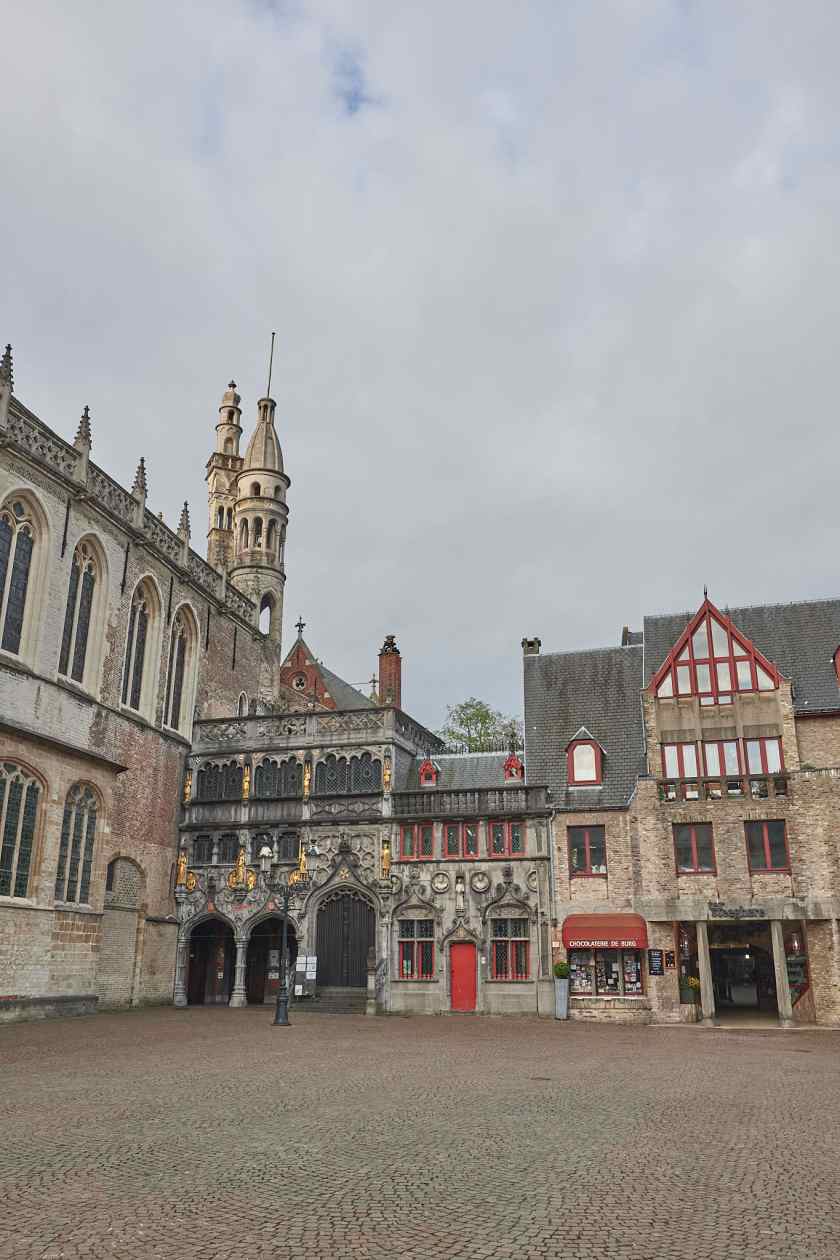
The Basilica of the Holy Blood in the corner of Town Hall Square
The two tiered basilica has a lower chapel dedicated to St Basil and is a stark Romanesque church which has remained virtually unchanged since it was built in the 12th century & a upper Gothic Chapel that was last renovated in the 19th century and houses the Holy Relic. The lower chapel was closed for tourists the first time we went there as there was a ceremony going on so we went upstairs to the Gothic Chapel which is more ornately decorated. My first impression was that this is much bigger than it looks from outside! It was decorated from floor to ceiling with murals, paintings, painted ceiling, gilded arches and stained glass windows – all in all a riot of colours. The vial itself it placed on the altar in a small case with golden doors that are opened only on specific occasions. We walked around and took a lot of photos before sitting in the pews (chairs here instead of the traditional pews) for a few minutes and moving out.

The Gothic Upper Chapel decorated from floor to ceiling
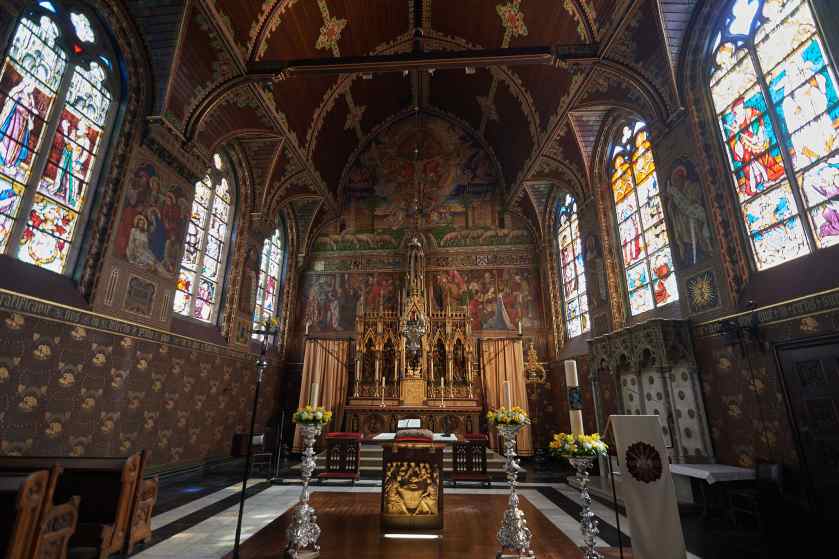
The vial is kept in the small golden cabinet on the altar
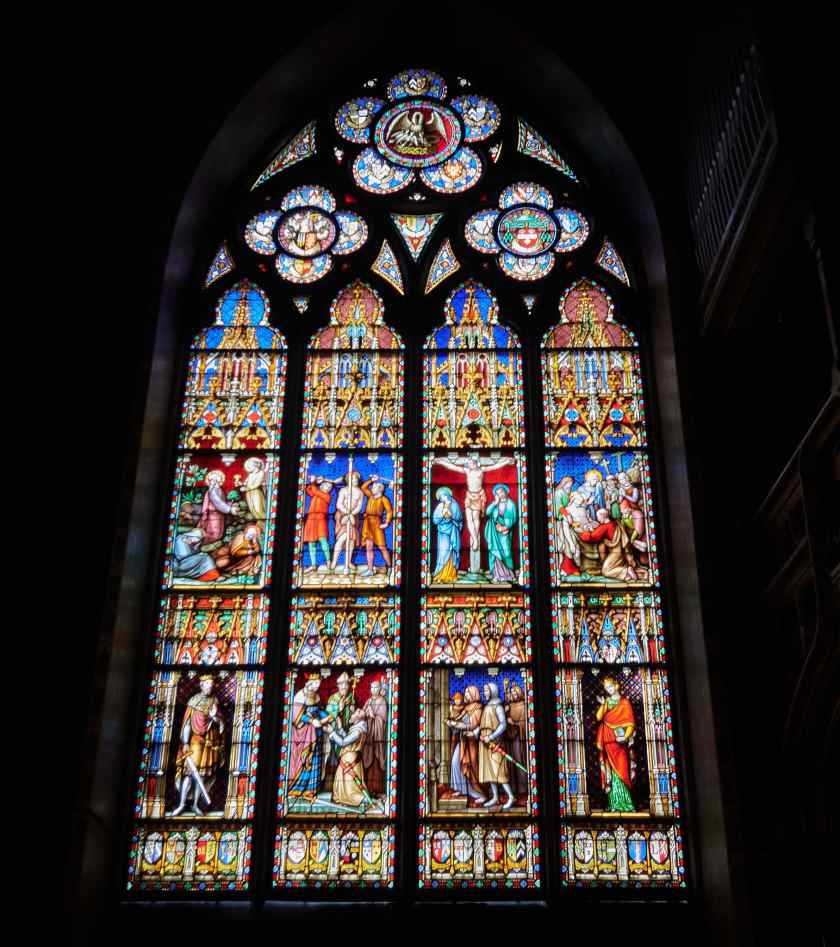
Beautiful stained glass windows adorn the walls of the upper chapel
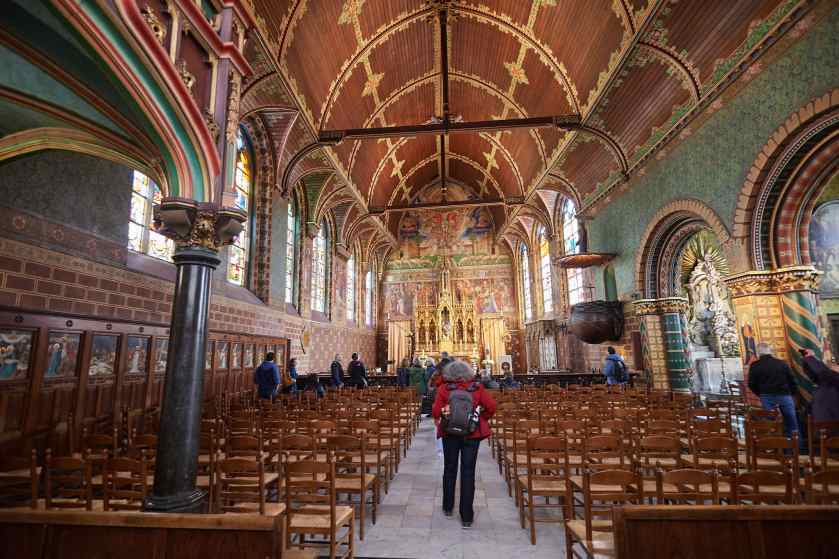
The upper Gothic Chapel is much larger than it looks from outside
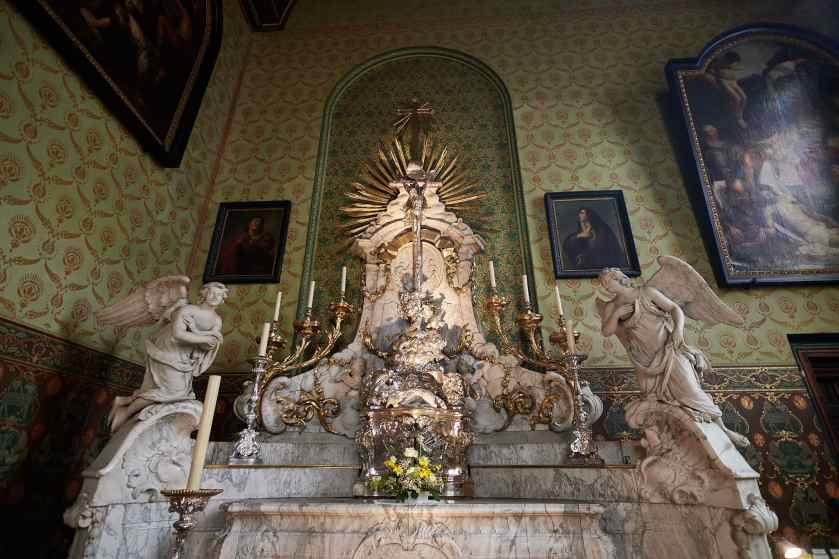
Angels flank a beautiful altarpiece in one of the side chapels
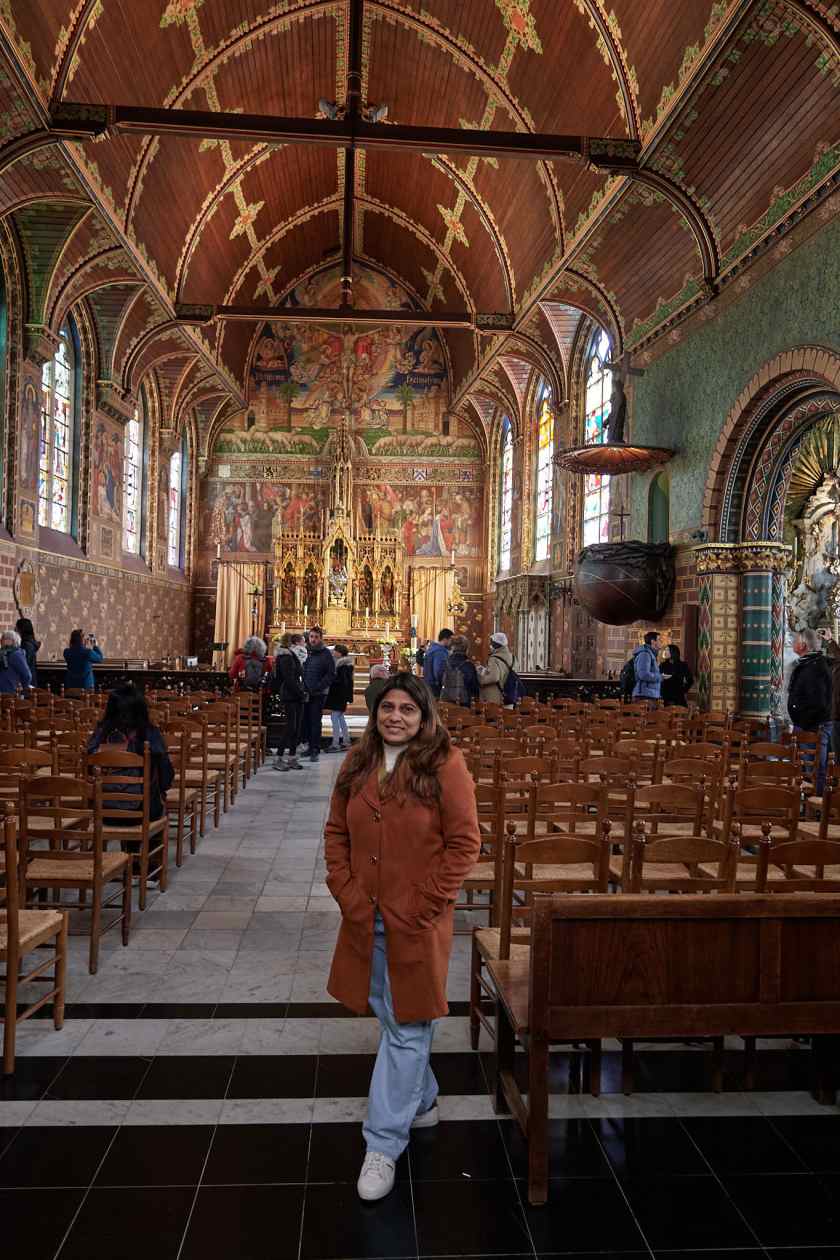
The better half poses in the upper chapel of the Basilica of the Holy Blood
We would return again the next day to finish our visit to the lower Romanesque Chapel which is as bleak as the upper one is colourful. Stone and brick walls with no adornments, dimly lit and much smaller in size it is a much sombre place than the cheeriness projected by the upper chapel. To add to the mood there are wooden sculptures of Christ being tortured and of Mary holding Christ after he has been taken off the cross. The contrast in the two chapels of the Basilica was an interesting experience and a lesson in the evolution of religion from austerity to full display of riches. We were glad we had made it a point to return to see the lower Chapel.

The lower Chapel dedicated to St Basil
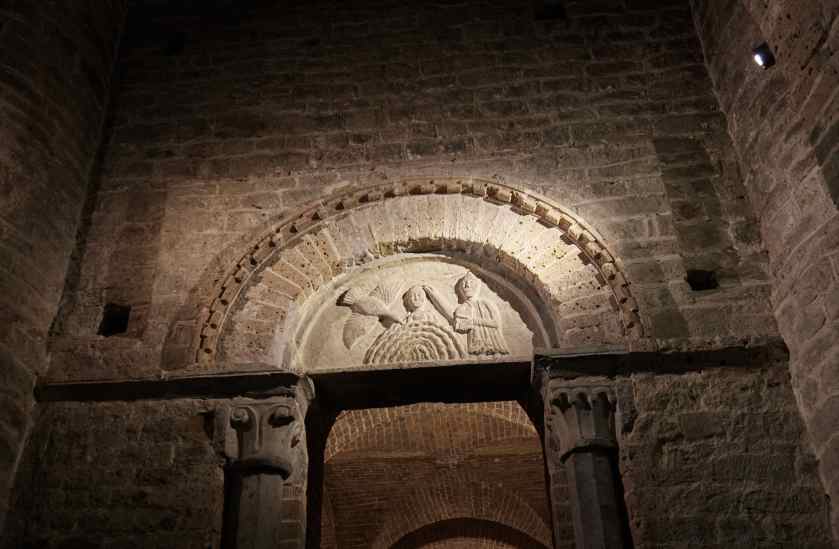
The archway over the entrance shows St Basil being baptised and blessed by a huge sized dove
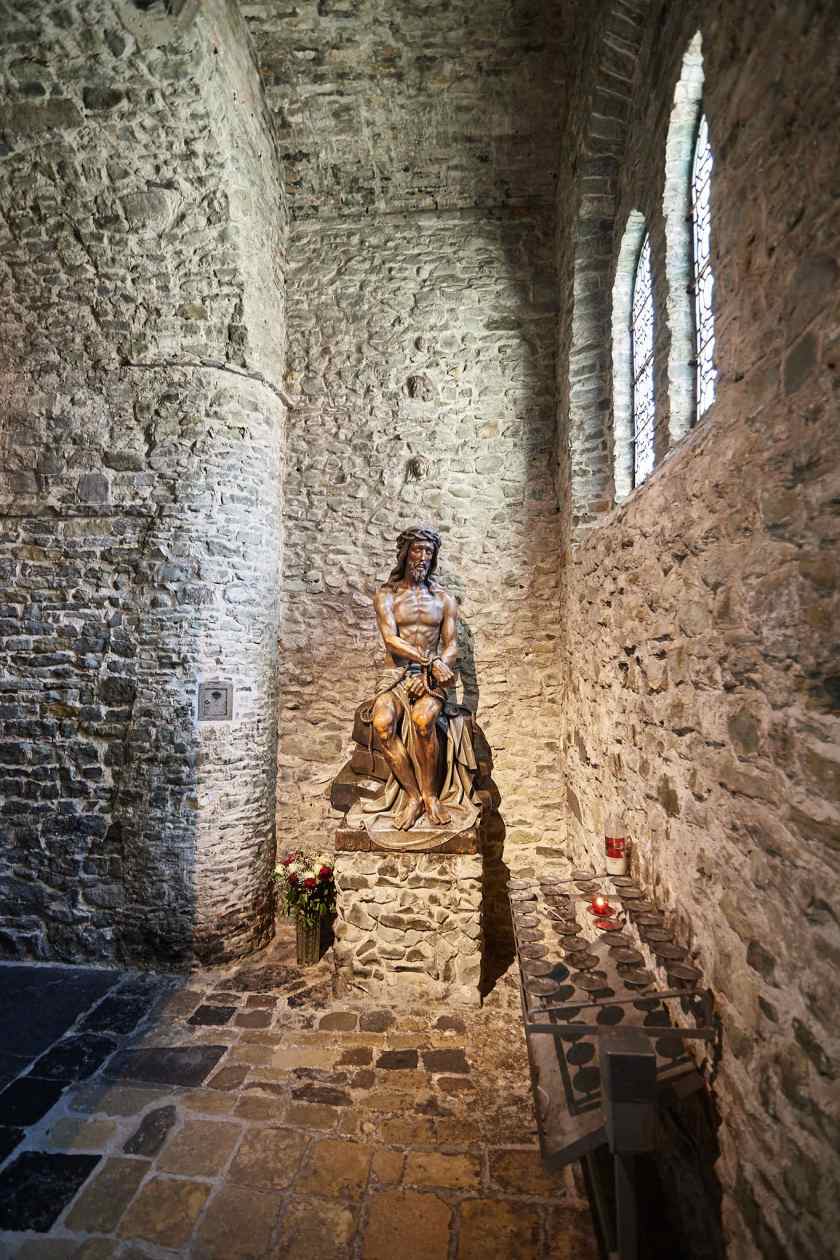
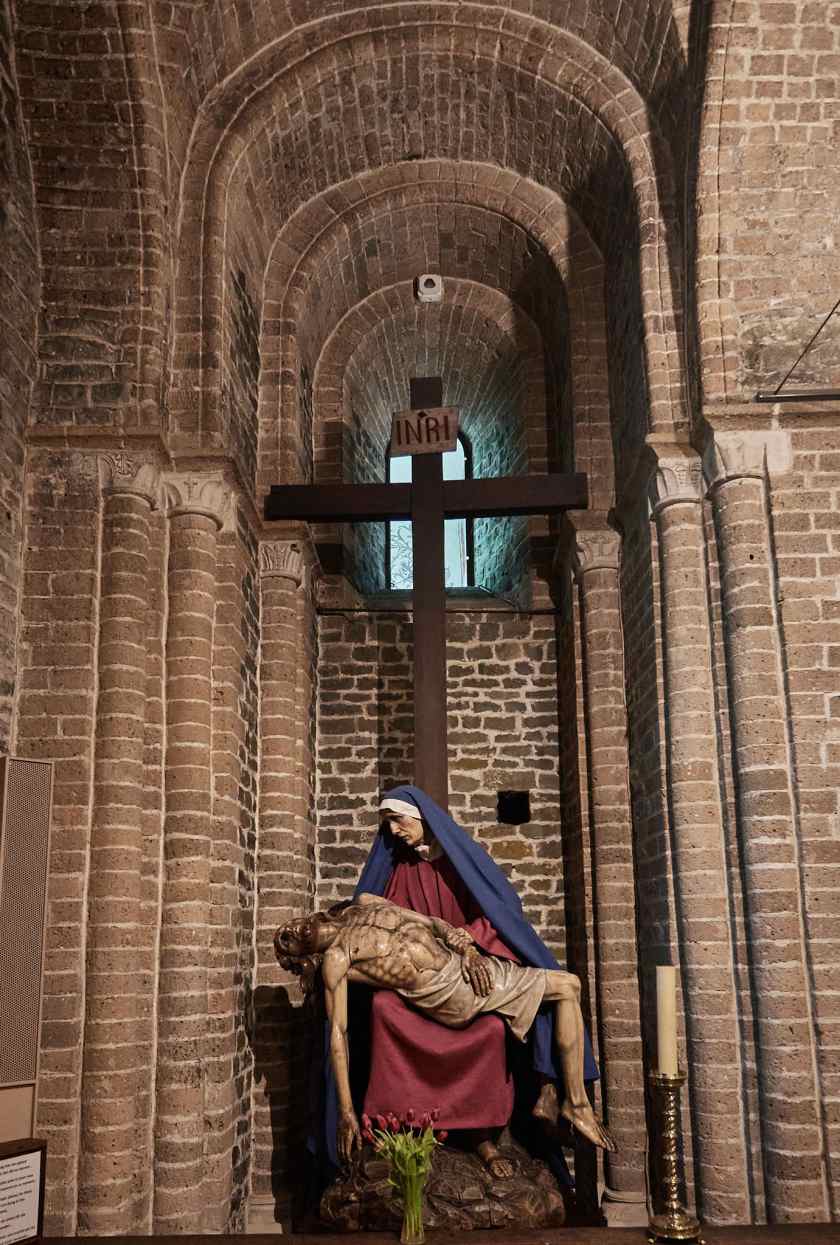
The sombre wooden statues of Christ in the lower Chapel
Even though the Basilica of the the Holy Blood is the most famous Church in Bruges the Church I wanted to see the most was the Church of Our Lady which we had walked around on our first day in Bruges. This Church houses the only Michelangelo sculpture to have left Italy in the masters lifetime, a beautiful Madonna with Child statue. I had read about the renaissance artists since my childhood and whenever there is a chance to see a sculpture by one of the greats I don’t miss it! I have dragged the better half through countless museums & churches in Florence and Rome in Italy & the Louvre in Paris while gushing gleefully at how someone could make marble flow like cloth and give stone expression all without the use of modern tools. ( The Best of Florentine art – The Uffizi & the Accademia & The Vatican City – Half a day spent in a country within a city & many more in my Italy and France section). So when I told her about the Michelangelo sculpture in Bruges she knew that I was going to take her to see it and gladly agreed. (I knew the parents would have no interest and left them to rest their legs in the hotel)

The exteriors of the Church of Our Lady in Bruges
The Church has a free section and a paid museum section which includes the Madonna and Child. We bought tickets for ourselves and went in the church. The main nave of the Church is huge with high arched ceilings, pillars adorned with sculptures of the 12 apostles and an intricately carved pulpit.

The nave of the Church of Our Lady, Bruges
The church also has confessionals with beautifully carved wooden statues of saints, chapels with murals and stained glass windows that are beautiful to look at, choir lined with the emblems of the local houses and 2 tombs in the centre of Charles the Bold & Mary of Burgundy. Art in the museum section has various beautiful pieces from the lesser known Flemish painters that all have a religious motif.

The carved confessionals at the Church of Our Lady, Bruges

3D murals at the De Baenst Chapel
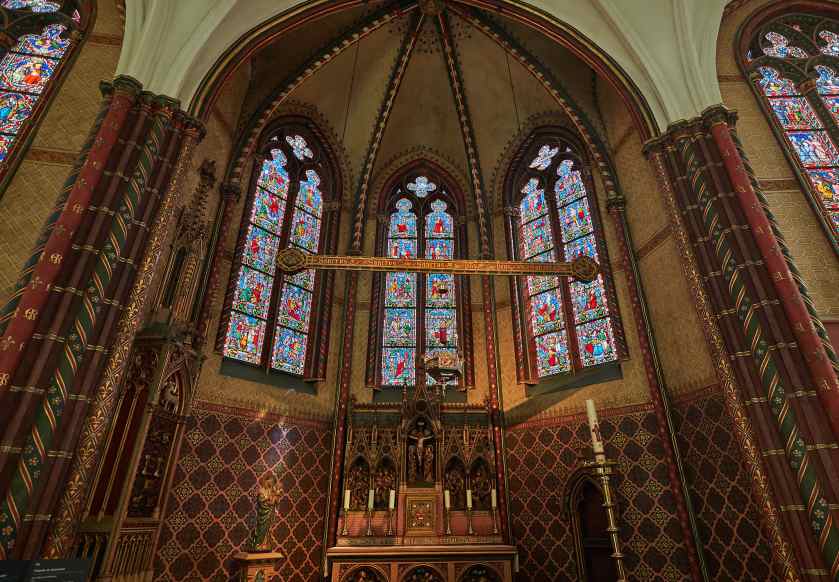
The Blessed Sacrament Chapel with my favourite stained glass

Our Lady of the 7 sorrows
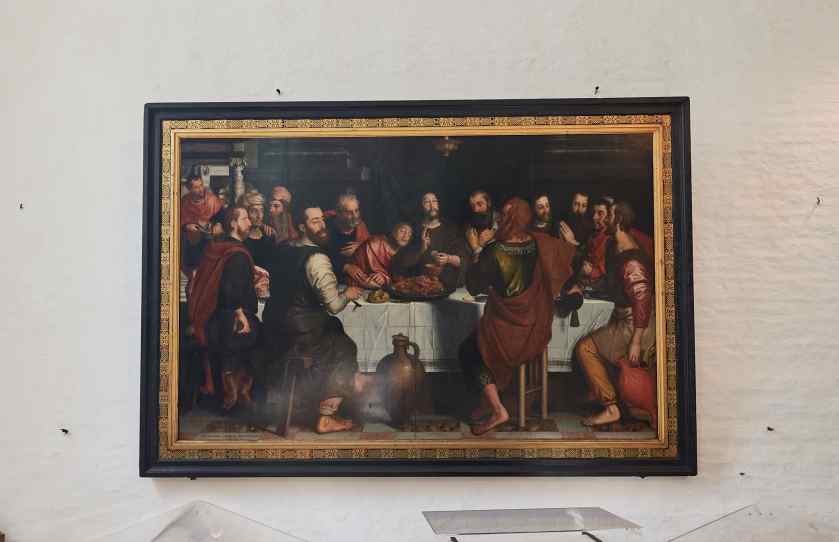
The Last Supper – note red haired Judas with his hand on the purse given to betray Jesus
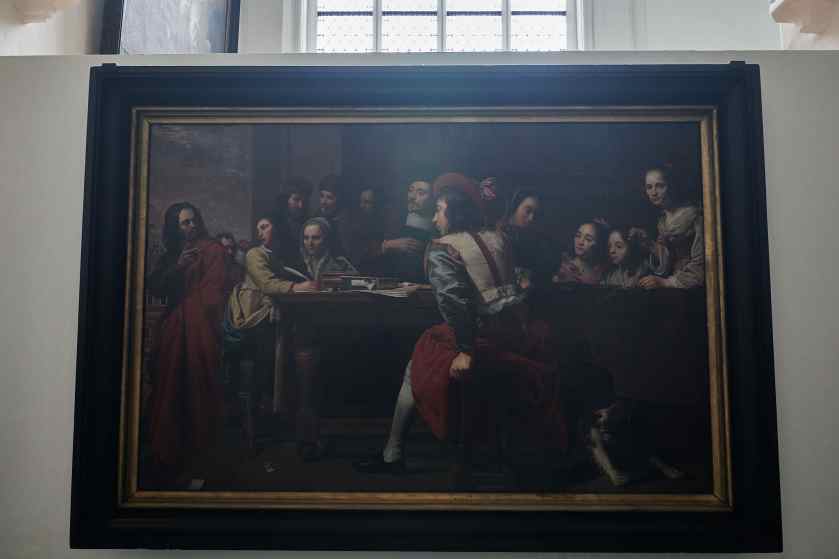
The calling of Matthew – Jesus on the left asks Matthew to follow him as he looks in surprise
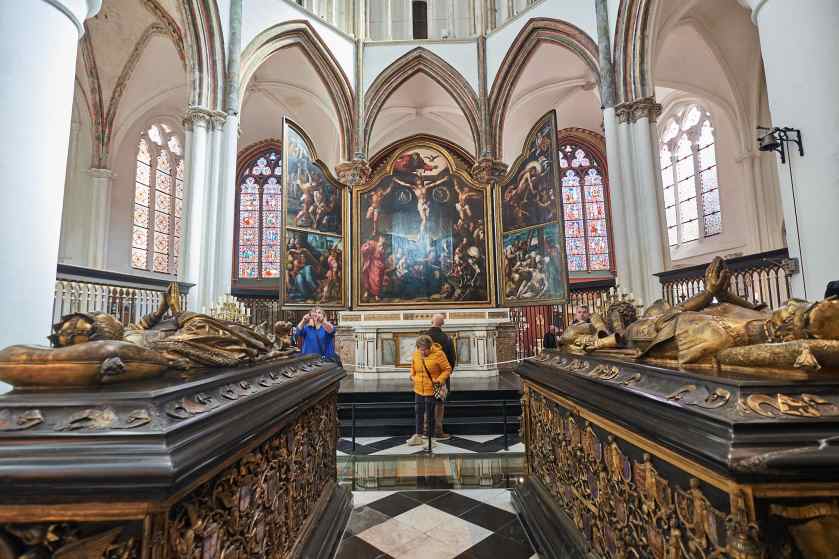
The tombs of Charles the bold & Mary of Burgundy

The Choir with the emblems of the houses seen lining the top of the wooden panels
Finally after seeing the whole Church we spent 15 minutes looking at the Statue we had paid the entrance fees for. The Madonna and Child by Michelangelo was bought by a wealthy Bruges businessman from Michelangelo in 1506 and brought to Bruges. It was taken away by Napoleon and displayed in his National museum in Paris, it was returned to Bruges after Napoleon lost at Waterloo. It was stolen again by the Nazis as Hitler wanted it for his museum, it was again recovered from the Althausee salt mines in Austria along with other art stolen by the Nazis and again returned to Bruges. So the story of the statue is as interesting as the statue itself. It is displayed on a huge Baroque styled back piece which overwhelms the statue. But once you get close you see the trademark of the artist – Marble carved intricately to make clothed figures seem natural, delicate expressions and motion of the baby Christ trying to move away while being restricted by his mother’s hand.
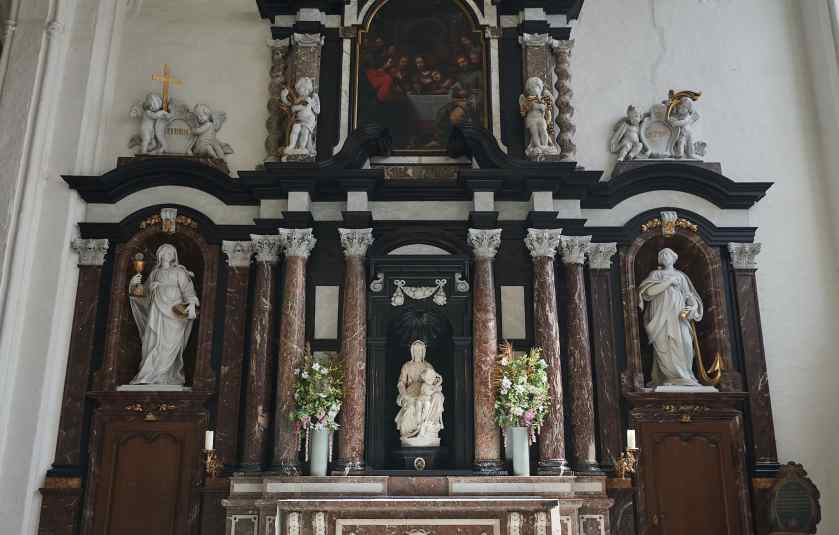
The Baroque back piece overwhelms the beautiful sculpture

The Madonna and Child by Michelangelo in Bruges

After admiring the statue for a long time
The other church that we visited was the St Salvator’s Cathedral which wasn’t in any tourist guide surprisingly. This church is one of the oldest surviving buildings in the centre of Bruges since the 10th century. It was a common parish for centuries before it became the main church of Bruges in the 19th century when the original Cathedral (St Donatian’s ) burnt down in 1799. It is very close to the Church of Our Lady and we decided to take a look in when we were in the area.
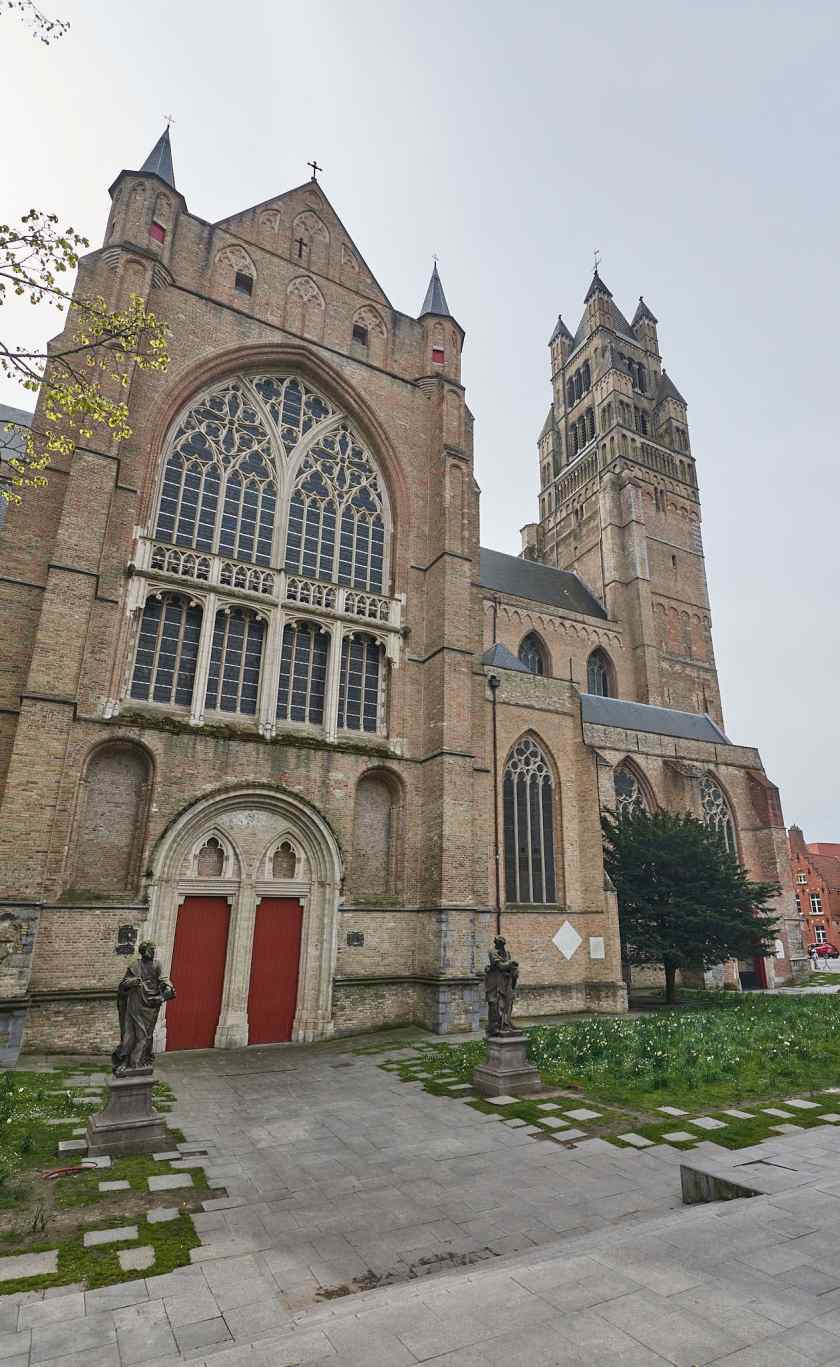
The St Salvator’s Cathedral in Bruges
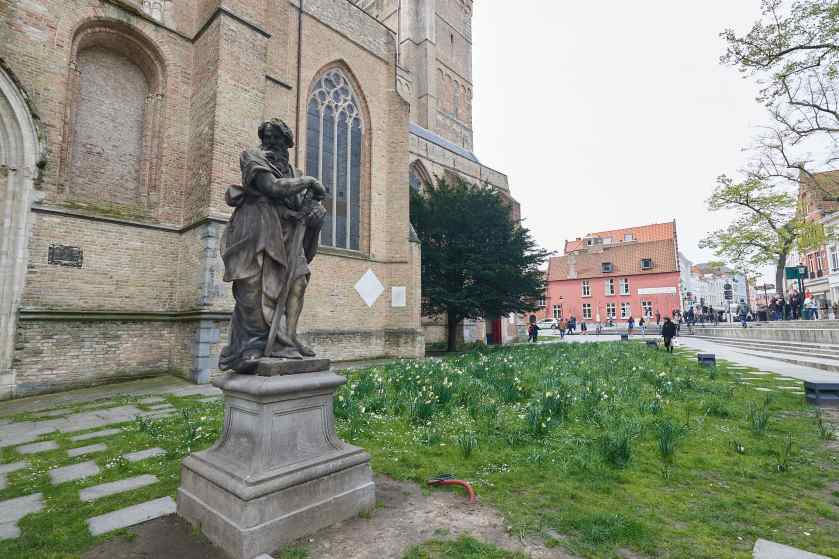
Almost no crowds near the St Salvator’s Cathedral
It turned out to be a great decision as the church had some great tapestries lining the choir from the 17th to 18th century which were salvaged from the burnt down St Donation’s. The tapestries were so big that even my ultra wide lens struggled to take photos of them in that confined space

The Altar and the choir lined by huge tapestries
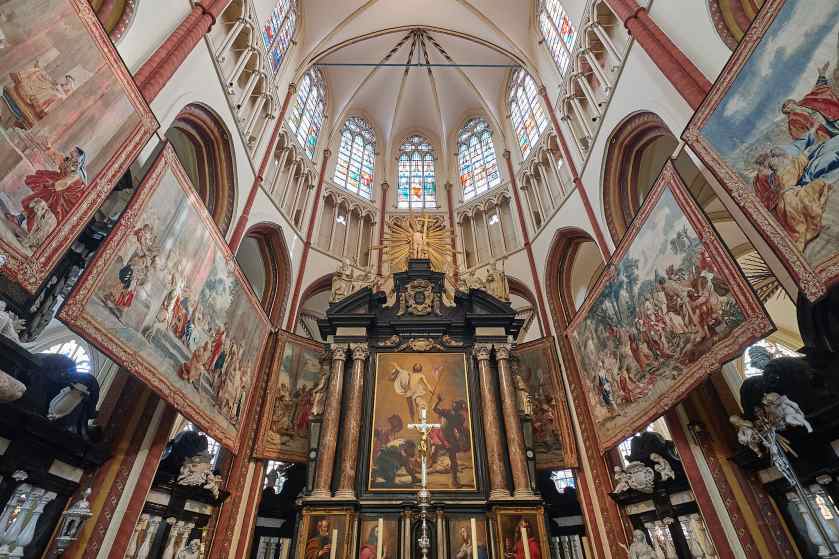

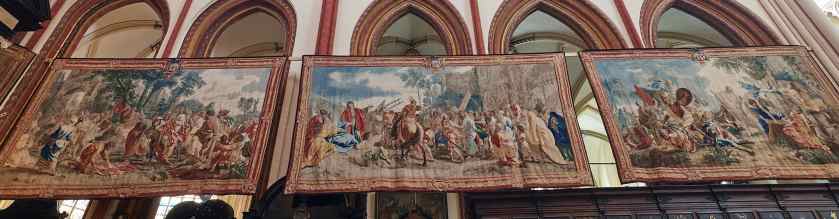
Huge tapestries showing scenes from the crucifixion of Christ at St Salvator’s
It also had the biggest organ in Bruges and some delicately painted stained glass windows. We walked around the church admiring the structure, taking photos and did our church routine before walking out.
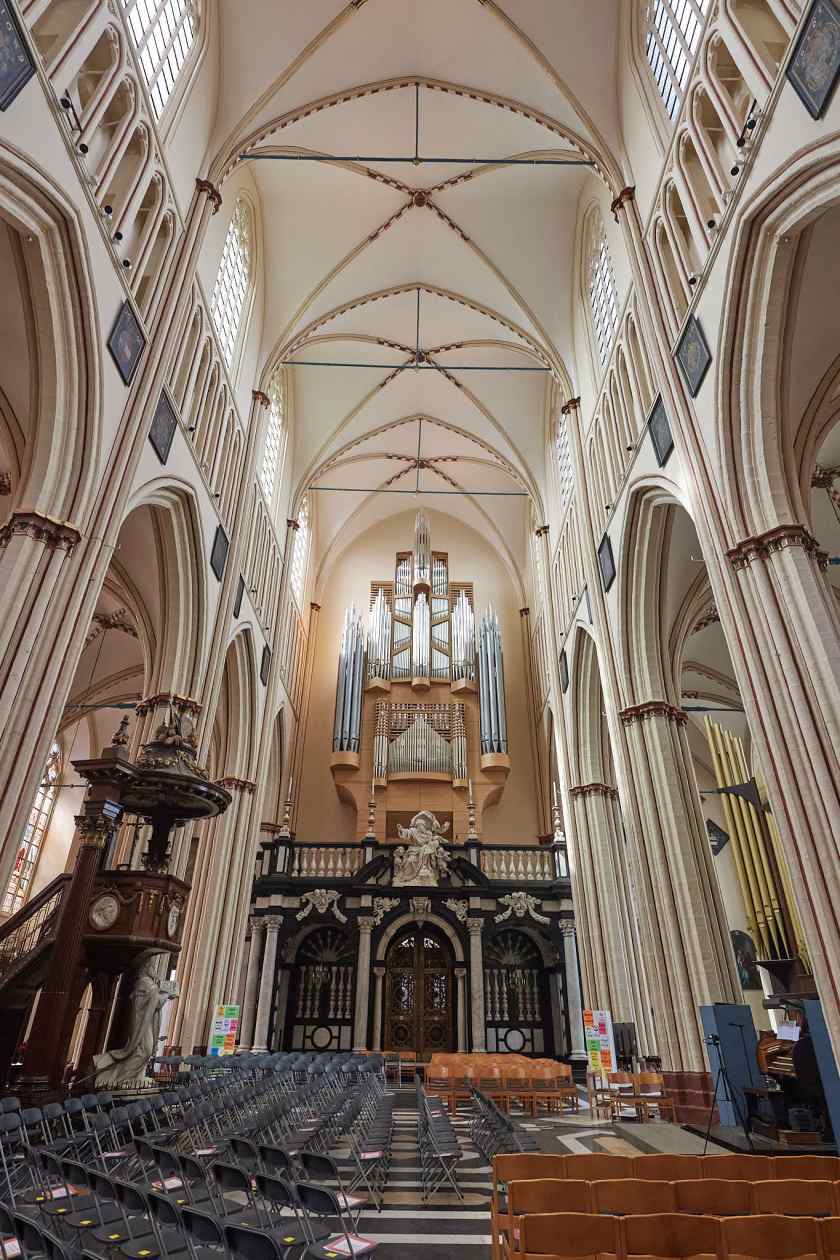
The huge church organ at St Salvator’s
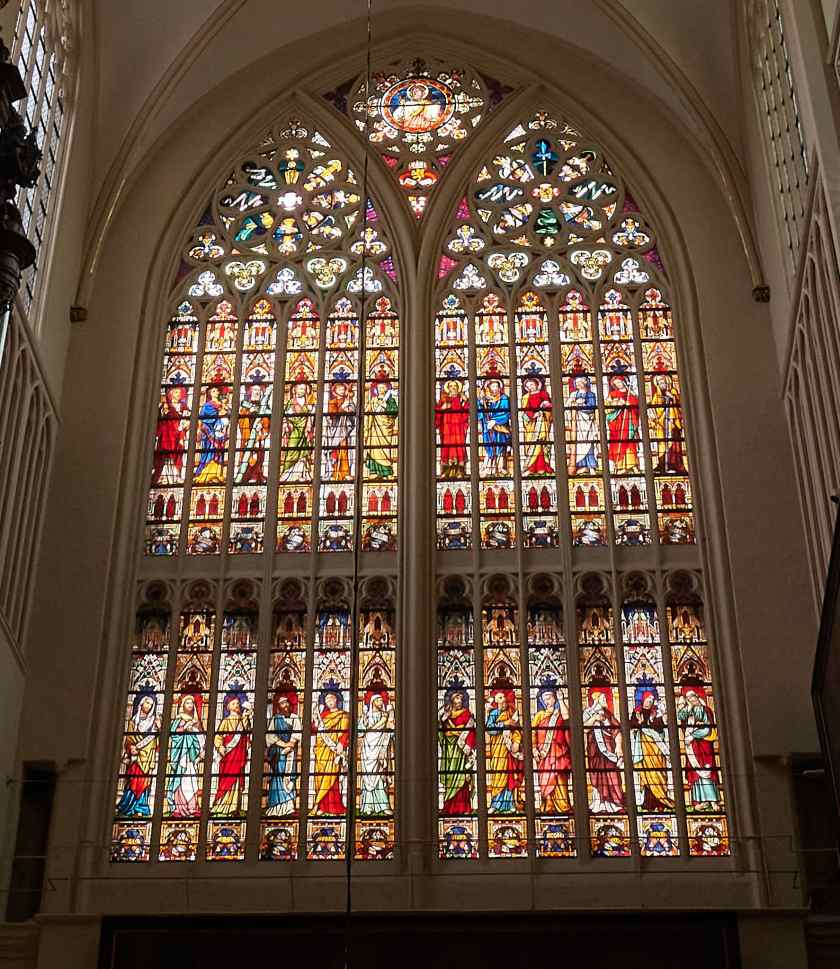
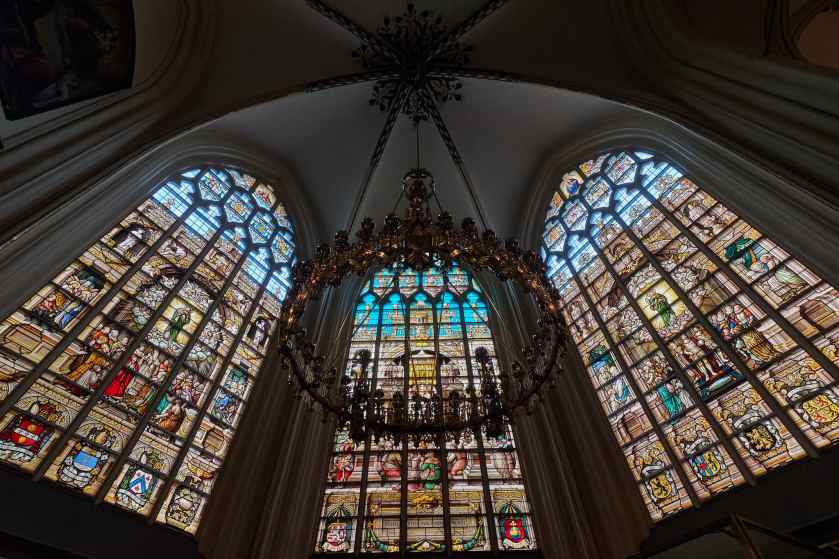
Beautiful stained glass windows at St Salvator’s Cathedral, Bruges


Happy at having ventured into the St Salvator’s Cathedral, Bruges
The Belfry of Bruges was something that was a must see in my book. People who have followed this blog know that we have to climb at least one tower in a city/ town – the obvious choice in Bruges was the Belfry. There are limited entries to climb the tower at a particular time. Since we were in Bruges for 4 days we chose a morning where slots were available on the first entry up and bought our tickets/ reservations.
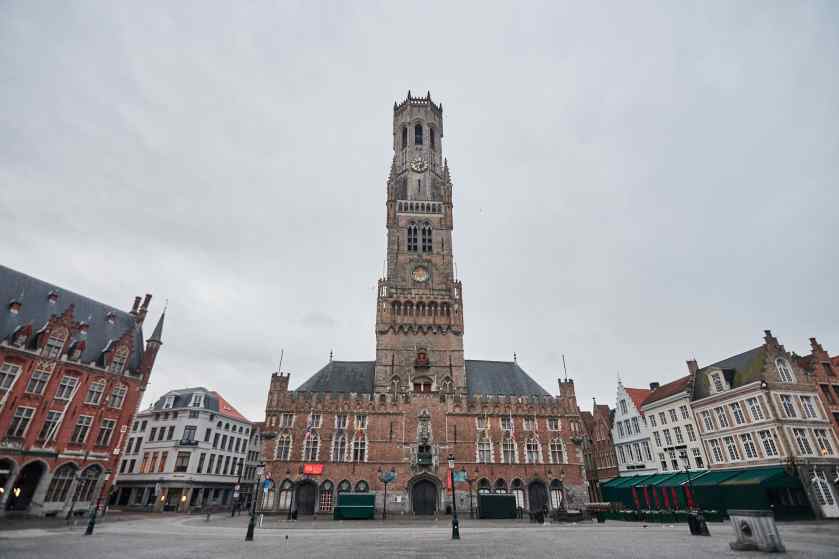
The iconic belfry of Bruges
We lined up 15 minutes before our scheduled entry time with the handful of people that had bought the tickets for the same time. As soon as the entry opened we validated our tickets and started our climb up. We didn’t stop and linger at the intermediate levels but tested our fitness by climbing the 366 steps as fast as our lungs and heart would allow!

A photo at the intermediate level showing the various types of bells in the bell tower
We reached the top level where the bells are located and started admiring the bird’s eye view of the beautiful town we had seen from ground level. As a photographer I was disappointed to find grills in the windows but my ultra wide lens did it’s job and I got the bird’s eye photos of Bruges that I wanted. But the grill also meant that sadly I couldn’t take photos pointing straight down at the Grote Markt square below.

St Salvator’s Cathedral dominates this part of the skyline in Bruges
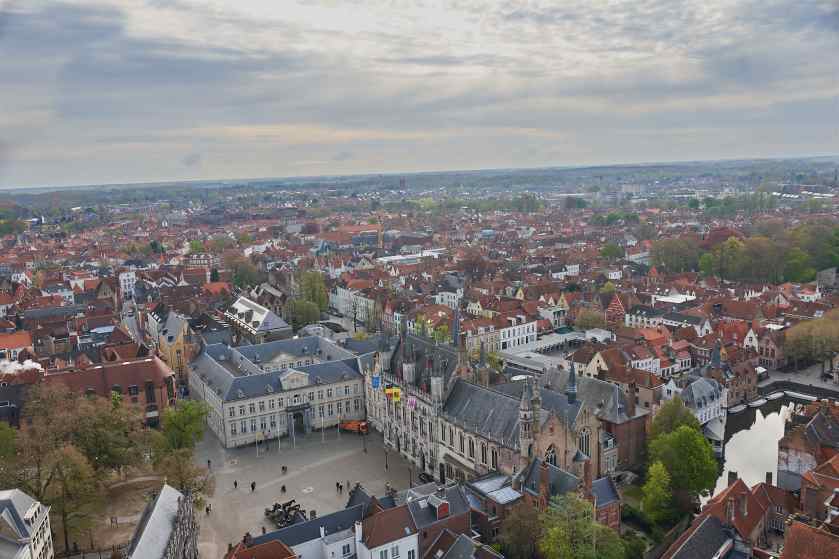
The Burg/ Town Hall square in Bruges

The famous Rosary Quay on the left from another angle
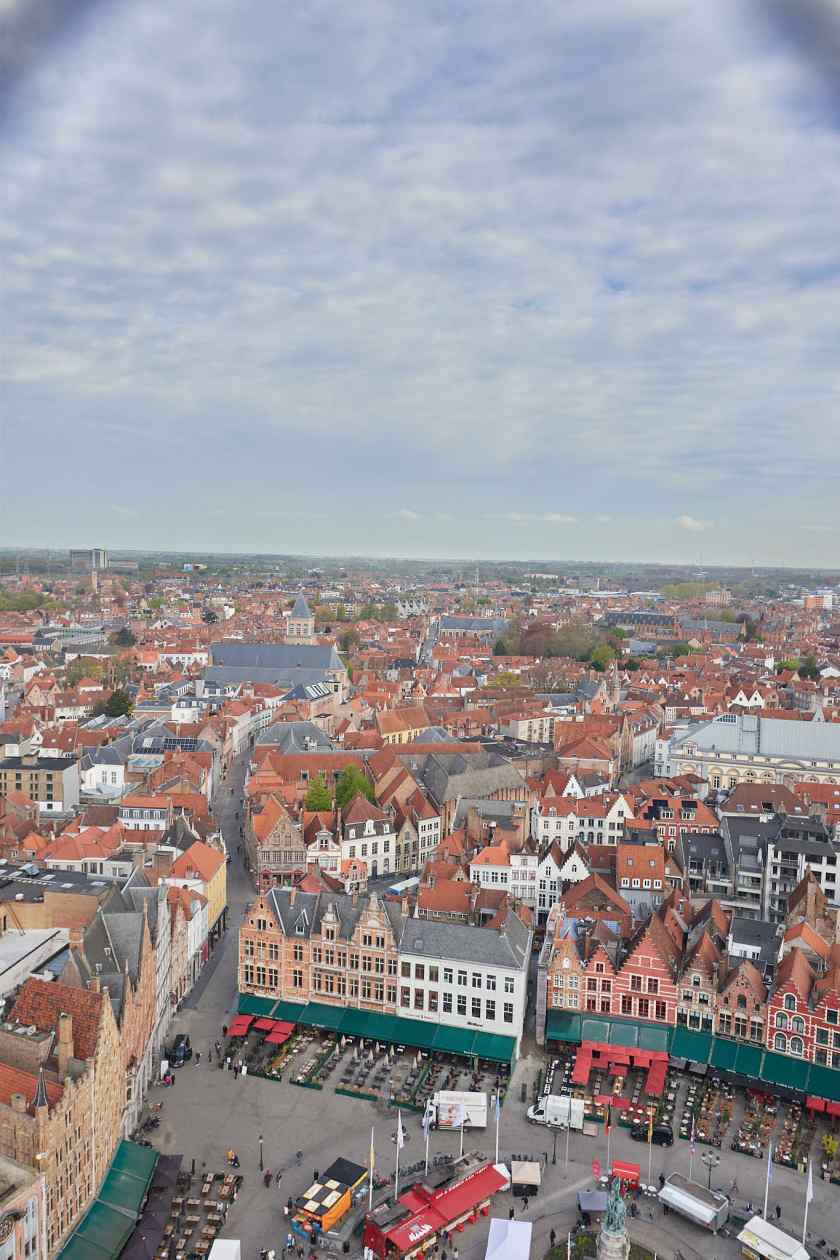
The Grote Markt below with a weekly market going on

The iconic spire of the Church of Our Lady, Bruges
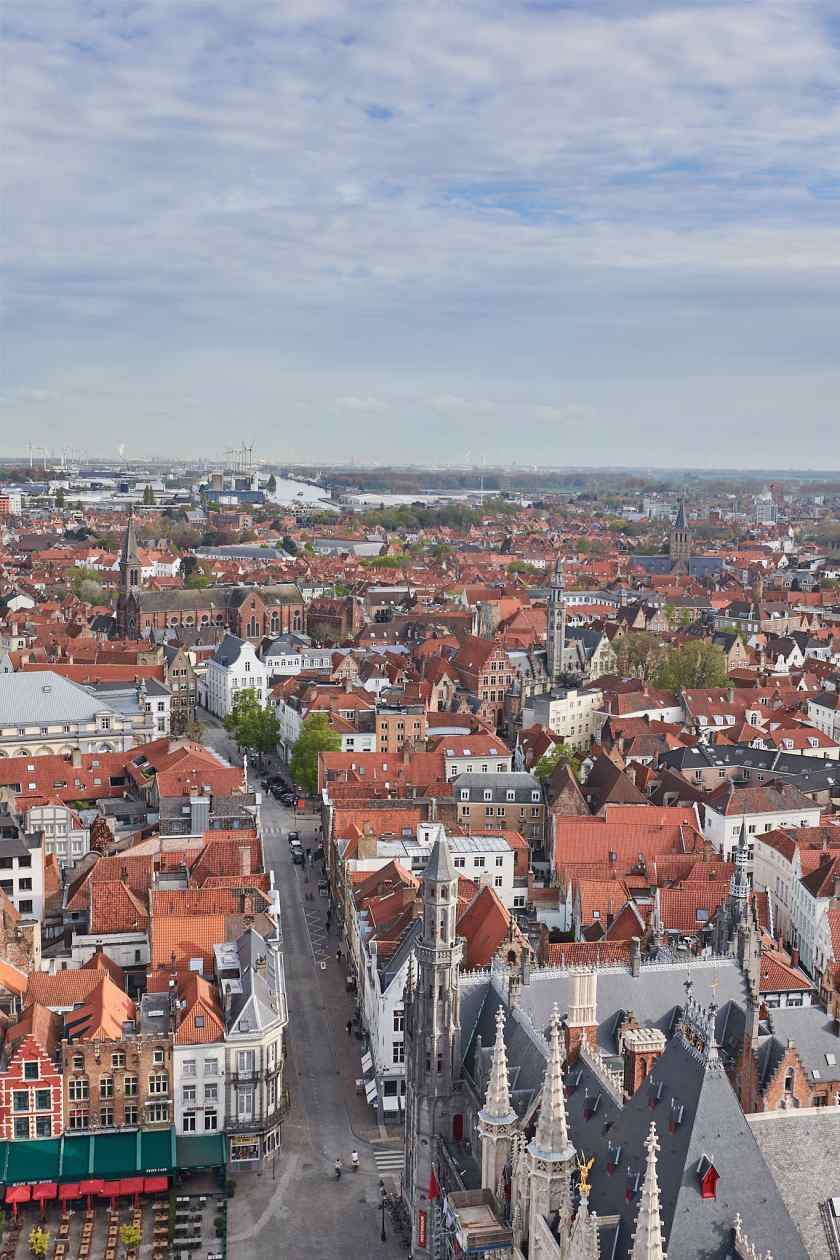
Modern wind turbines in the distance in contrast with the Old town Bruges
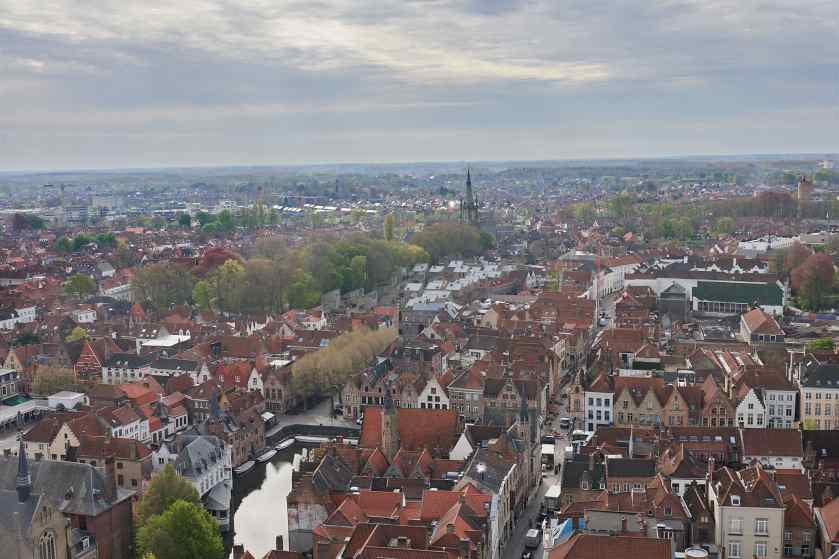
Our Hotel Duc De Bourgogne – The White building on the canal at the left

Two towers in one frame – St Salvator’s to the right & Church of Our Lady to the left

I can’t get enough of the beautiful view from the top of the Belfry

Happy us at having done our mandatory tower climb in Bruges
While we were on top of the Belfry the Carillon bells rung every 15 minutes making us cover our ears, but we still had the ringing in our ears for some time after we went down!
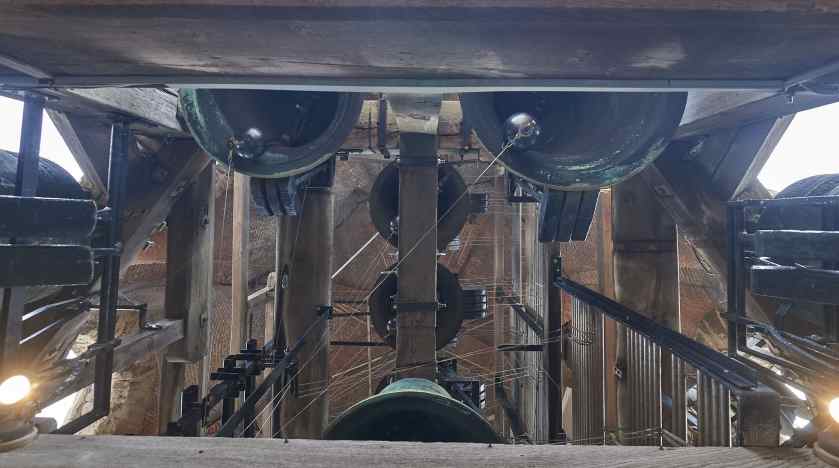
The Huge bells played by a carillon at the Belfry in Bruges
After having taken a lot of photos and trying to recognise all the landmarks from above it was time for us to take the steps down. I always find going down the tiny spiral steps to be much more dangerous for my size 11 feet & dodgy knee. So I carefully went down taking more time than I had climbing the same 366 steps.

Tight spiral steps near the top of the tower

Wider stone steps as we descend down
We stopped now at the intermediate level and took more photos of the Grote Markt Square and the enclosed courtyard of the Belfry behind. Here there is a demonstration of the various sounds the different types of bells make and we rung them to check which was the one that was still ringing in our ears!

The Grote Markt square from a lower level of the Belfry

The enclosed courtyard behind the Belfry
We then descended the rest of the stairs and left the Belfry, but not before I bought a fridge magnet of the Belfry to add to the clutter on my fridge. The churches and the Belfry of Bruges had been a great experience and even though the streets of Bruges are charming, I was glad I had ventured off them and into these beautiful buildings.
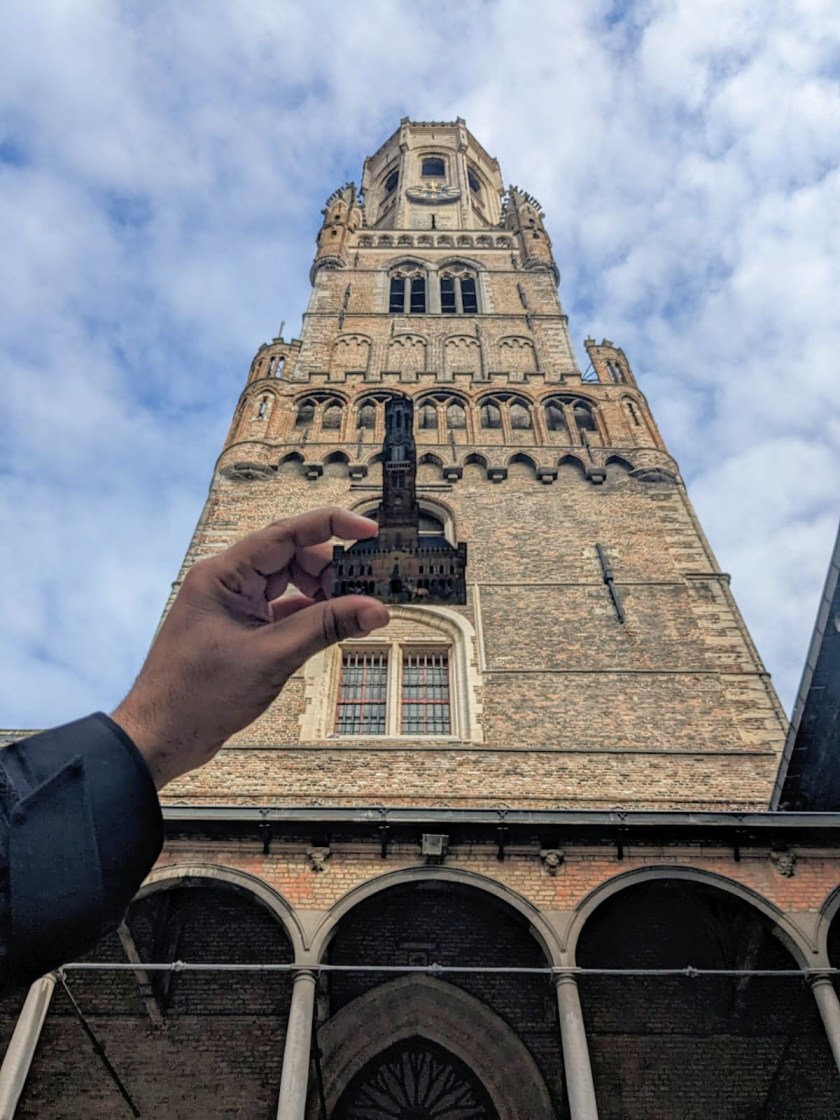
Buying a souvenir to remind us of our climb up the Belfry at Bruges
We still had a day trip to Antwerp to do after our descent from the tower, but that is the topic for another post some other time, some other day. I tend to go overboard with the photos inside churches and in my tower climbs but I can’t help myself there.
Till next time,
Bye.
 yogictravel
Glad you go overboard in the church pictures. I love churches too. They’re incredibly peaceful and the architecture is outstanding. They’re like mini museums
LikeLike