It has been a while since my last series documenting my family’s visit to the beautiful countries of Belgium and Netherlands in the Spring of 2023. Due to various reasons professional and otherwise I have not been able to start this short series describing my time in the rarely visited Desert National Park in Rajasthan. I didn’t want a full month to go by without getting a new post out, so if this feels a bit disjointed – Apologies in advance! Here goes….
The winter bird migration season is upon us with the start of November and though Mumbai remains hot & humid as ever migrants from far and wide have started their move into the birding hotspots all over the Indian Subcontinent. Though I am yet to plan any trip to a birding hotspot this season, I felt this is the perfect time to post about my time in the Desert National Park the previous season.
The idea of this trip started when my friend who is a much more avid birder than me asked me if I was interested in a short trip (Check out his beautiful wildlife photos on – https://instagram.com/ganesh_anant_gore?igshid=NGVhN2U2NjQ0Yg==) . On enquiring about the destination he mentioned the ” Desert National Park ” near Jaisalmer. This park is unusual because even though you won’t see flocks and flocks of birds here (It’s the desert after all!) the birds you see here are not very commonly seen in the other parts of the country making it a unique ecosystem. The great draw of this park is a chance to see the Great Indian Bustard, a critically endangered bird that may not last till the end of this decade if not conserved well. My friend had already done the enquiries and talked to the guide there, so for a change I didn’t need to do anything except book my tickets and pay my share! I jumped at the opportunity and with everything in place we were on the rare direct flight to Jaisalmer from Mumbai.
At Jaisalmer airport we were received by the father of the person who currently runs the only birding lodge in this park. An hours drive later we were shifted from a sedan to a 4 by 4 Gypsy for the rest of the ride to the “Godawan Garh ” the then newly opened birding lodge far away from the hustle bustle of Jaisalmer right in the middle of the Desert National Park ( DNP from here on). It was almost sunset when we got there and we kept our luggage in our surprisingly well built stone cottage. I got the ultra wide lens on and took some photos of the resort itself before the 300 mm got permanently attached to the camera for the rest of the trip.

The well built and equipped cottages of the “Godawan Garh”
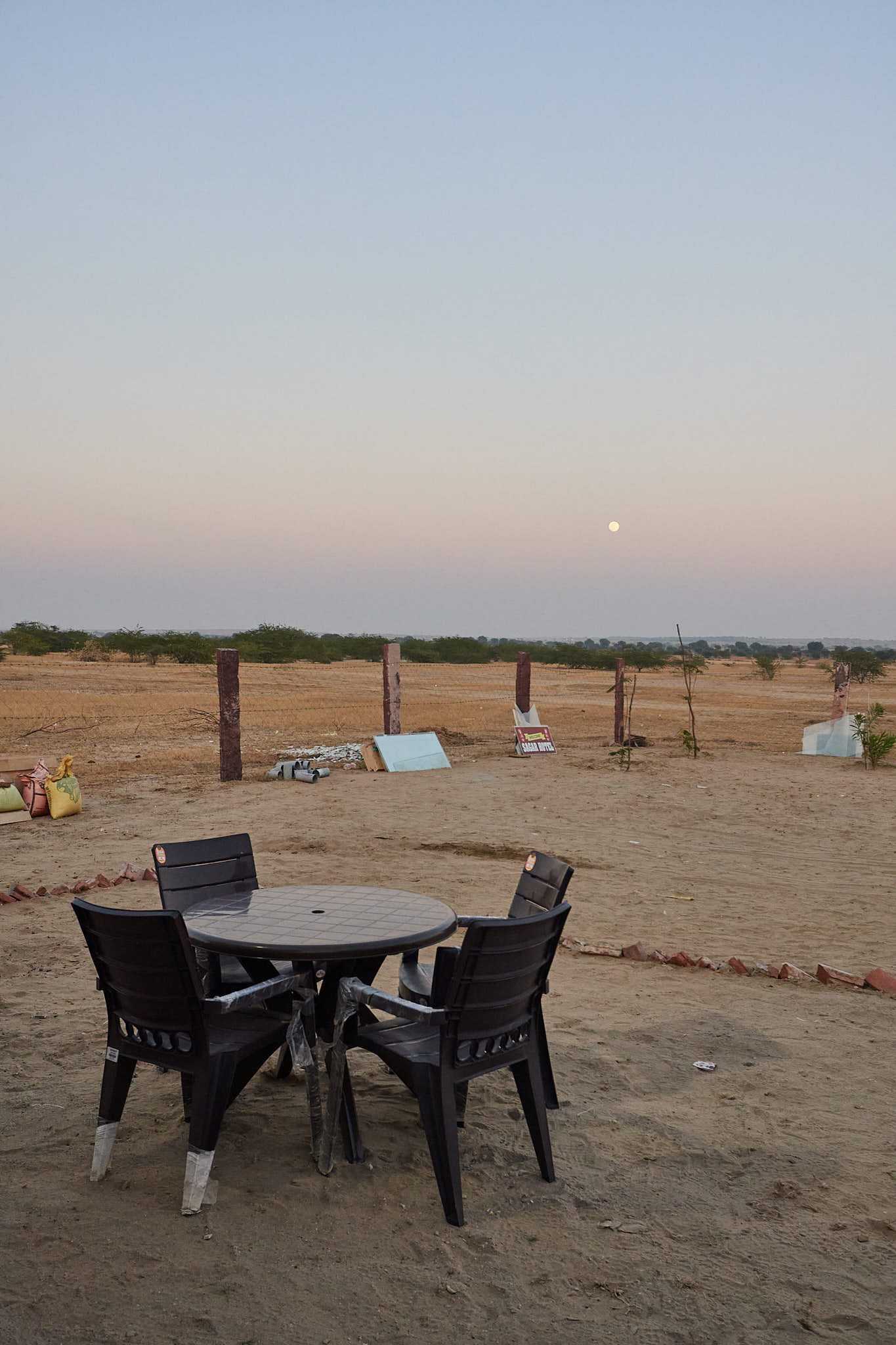
The sun on its way down with the Desert National Park just outside the fence
It soon got dark and cold and we put on our layers as Aliyar Rozani and his team prepared our meal for us. The hot traditional desert food ate in the open on a cold desert night was an experience we would enjoy for the next 2 days. It was a clear full moon night so the first photo I took with the 300mm on this trip was not of a bird but of the beautiful full moon!
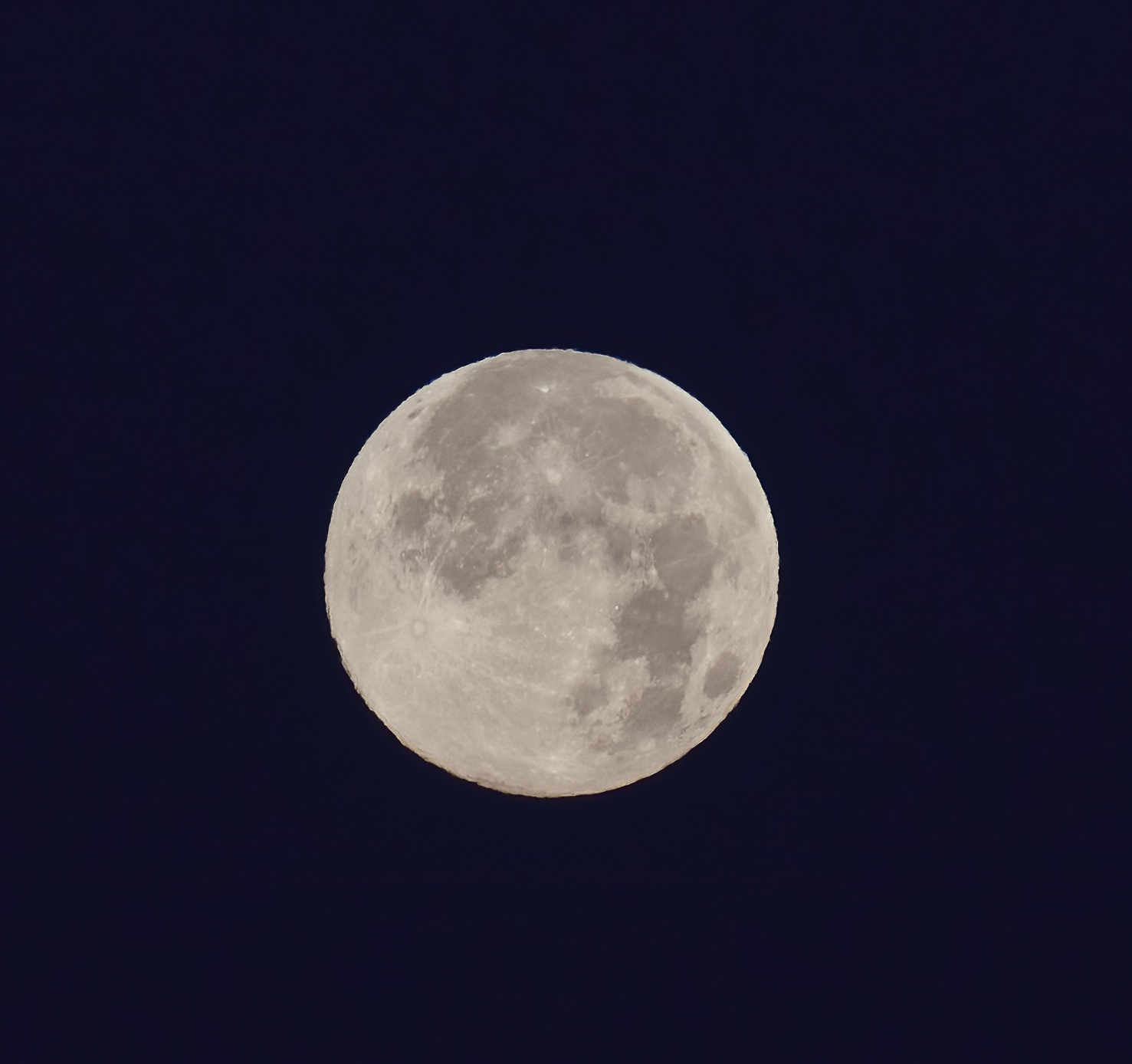
The beautiful full moon as seen from the desert national park
With our tummies full we retired into our comfortable bed under thick quilts and retired for the night. We were up before dawn as all birders have a habit of doing. We got our gear in order and got all bundled up in warm clothing because riding around on an open gypsy on a cold desert winter morning is not a thing to be taken lightly. We set out after a hot cup of tea to warm us up & with a packed breakfast with us to see what we could find on that cold desert morning.
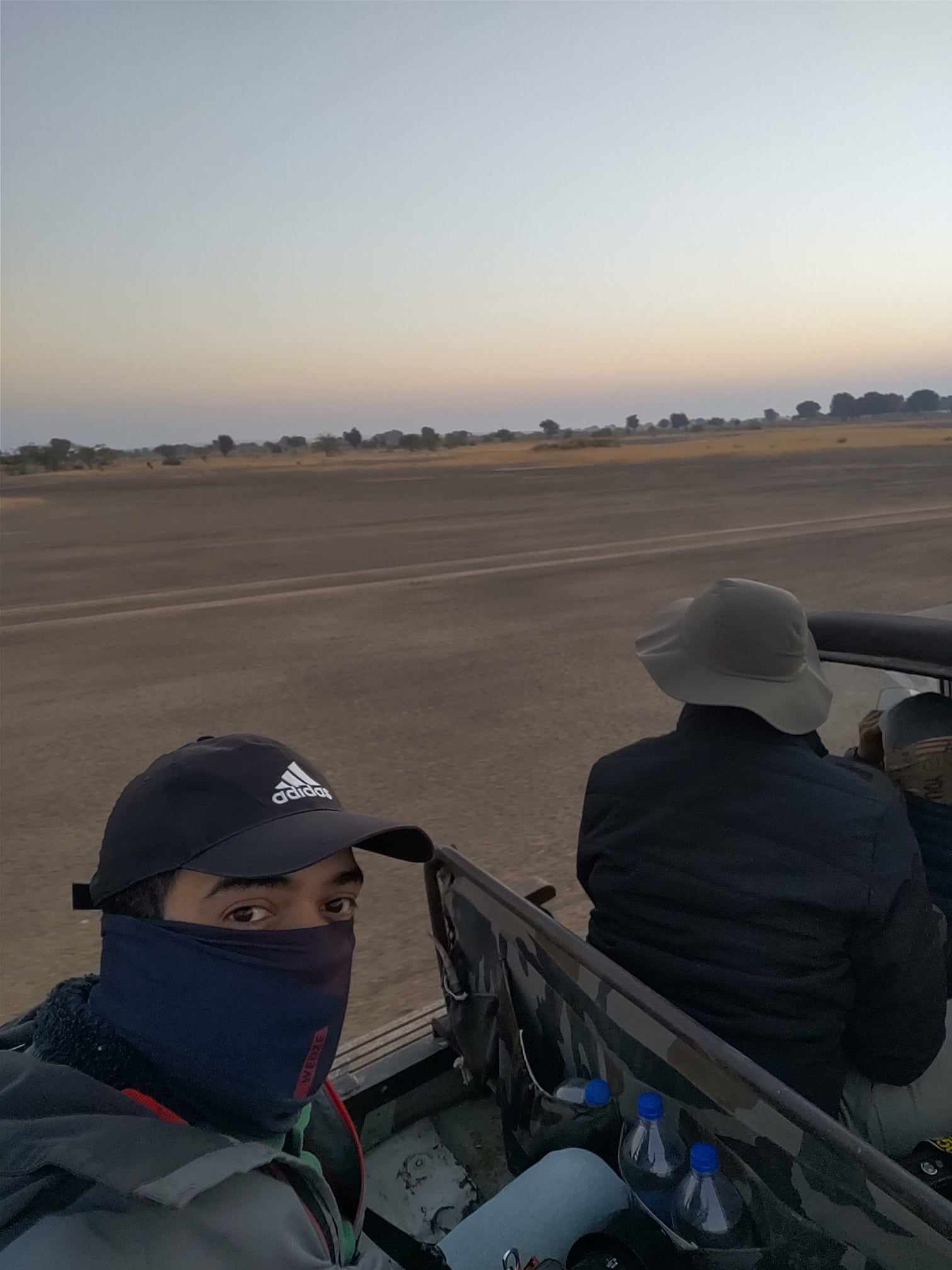
All covered up in the back of an open gypsy at the DNP
The sky always has a beautiful colour in the desert at sunrise and sunset and it was no different here.
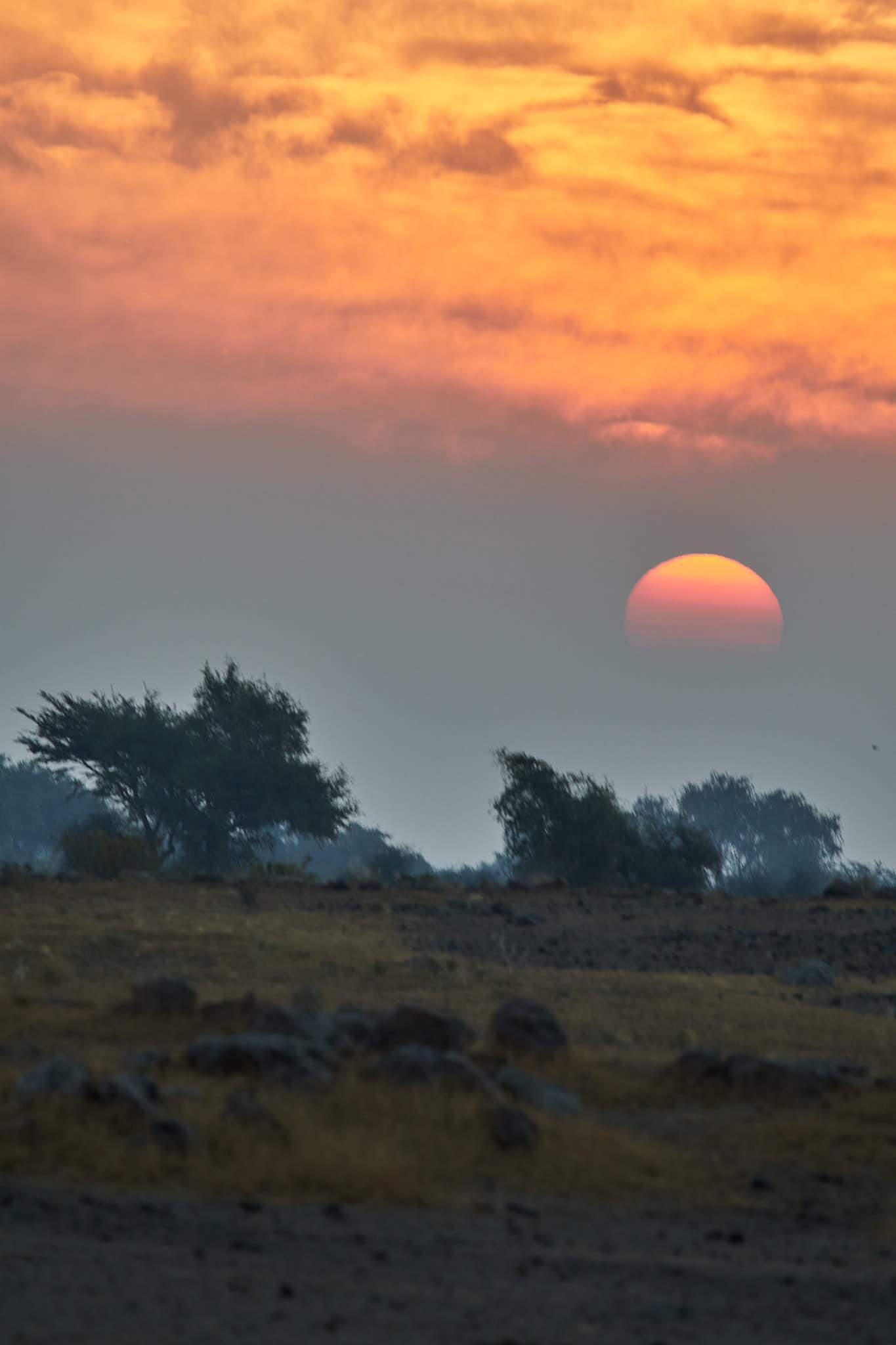
The sun rises on the Desert National Park
The first bird we came across right as we exited the lodge gates was a small but pretty Isabelline Wheatear. The light wasn’t the best but I never say no to a pretty bird posing for me, so I took a few photos before moving on.

Isabelline Wheatear poses for us at the DNP
The DNP is well known for it’s vultures, another group of birds that has had it’s numbers decimated thanks to humans. The first of the vultures we spotted was the Egyptian Vulture. This smaller of the vultures with it’s typical spiky hairdo is always a pleasure to photograph. We got this individual at just the right time with the golden sun rays falling on him as the sun came up giving a memorable set of photos.

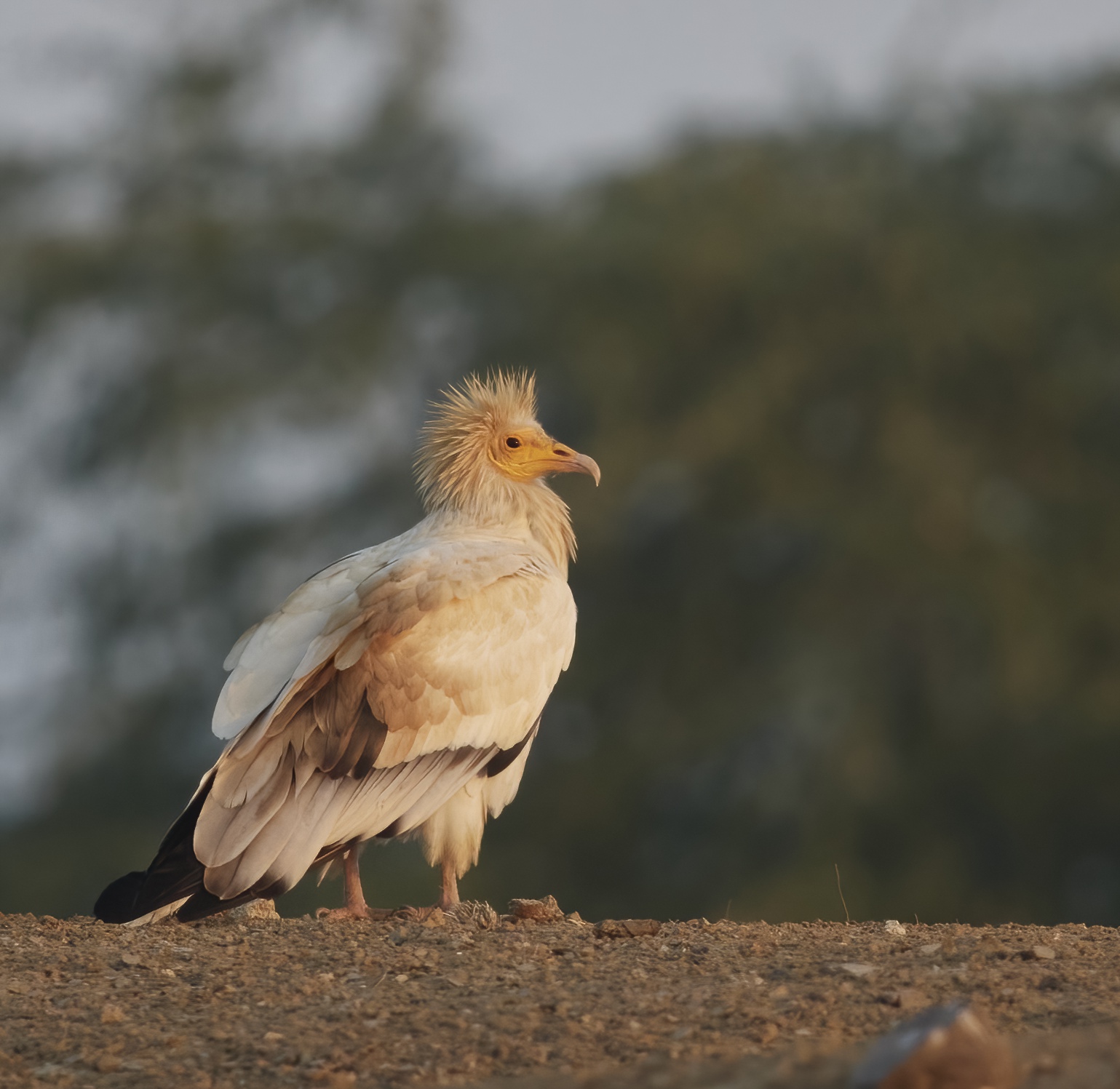
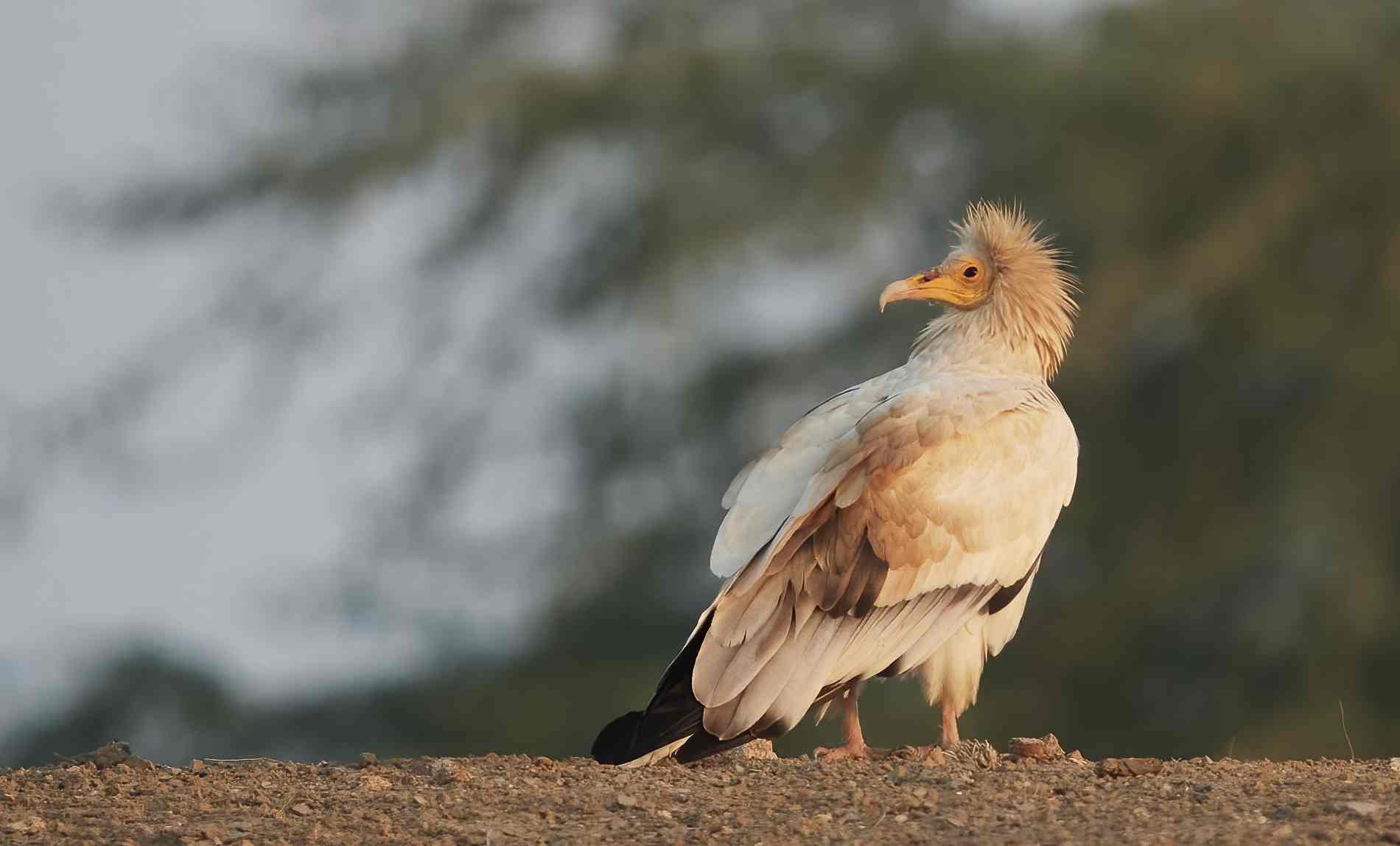
The Egyptian Vulture in the golden light of early morning
We then headed to the periphery of the fenced region inside the national park itself which is the last refuge of the Great Indian Bustard in India. The Great Indian Bustard is a predominantly ground dwelling bird which has been driven close to extinction because of decreasing habitat, illegal hunting and because these birds have a tendency to be clumsy fliers who run into the electrical wires. Less than 120 of these birds exist as I am writing this so the people in charge have built a fenced enclosure inside the DNP where no vehicle can enter thus giving the birds some space. This enclosure is a huge one so sighting an individual requires some luck and we didn’t have any that morning. That didn’t mean that we didn’t have fun photographing the other wildlife of the region.
I was surprised at the huge flocks of sparrows in the DNP and was even chided by my birder friend for taking photos of sparrow! Huge sparrow flocks are something that is lost in the urban areas and I still took photos of the flocks under the disapproving glances from my friend.

Huge flocks of Sparrows at the DNP
We came across a herd of Nilgai which seemed like a nuclear family unlike the bigger herds seen in the other parts of the country. It’s an antelope that has the great habit of looking directly at the camera and it always makes for great photos.
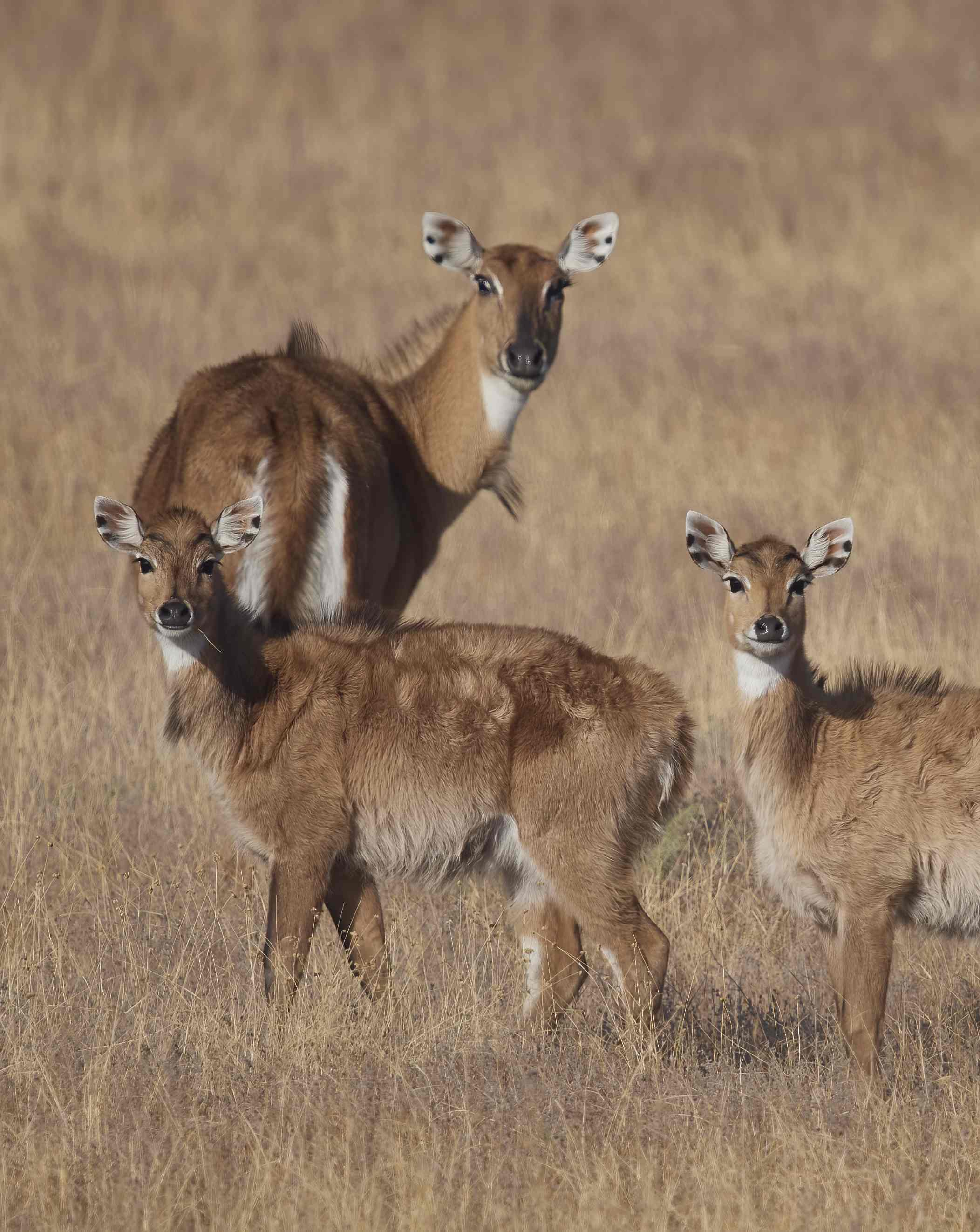
Mama Nilgai with 2 kids
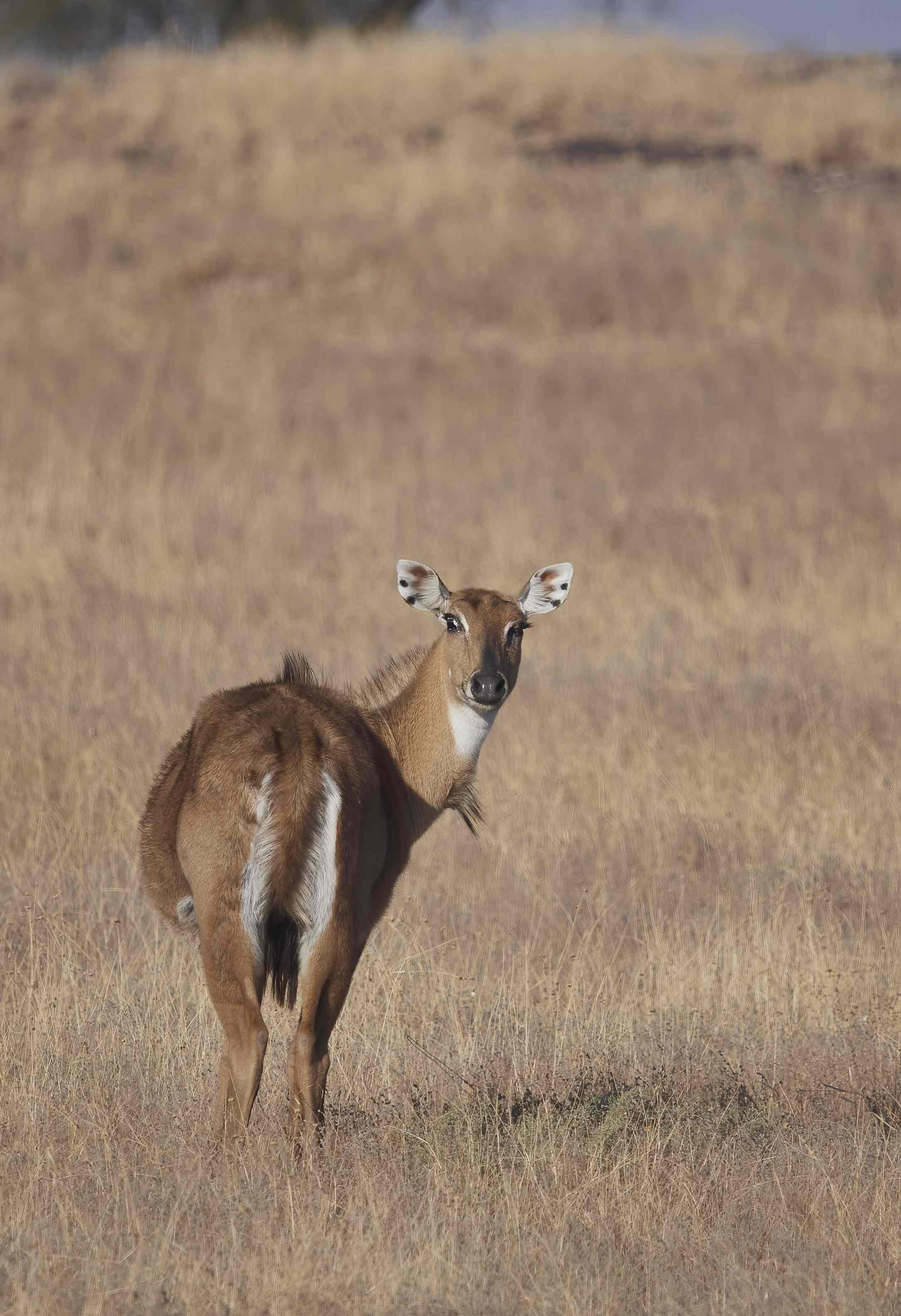
The Mom gives us a cold stare!

Dad sits in the distance keeping a watchful eye!
The fence of the enclosure made a good perch for birds and I got decent photos of common birds of the region like the great grey shrike, the black crowned sparrow lark and the common babbler.

The Great grey shrike poses on a post near the Bustard enclosure

A common Babbler on the fence
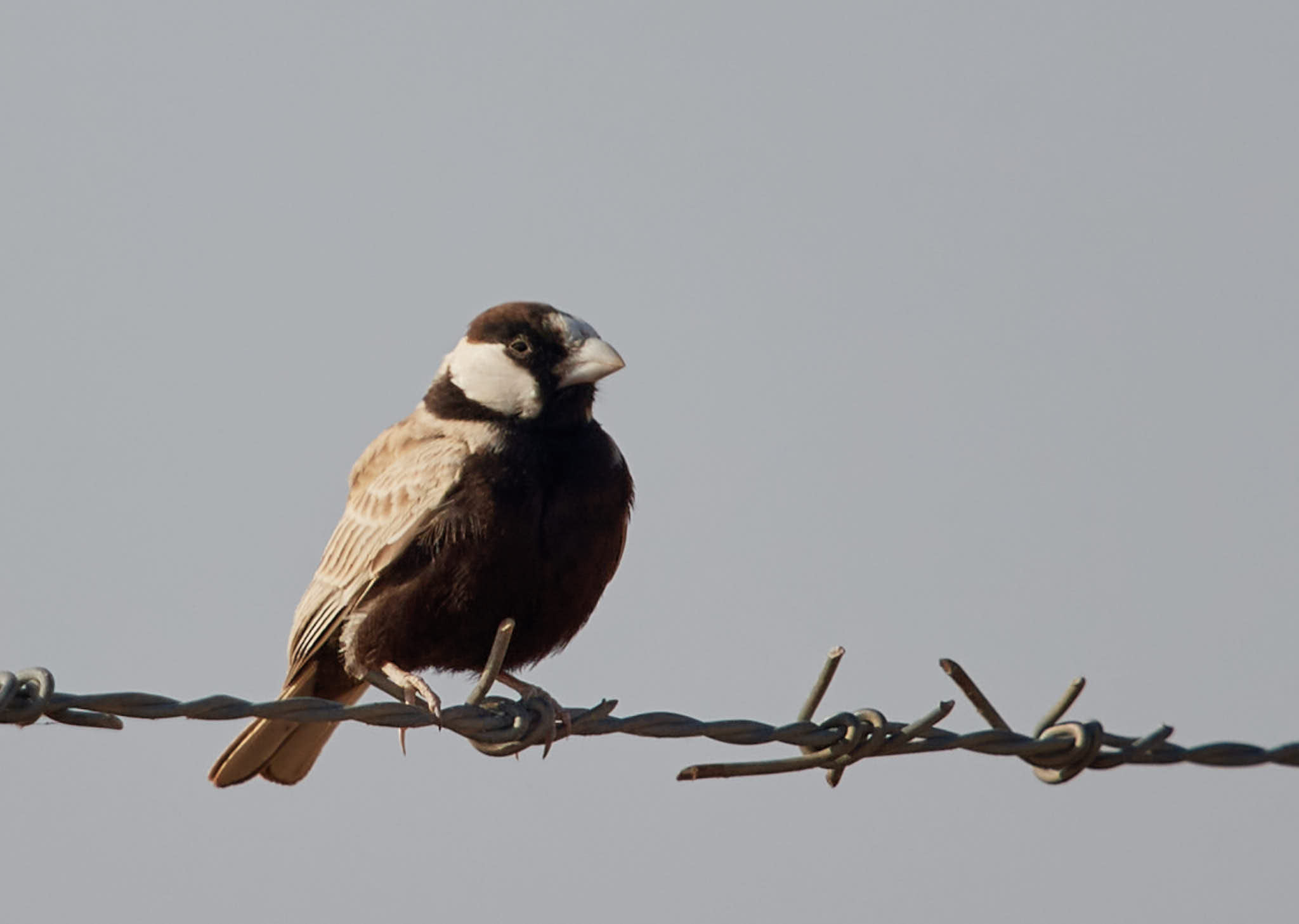
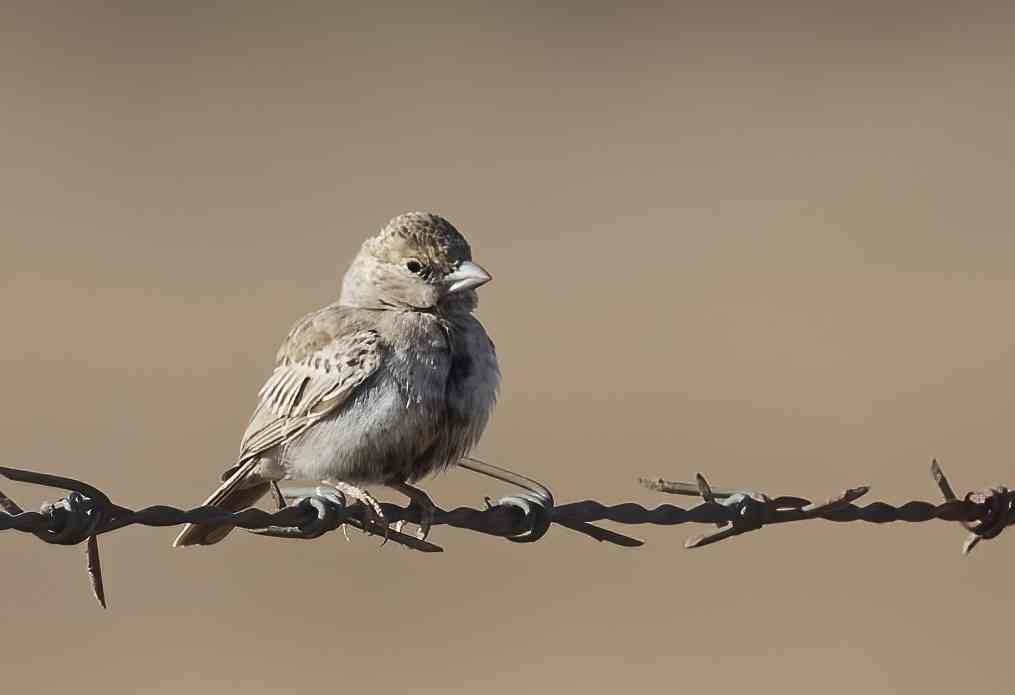
Male and female Black crowned sparrow lark
Another ubiquitous species of the region is the variable wheatear. As it’s name indicates these birds have a variety of combinations of black and white feathers while belonging to the same species. They didn’t seem to keen to be photographed though but I still got a few photos to illustrate the point.
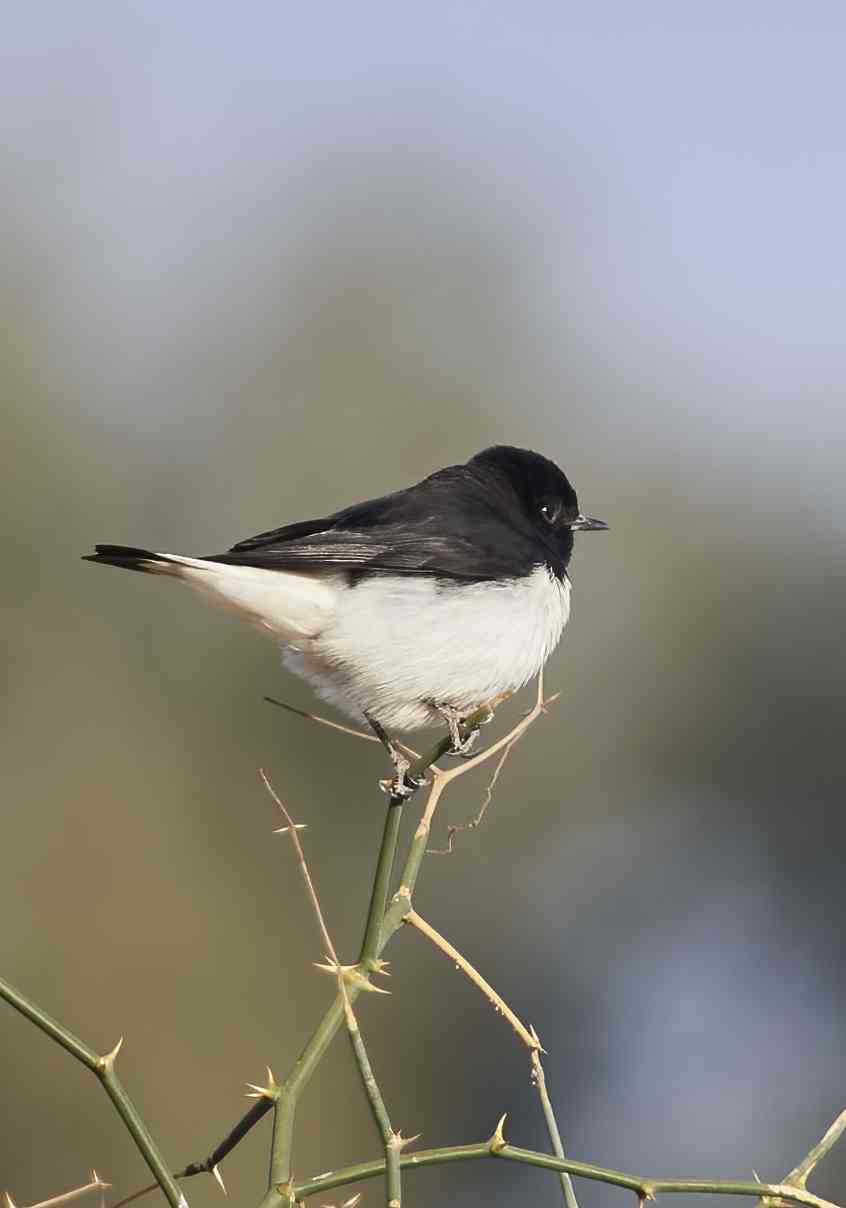

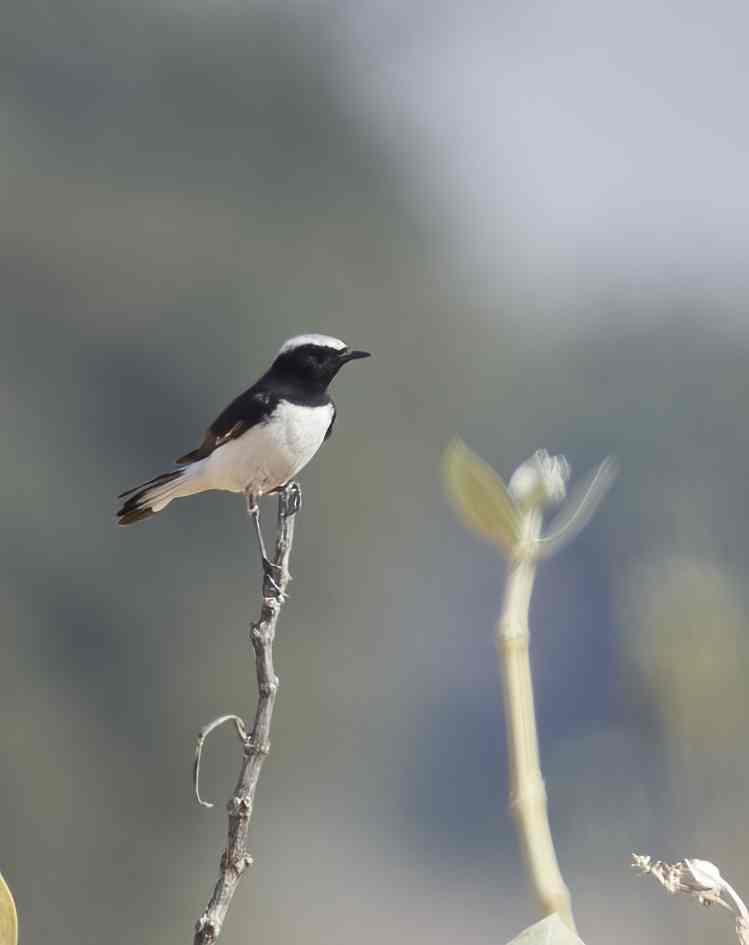

Various feather patterns of the Variable Wheatear at the DNP
A thing which I regret not taking more photos of were these herds of black faced sheep which were tended to by the locals of the region. I did however take photo or two while we were zooming around trying to find a Bustard.

A flock of the black faced sheep of the region
We returned to the Godawan Garh not having seen even a glimpse of the Bustard but having enjoyed our ride through this terrain. Hot lunch awaited and after the cold hastily had breakfast in the middle of the safari it was something our bodies wanted. We ate the simple but delicious freshly prepared food and took a short siesta before heading out again in the late afternoon. We were happy to emerge from out room to find a common buzzard fly just overhead and took photos of this desert raptor before heading out.
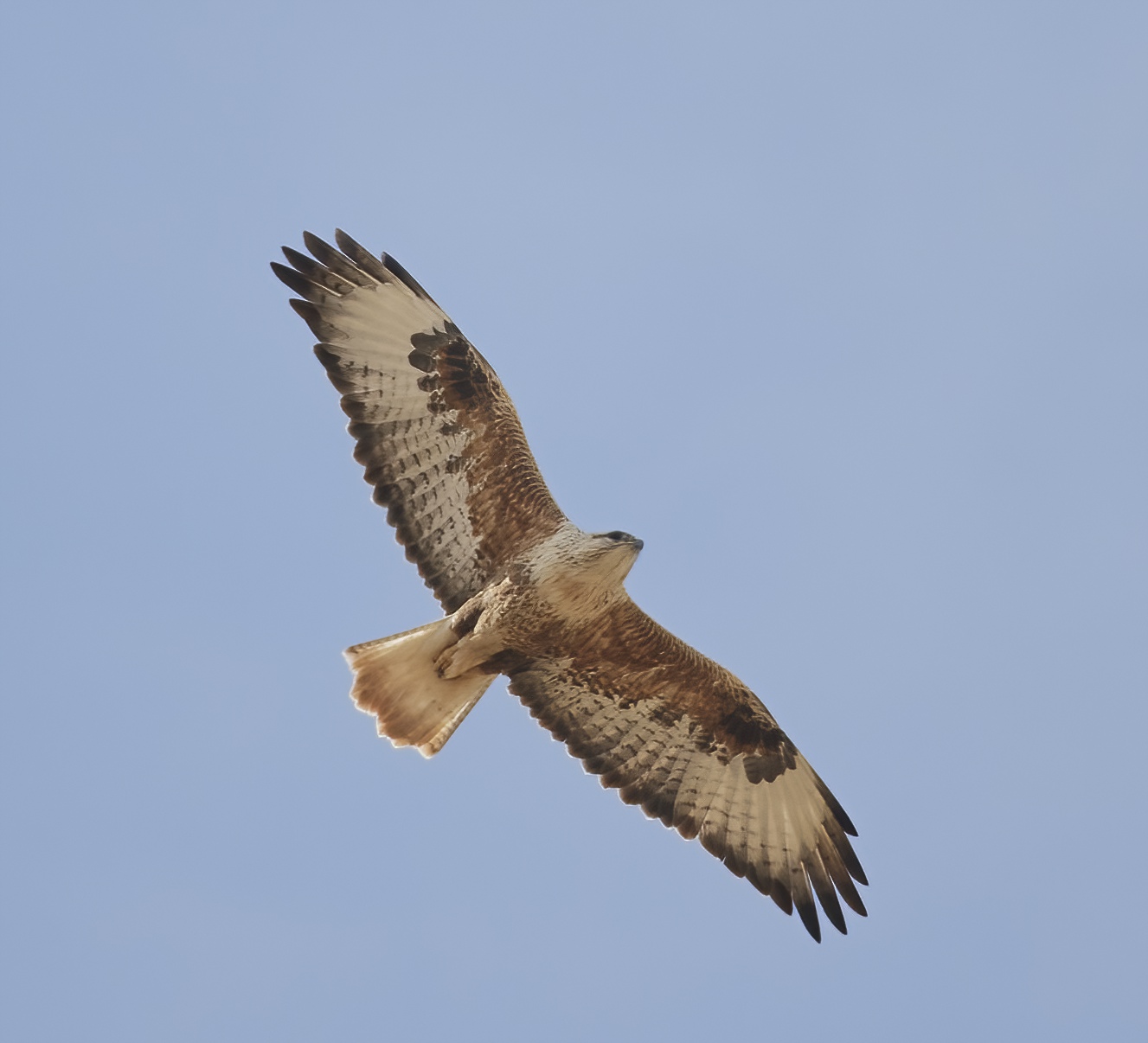
A common buzzard flies overhead at the Godawan Garh
That afternoon we decided to head to the parts where another of the unique species of the region , the trumpeter finch is found. We drove to the area which is farther away and went off the road towards a hill. Without a guide who knows where these species are usually located it would have been impossible to find these pretty little birds.

A common kestrel on a roadside wire at the DNP
We got off our car and walked towards a group of cacti where a flock of these birds are usually seen. The area would have been a great site for my ultra wide but I had carried only the attached 300mm so I took mobile photos of this landscape.

The region where the trumpeter finch are found
We first found a desert lark and a Persian wheatear and I passed my time taking photos of these desert birds going about their day to day activity as we waited for the finch flock.
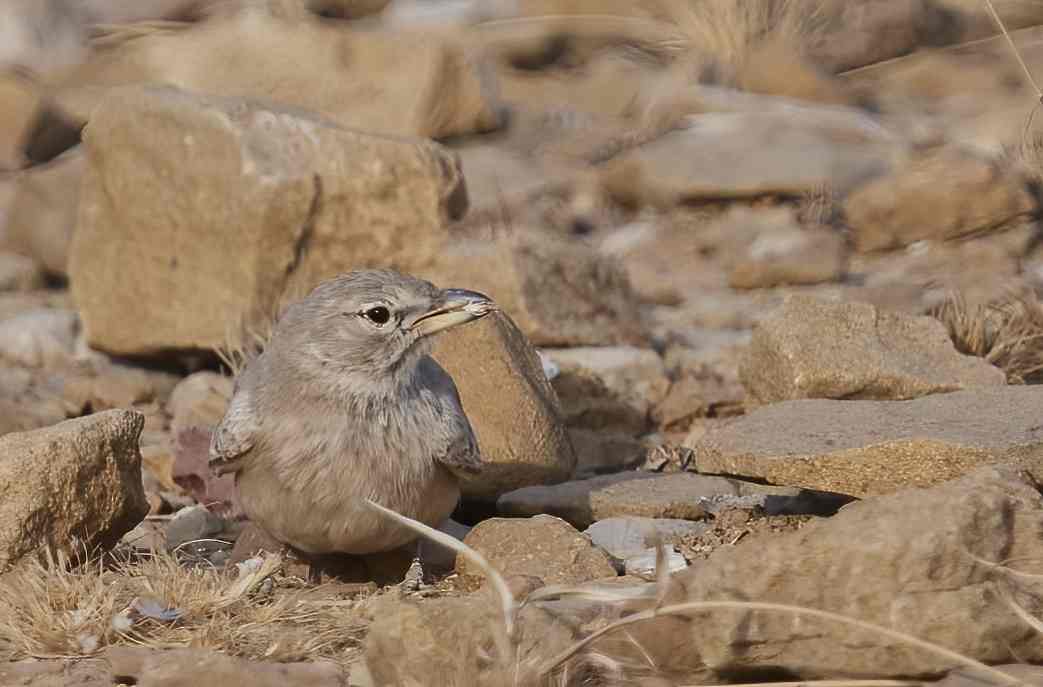
A desert lark forages for food

A Persian wheatear poses on the cactus

The desert lark keeps me busy as we wait for the main attractions
Finally a small flock of the trumpeter finch made their appearance and their brightly coloured beaks in stark contrast to the dull body and the desert landscape made for good photos even though the light was poor. At least we got our intended target species this time!
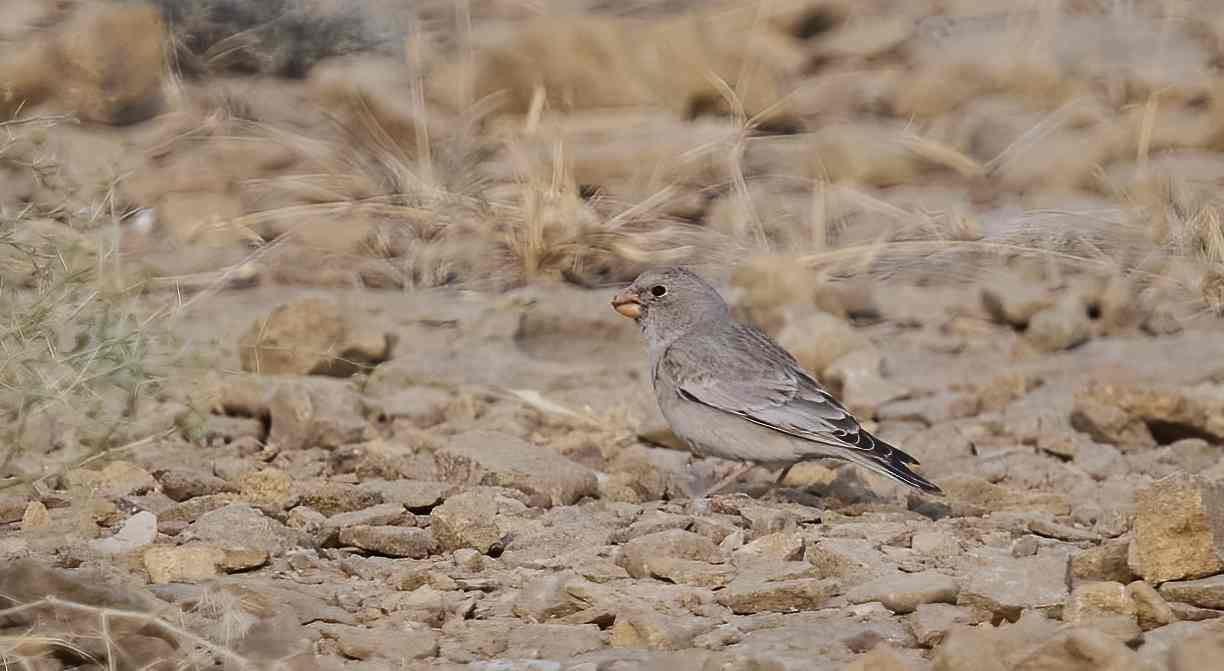
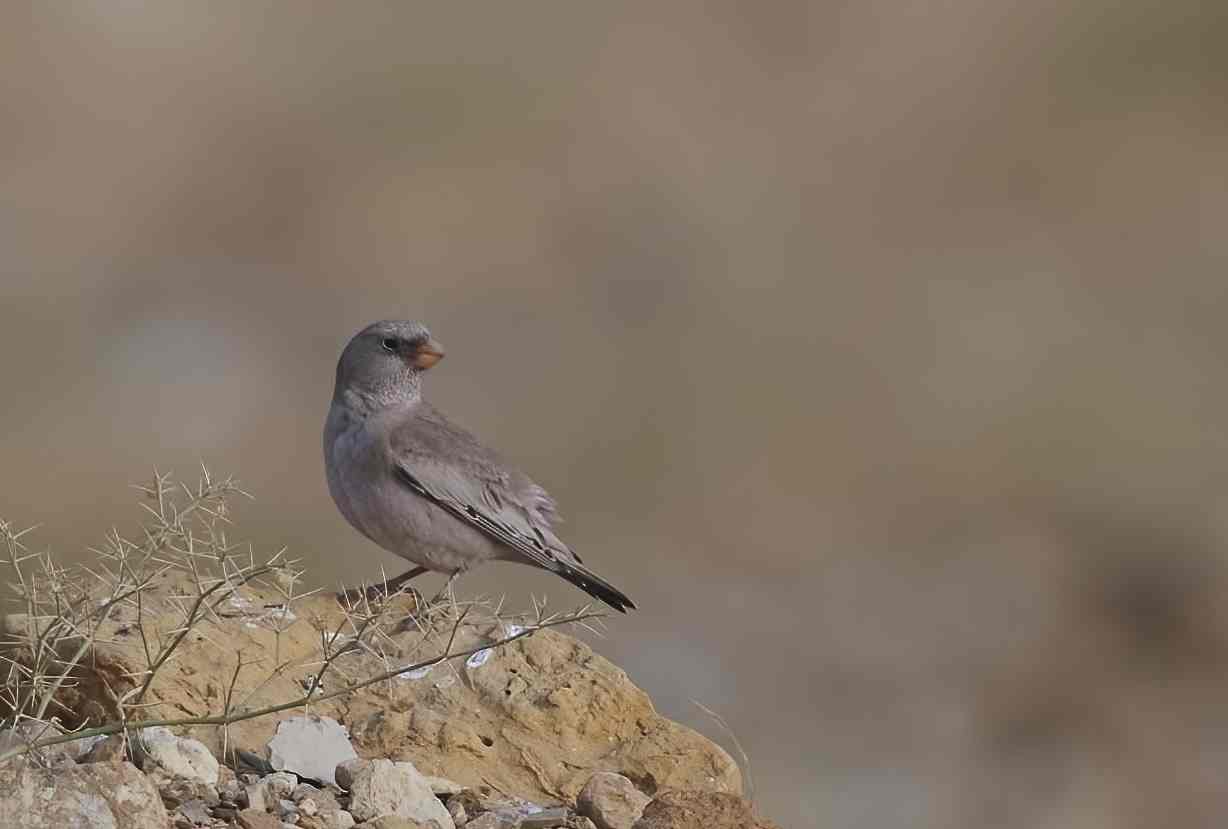

A small flock of Trumpeter finch at the DNP
With the light fading we decided to head back to the lodge with a great first day at the DNP behind us.

The beautiful colours at dusk at the DNP
We tucked in after a by now predictably delicious hot meal and decided to give the Bustard enclosure another go the next morning. So we set out with our fingers and toes crossed at least to get a sight of the rare bird!
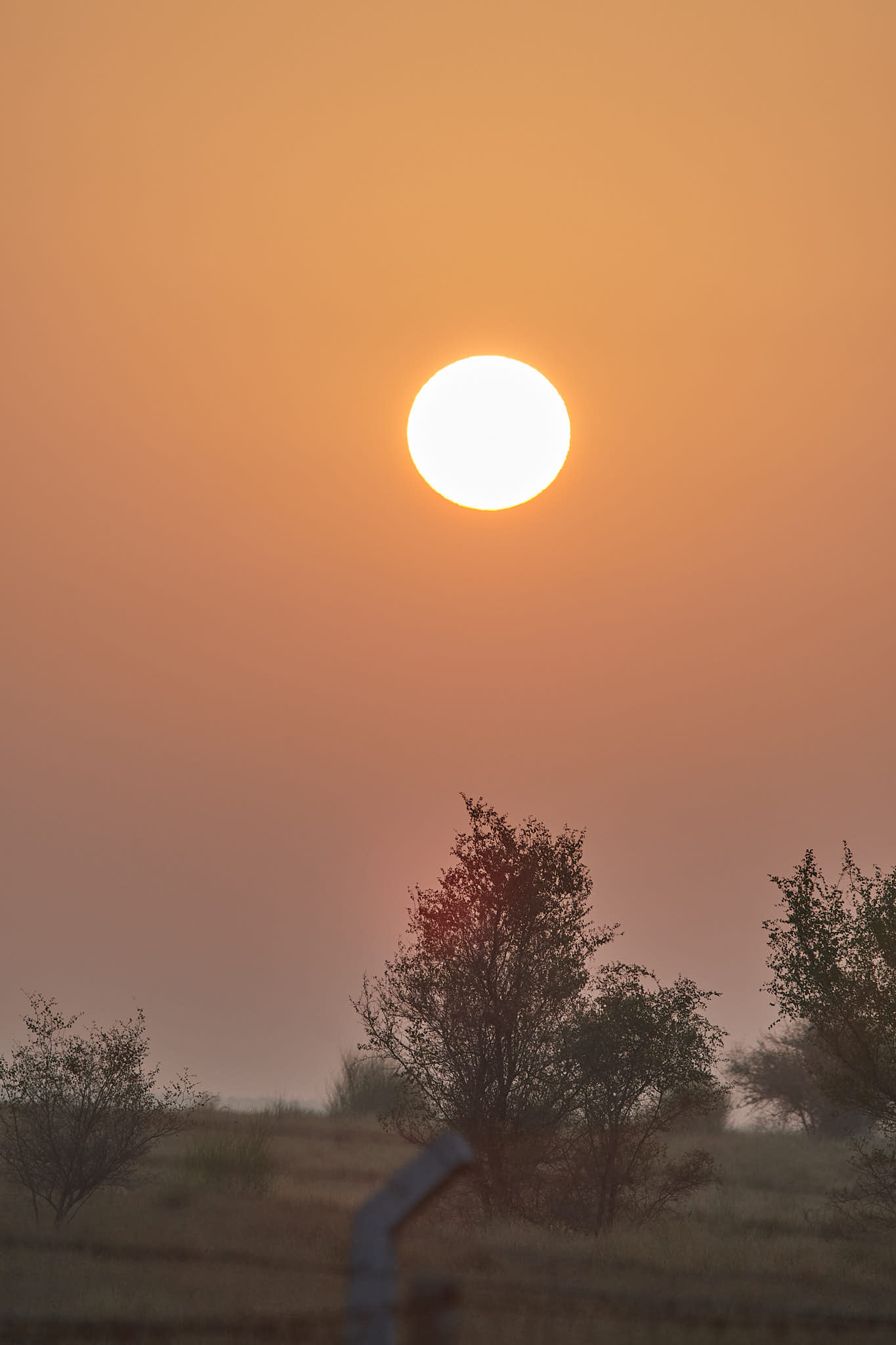
Another beautiful morning at the DNP
We reached the part of the periphery of the enclosure where they had been spotted last and we got down to a vantage point only to see three huge birds flying off. I tried to be as quick as possible and got some photos of these birds flying off.
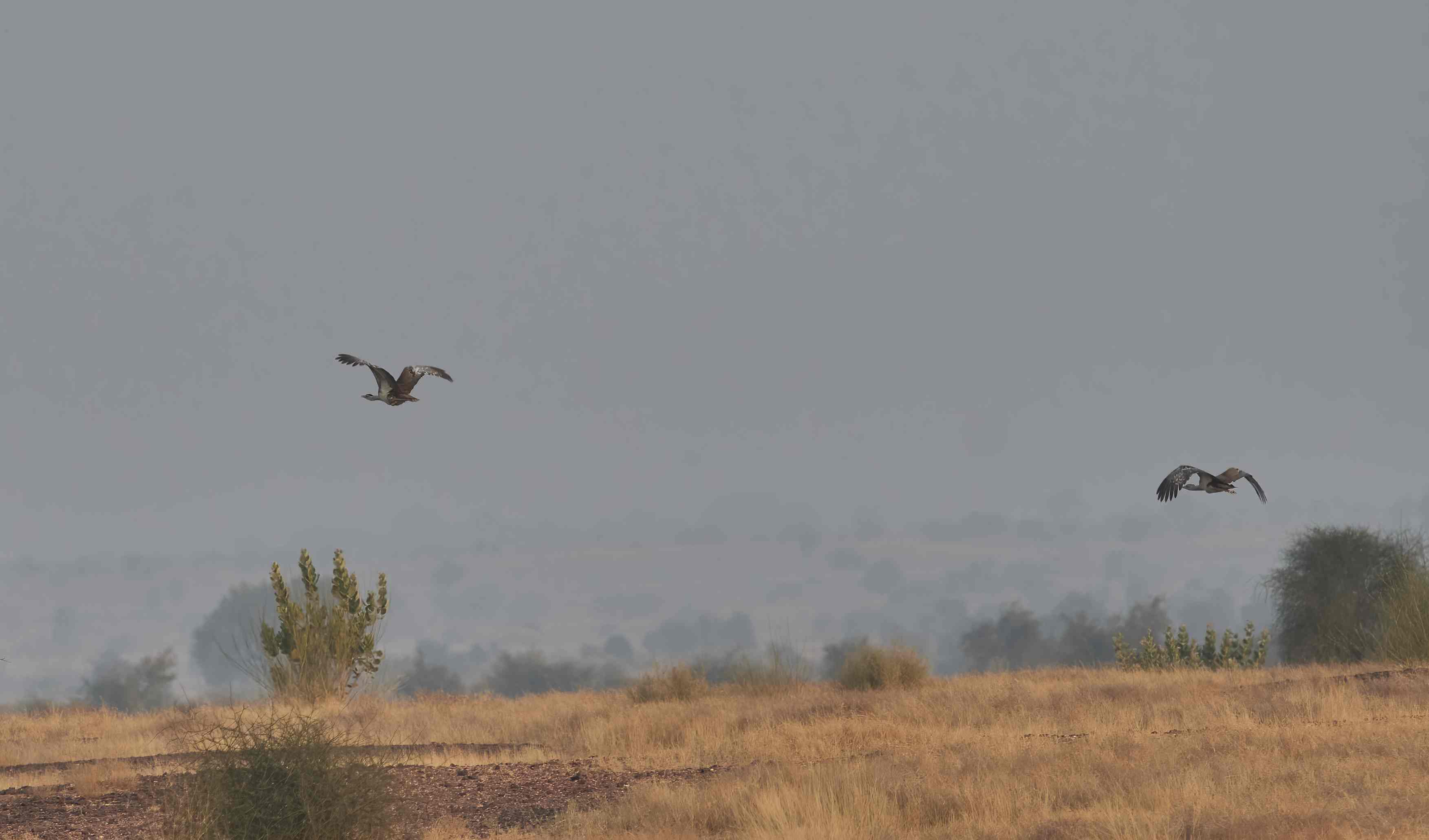
A couple of Great Indian Bustard fly off
Aliyarbhai was a man possessed now and we drove the gypsy towards where the birds had flown off. Remember that it is impossible to go (and not desirable for the bird’s sake) to go into the enclosure so we could just hope they landed somewhere in sight close to the fence at another place. So I had to plead with him to stop for a moment or two so that I can take a photo of a herd of chinkaras.
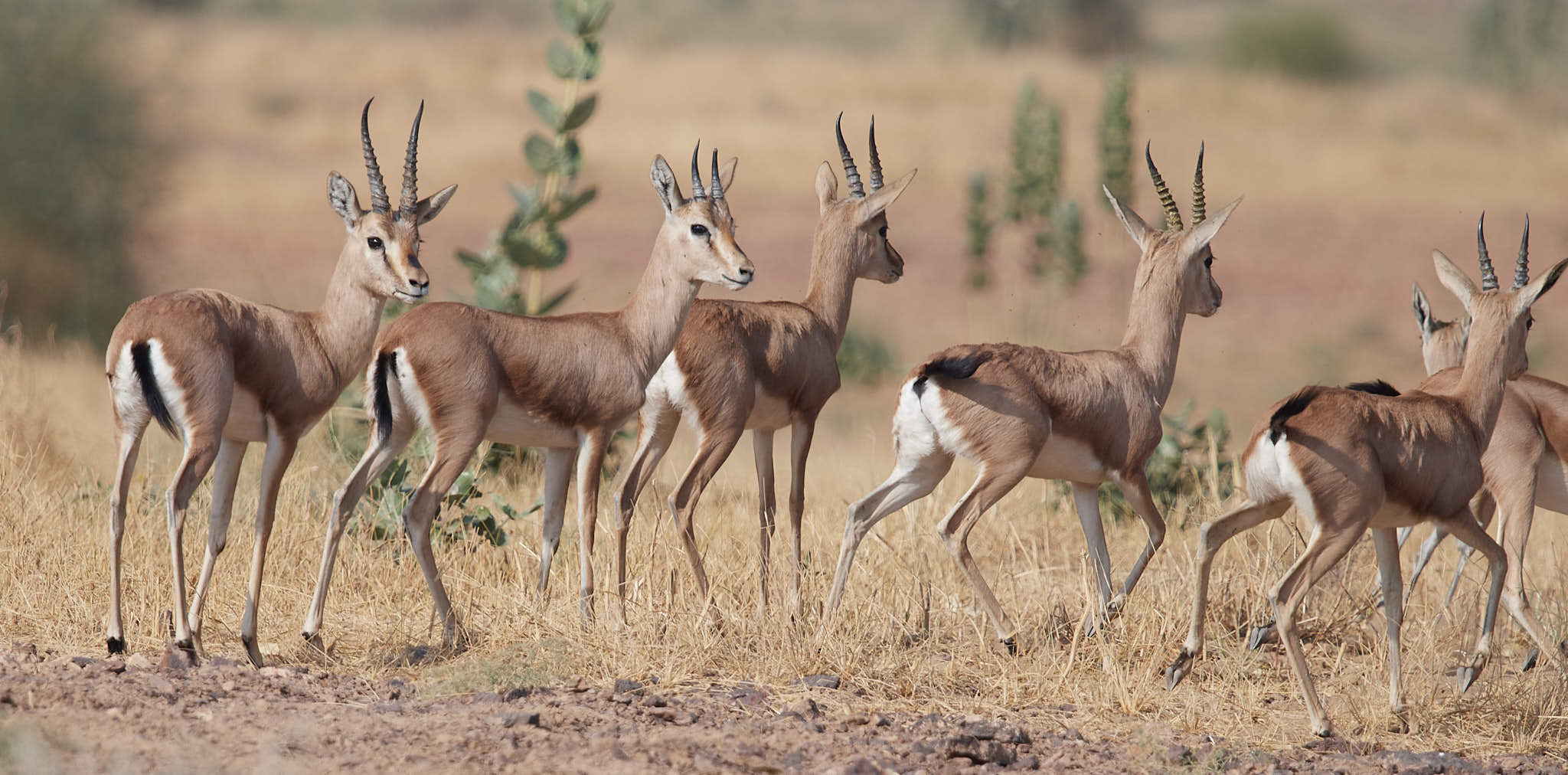


A herd of Chinkaras stare at us as we zoom around trying to spot the GIB
The Bustards had indeed landed but at at distance too far for any of our lenses to take good photos so we just observed the trio of bustards walk around the grassy patch and take a photo or two when most of an individual came into view.
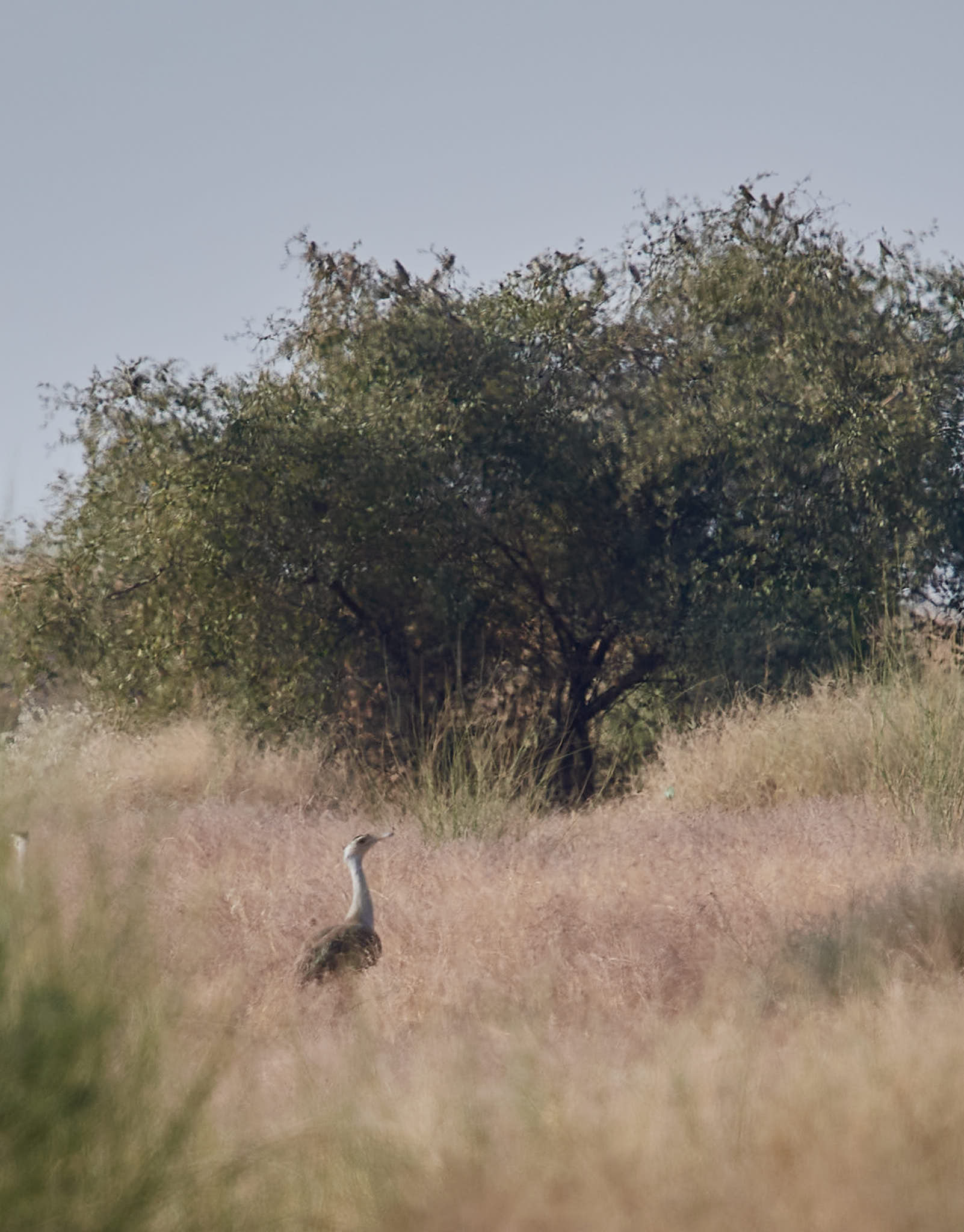
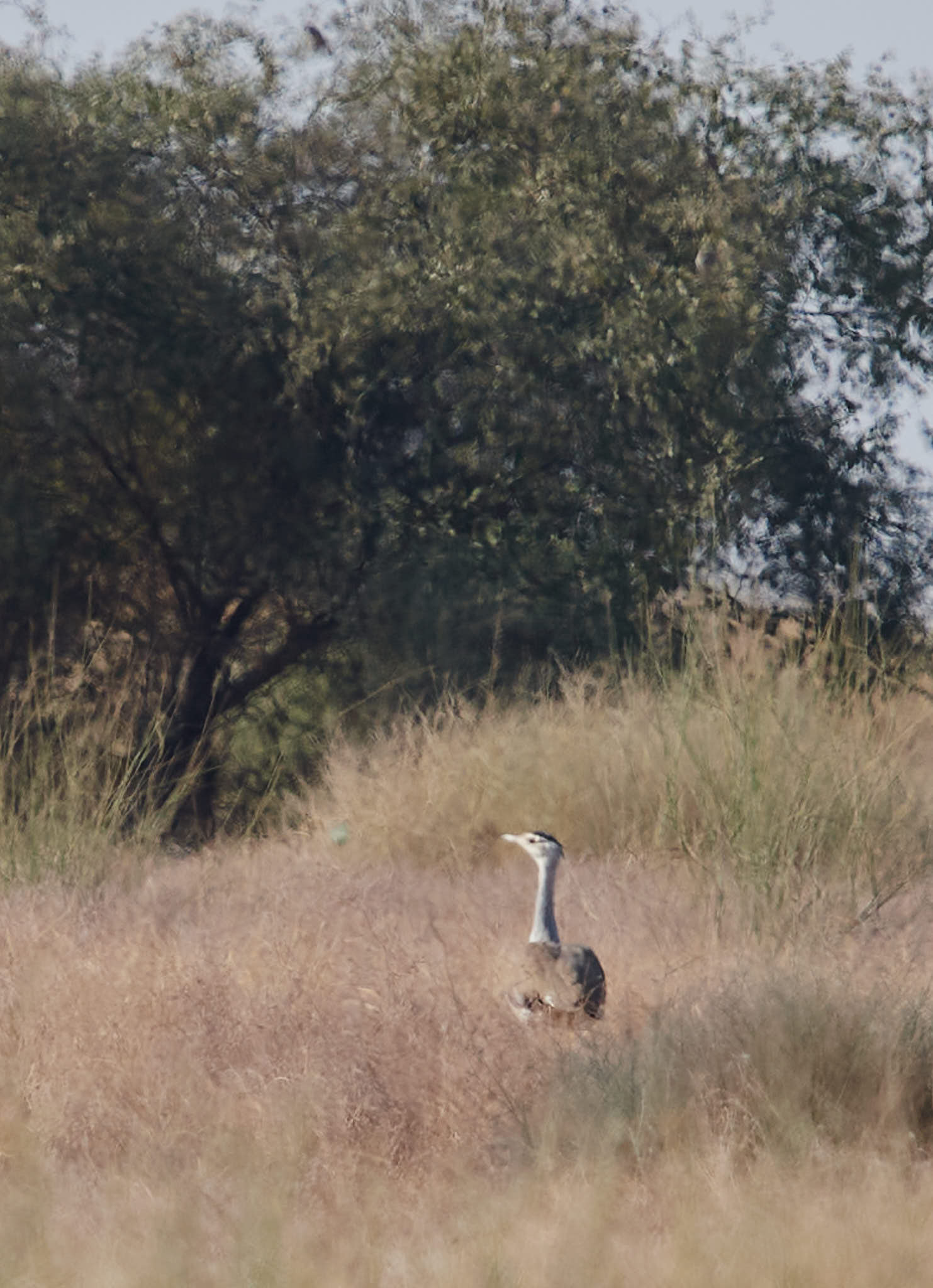
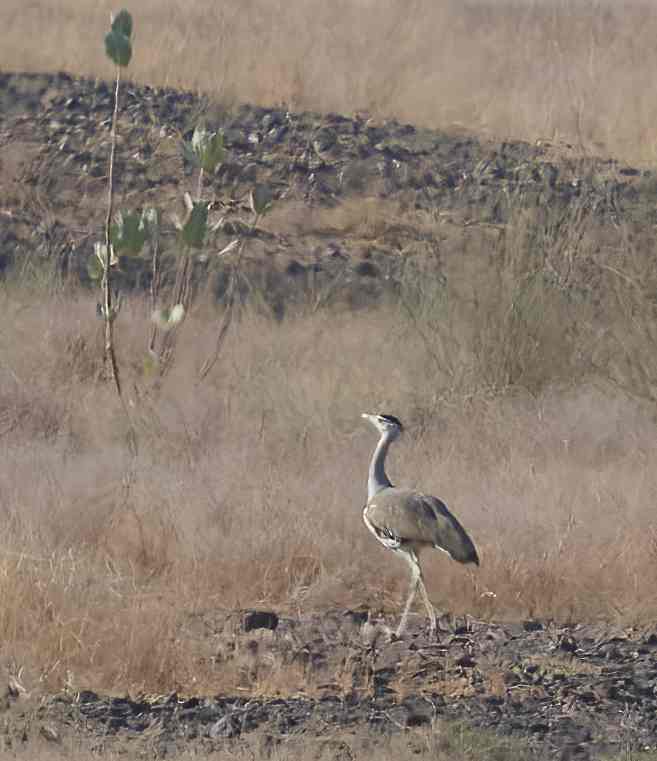
Long distance photos of the Great Indian Bustard at the DNP
As most of the birders in the 2 vehicles that were at the spot concentrated on the bustard a pretty little desert specialist known as the White browed or Stoliczka’s Bushchat sat unnoticed on a fence very close to us wondering what we idiots were up to! I was lucky enough to get great photos of this pretty bird before it got tired of us and flew away.
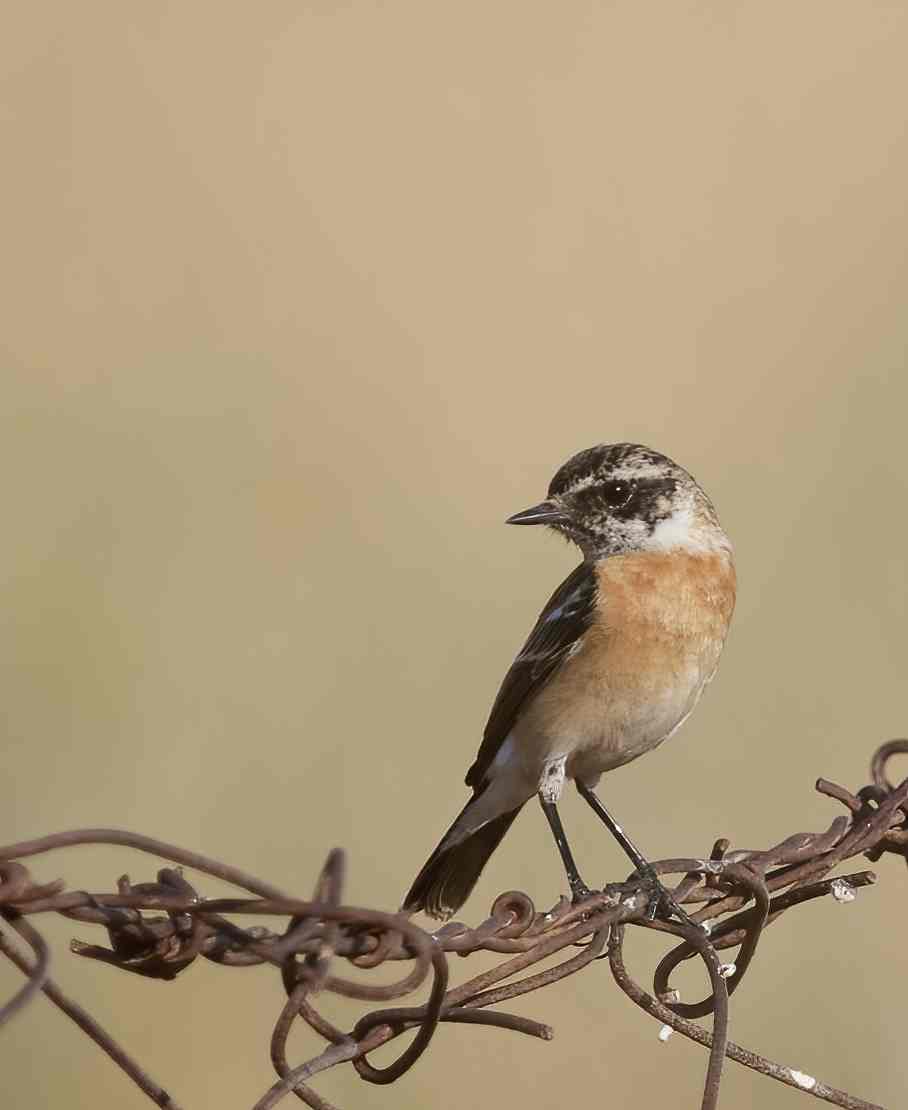

A White browed or Stoliczka’s Bushchat at the DNP
The Bustards moved beyond the small hill and our small entourage moved to see if we could get some more sighting of the GIB. We stopped where we had a good view of the hill which they had crossed. One individual came into view posed in the distance for some time making us take a lot of mediocre record photos. They didn’t come any closer quite predictably before the trio took off in unison and flew off into the distance out of sight.
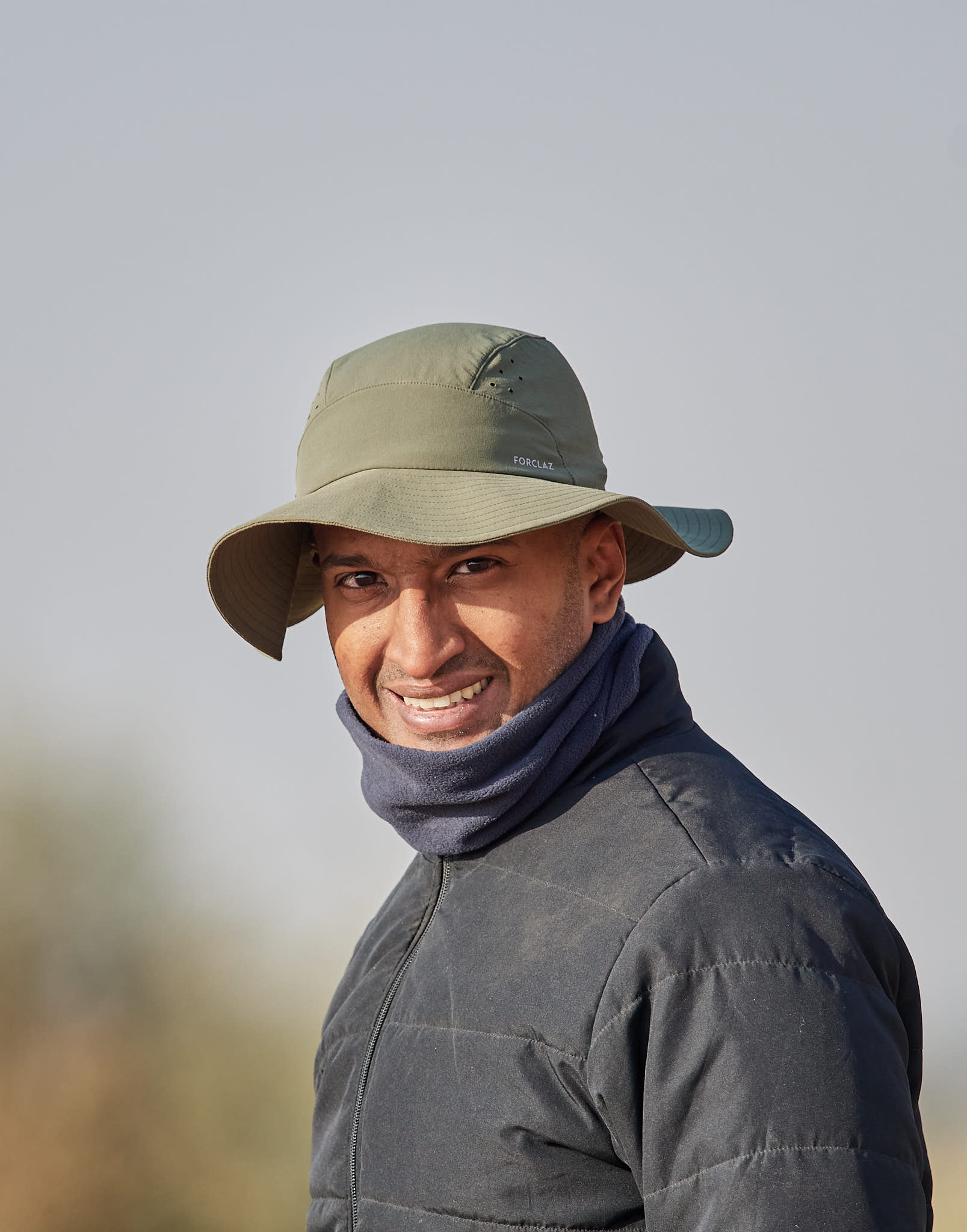
Taking portraits with the 300mm of my friend as we search for the GIB
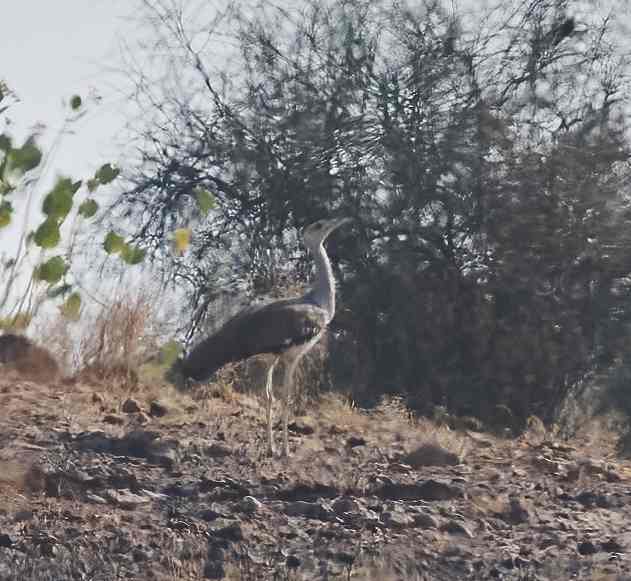
A lone individual GIB shows itself before flying off
We returned to the lodge at least having had the privilege of seeing a Great Indian Bustard with our own eyes. We had 4 more rides in this beautiful landscape to search for more species that inhabited this difficult to survive terrain. We realised that we should try for some other species and not run just after the Bustard, if we ran into them nothing better!
Whether we would have more luck with the other species or return disappointed is topic for another post some other time, some other day as I have rambled on far too long on my return to writing.
Till next time,
Bye.
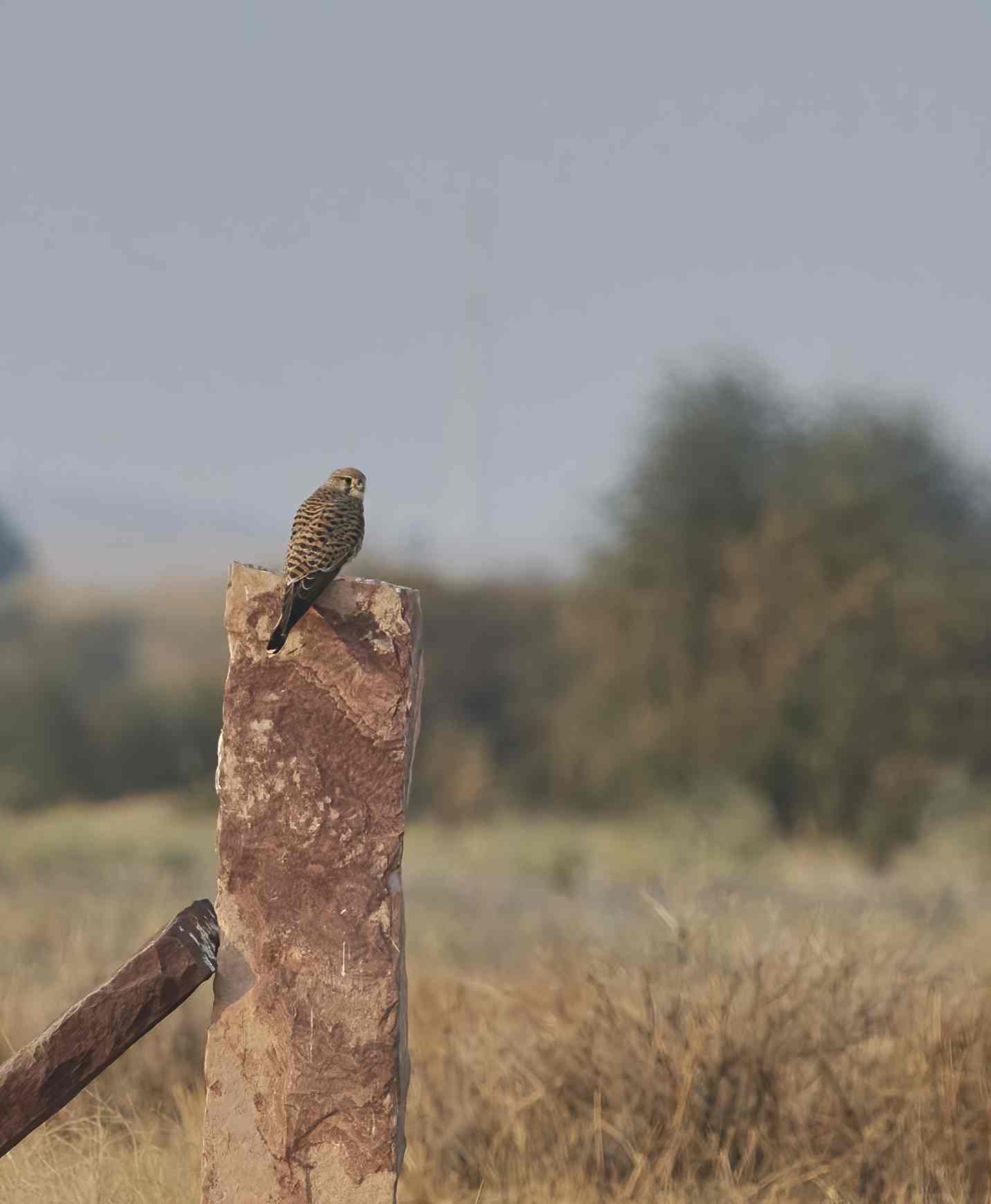
A lone common kestrel on a stone post at the DNP
 yogictravel
Outstanding pictures of the cute little birds. You’re tempting me to learn birding. Loved this post.
LikeLiked by 1 person
Great post man. Fellow birder here – Harshit, based out of Gurgaon and originally from Dehradun. Would like to connect!
LikeLiked by 1 person
Thanks for the appreciation…I always reply here and my email is yogibaba1982@gmail.com
LikeLike