This post is a continuation of a series documenting our travels through Andalusia in the European Autumn of 2025. We had spent an amazing 2 days in the pretty town of Cordoba where we had seen the amazing Mezquita (The Mezquita Catedral de Cordoba – A unique architectural masterpiece – Alluring Andalusia, Part 2 ) and enjoyed ourselves thoroughly wandering through the lanes of the pretty Old town ( Wandering through the streets, walls, churches & bridges of Old Town Cordoba – Alluring Andalusia, Part 3 ). The next destination on our itinerary was the picturesque whitewashed hilltop town of Ronda.
Initially we had planned to spend 2 nights in Ronda before moving on to our next destination, Granada. That changed when we saw that there were no train connections between Ronda and Granada after the peak summer season had passed. So we changed our itinerary and booked just one night in Ronda and would return to Cordoba on the next evening to spend the night at the same hotel we had stayed at before moving on to Granada the next morning. That meant we just needed to take a small bag to Ronda and leave most of our luggage in our Cordoba hotel, which worked out perfectly.
We took the morning train to Ronda and had a pleasant journey there. We alighted at the train station and walked the 1.5 km to our hotel in the Old town ( made easier by the fact that we had almost no luggage!). On the way we walked through the Paseo de los Ingress which gave us the first glimpse of the amazing cliffs surrounding the hill town.
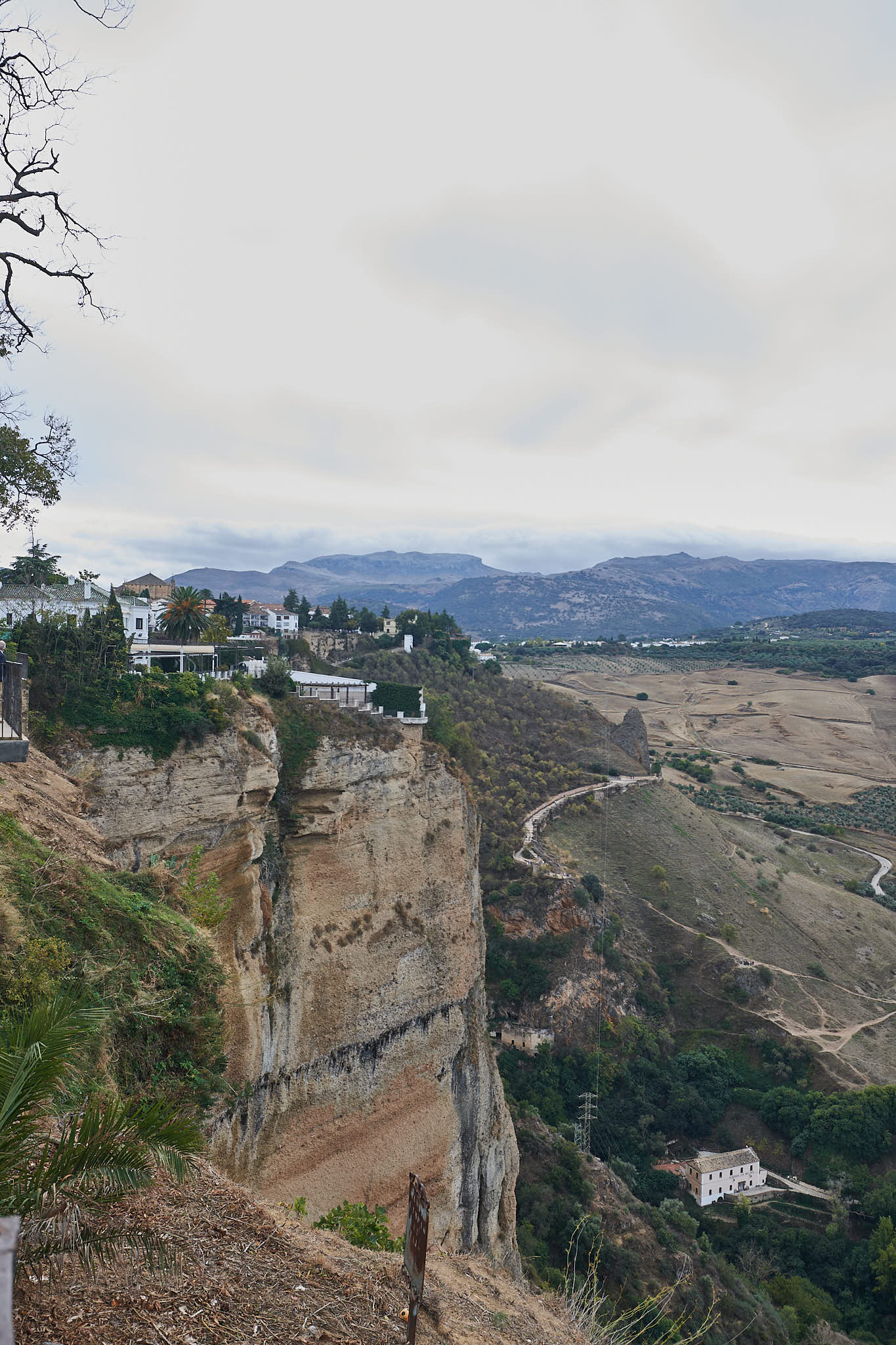
The Paseo de los Ingleses shows the cliffs on which Ronda is located
The path ended right at the square where the famous Bullring of Ronda was located – the Plaza de Toros. Bullfighting is a sport and a passion in Andalusia and Ronda, the birthplace of modern bullfighting has the first great Spanish Bullring. We had bought tickets to visit the Bullring as it opened the next morning to avoid the day tripping groups. For now we satisfied ourselves with a photo of the exterior of this famous structure.
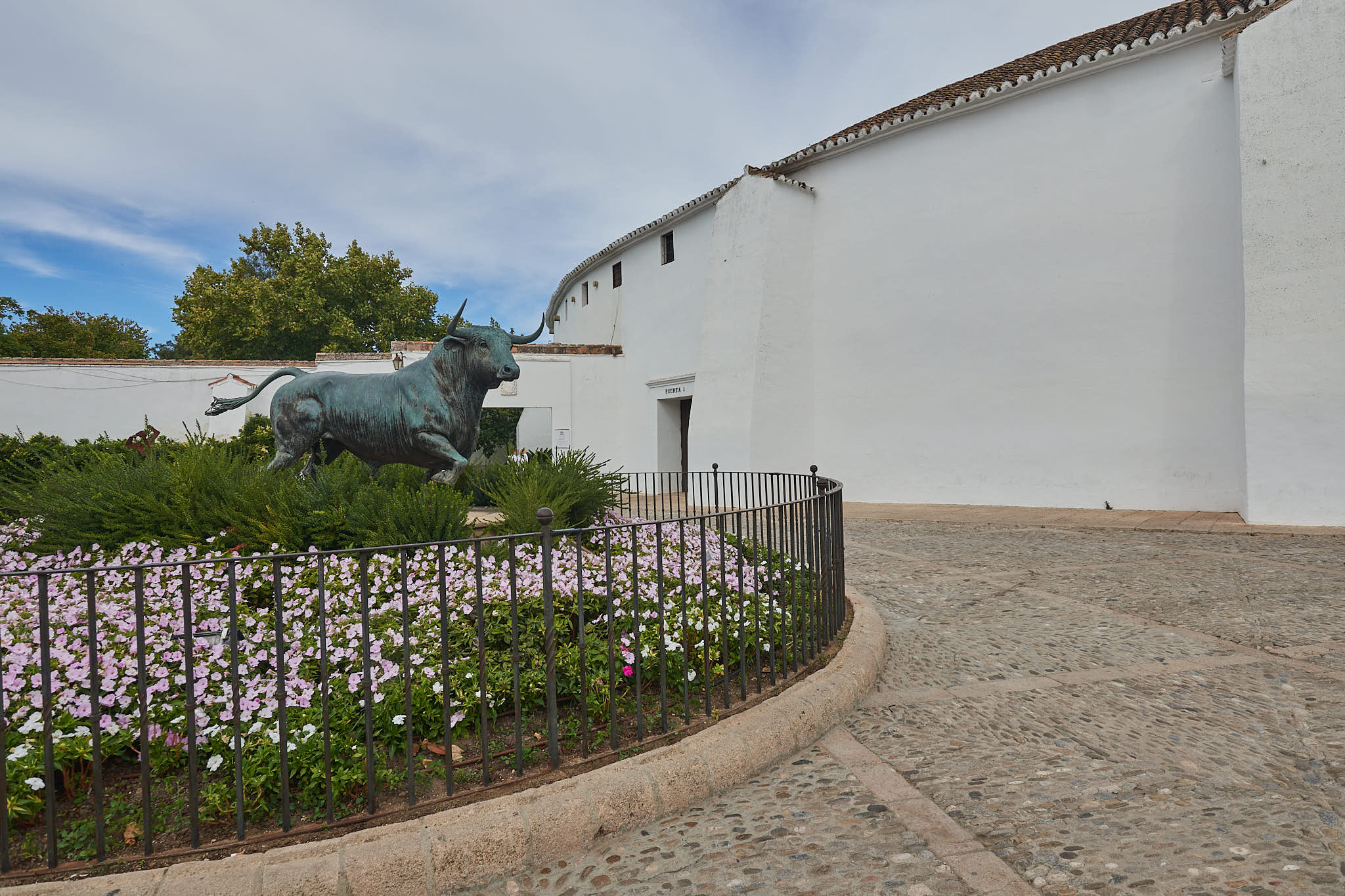
The famous Bullring of Ronda – the huge white building not the decorative sculpture!
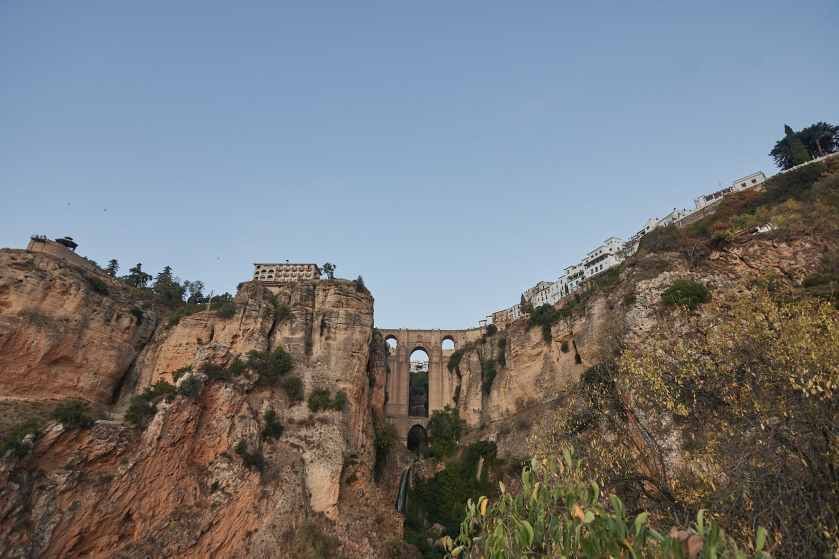
We then crossed the “New Bridge” (from 1793!) which spans the 360 feet deep ravine called the El Tajo that separates the New town where the station is located from the Whitewashed Moorish Quarter / Old town. It was swamped with groups at the moment so we just stopped for a moment to appreciate the “El Tajo” before moving into the Old town where our hotel was located. I also made a mental note of the path I saw going down into the gorge which would give great views of the bridge and the town from below – We would go down that path later in the day.
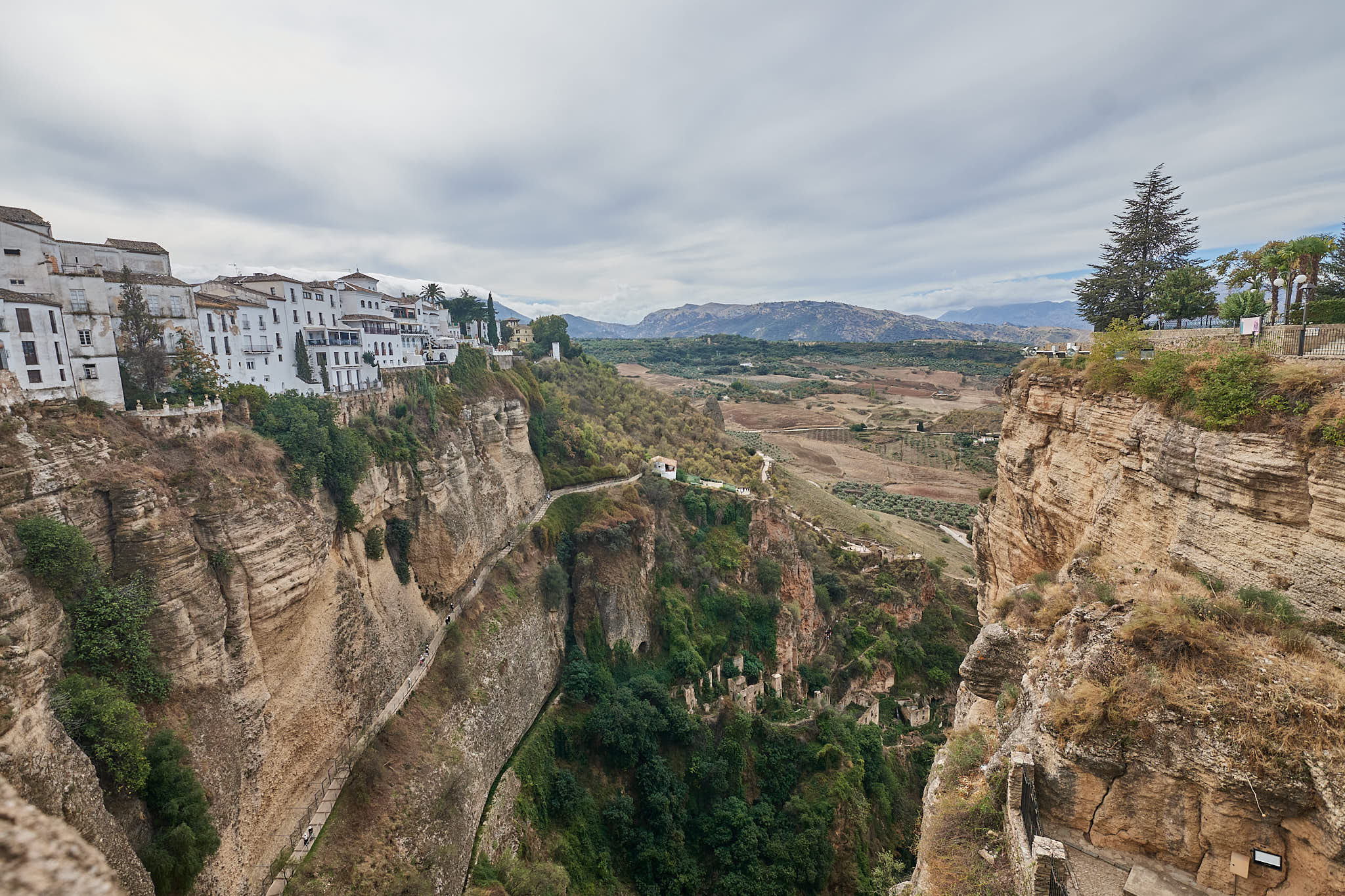
The view of the El Tajo from the New Bridge of Ronda
We then walked to our hotel San Gabriel which was a 1736 townhouse converted into a hotel. As we were far too early for our room to be ready we kept our luggage in the storage and proceeded to start our walk around Ronda.
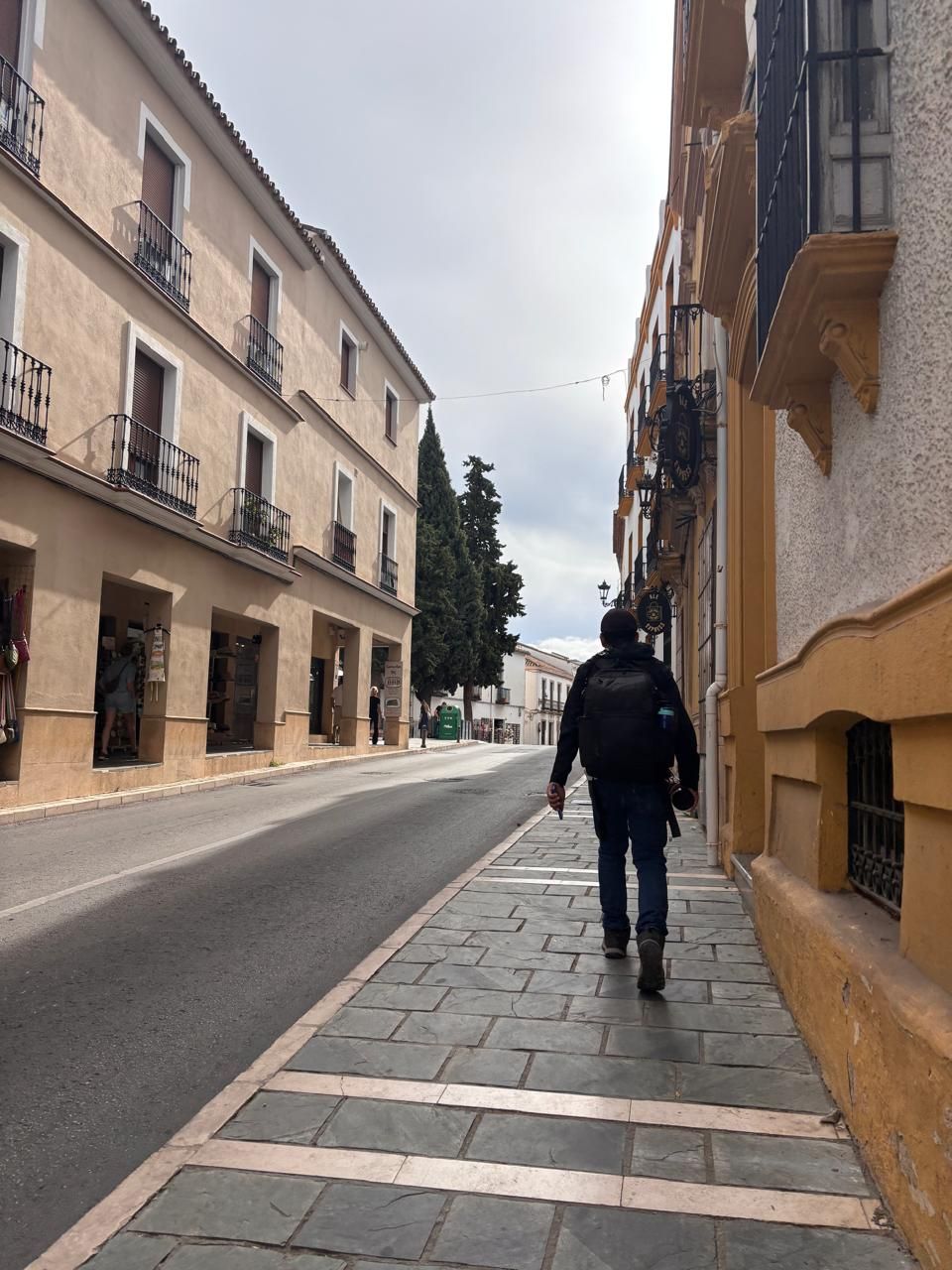
Walking on the streets of the Old town on the way to our hotel San Gabriel
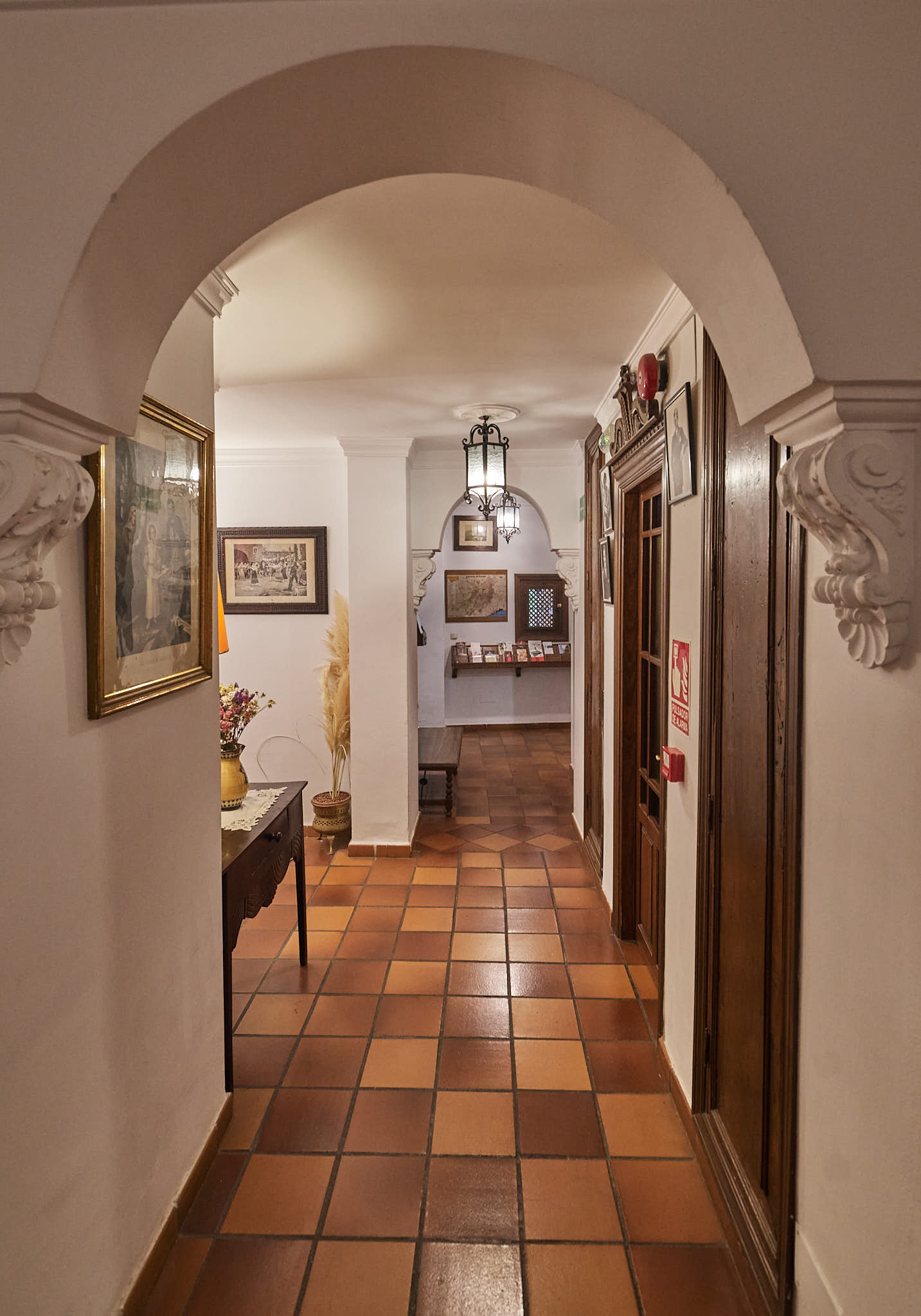
The quaint passage of the Hotel san Gabriel in Ronda
As we had a brief stay in Ronda we made a beeline for the first sight we wanted to see that was the Church of Santa Maria la Mayor. This 15th century church was built around the remains of Morrish Ronda’s main mosque ( before that it was a temple to Julius Caesar!). We bought tickets for our entry (which included a very interestingly narrated audioguide & entry to the roof of the church for some great views over the town) and entered the church.
Before entering the main church we saw a very elaborately done nativity scene in the lobby done with some Andalusian flair. We took a few photos before moving into the church itself.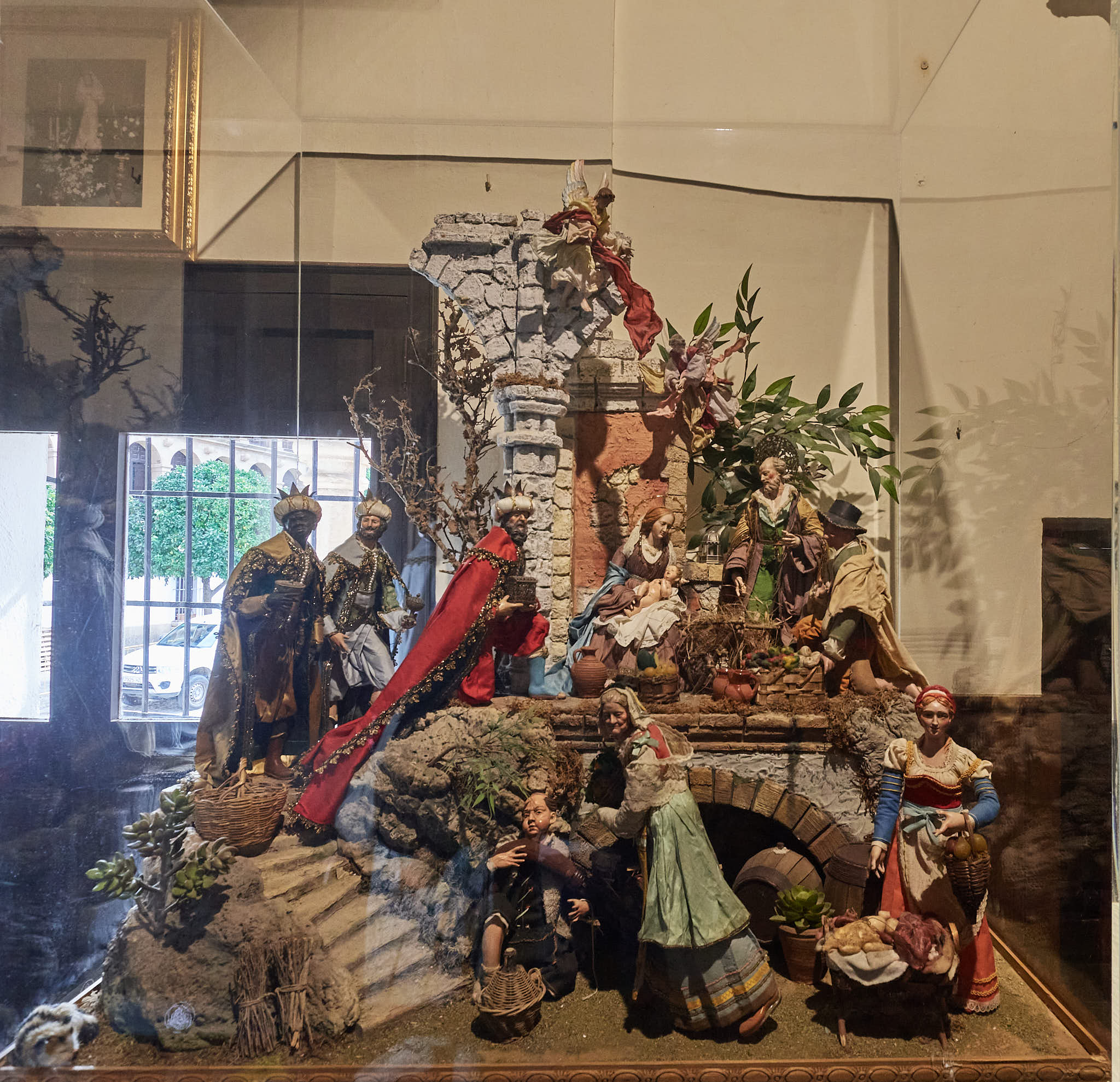
The nativity scene inside the lobby of the Church of Santa Maria
As soon as we entered the church we turned to face the magnificent Baroque styled altar del Sagrario flanked on either side by a smaller but equally elaborate altar dedicated to the “Virgin of Ultimate sorrow” and a huge mural of St Christopher, the patron saint of Ronda and travelers with baby Jesus on his shoulders.
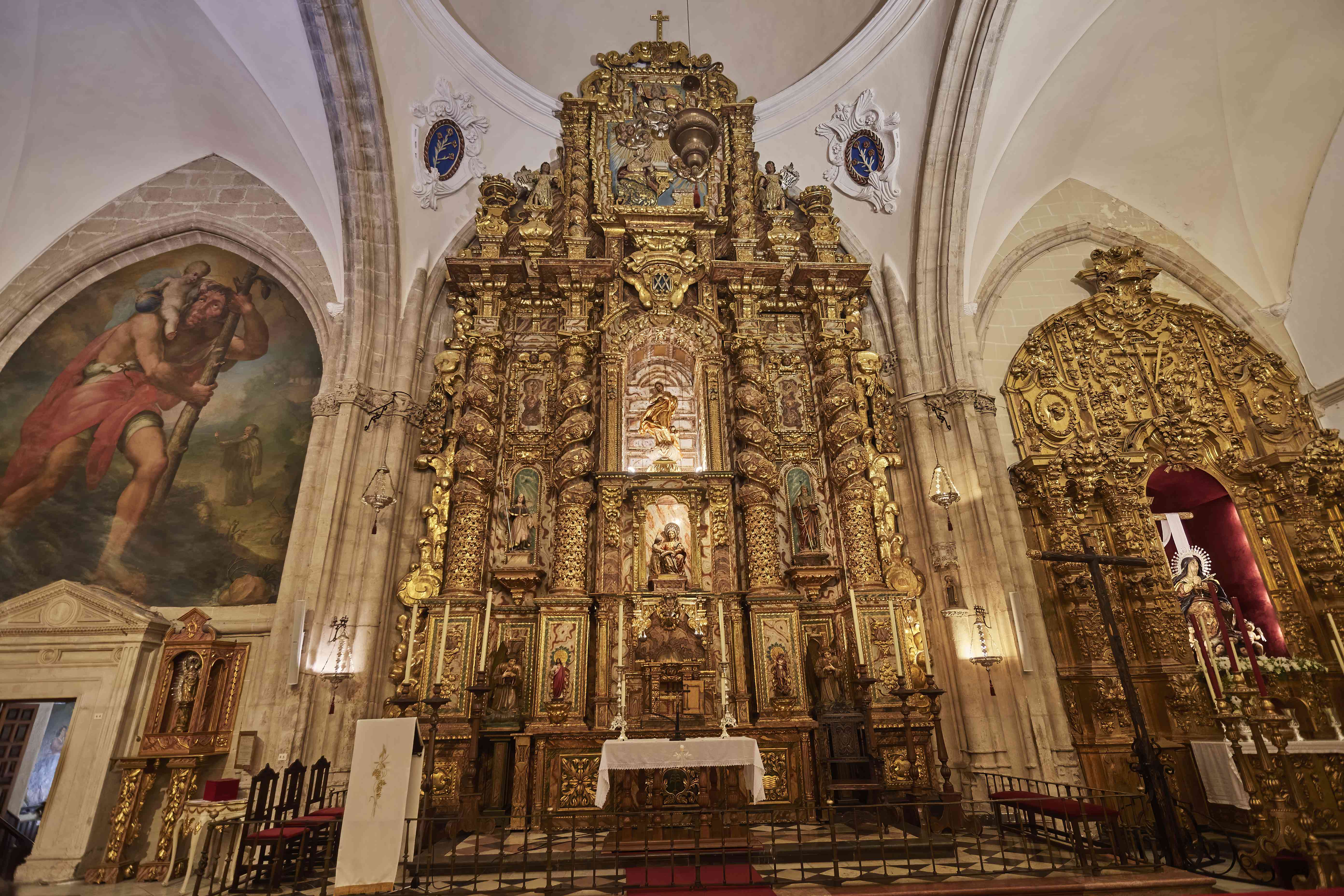
From left to Right -The Mural of St Christopher, the Altar de Sagrario and a side altar dedicated to the Virgin

With the Baroque altar at the Church of Santa Maria, Ronda
In the church there were various statues of St Mary , all adorned with unique clothes and decorations around. We then went around the huge carved wooden choir in the centre of the church.
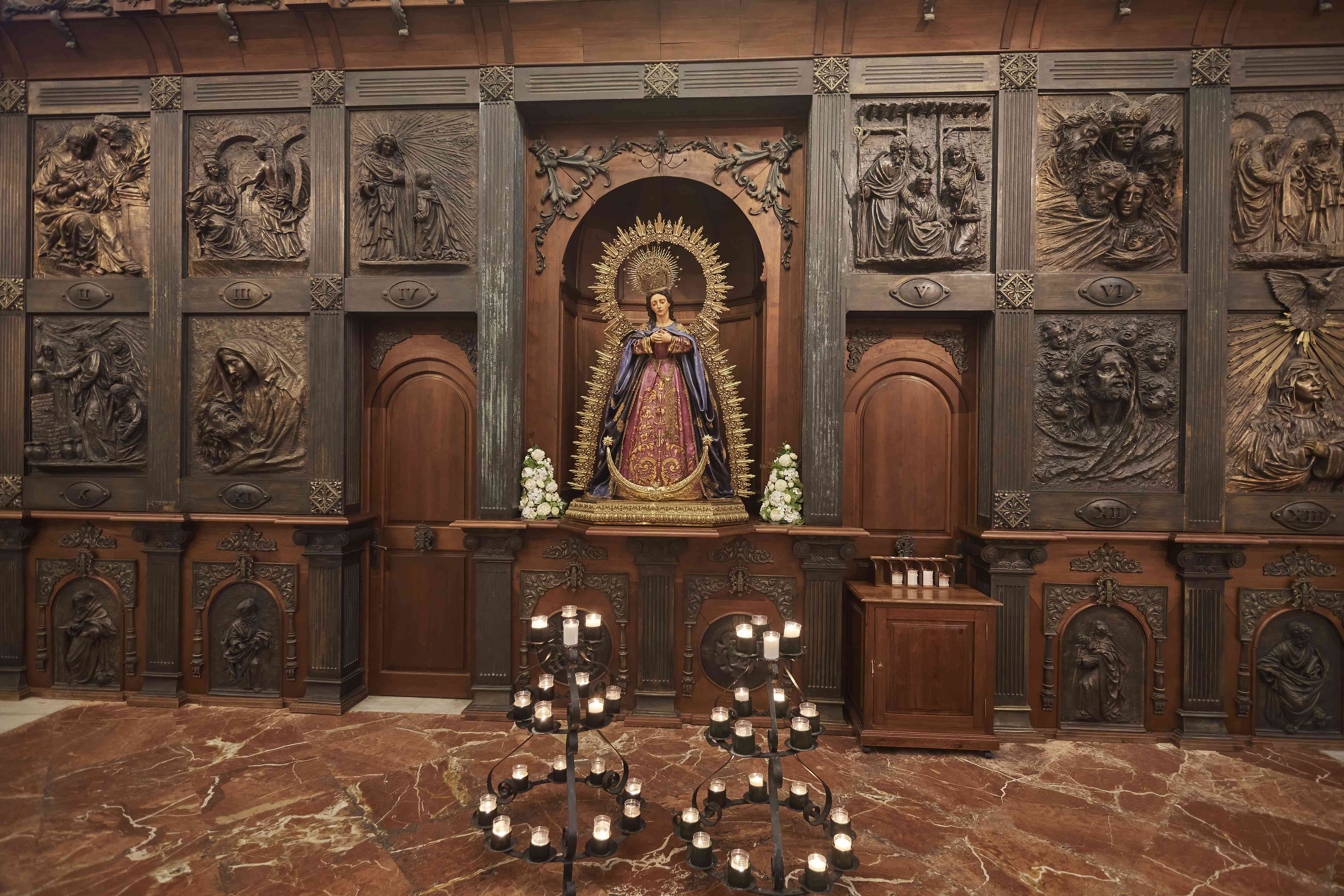
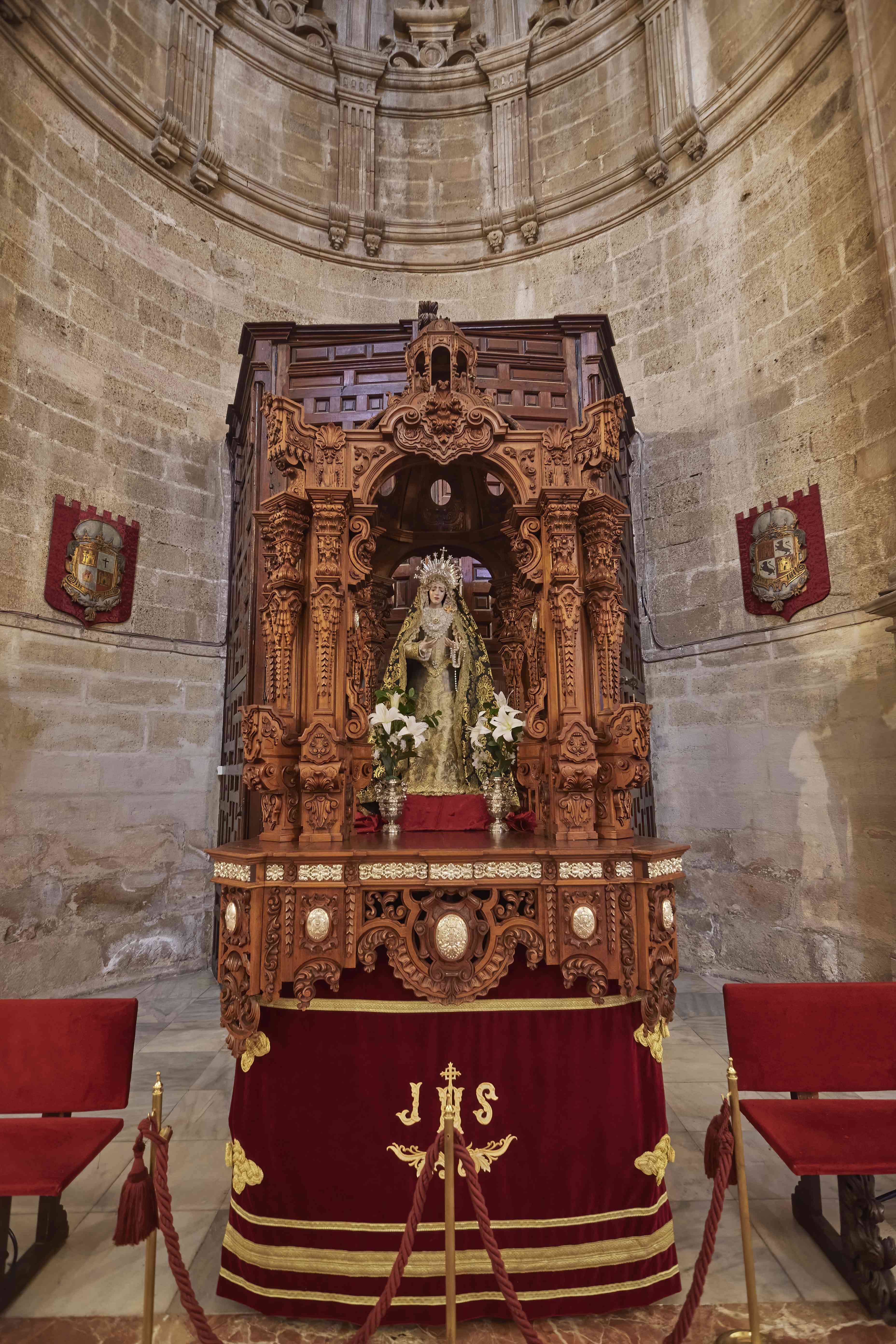
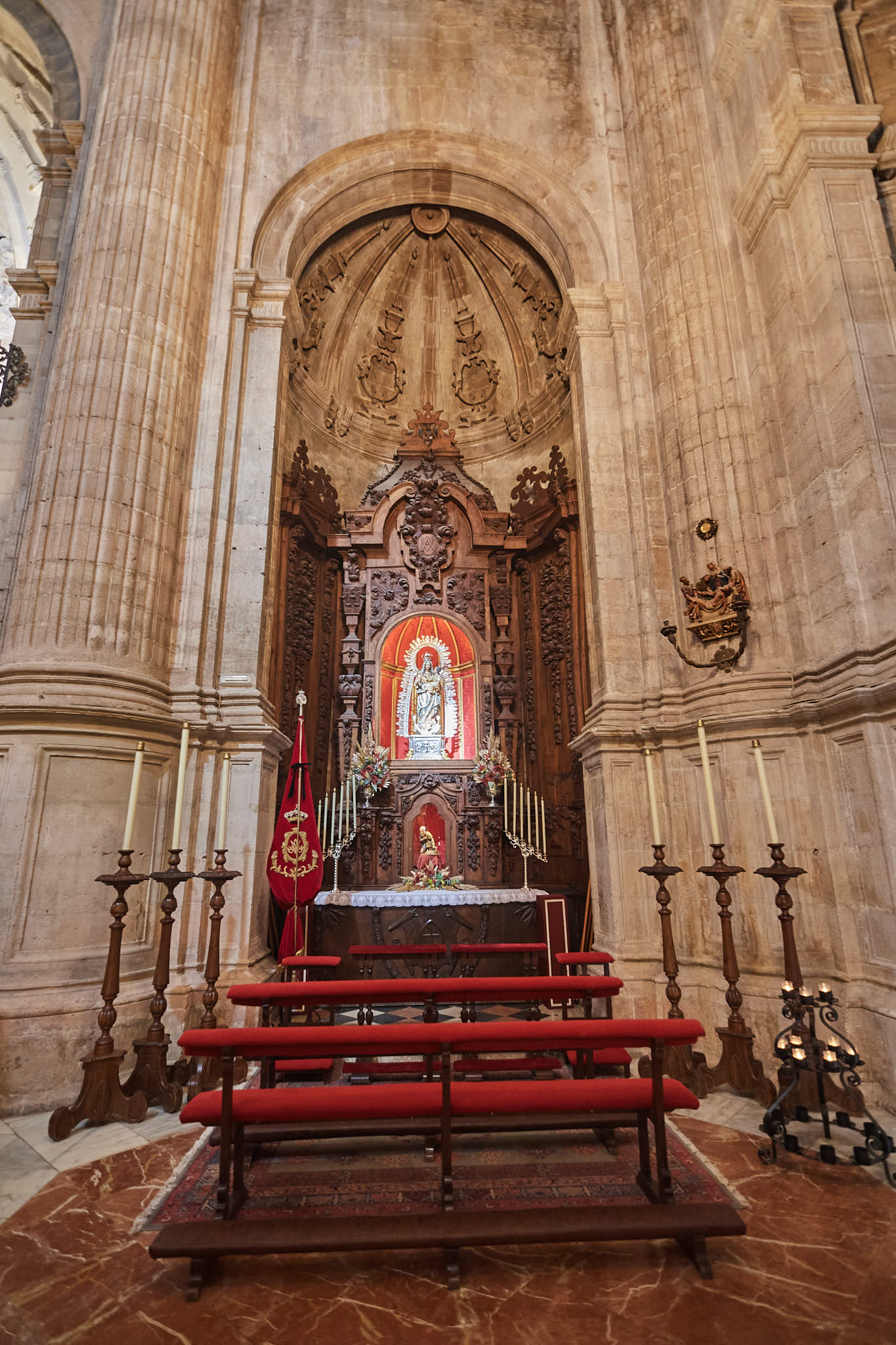
Various altars and statues of St Mary with different decorative clothes and adornments
As we came around the choir we gazed up to see the high ceiling, dome of the church, the huge decorative Chandelier hanging from the ceiling and the balcony looking to the inside which we would visit later.
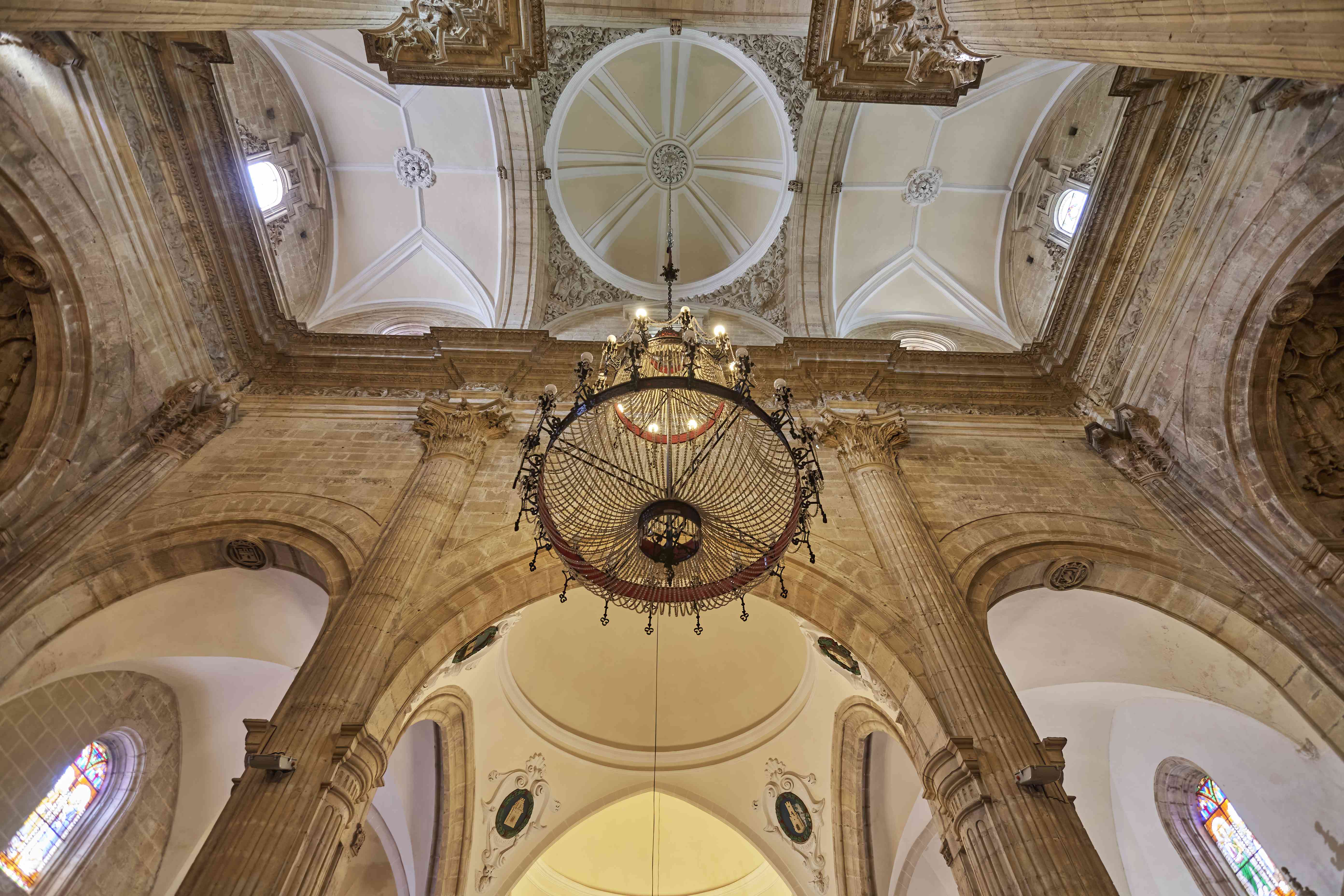
The huge Chandelier hanging from the high ceiling below the dome
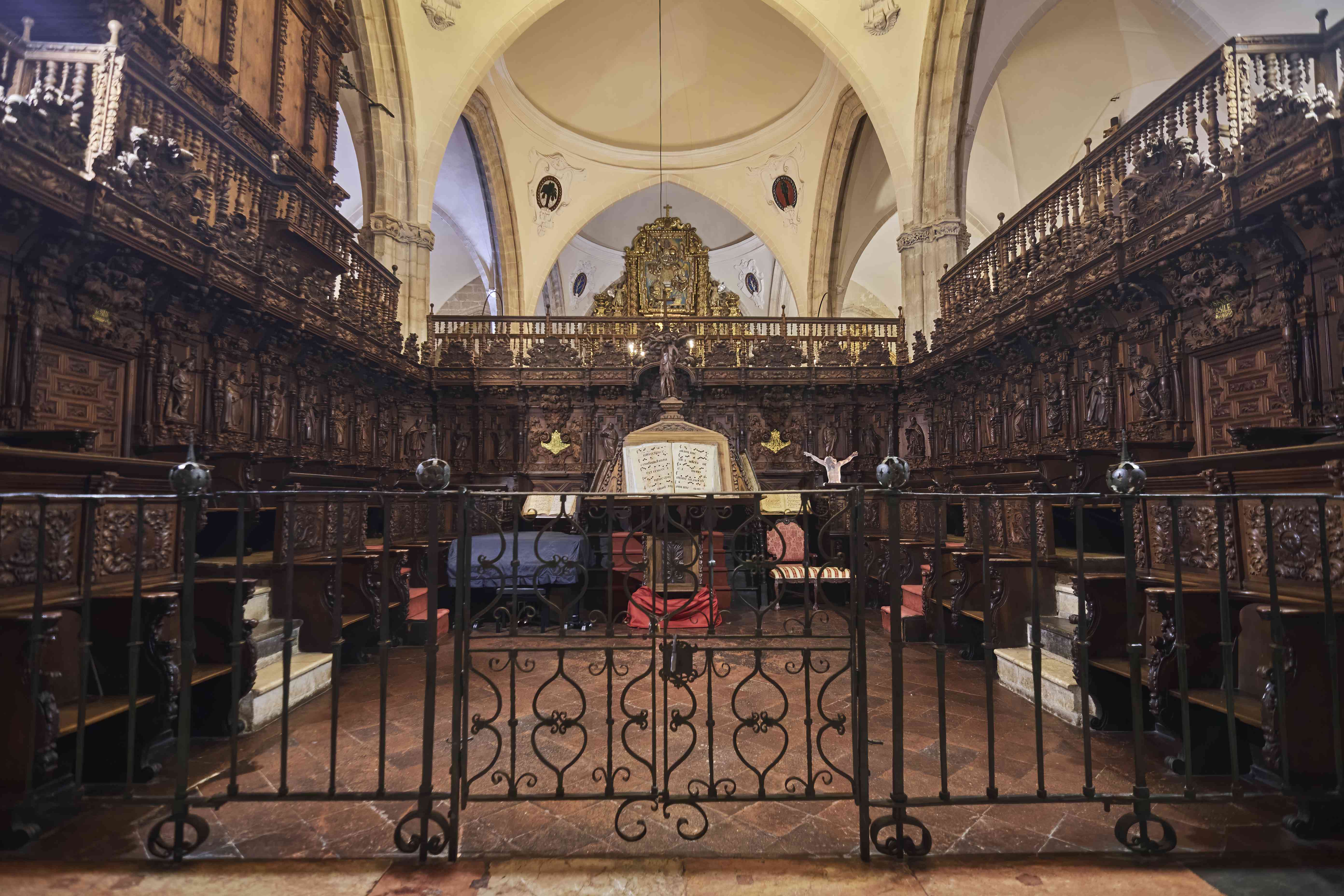
The huge wooden choir with carvings about the life of theVirgin carved on the panels
Finally we came face to face with the main altar and the nave of the church. We listened to the audioguide about the history of the church we were in while doing our church routine of sitting in the pews for a few minutes. We then visited the modern looking crypt of the church before starting the activity we were looking forward to the most – the climb up to the terrace of the Church.
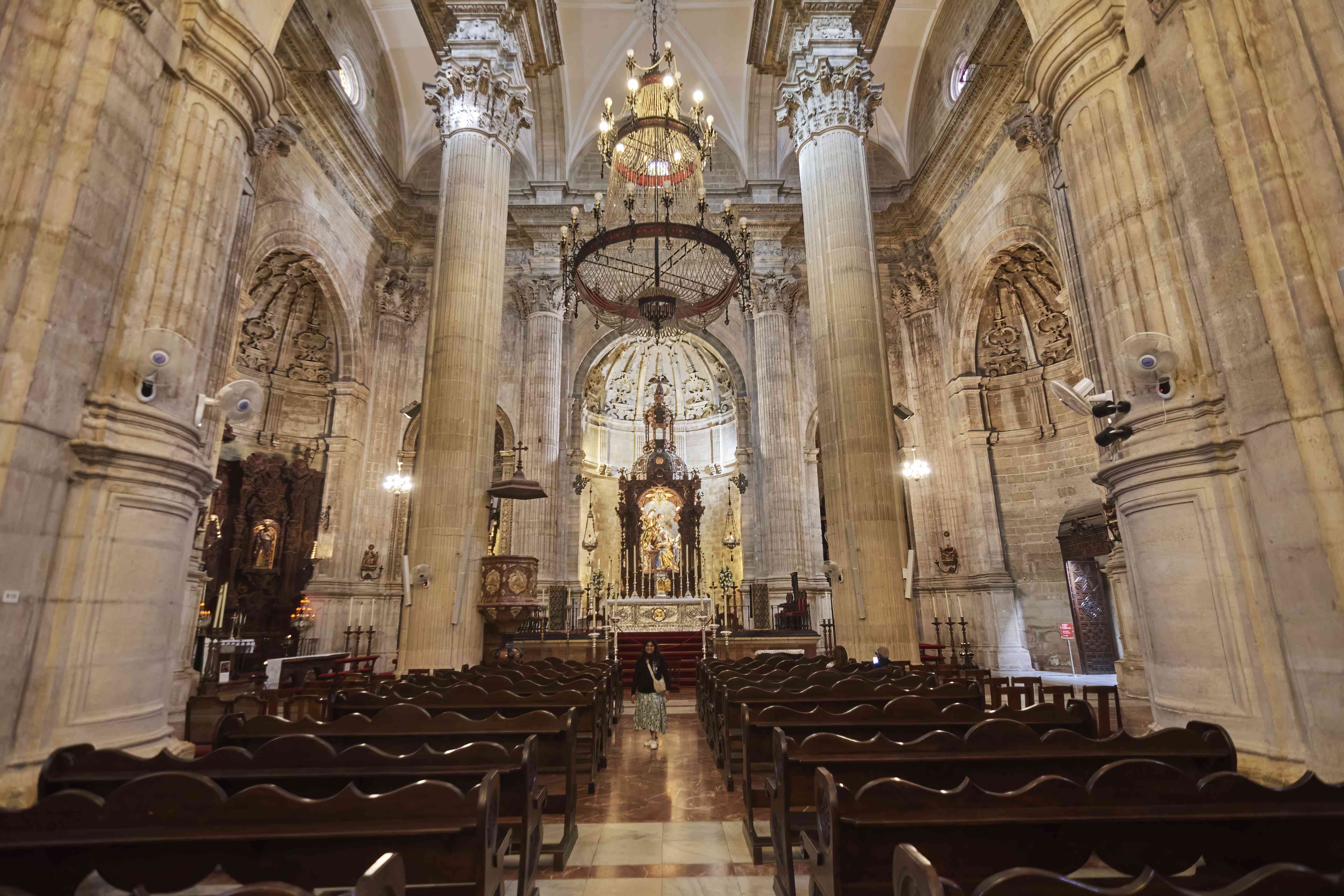
The Main Altar and the nave of the Church of Santa Maria la Mayor
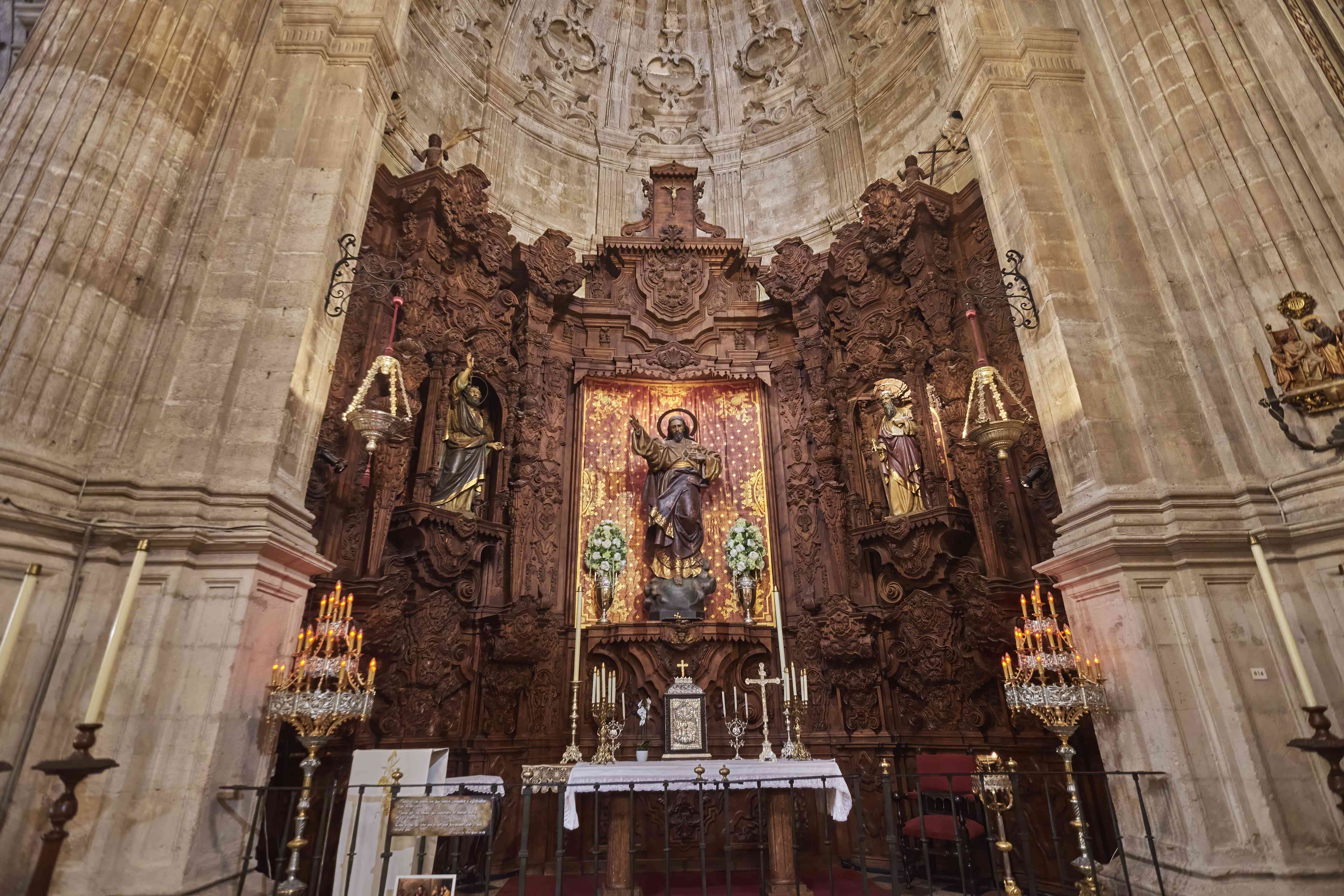
Another of the beautifully carved wooden side altars
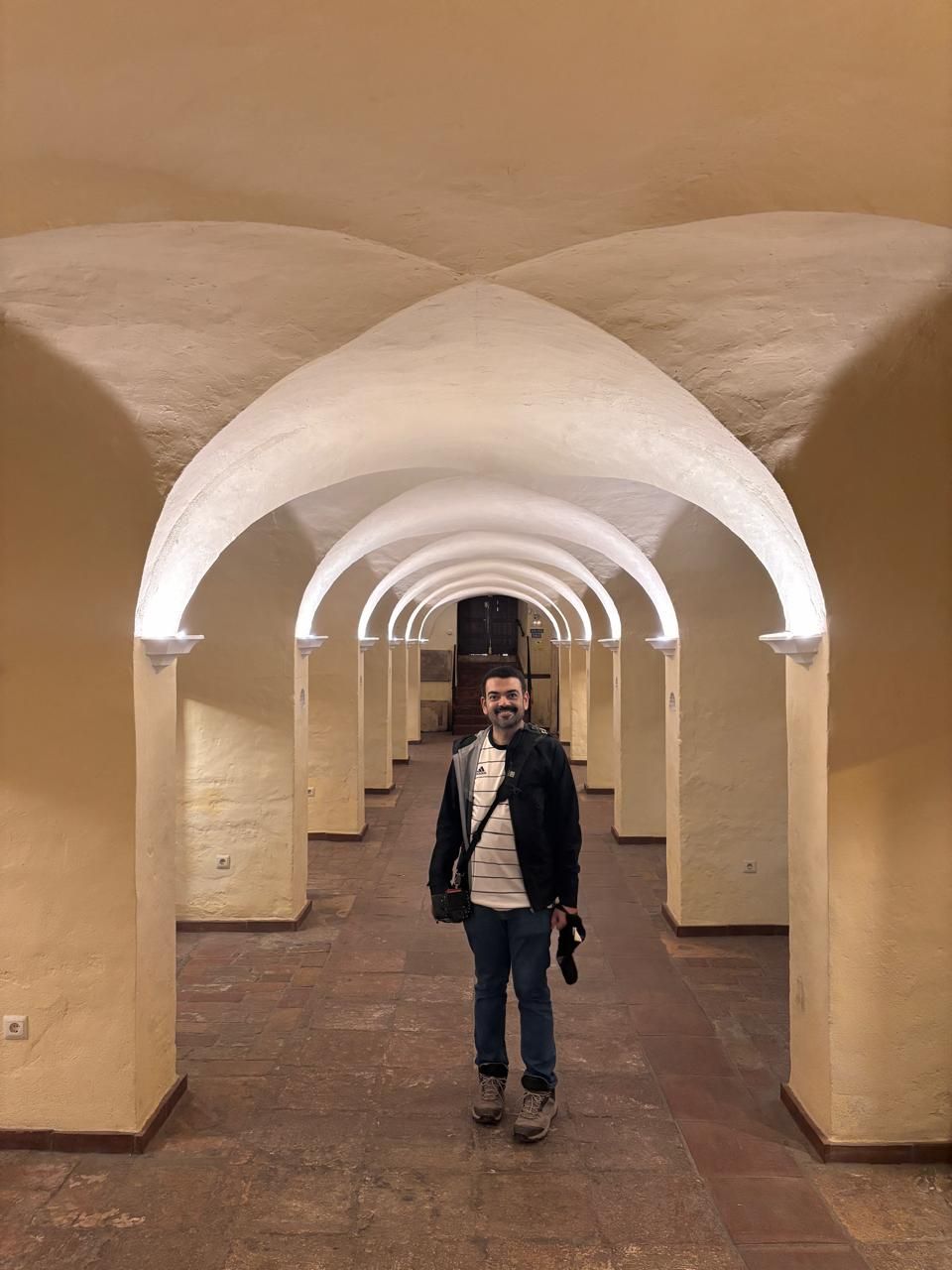
The modern looking crypt of the Church
The climb up the spiral stairs was not as claustrophobic as some church towers can get. We seemed to be the only people on the way up and soon we had a private Birds Eye view of the Moorish Quarter around and the whole town beyond. The cloudy morning had given way to a beautiful sunny afternoon and we enjoyed our time up on the terrace.
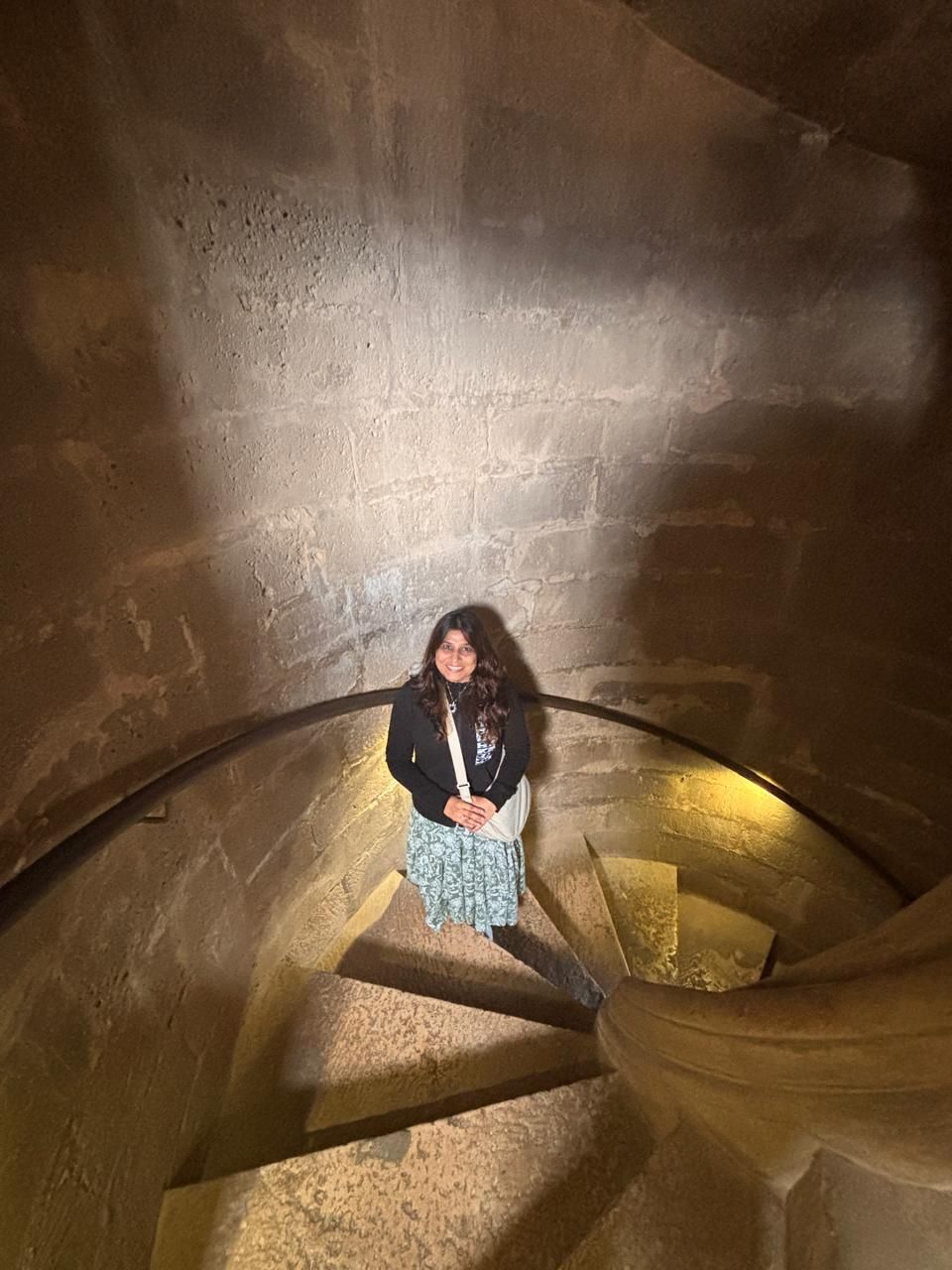
The spiral stairs leading up to the Church terrace
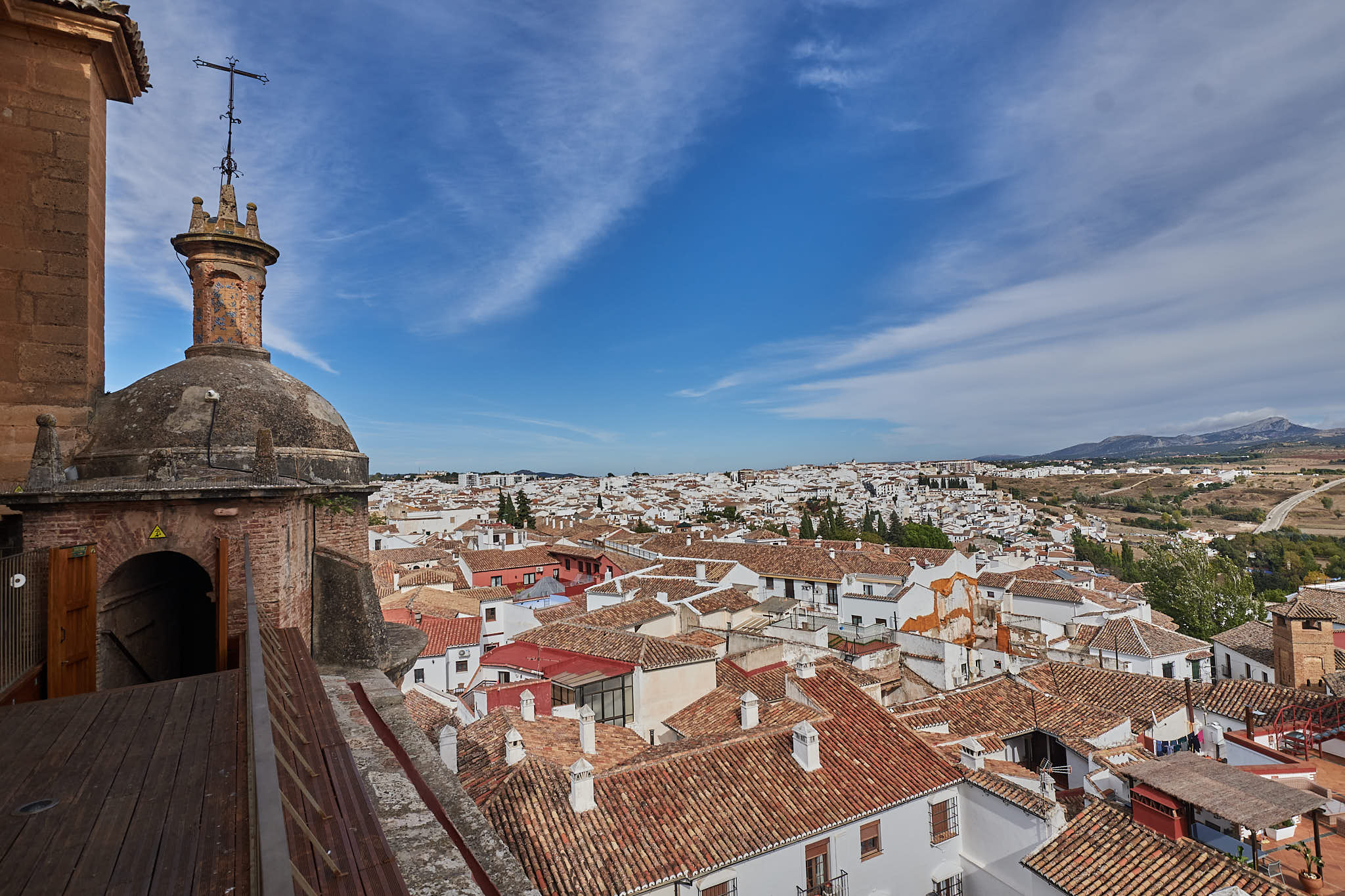
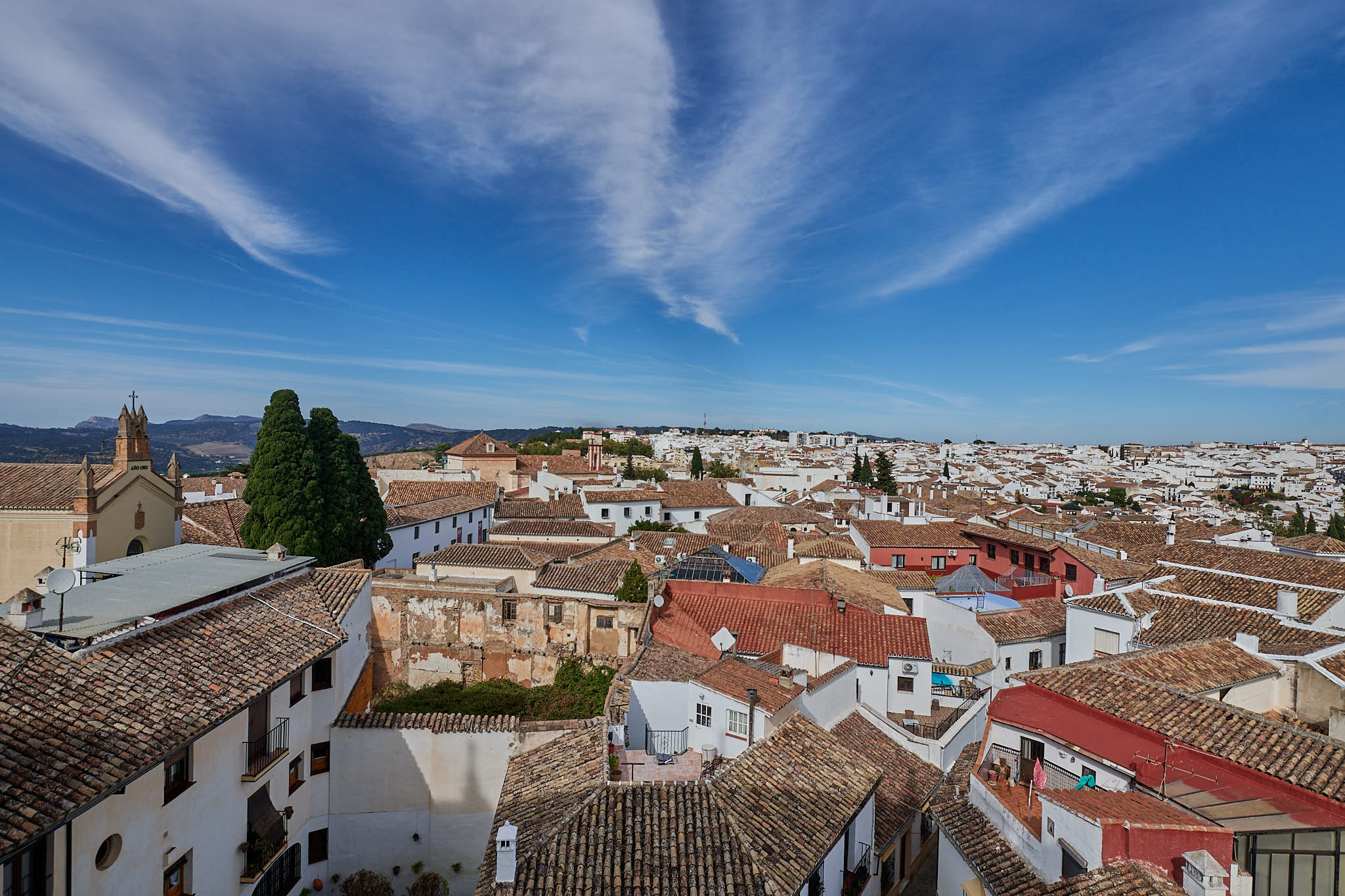
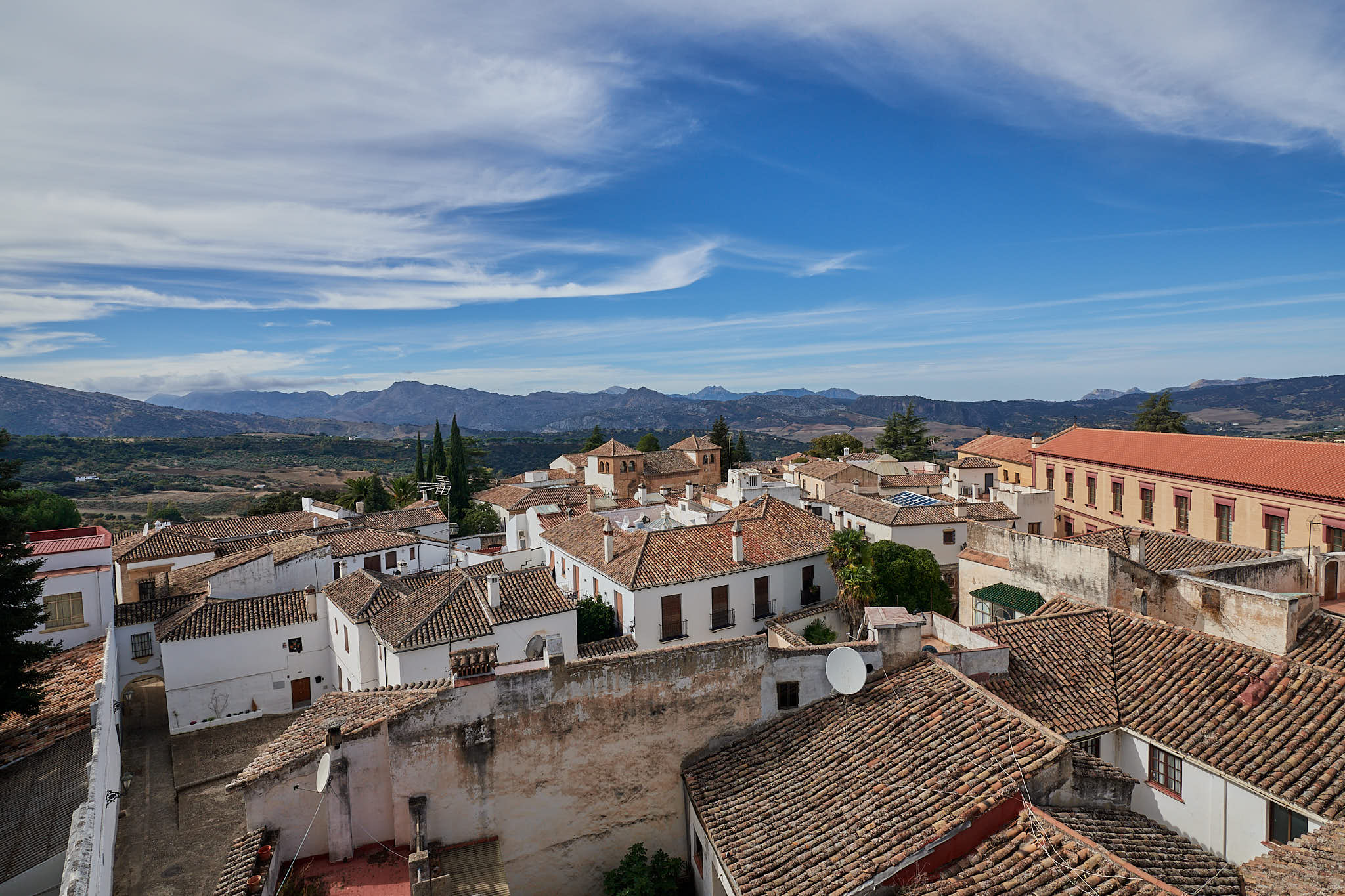
Views of Ronda from the terrace of the Church of Santa Maria la Mayor
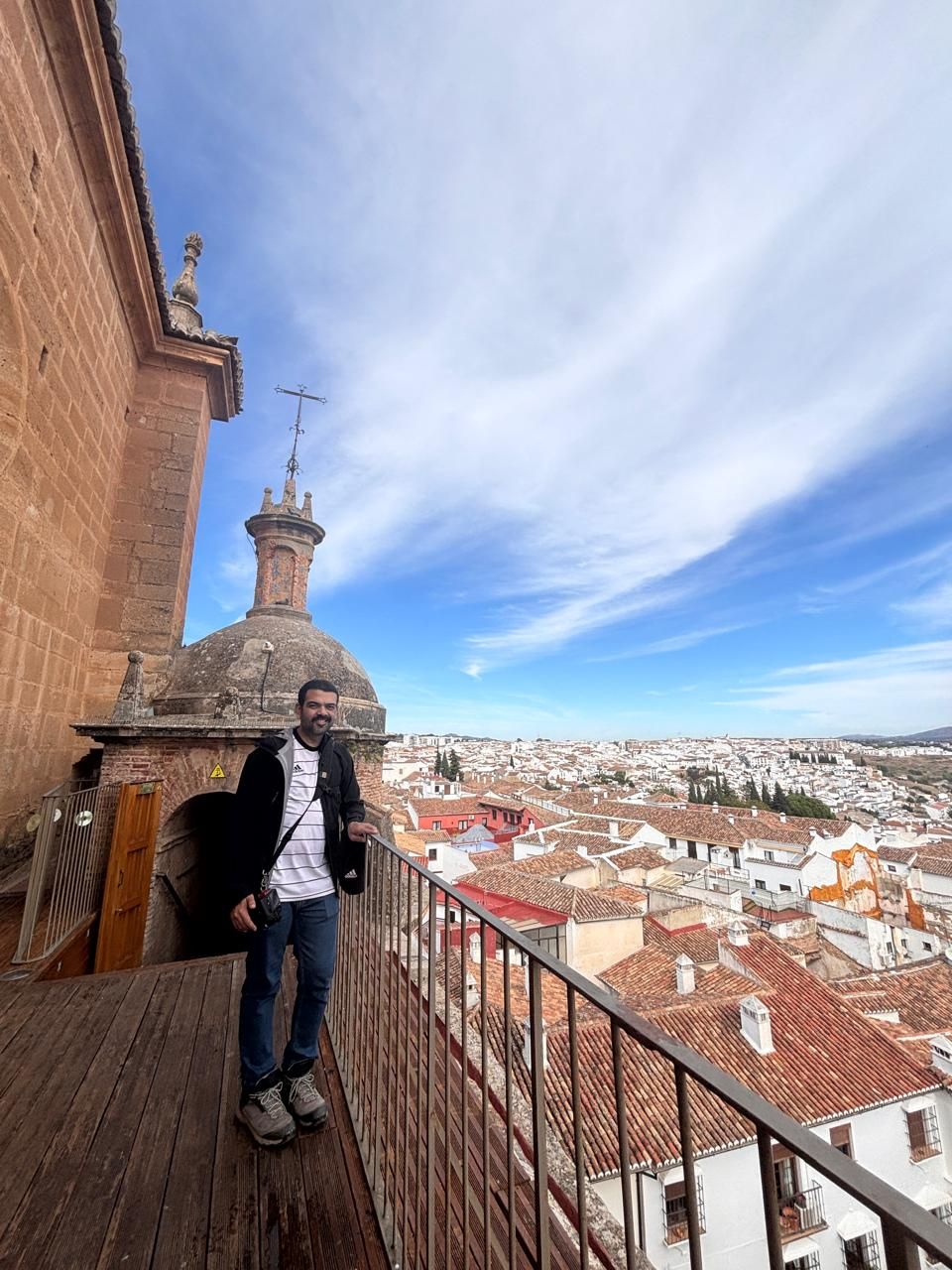
The better half insists that I pose for the photo this time!
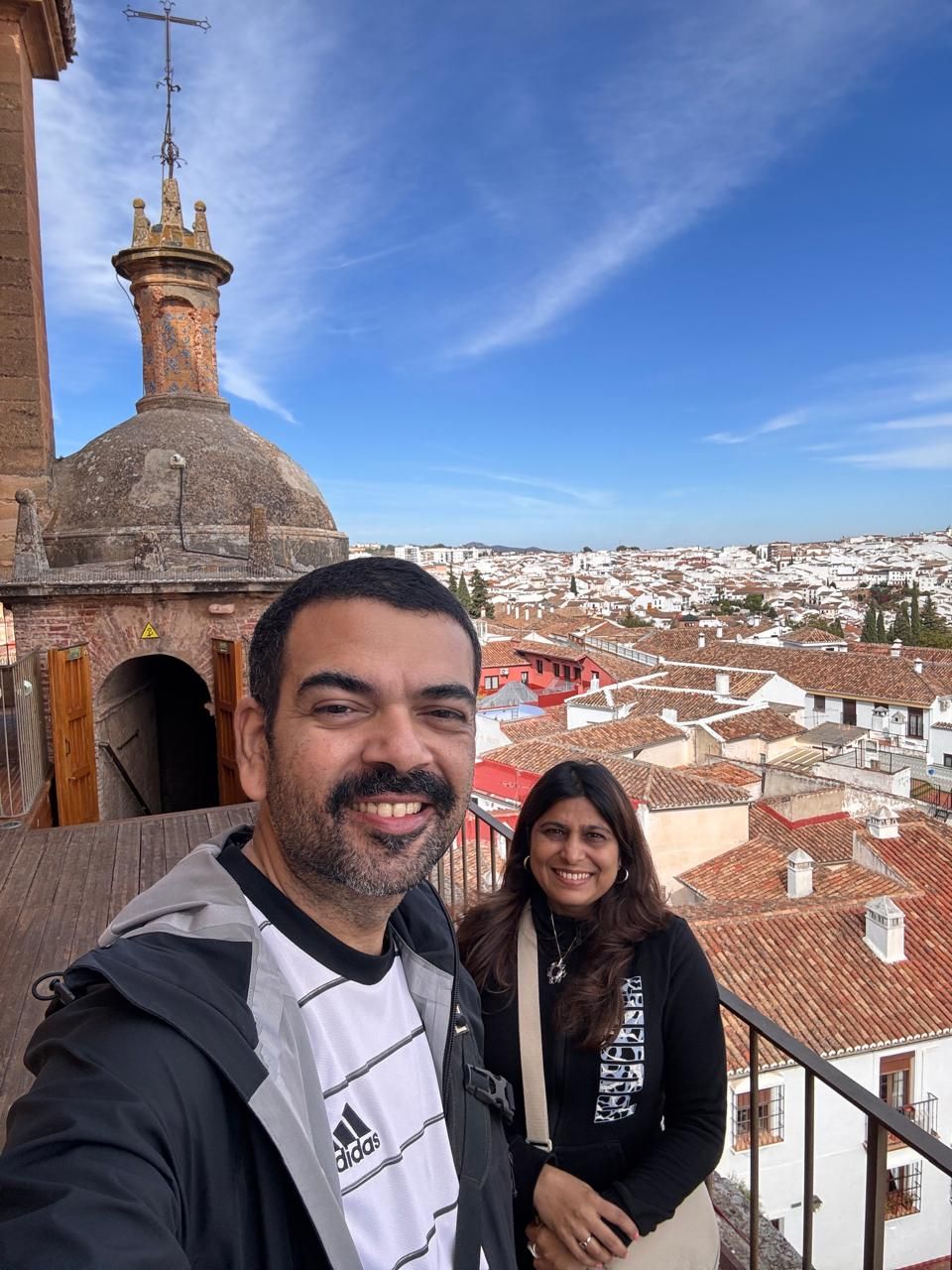
Enjoying our private Birdseye view of Ronda from the terrace of the Church of Santa Maria
We almost missed the entrance to the interior balcony which looks down to the main altar below. Luckily a cleaning staff member exited from the tiny door leading to that balcony and we went inside thanking her for showing us that door. The tiny balcony is not for people with a fear of heights as it looks straight down into the church below – something we had not seen before.

The balcony looking straight down into the church

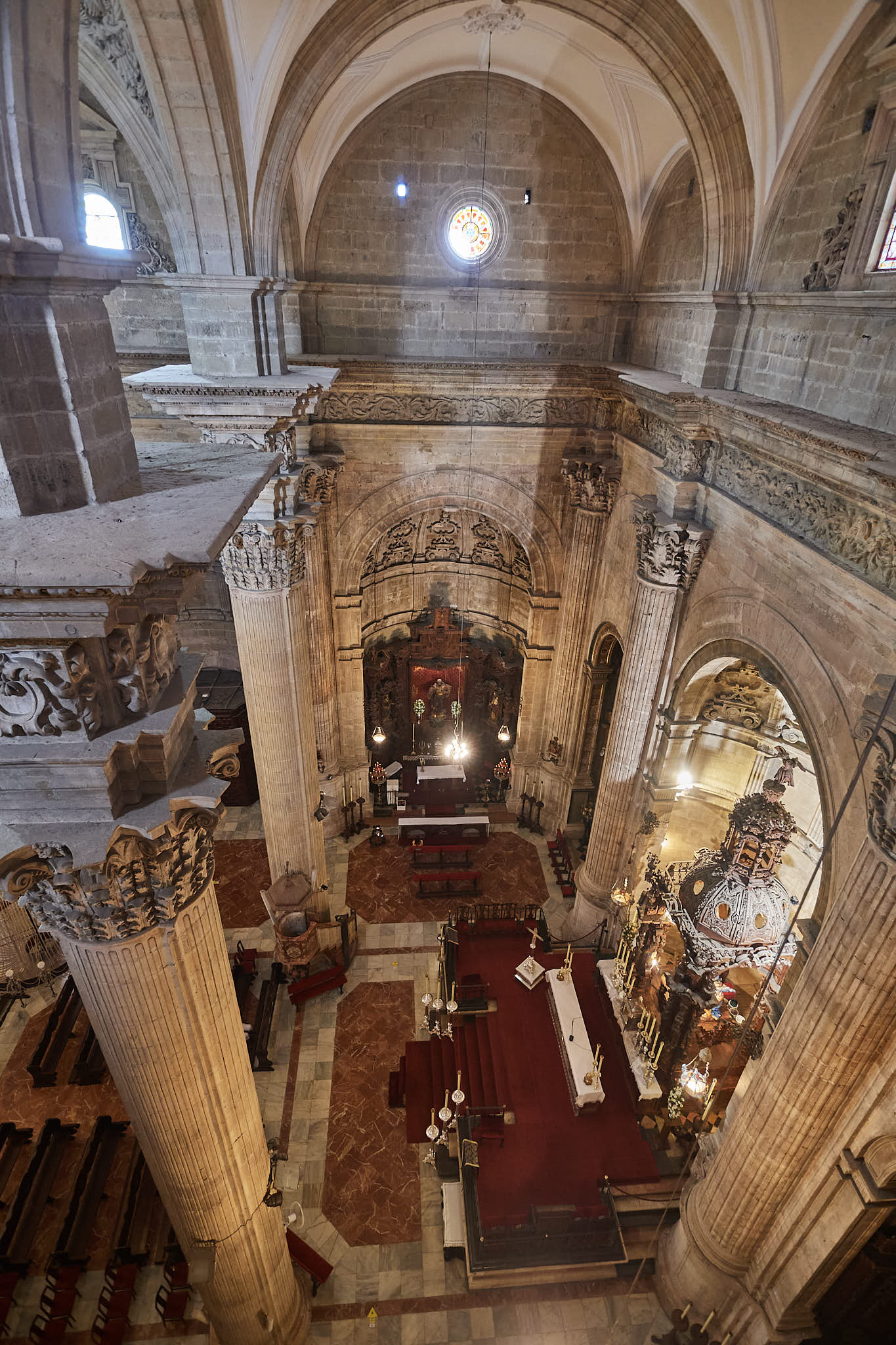
Views down to the main altar from the tiny balcony looking inside
After we had our fill of the views we descended down from the terrace and finished our church visit by passing through the treasury which had a beautiful scale model of the old church in addition to the usual religious art. We then said goodbye to the Church and resumed our walk through the Moorish quarter.
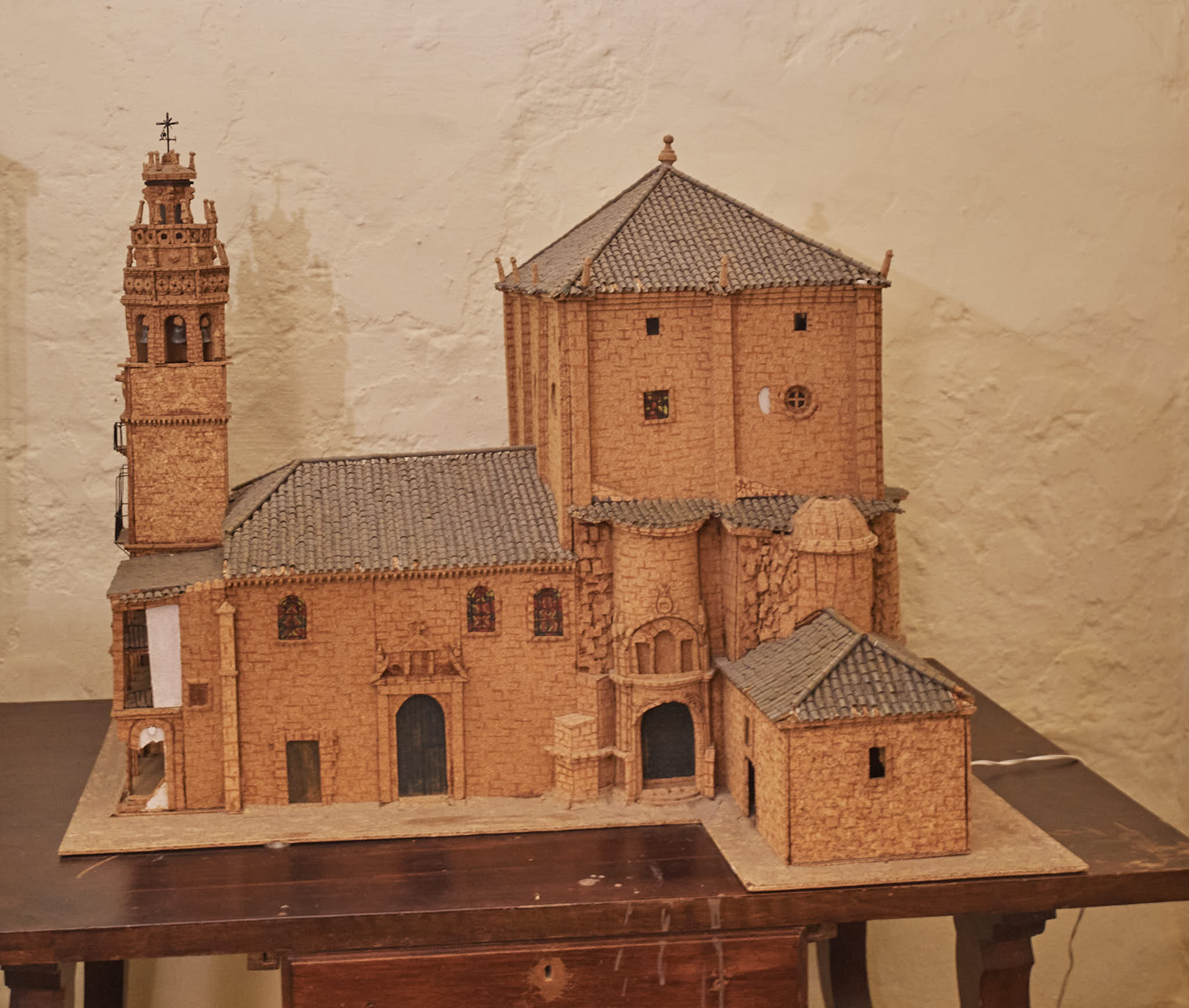
A scale model of the Old Church
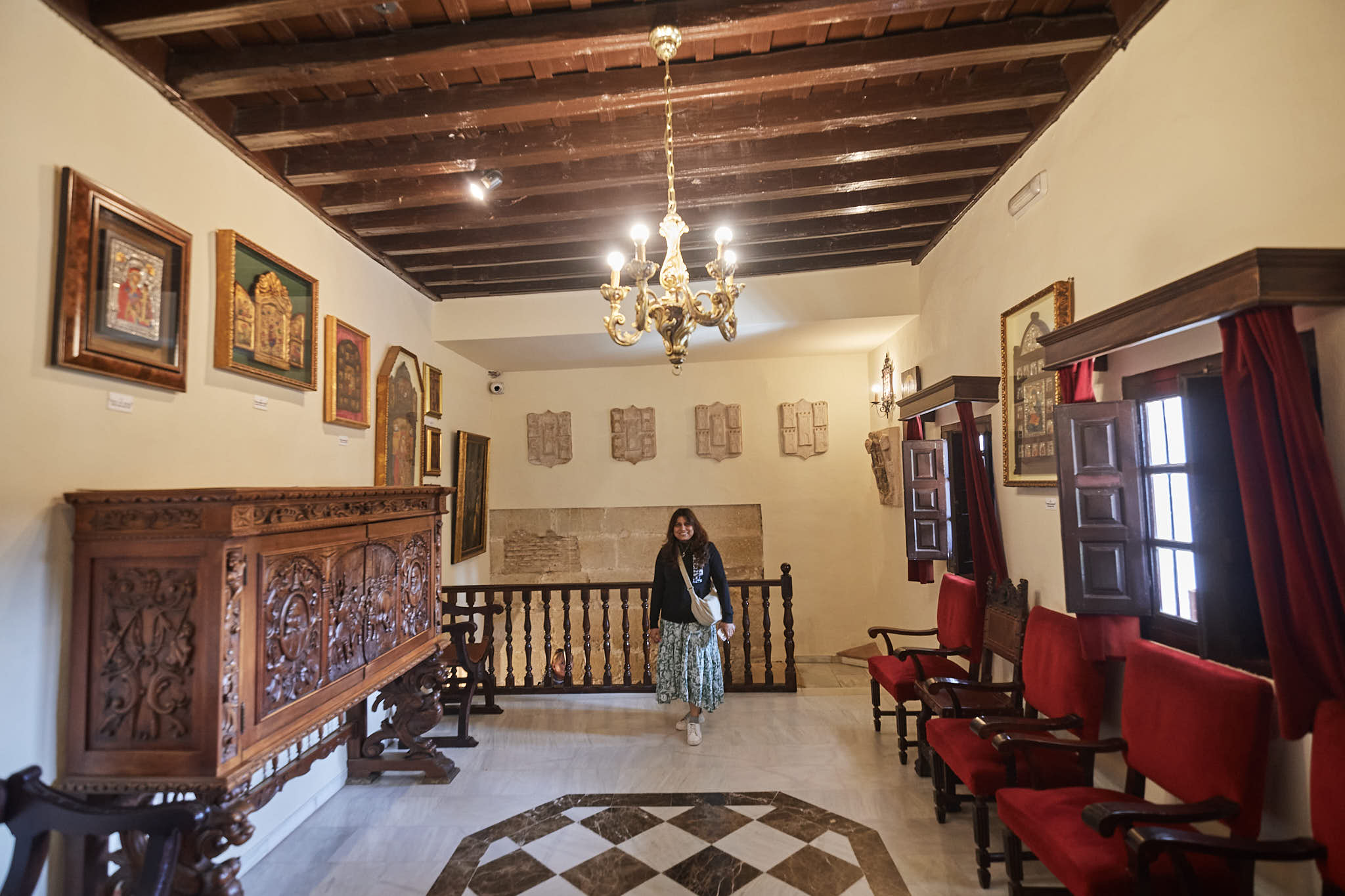
Visiting the treasury on our way out
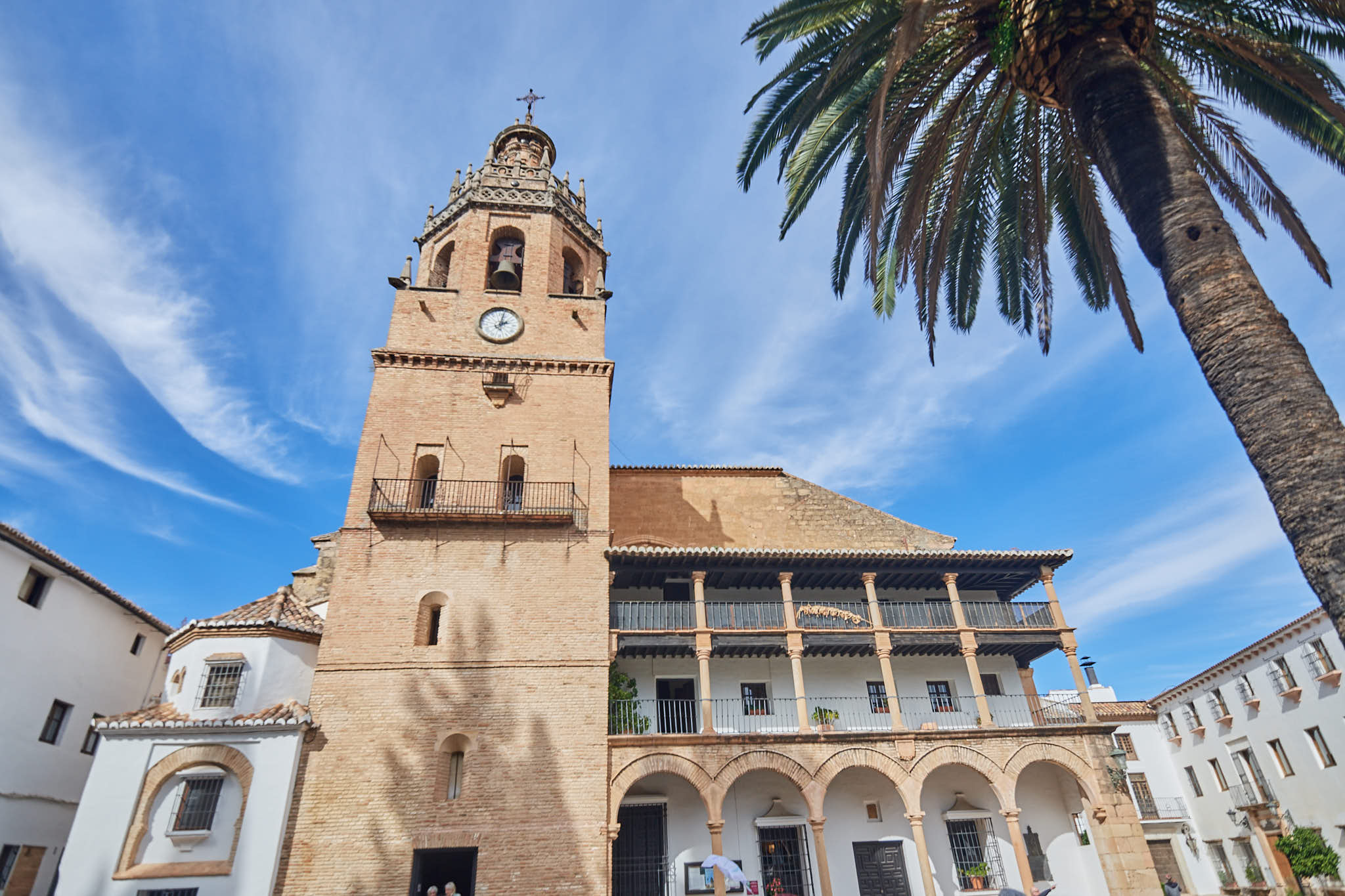
The bell tower of the Church of Santa Maria la Mayor
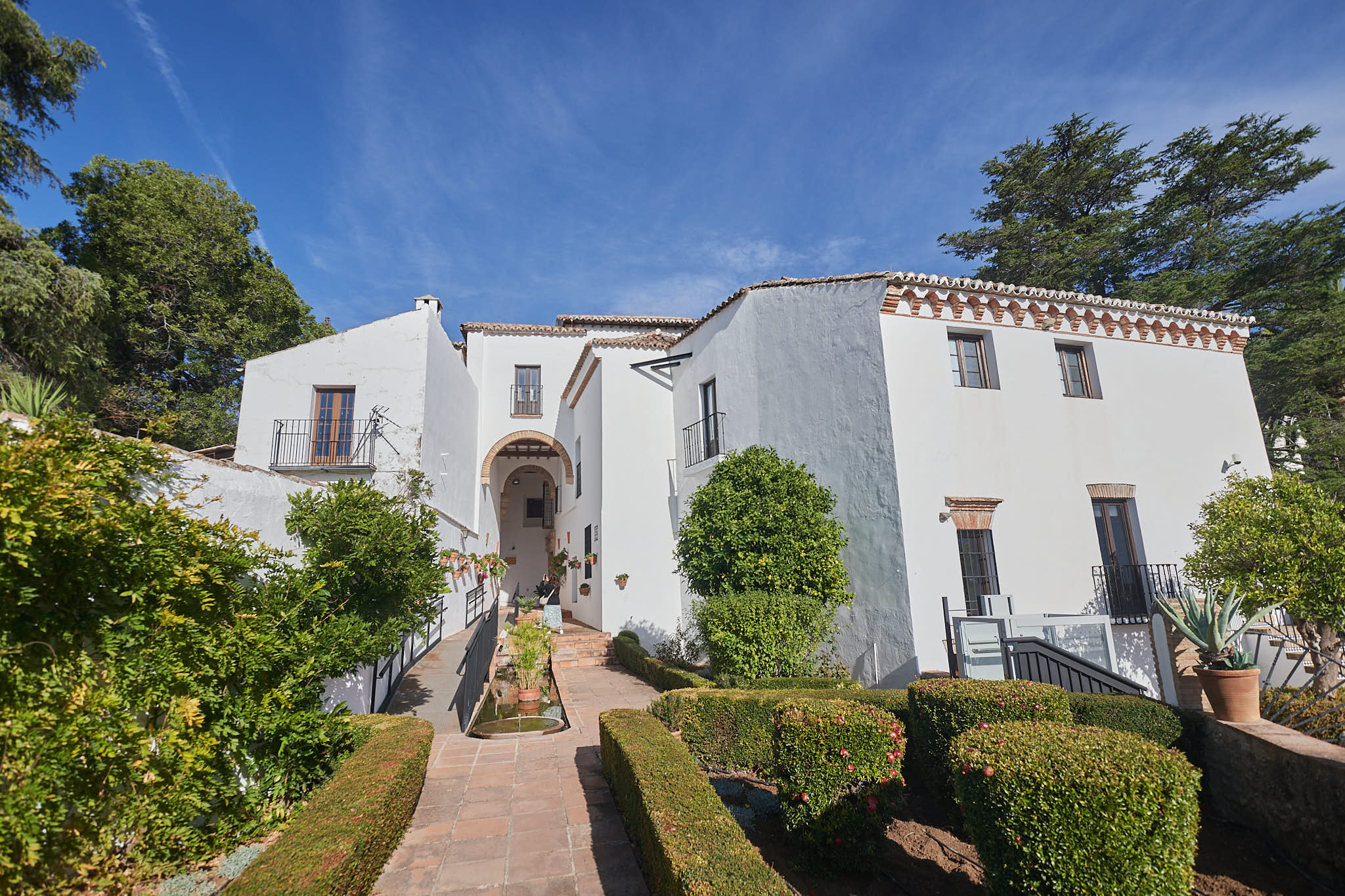
The next sight we visited in the Moorish Quarter was the Mondragon Palace a 14th century Moorish building which houses the Ronda Municipal Museum and more importantly for us, had 2 small gardens with great panoramic views. So we bought our tickets and lingered in the gardens for most of the time taking in the views before making a speed run through the museum which focuses on the history of Ronda from the prehistoric dates. It has an interesting continuous looped video which shows how Ronda grew through the ages and how the architecture changed according to who was in control – It was interesting enough to make us sit through the entirety of it’s run time.
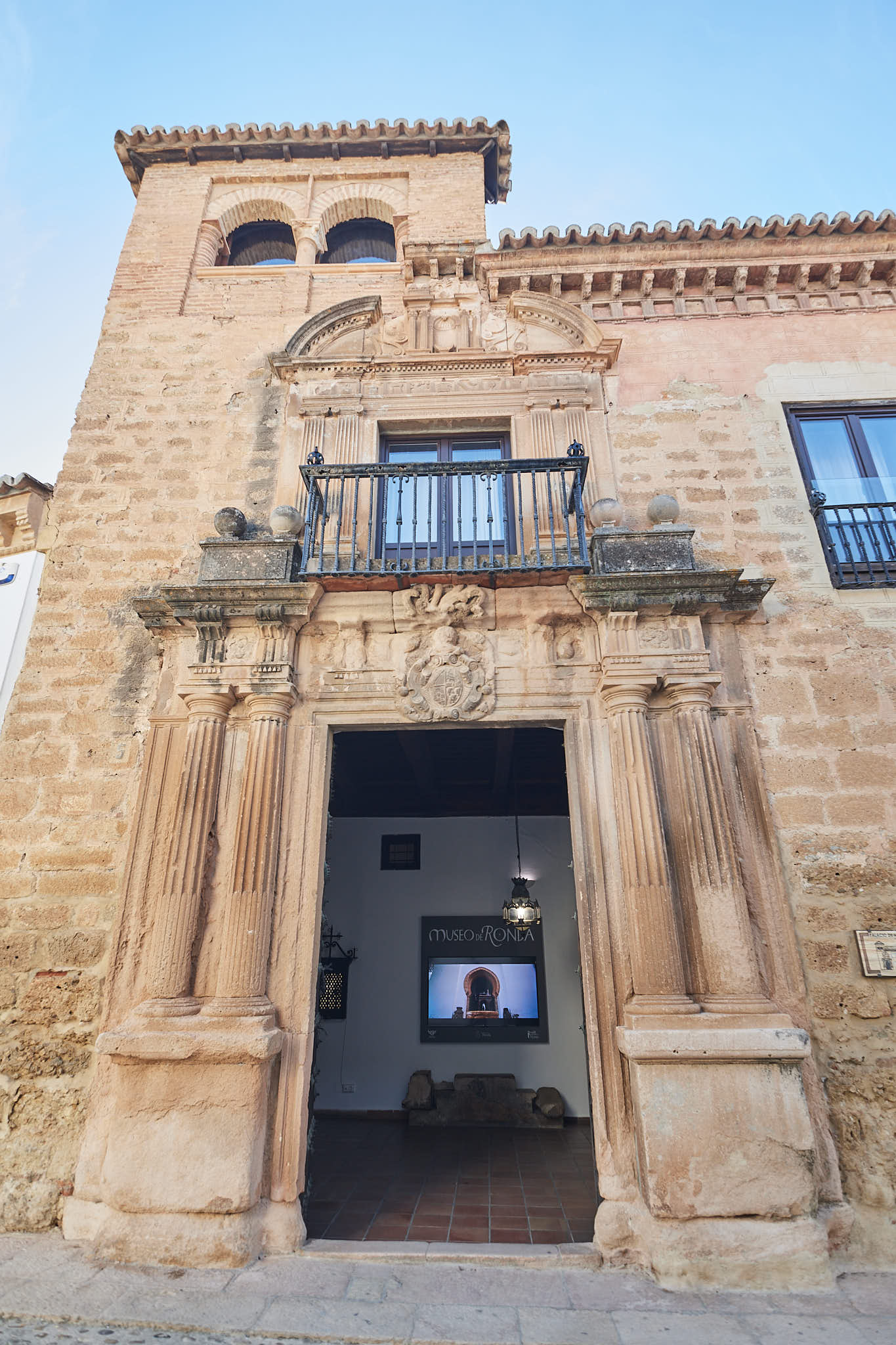
The 18th century facade to the 14th century Mondragon Palace
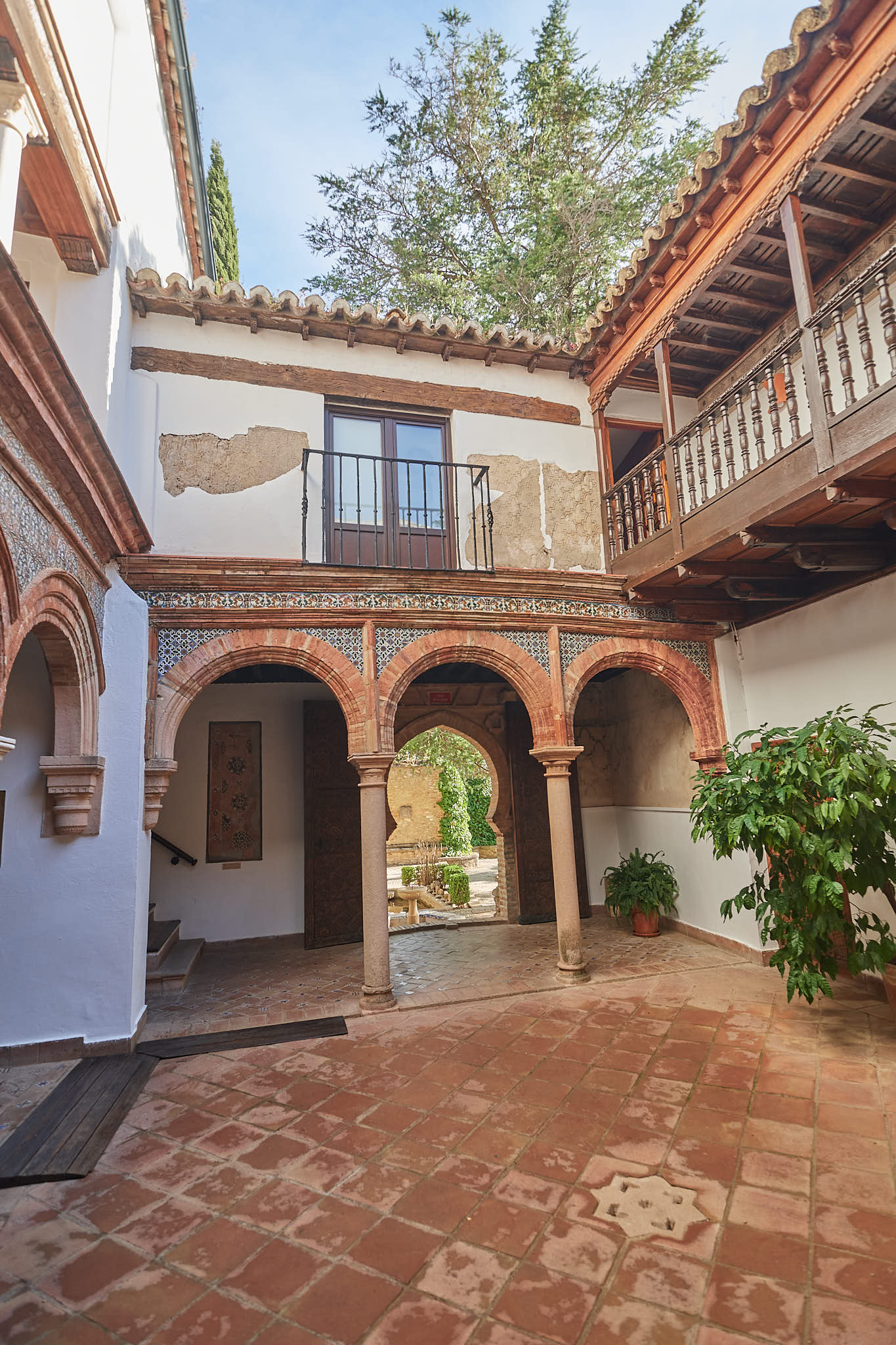
The courtyard of the 14th century Mondragon Palace
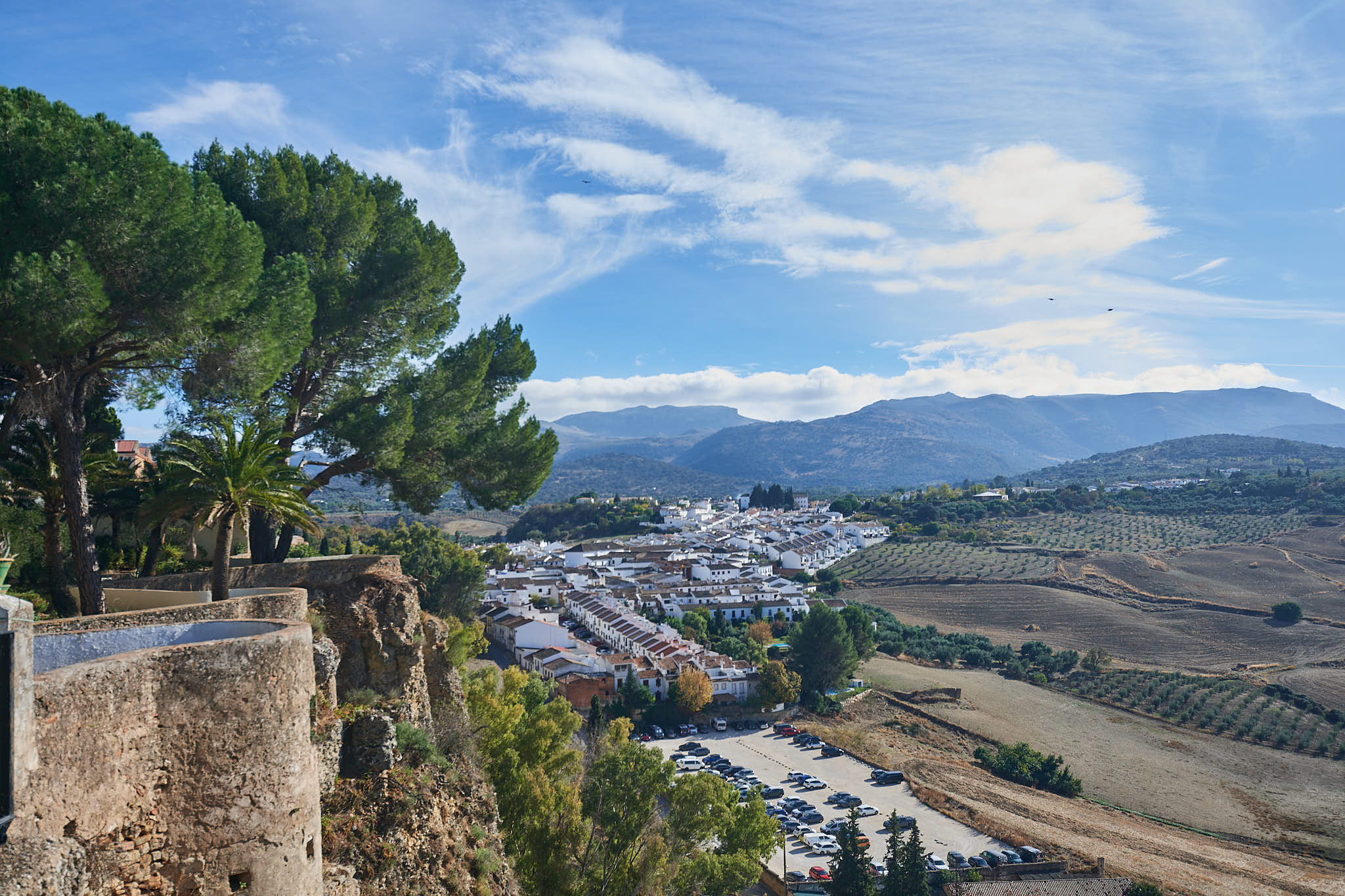
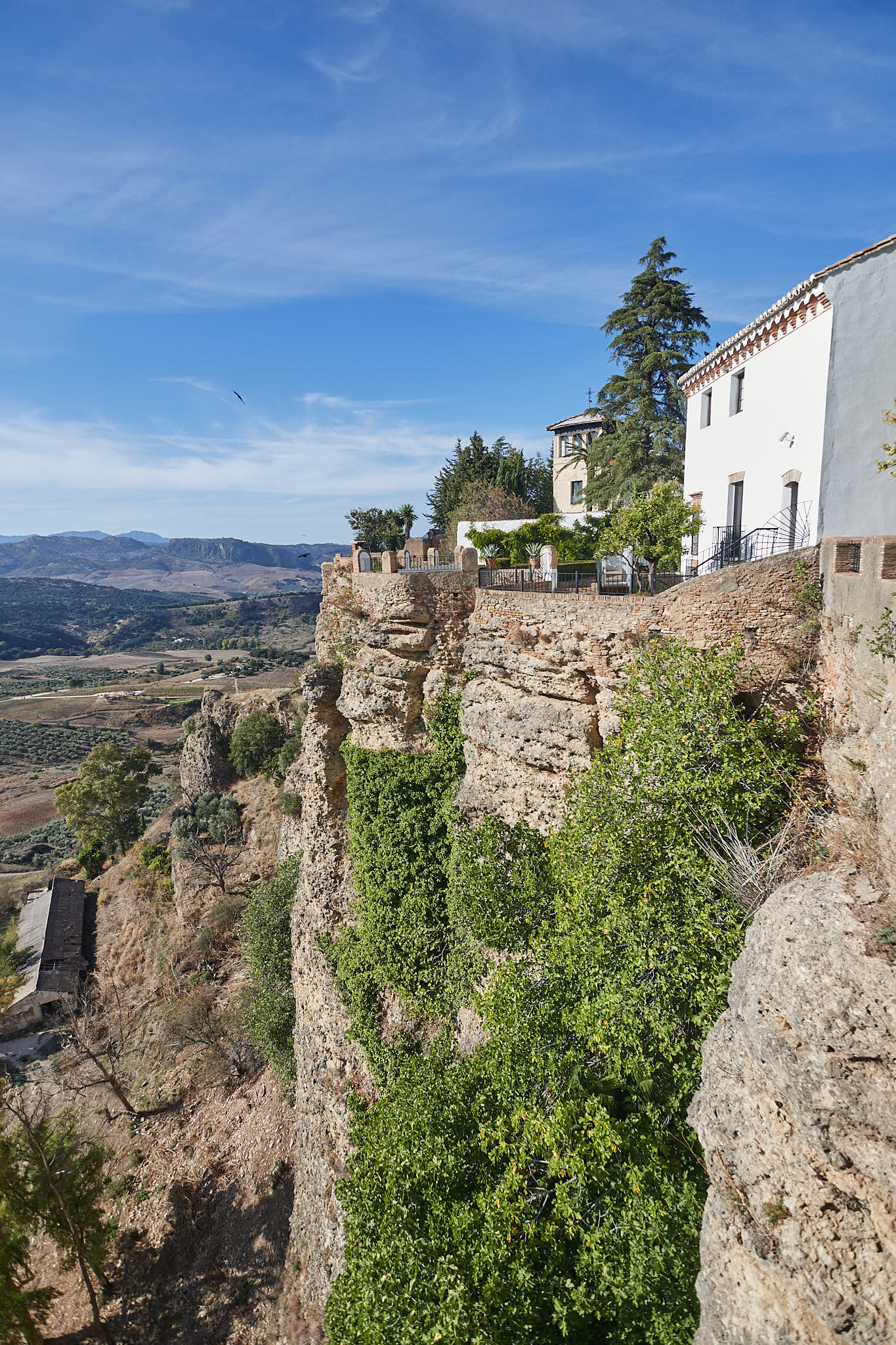
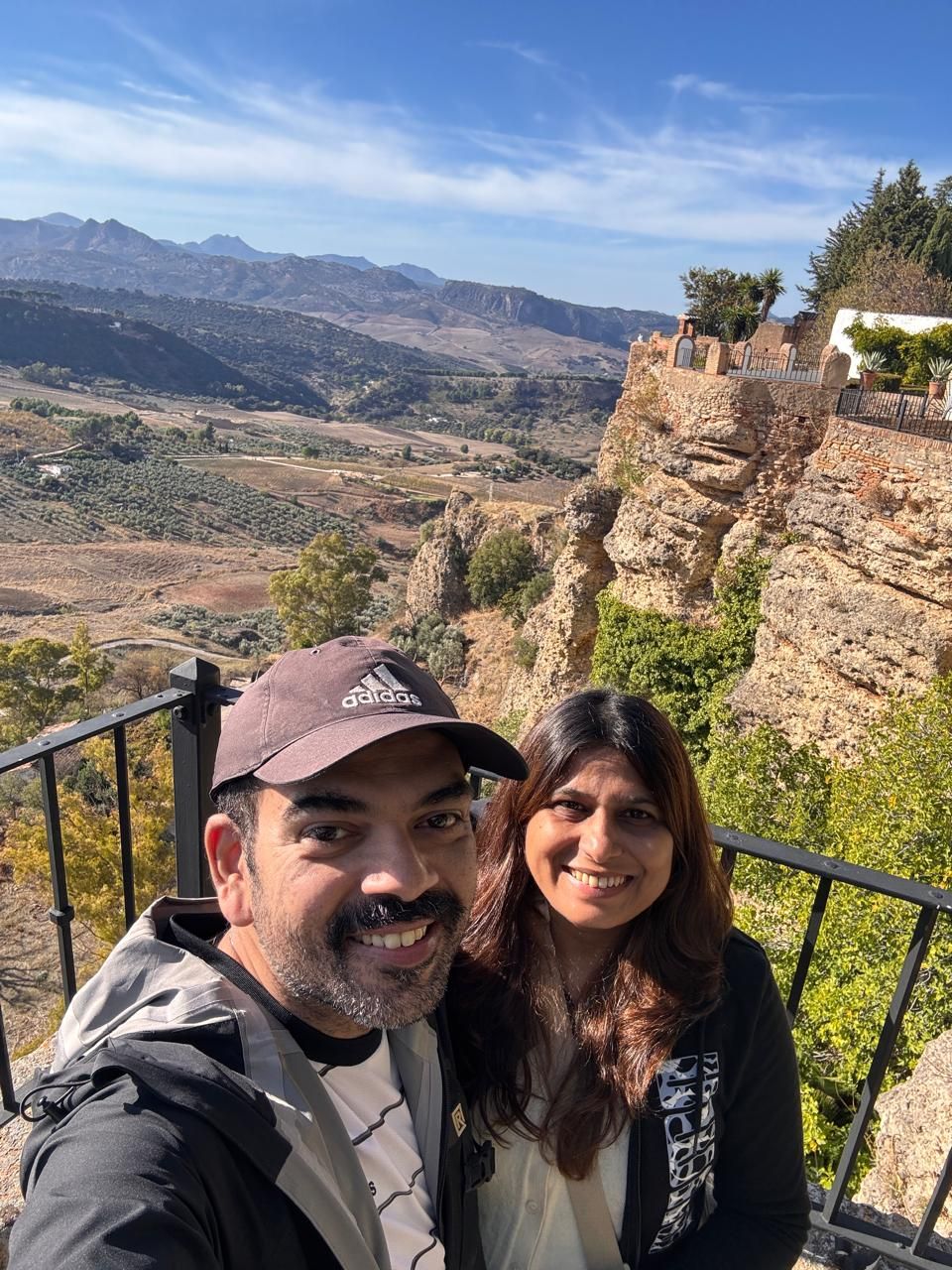
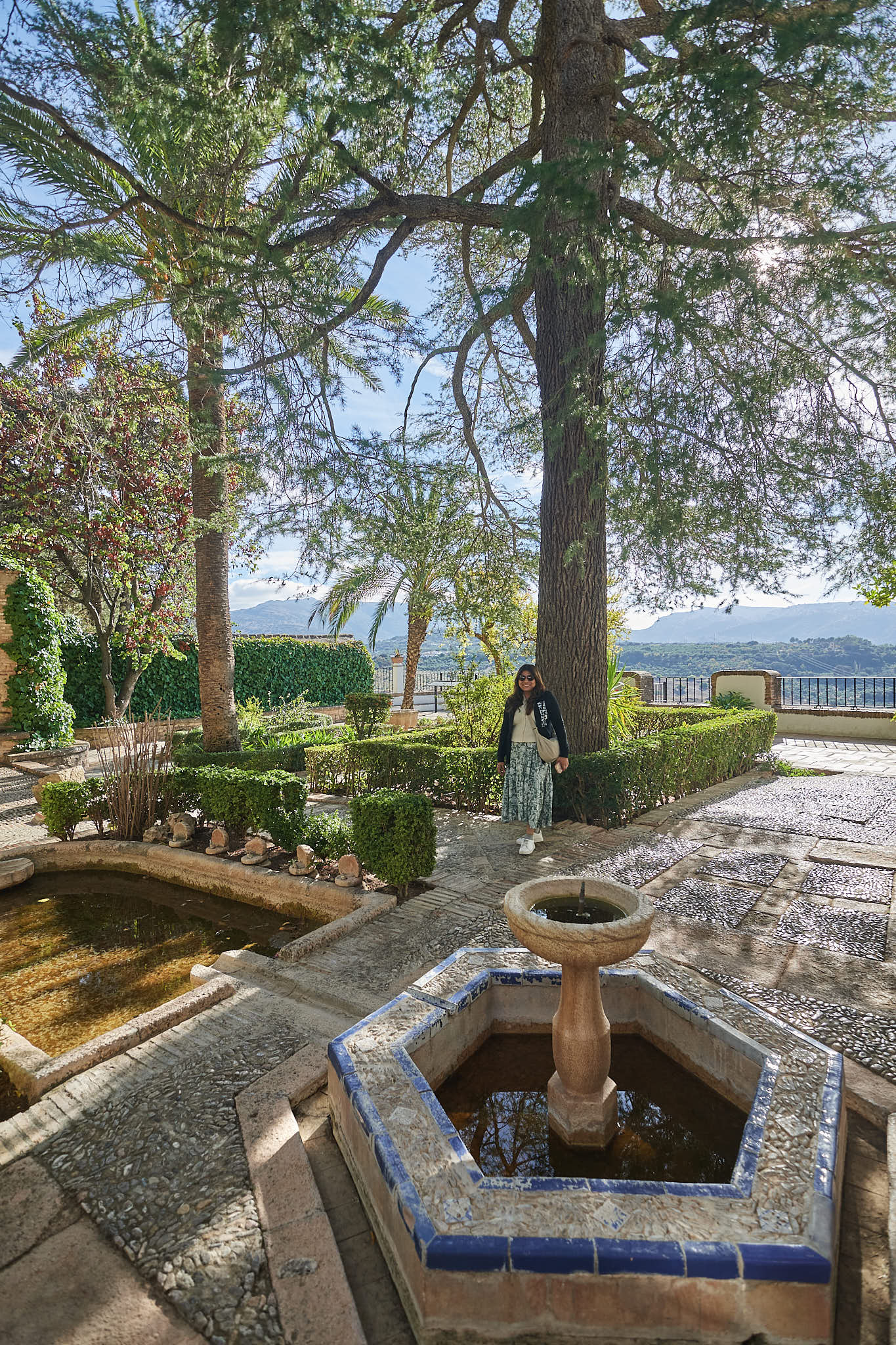
The beautiful gardens and views from the gardens of the Mondragon Palace
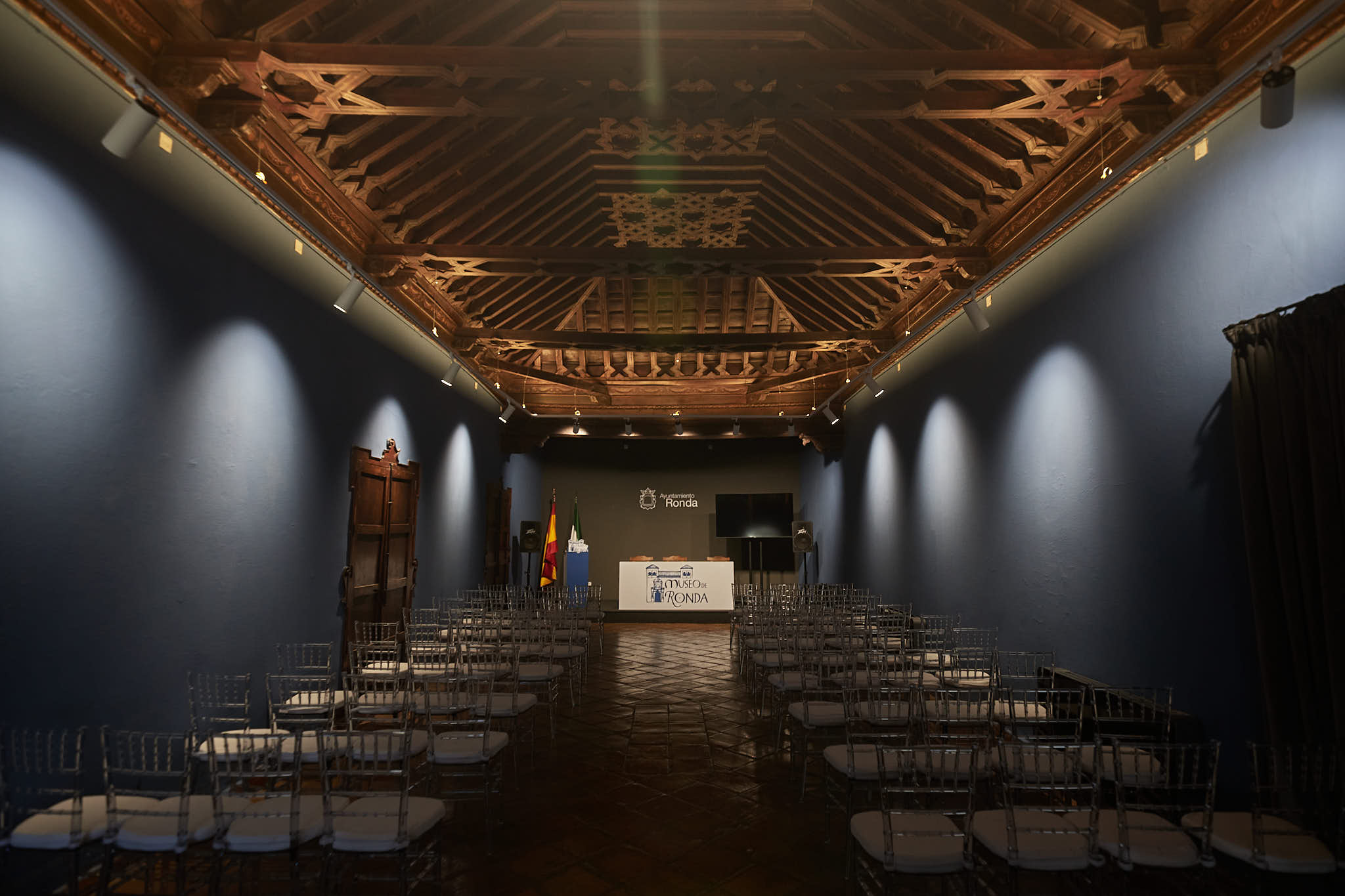

The Museum of Ronda which we rushed through – except for the interesting video presentation
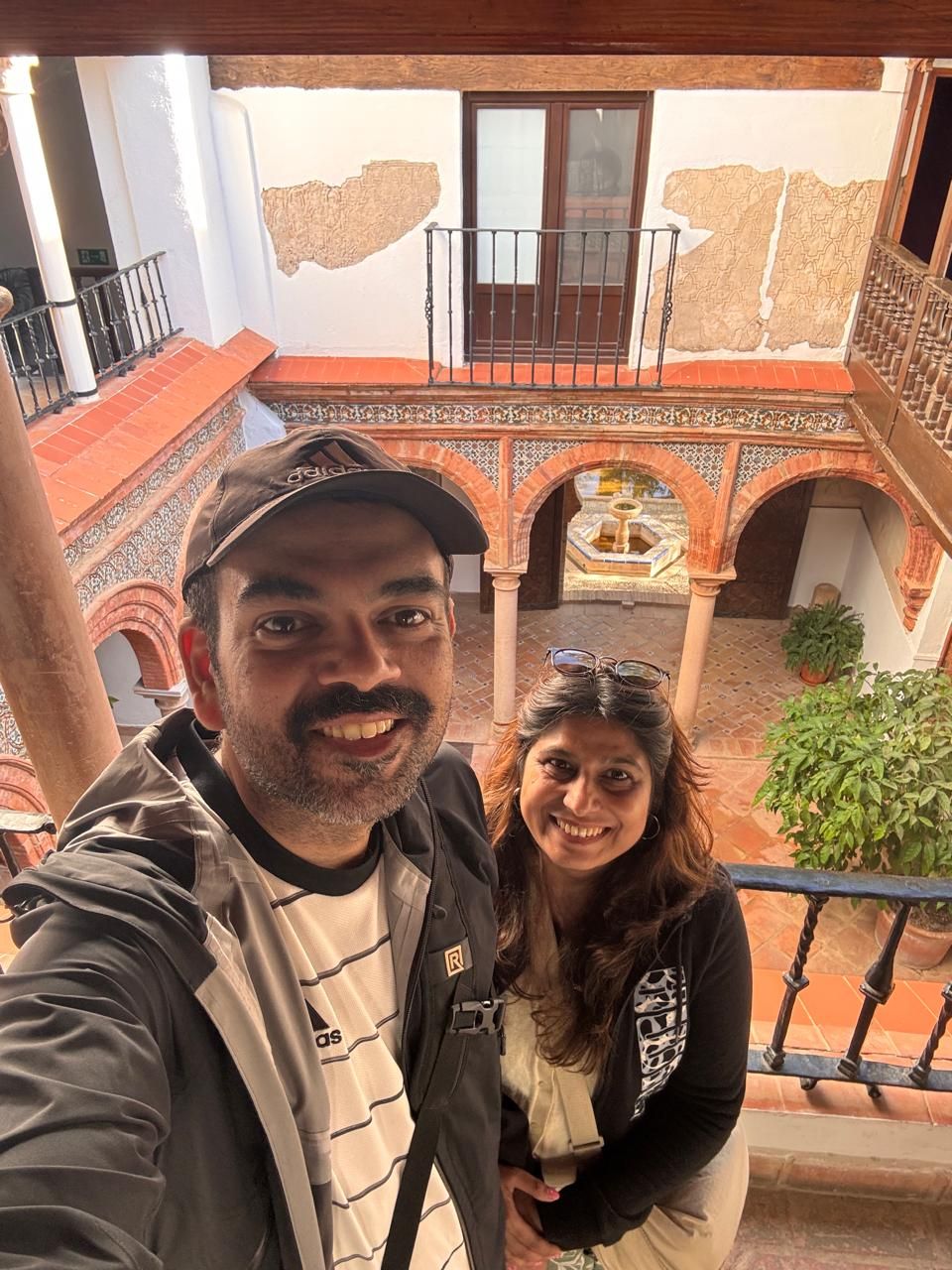
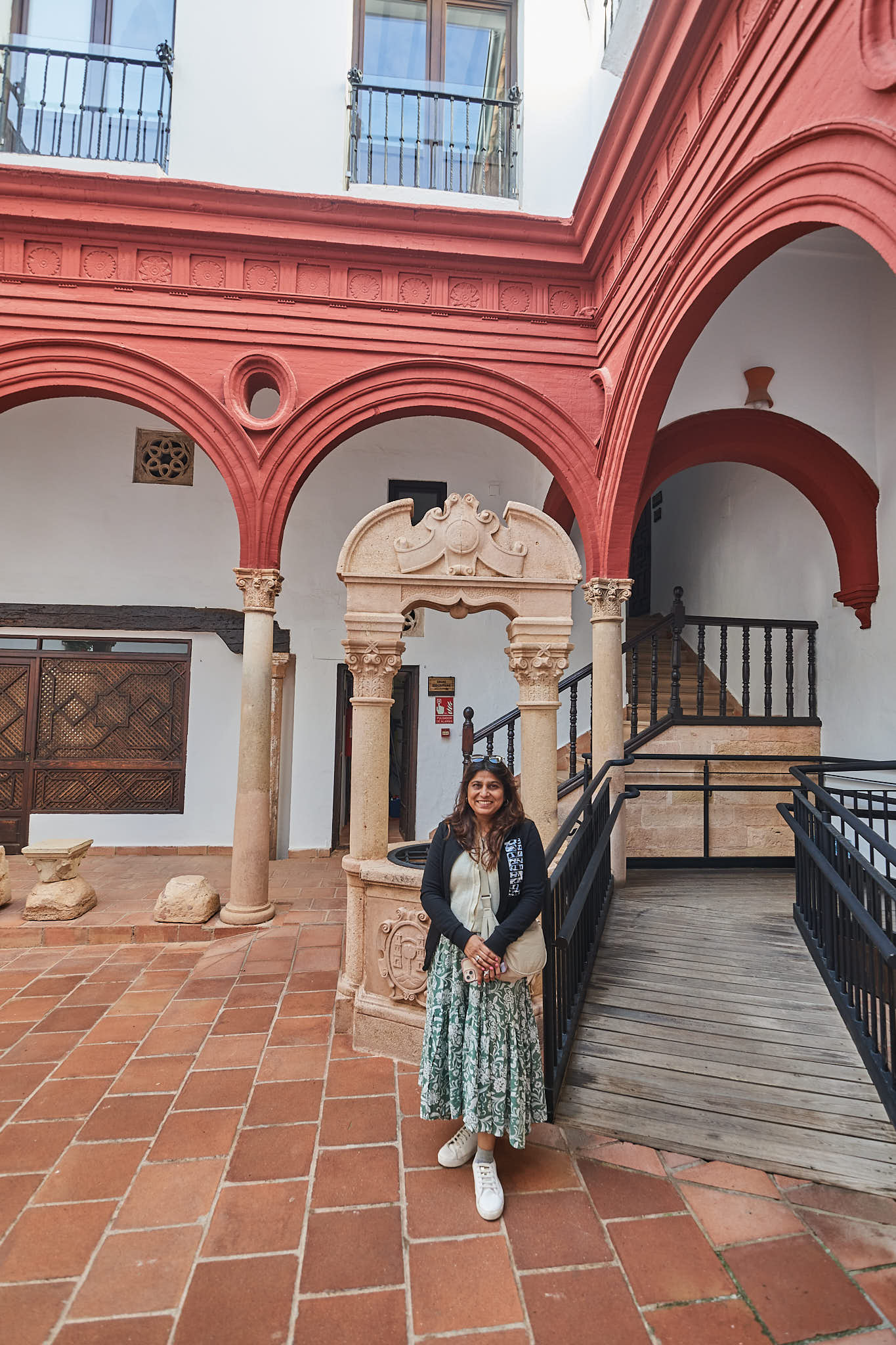
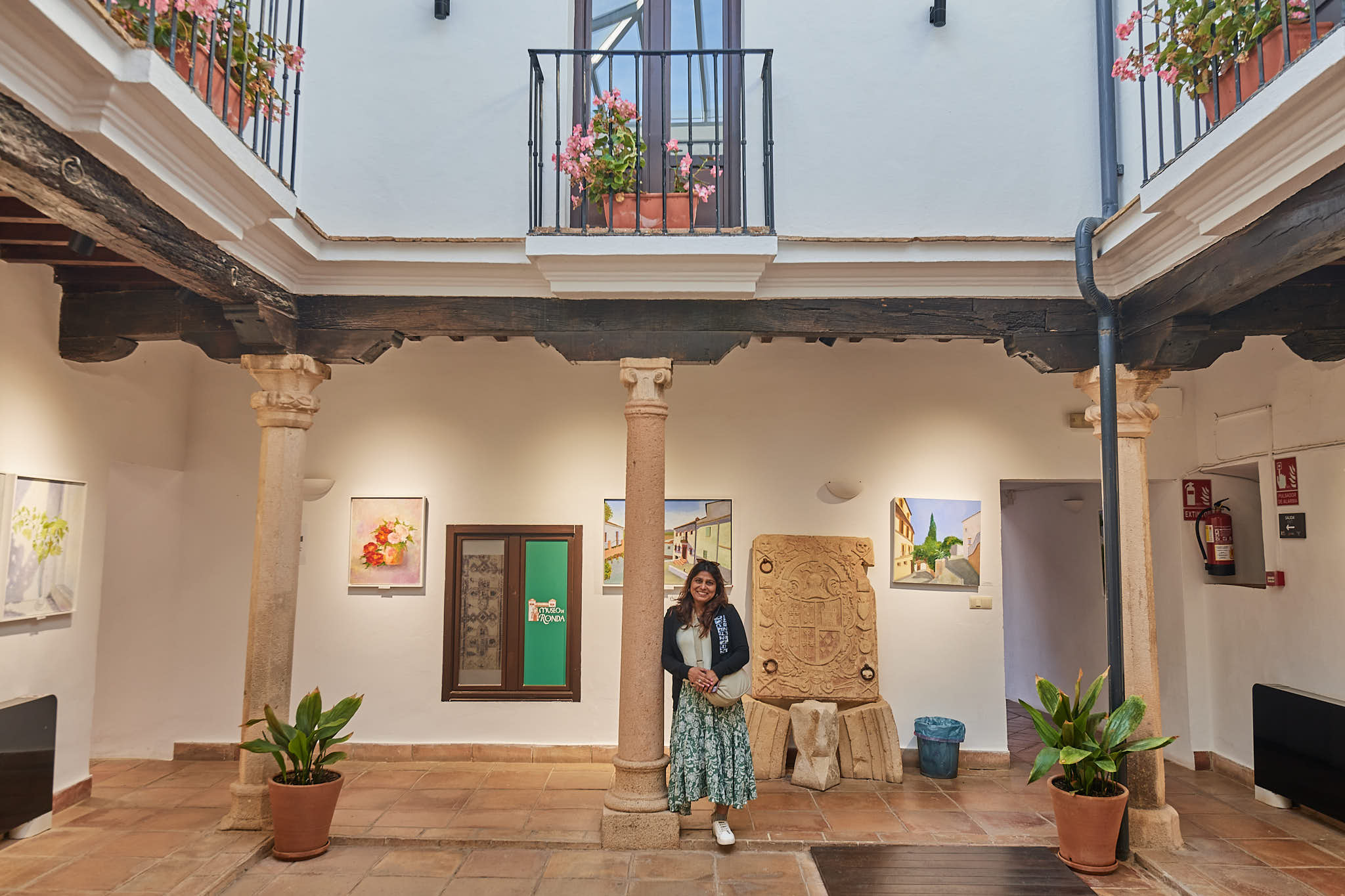
The beautiful courtyard of the Mondragon Palace
With the major sights of the Moorish Quarter seen we then went out through the Almocabar gate on the far side of town to have lunch without any crowds around. We saw the menu at a small restaurant called La Bodega which had seating on the square opposite it – perfect for a sunny autumn afternoon. We ordered Patatas Bravas, Gazpacho for the better half and a half portion of Chorizo for myself. I also ordered a small beer (cerveza) for myself and a pineapple juice for the better half. The food was great and the setting was peaceful which made for a great lunch in this beautiful little town.
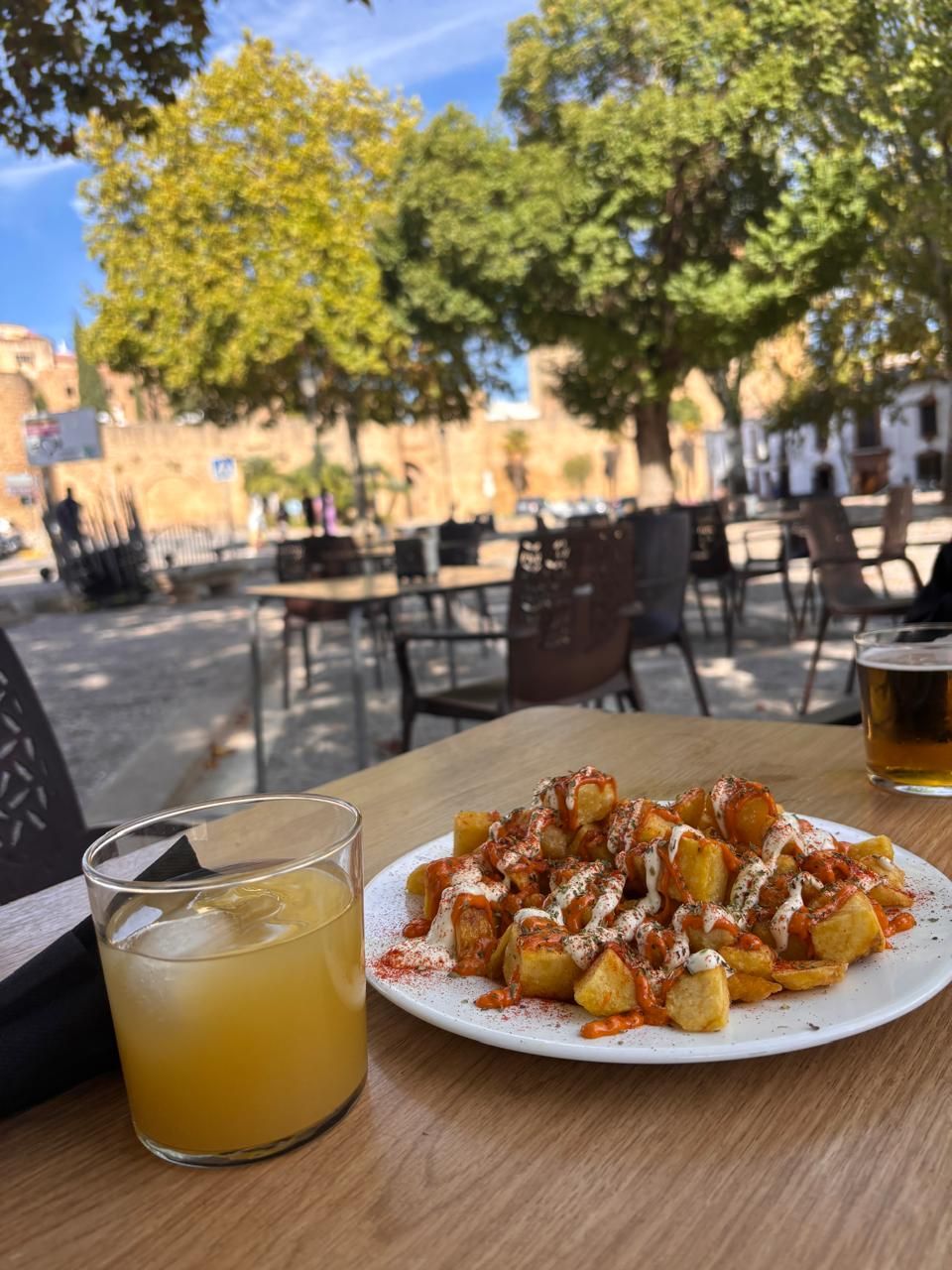
Patatas Bravas for the better half
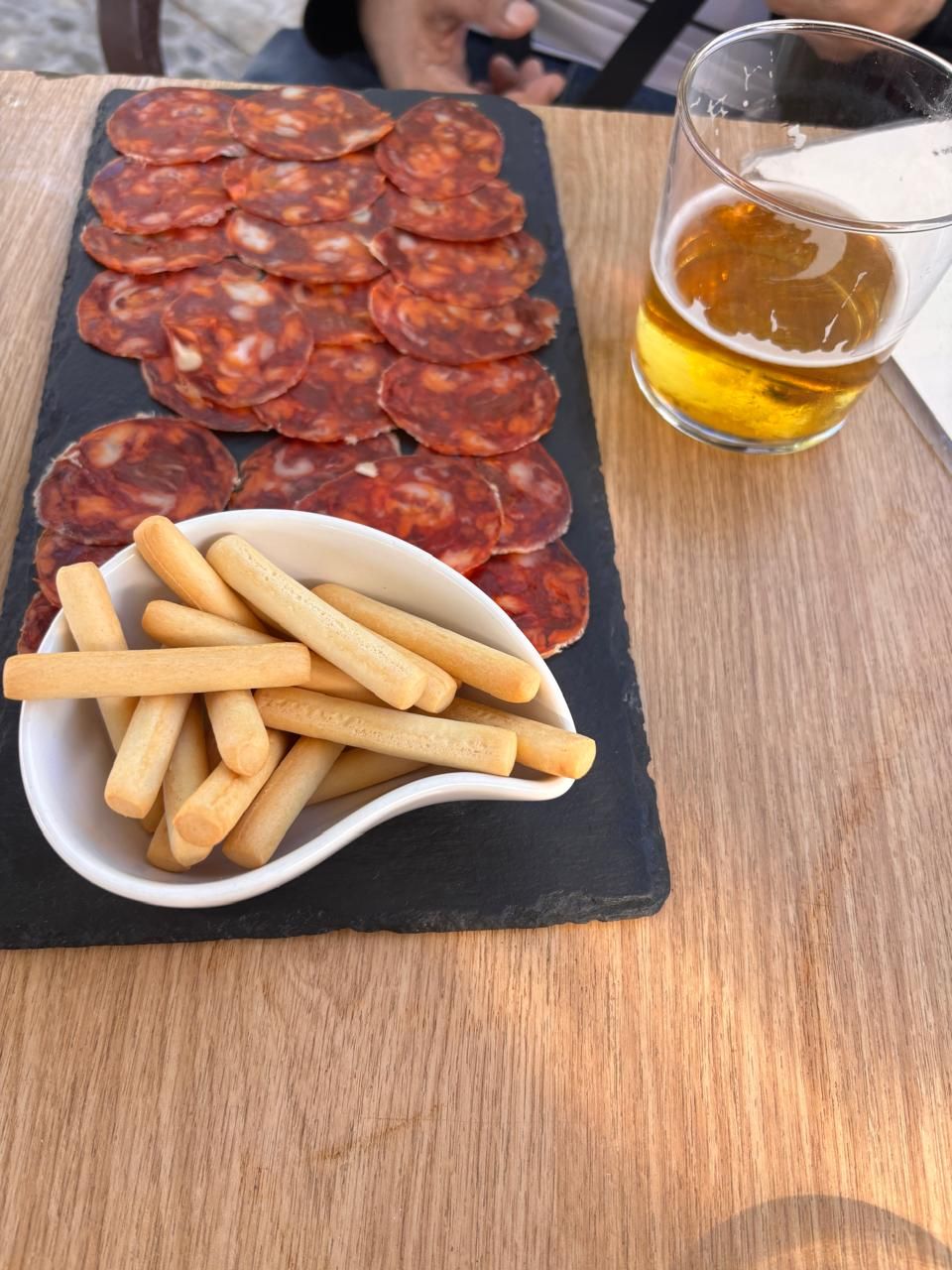
My platter of Chorizo with bread sticks
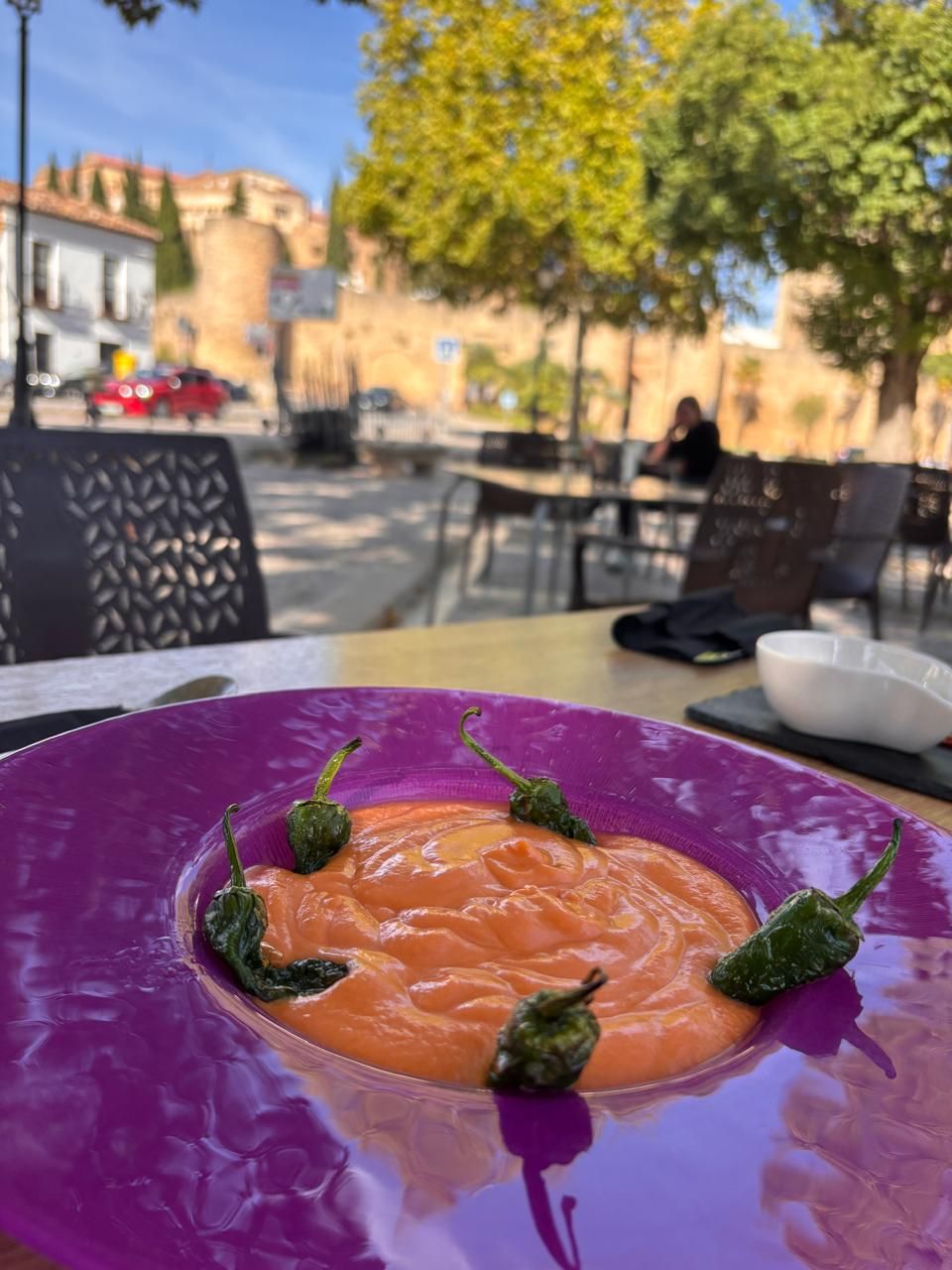
The delicious Gazpacho which we shared ( I ate most of those Pimento chillies – delicious!)
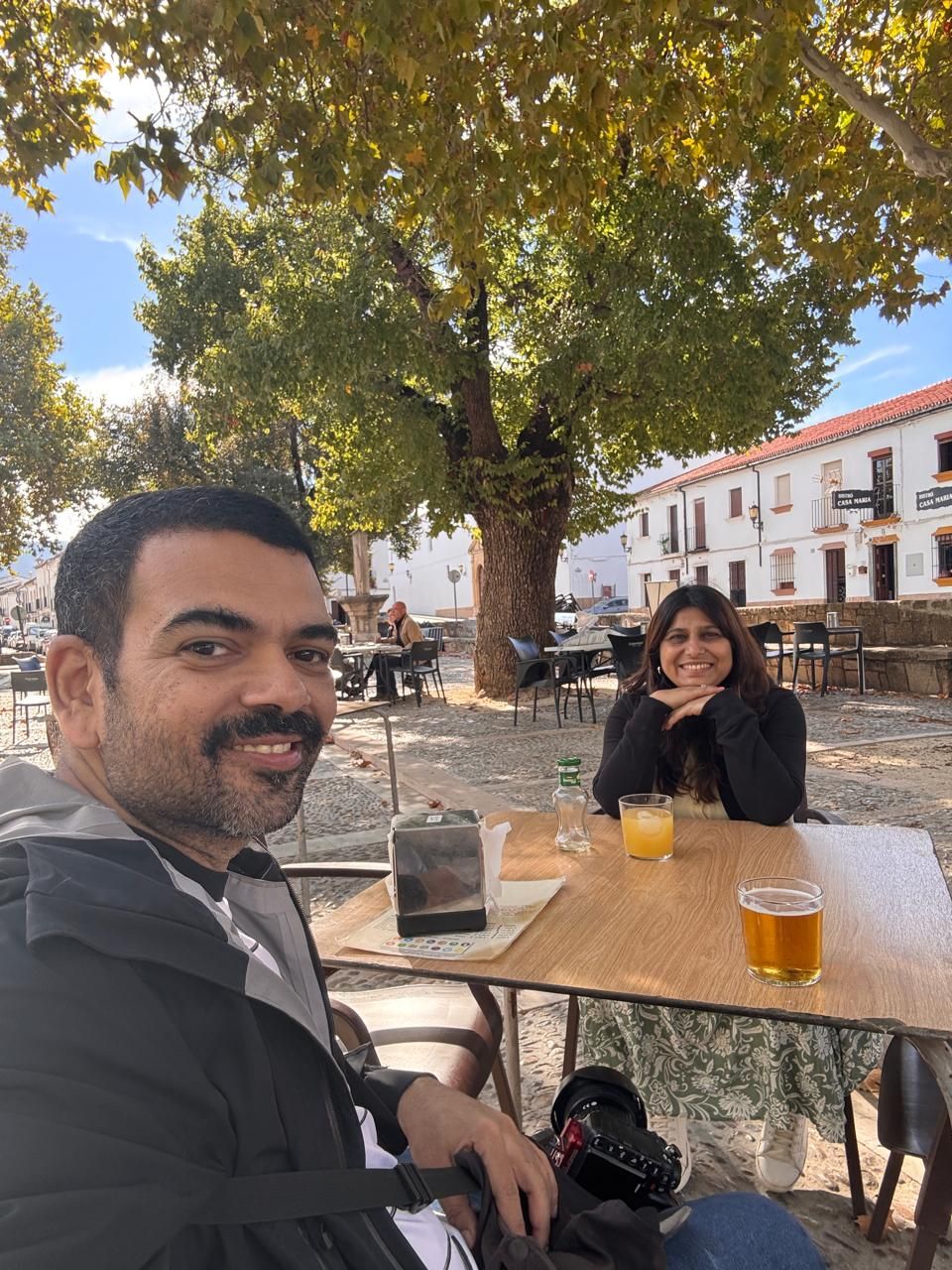
At the pleasant outdoor tables of La Bodega outside the Almocabar gate of Ronda
With a heavy lunch in our tummies we returned to our Hotel San Gabriel where our room was ready and we had a great late afternoon siesta – when in Spain enjoy a Spanish siesta!
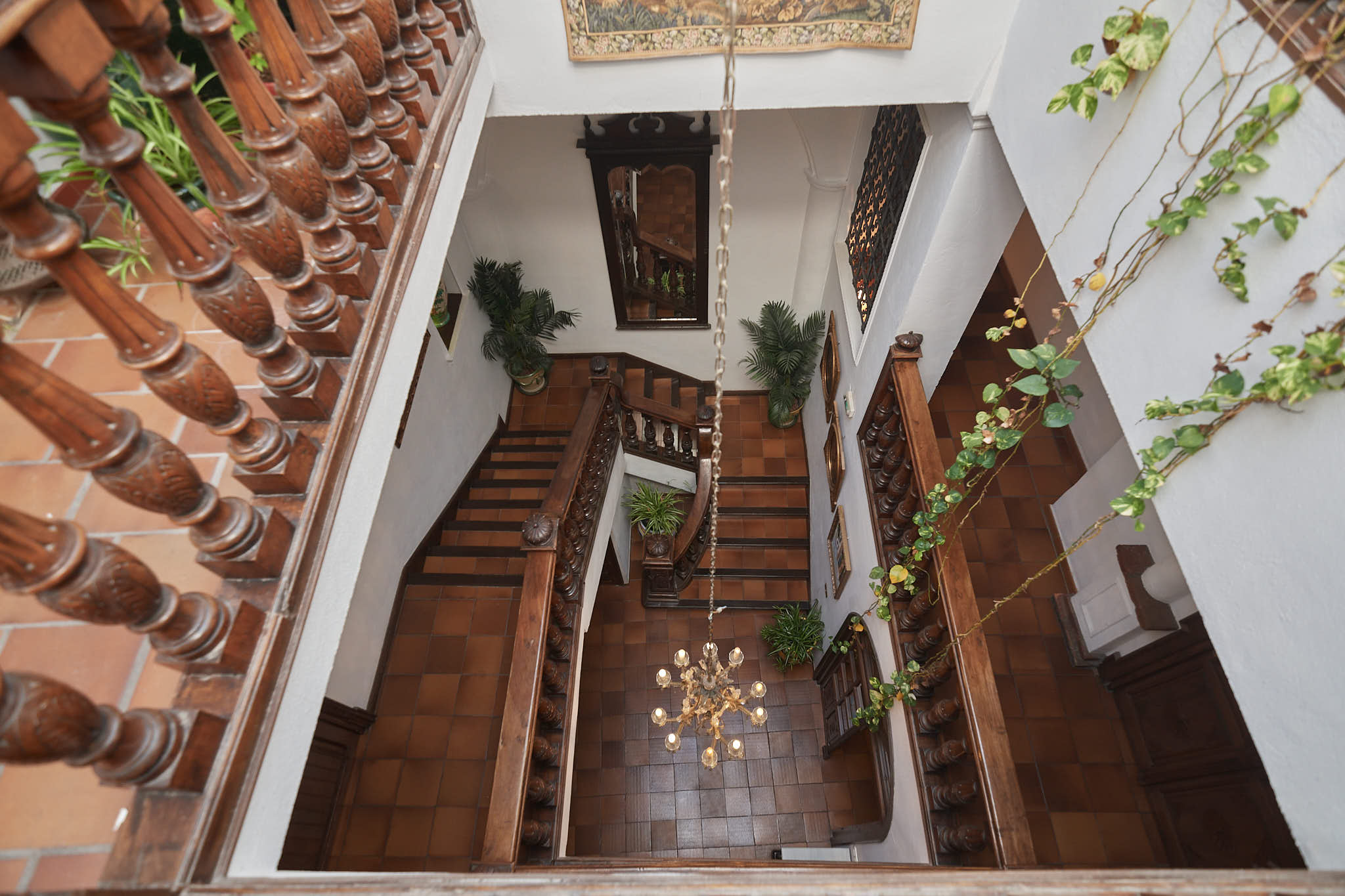
The beautiful stairs and central courtyard of the Hotel San Gabriel
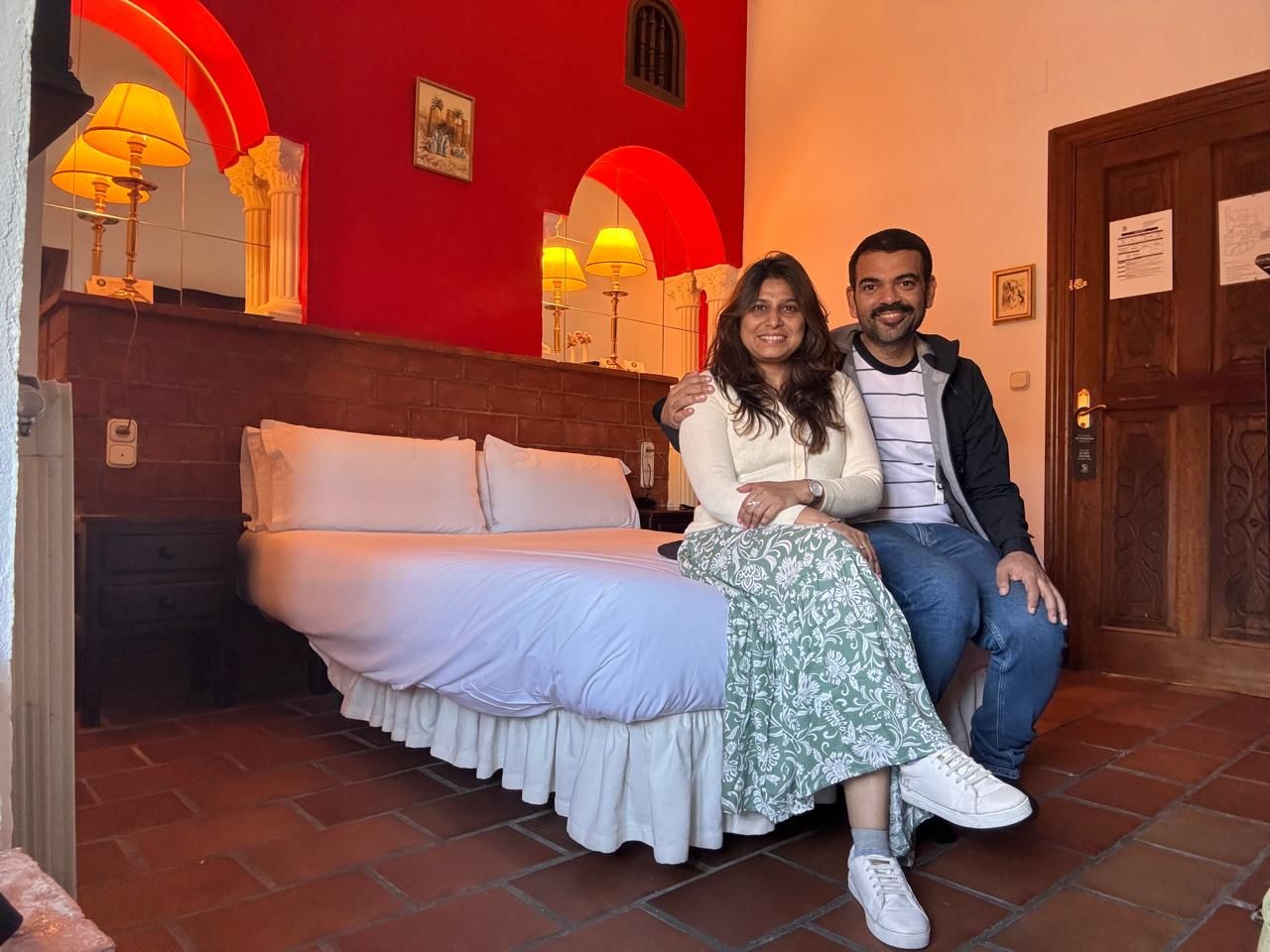
Taking a photo of our room before enjoying a siesta
We woke up refreshed and decided to use the remaining daylight hours to go down the path from the Plaza de Maria Auxiliadora near the Mondragon Palace to see the new bridge down from the valley below. We descended down the trail which is free to enter and continued down ignoring the paid boardwalk that gave nearly the same views.
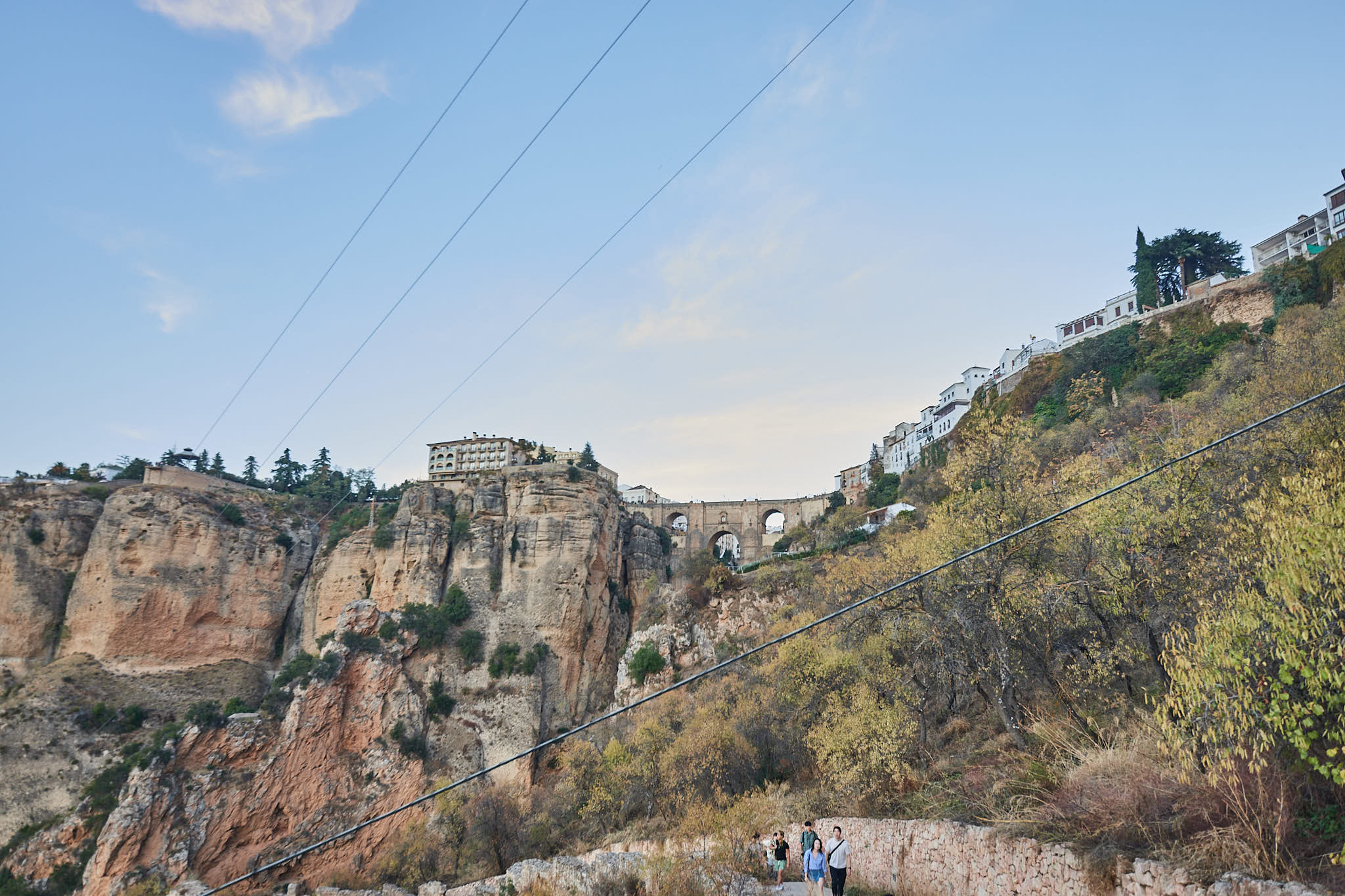
Taking the trail down the valley
We finally reached the viewpoint which gave amazing views of the architectural wonder that is the “New bridge”. We enjoyed the view for a long time and clicked a lot of photos even as the sun went down and the lights started coming on in the town above. We had a handful of other people who were enjoying the view with us which gave me confidence as I didn’t want to get stuck on a trail in the valley when it went dark.

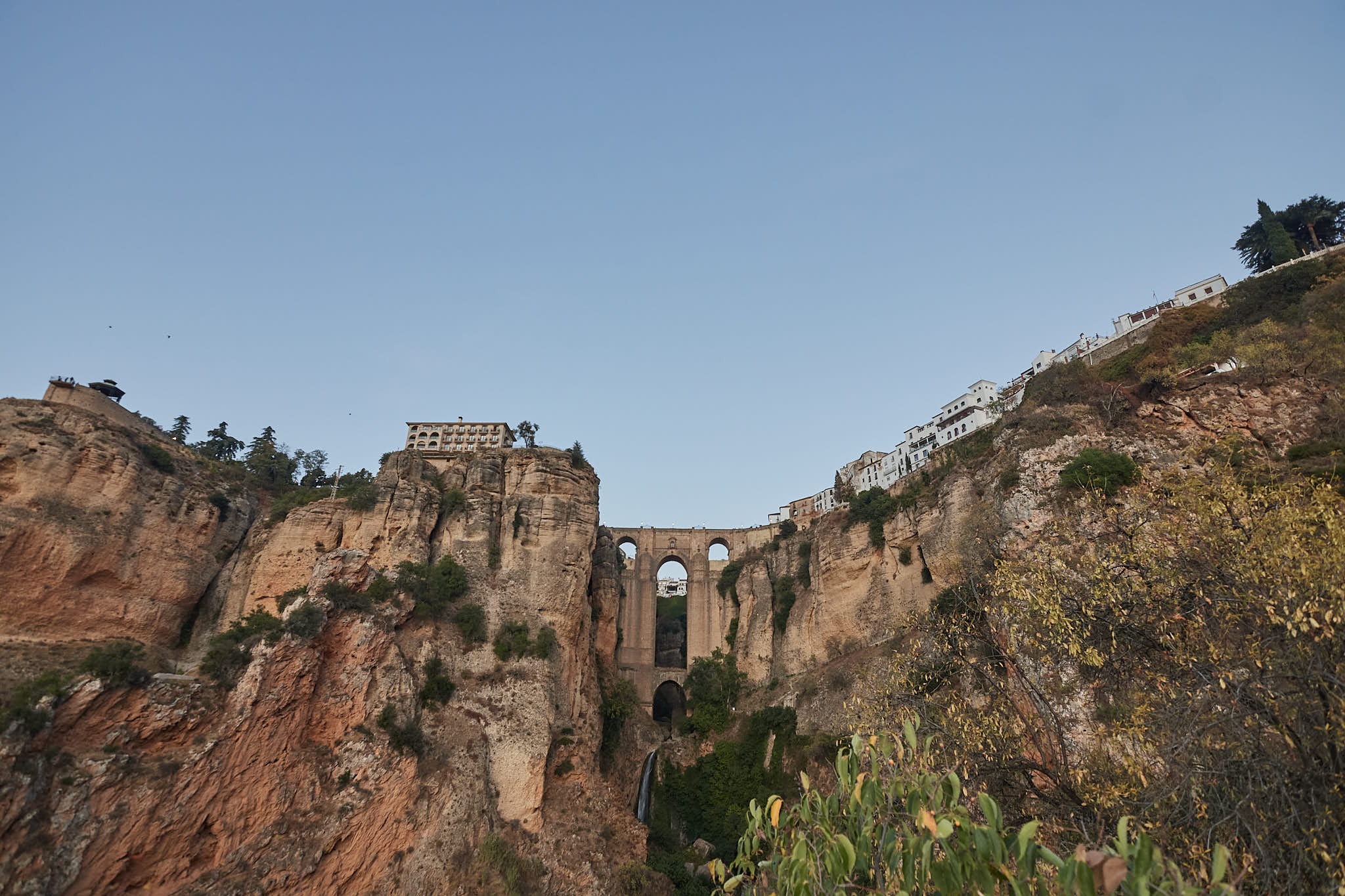
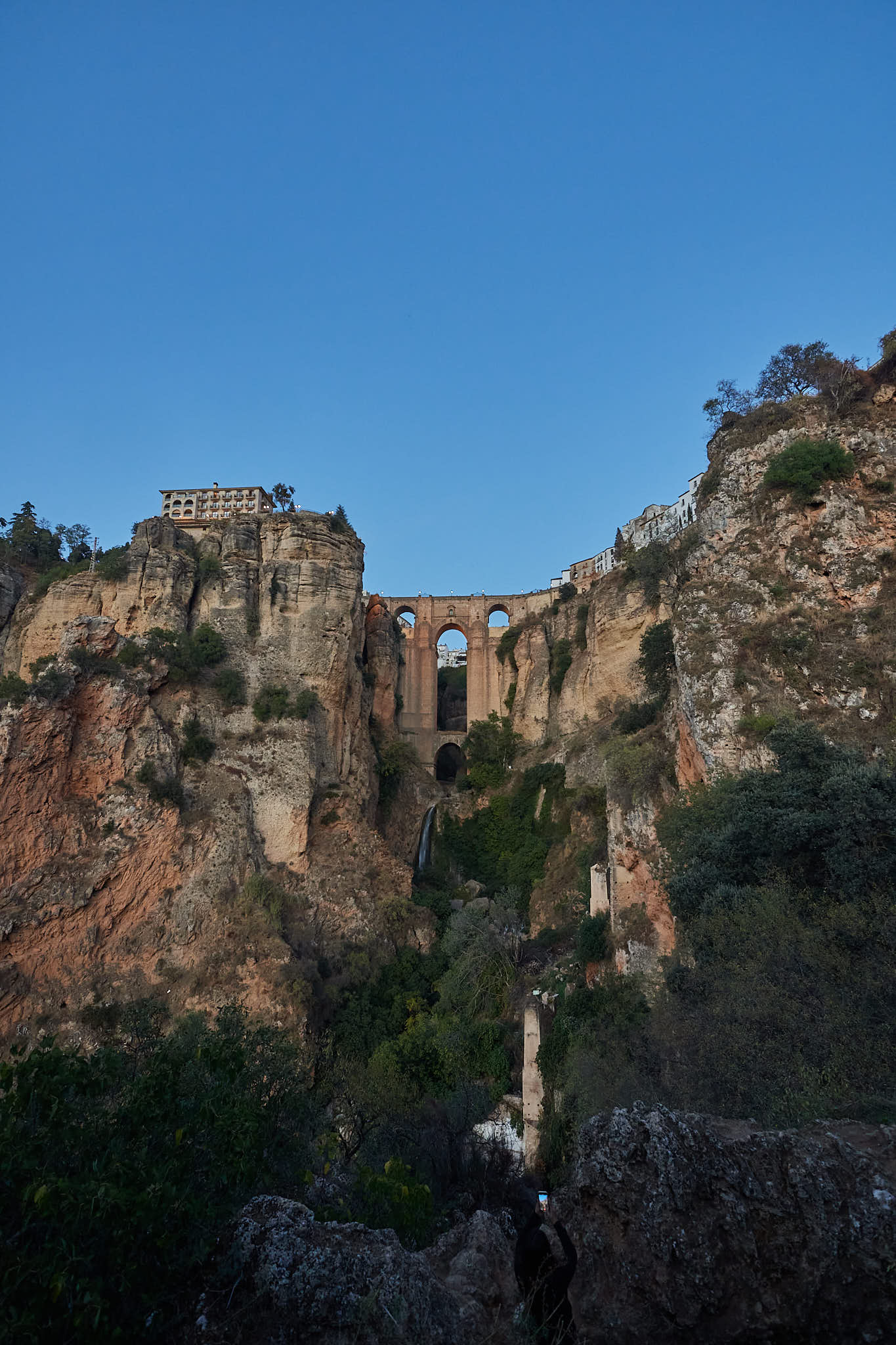
Views of the Old bridge from the trail leading down into the valley
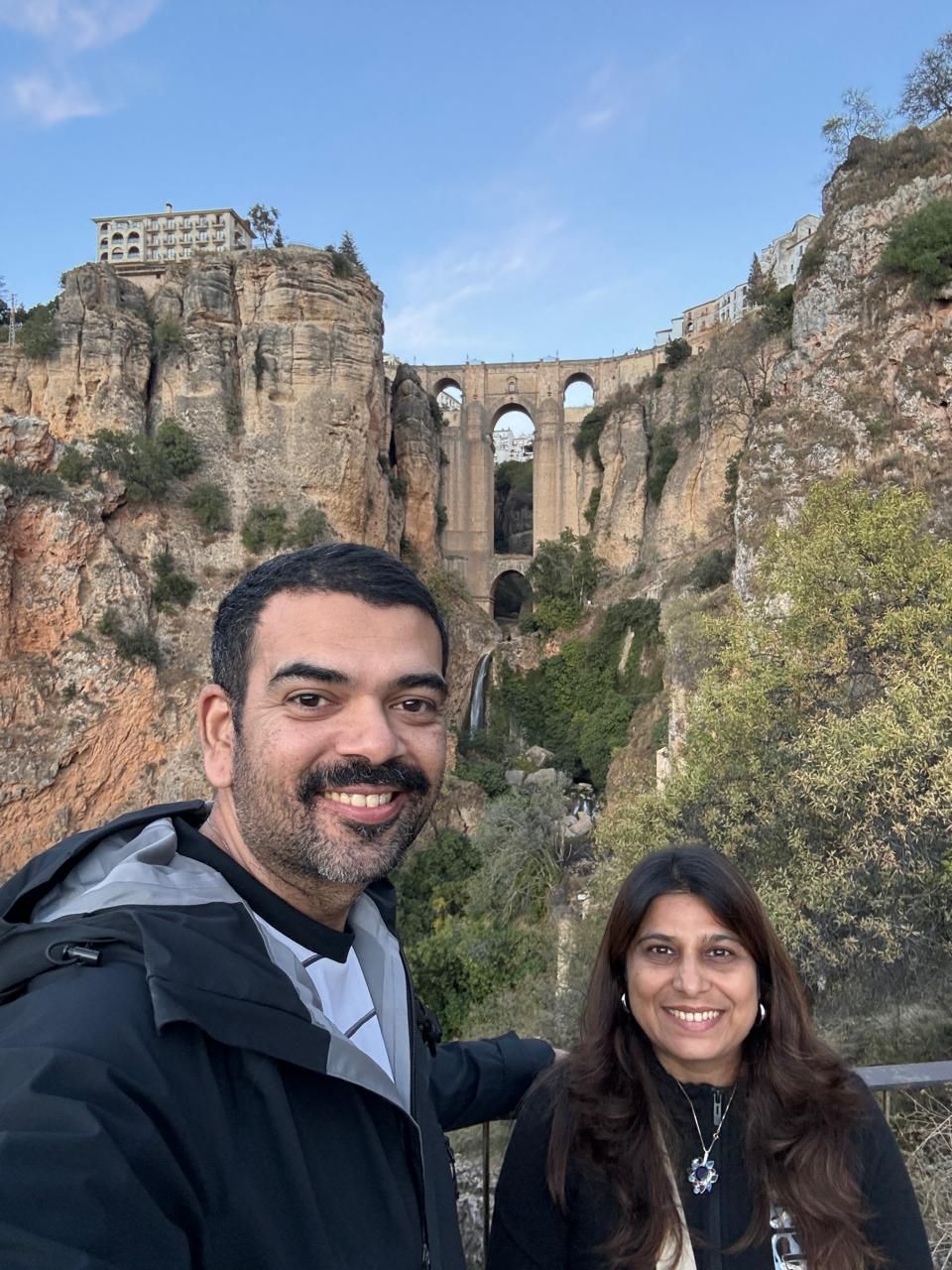
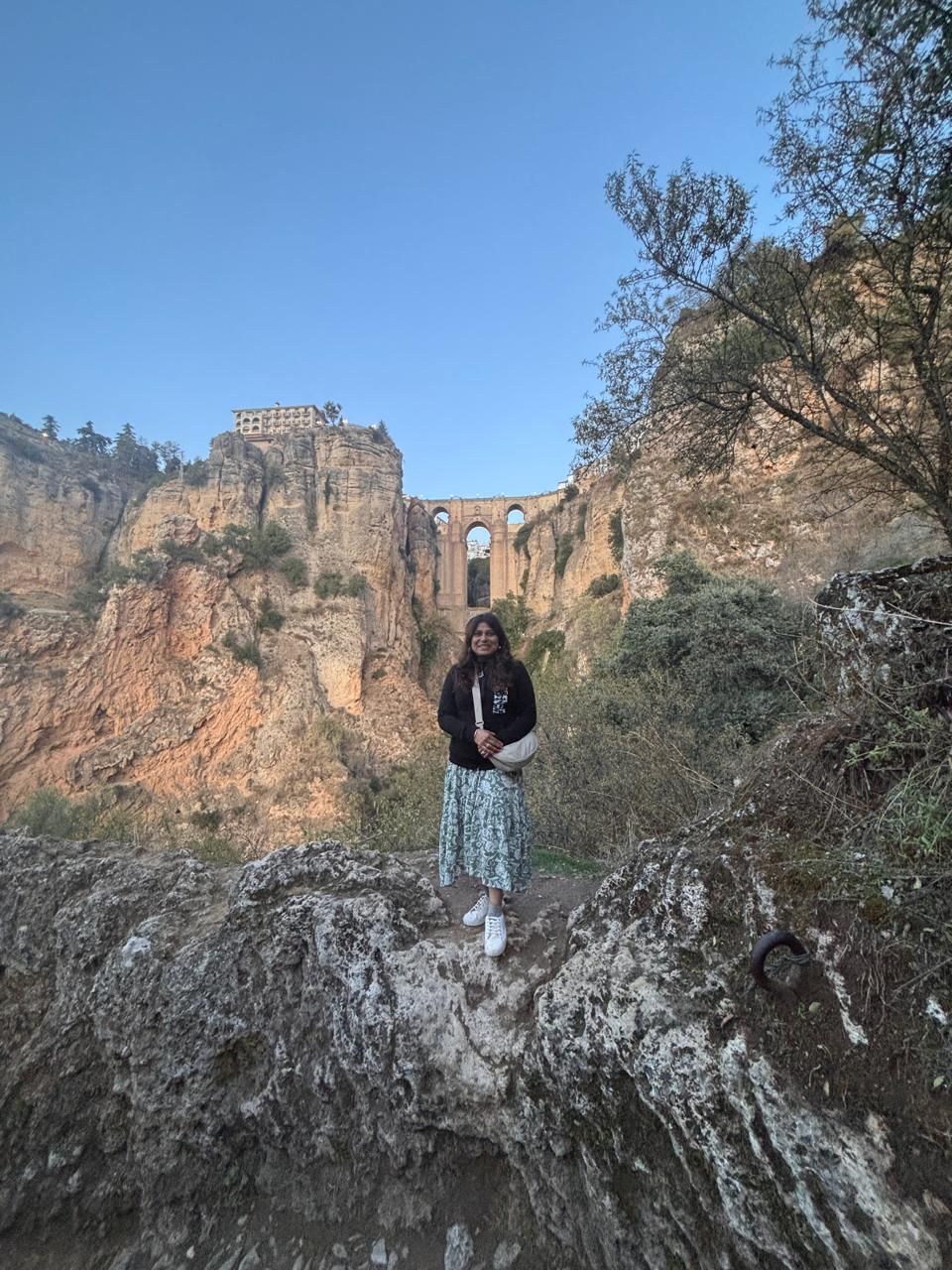
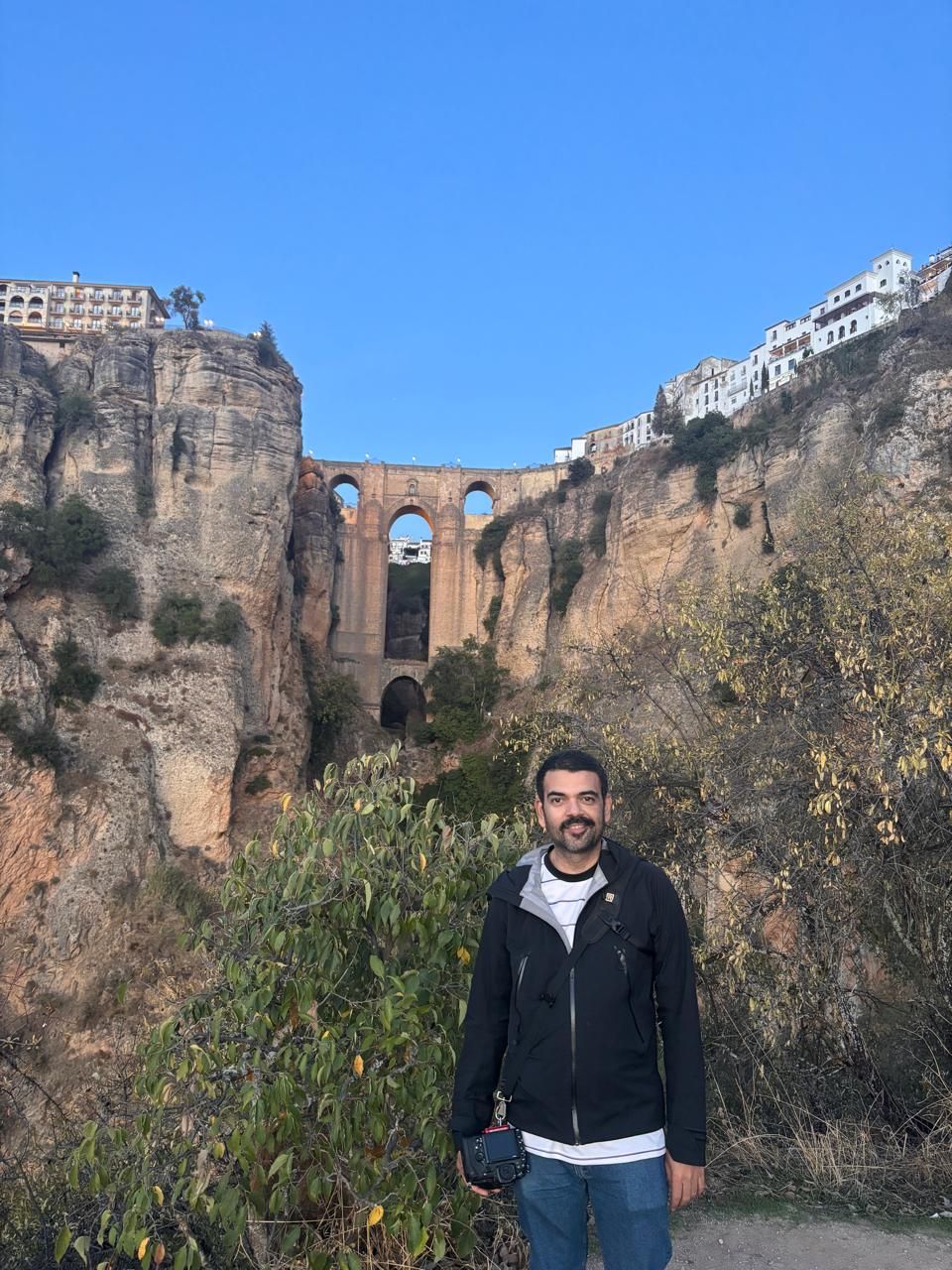
Posing for photos with the New Bridge of Ronda in the background
As it started to get dark the pessimist in me got his way and we rushed on our way up only to realise about half the way up that there were lights along the path which were subtle but would have been enough for a safe climb up even in the darkness.
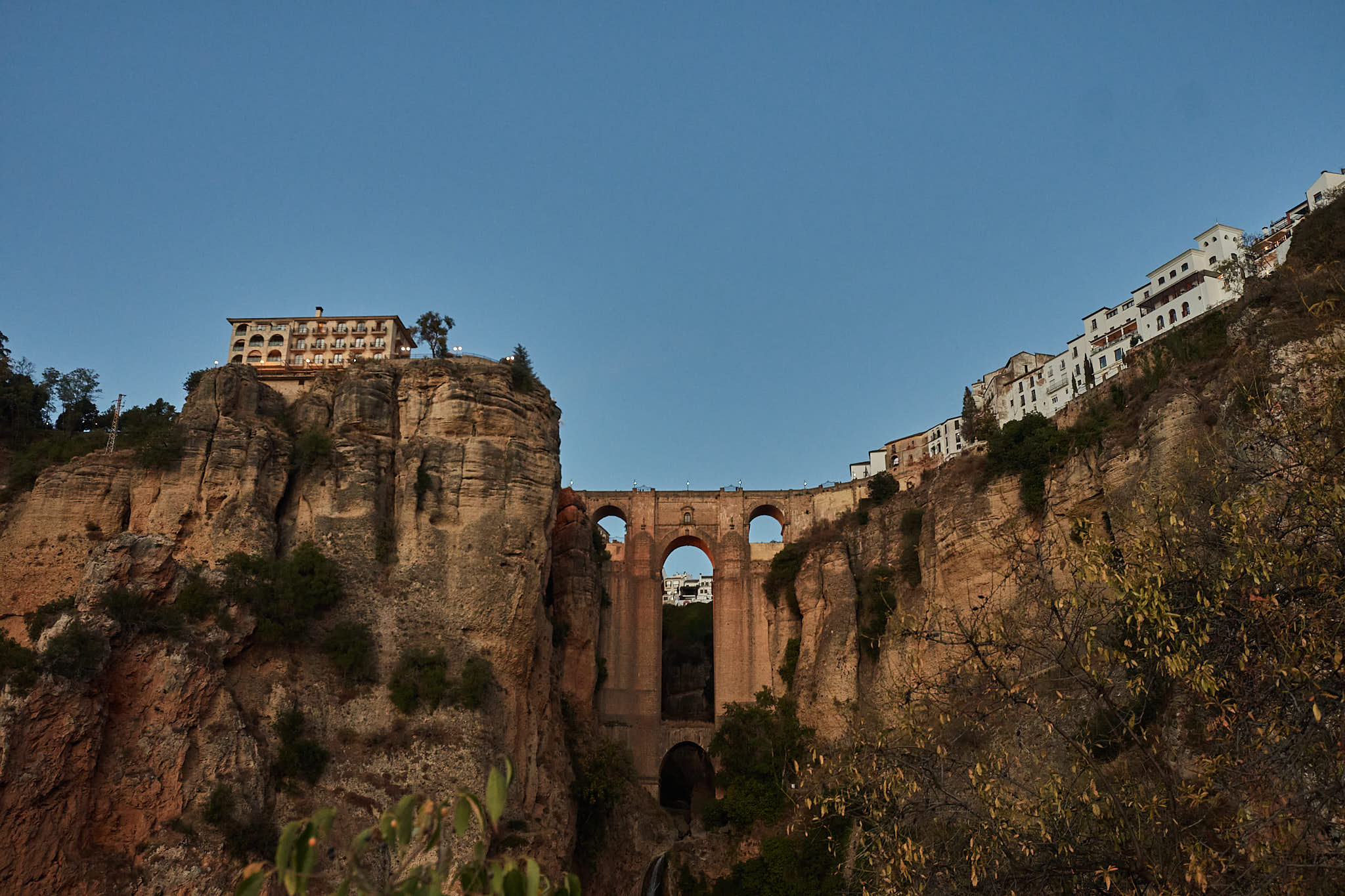
Lights start coming on in the town above
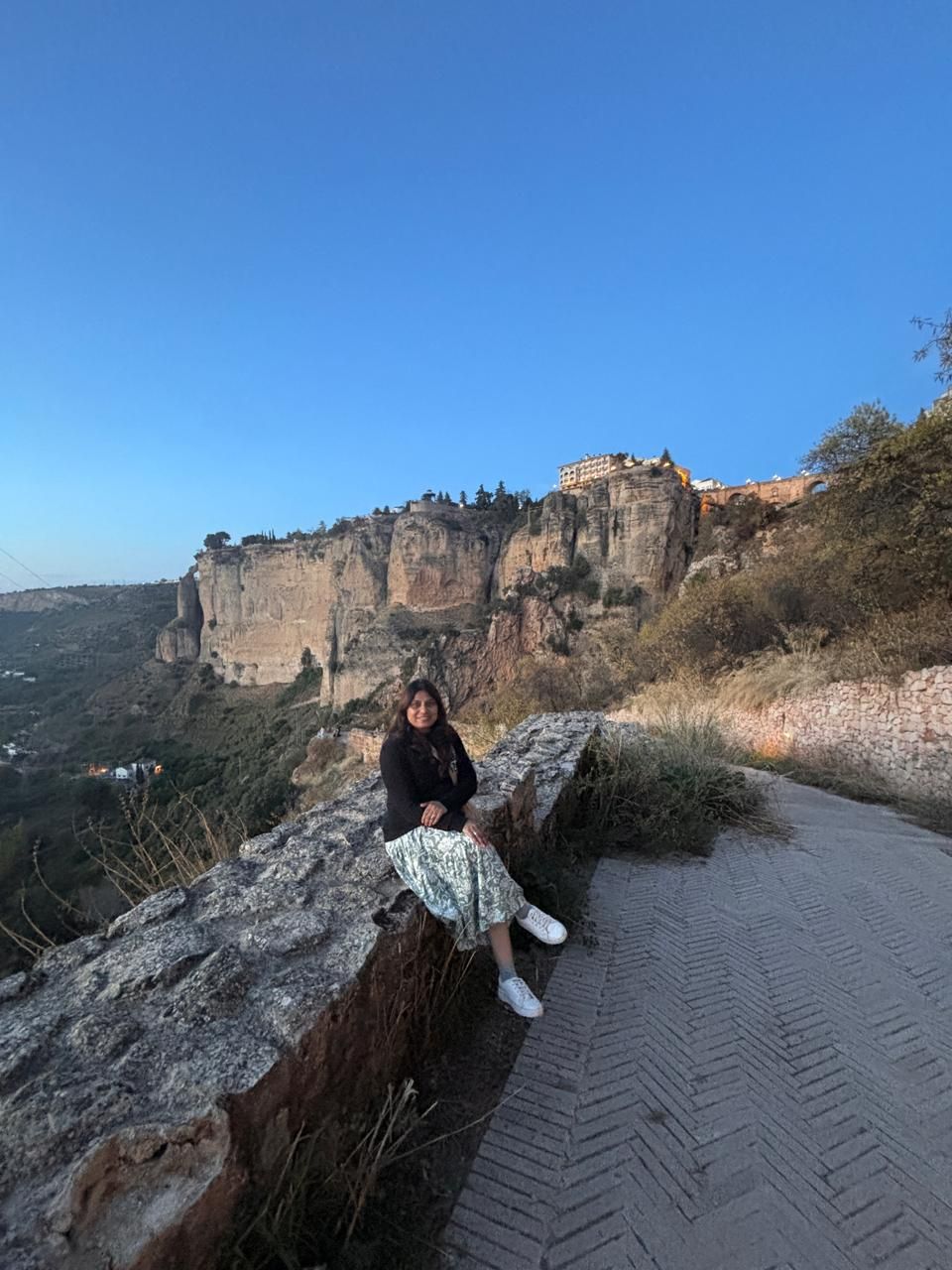
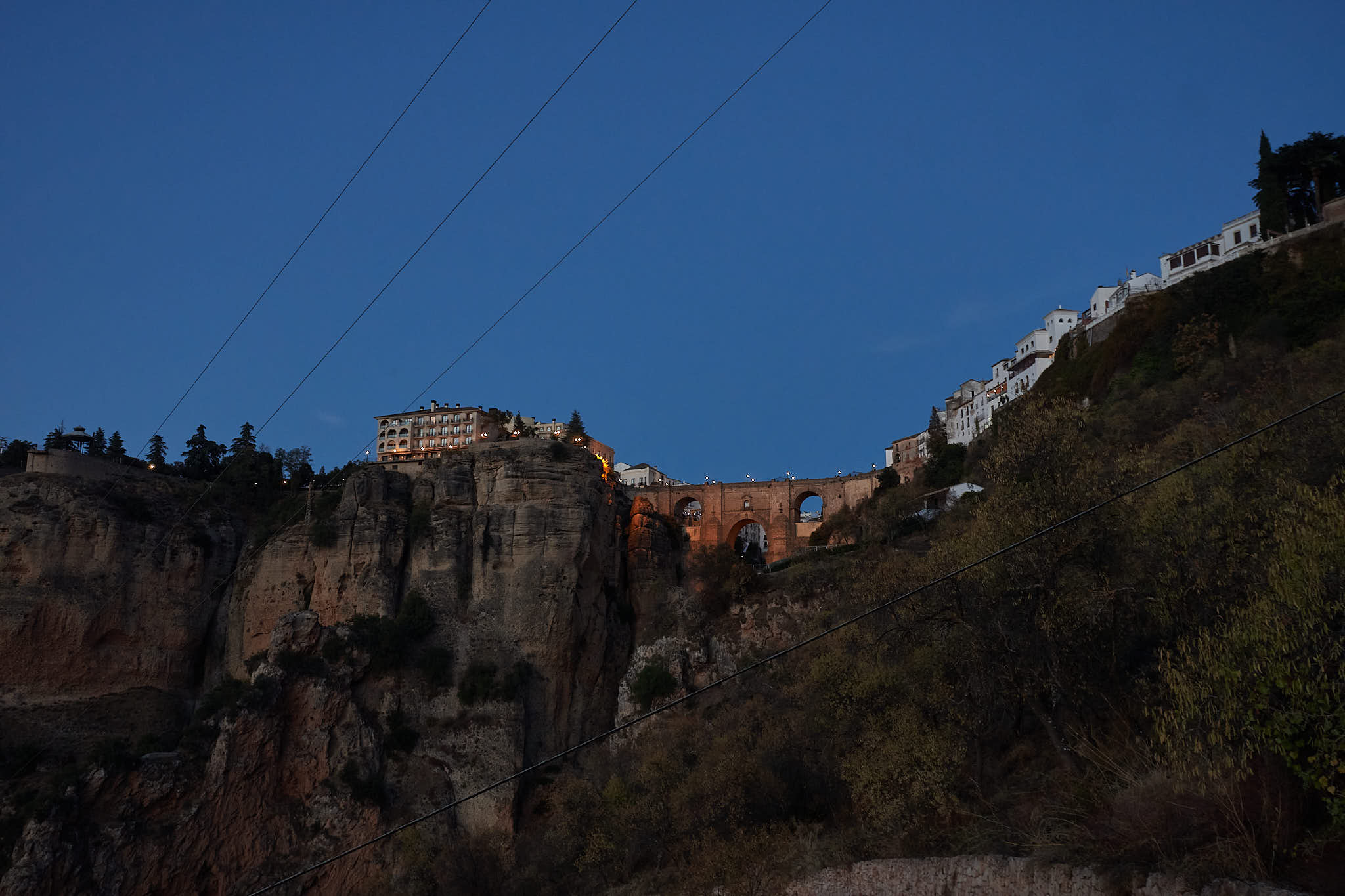
Near darkness as we ascend up the trail up back into town
With the New Bridge seen from below we decided to see the other bridges of Ronda. If there is a “New Bridge”(18th century) there has to be an “Old Bridge” ( 16th century) and there was an even older “Arab Bridge” or Bridge of San Miguel.
It was dark by now which ruled out the Arab bridge which wasn’t lit up but the Old Bridge was. So we decided to go and see the Old Bridge all lit up. We went out of the Moorish Quarter via the Gate of Philip V which was for centuries the gate to the fortified city.
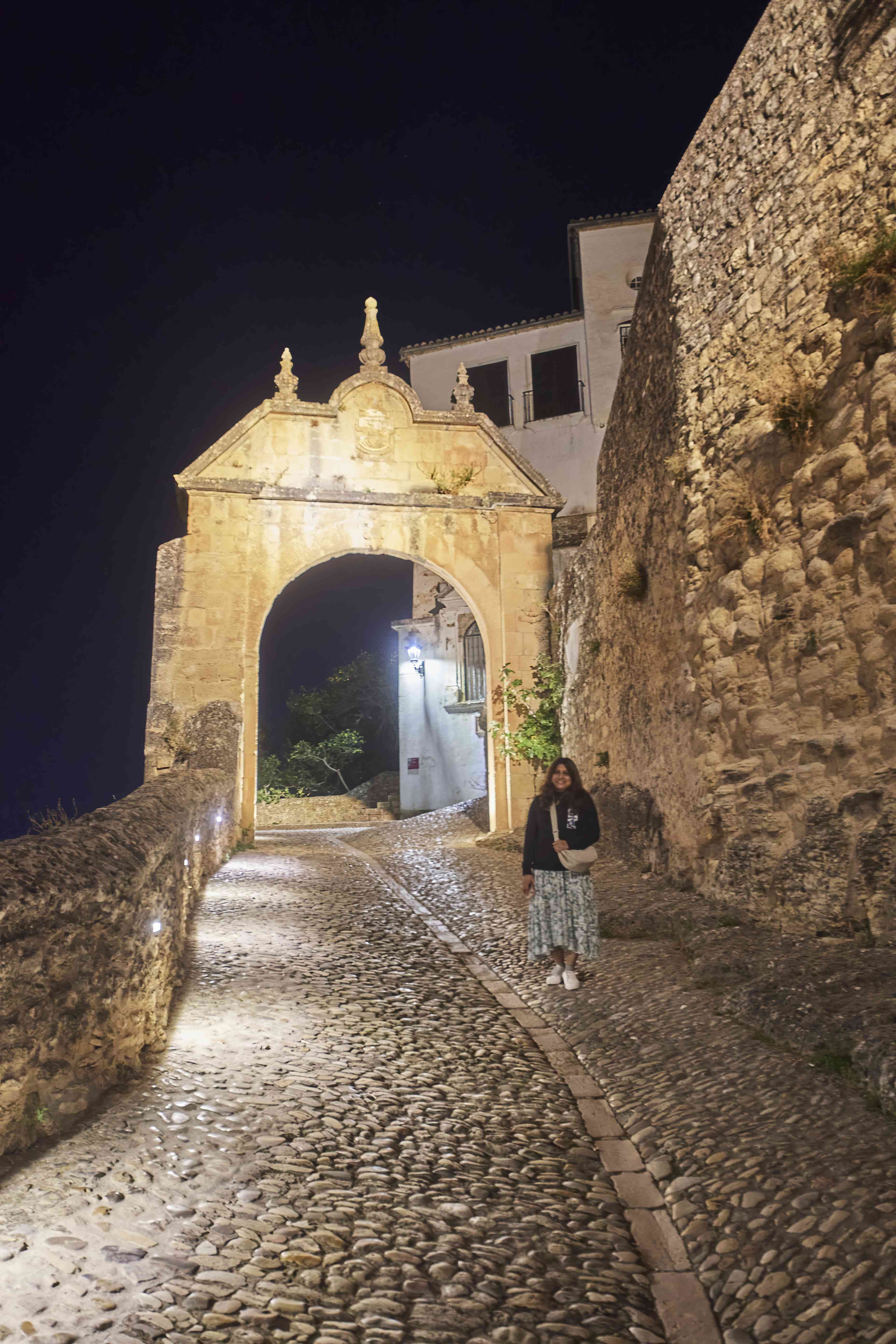
The Gate of Philip V the main gate of Ronda for centuries
The path looked down to the Old bridge or the Puente Viejo. The bridge and the town was lit beautifully and made for some great photos. We finally reached the bridge and took a photo of the gorge below.
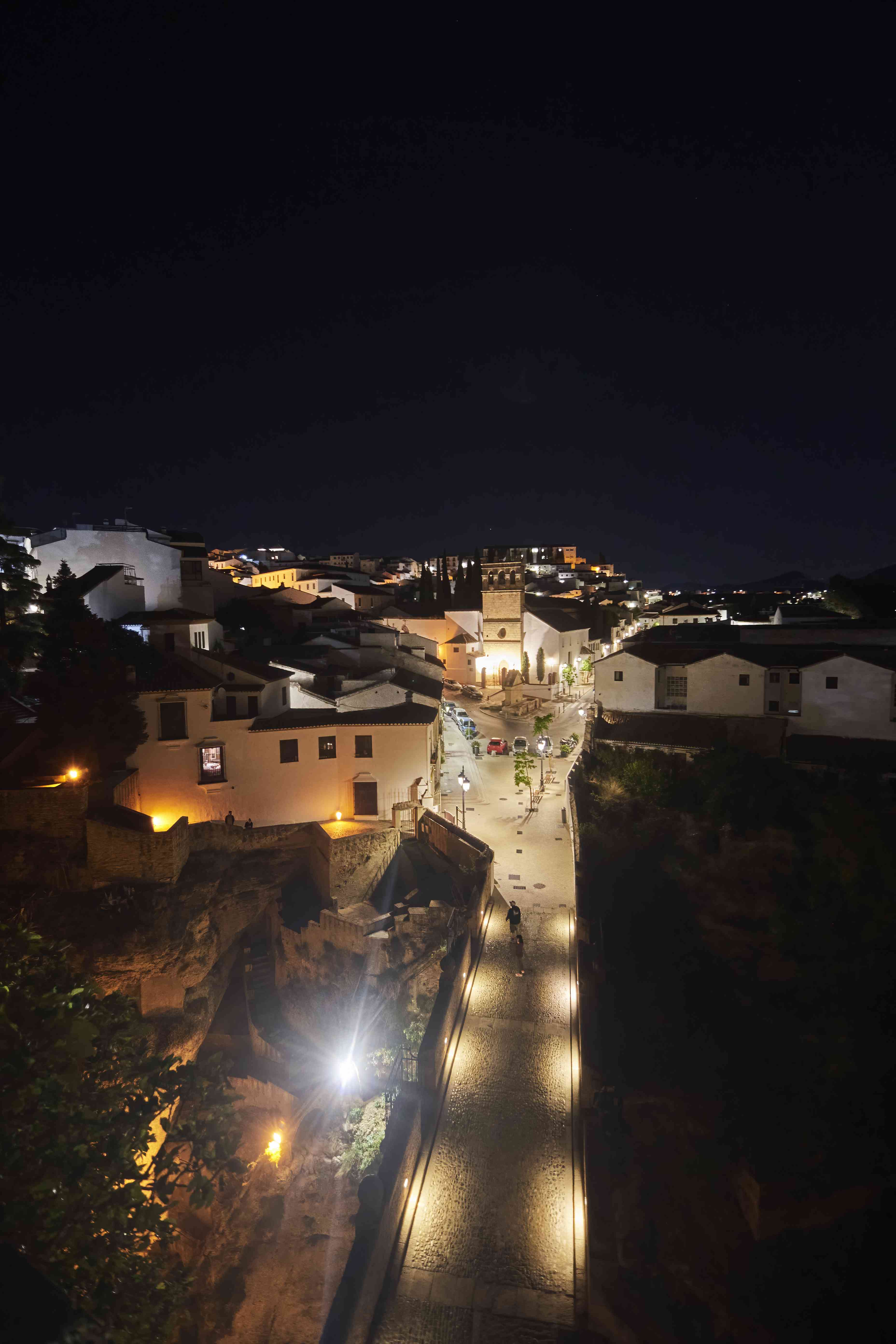
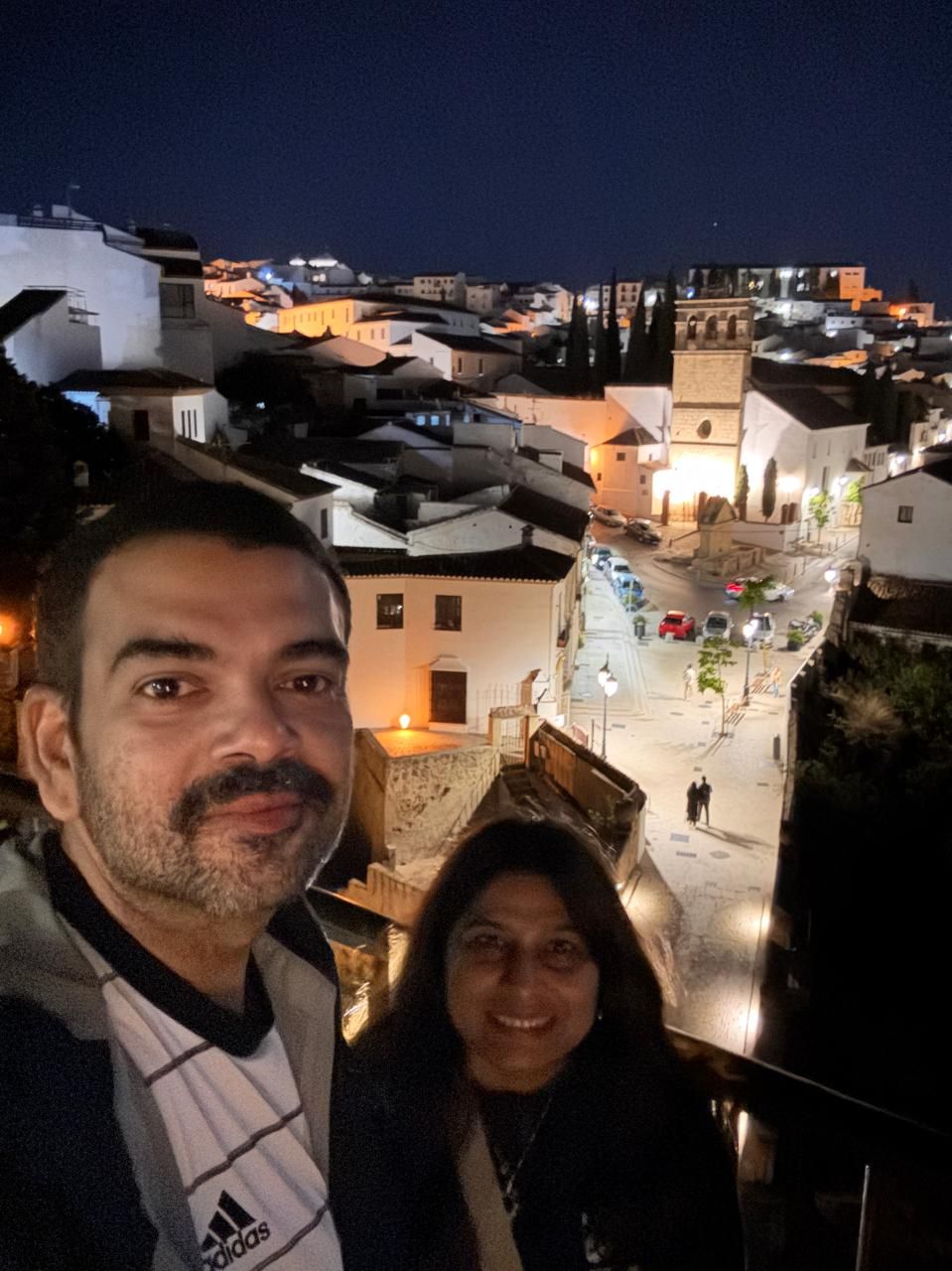
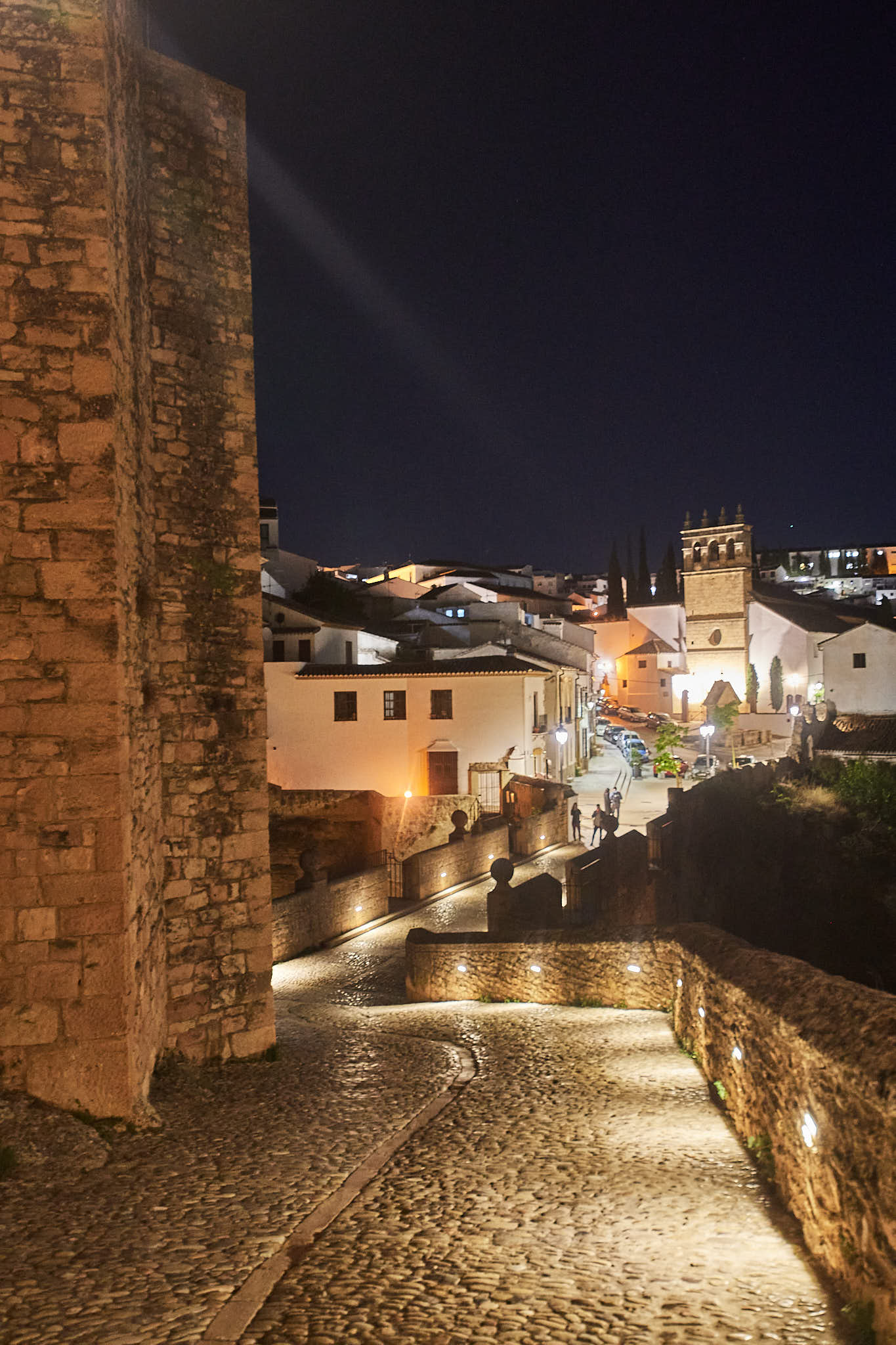
The pedestrian only Puente Viejo or Old Bridge of Ronda 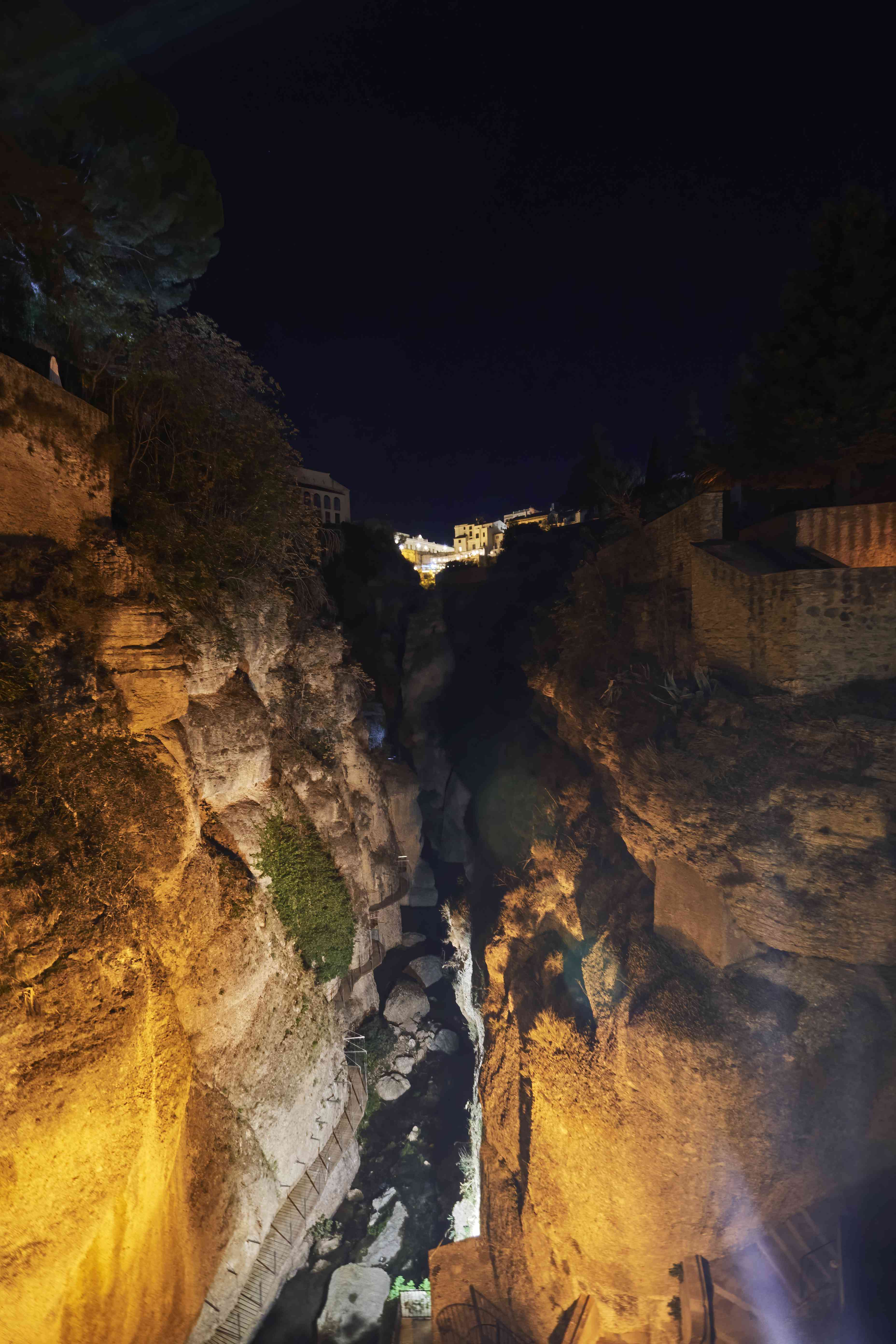
The Gorge below from the Old bridge beautifully lit up
We then crossed the Old Bridge and found the gardens along the gorge ( Jardines de Cuenca ) surprisingly open. So we went in and took photos of Puente Viejo / Old bridge all lit up.
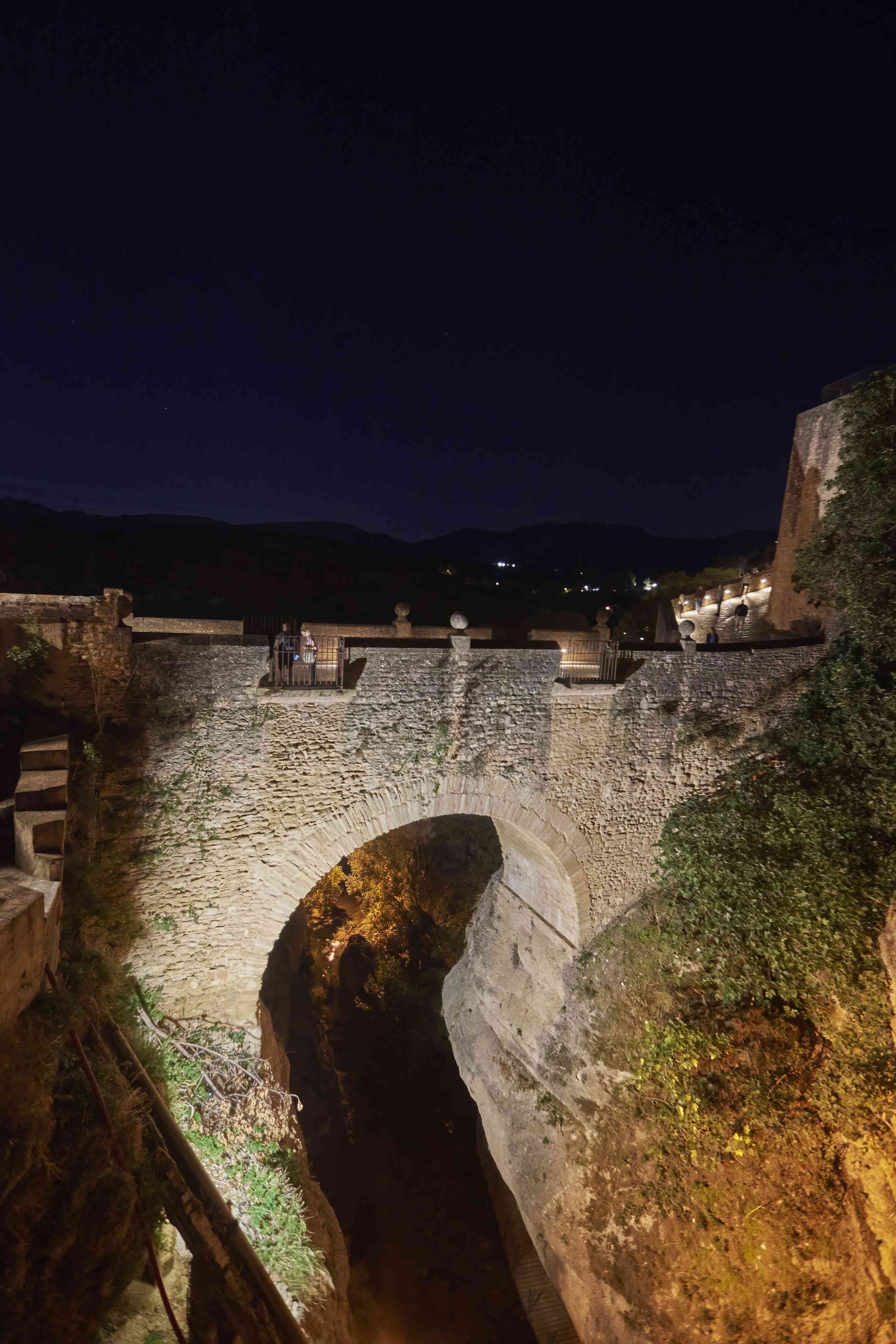
The Puente Viejo all lit up from the Jardines de Cuenca
The gardens then continued along the gorge and gave great views of the lit up New Bridge too at the far end. That was a welcome surprise as we didn’t expect the gardens to be open after dark. We clicked photos of the lit up Bridge and sat on a bench in the park enjoying the view before walking out.
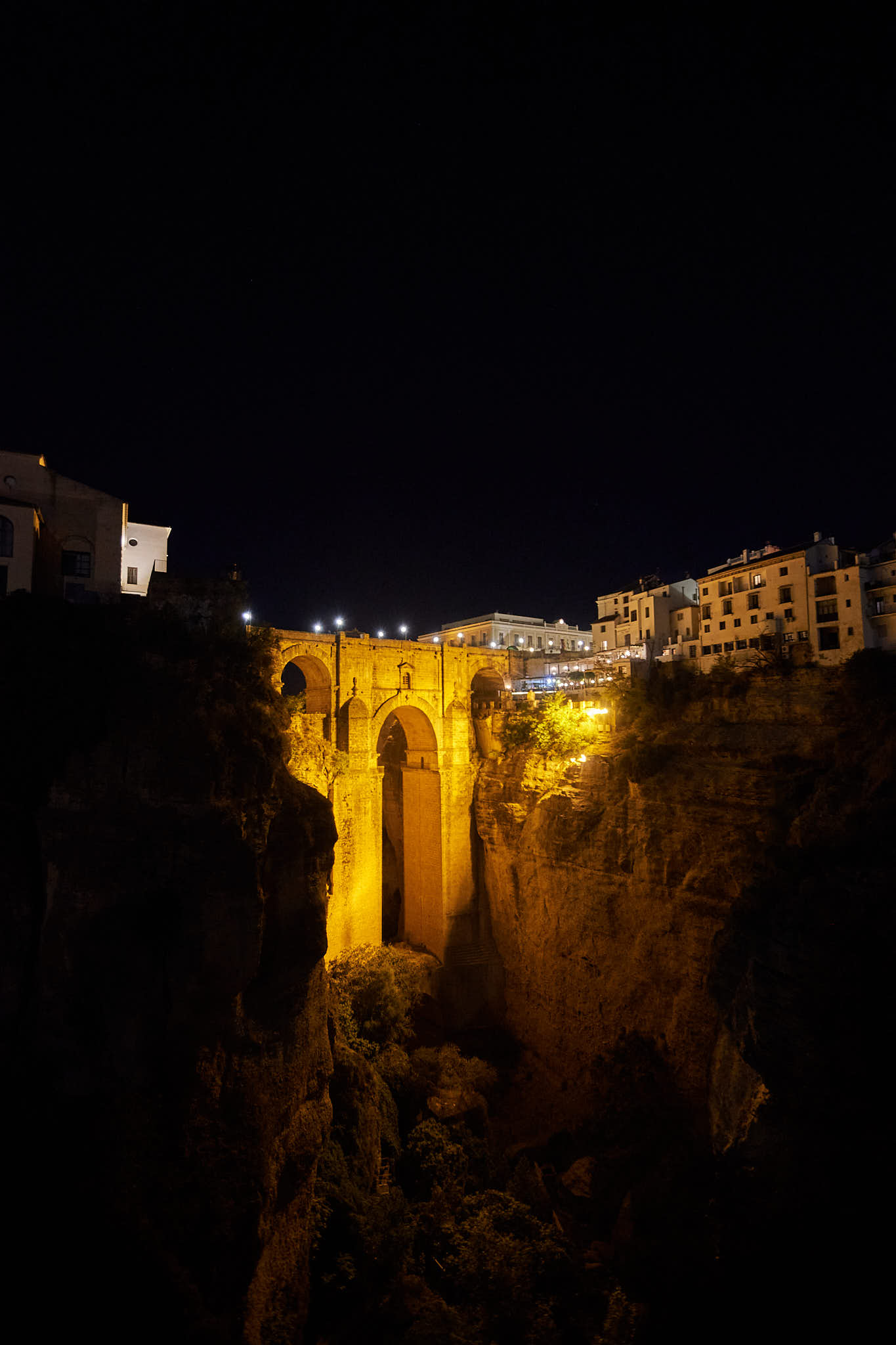
The lit up New bridge from the Jardines de Cuenca
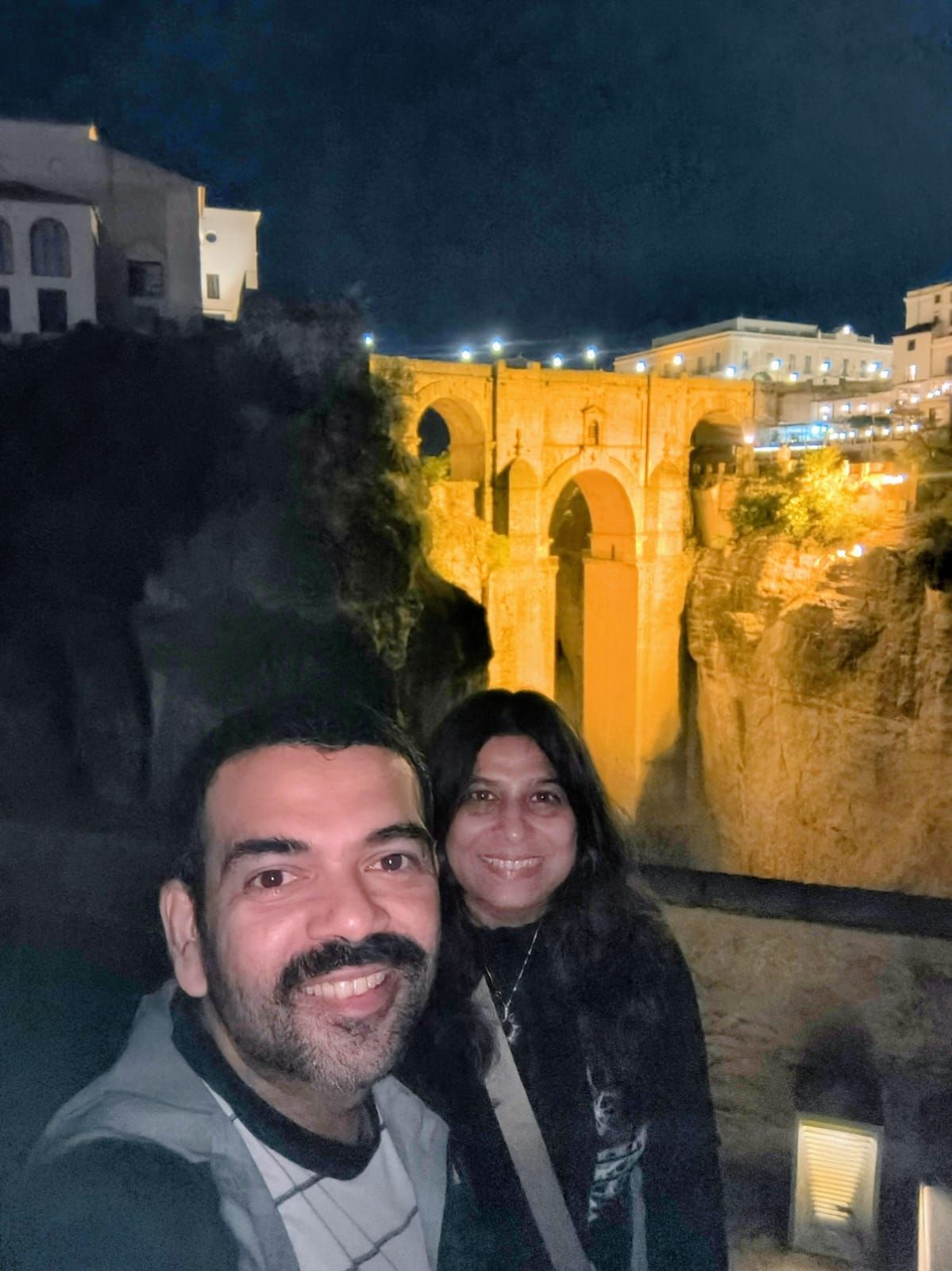
A selfie in the dark at the Jardines de Cuenca with the New Bridge in the background
We then walked to one of the squares in the Mercadillo quarter or New town called Plaza del Socorro. The day trippers had left and Ronda was peaceful as every popular small town is after dark. This typical Andalusian square surrounded by beautiful buildings was lit up and we sat on one of the numerous benches and relaxed our legs for some time.
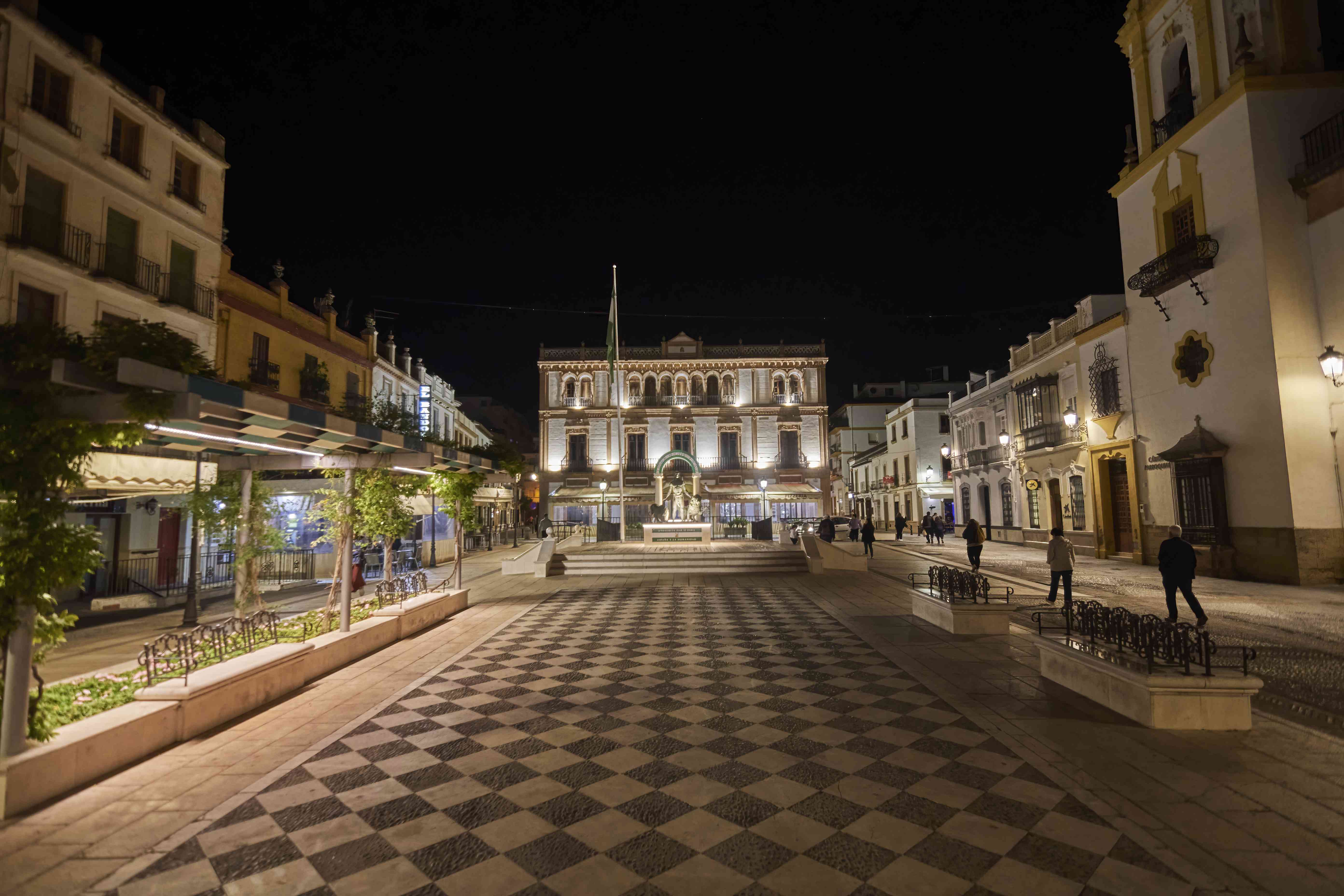
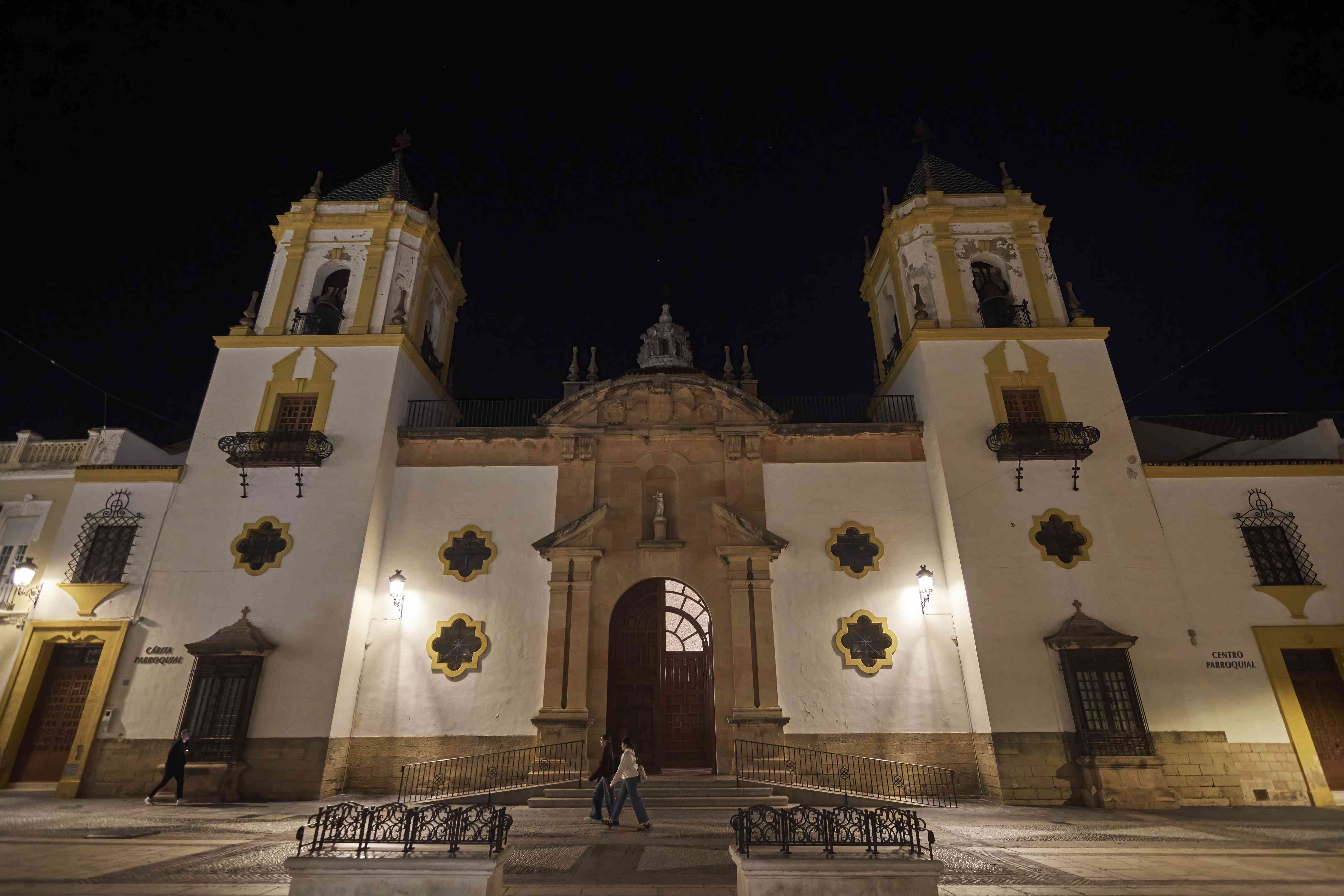
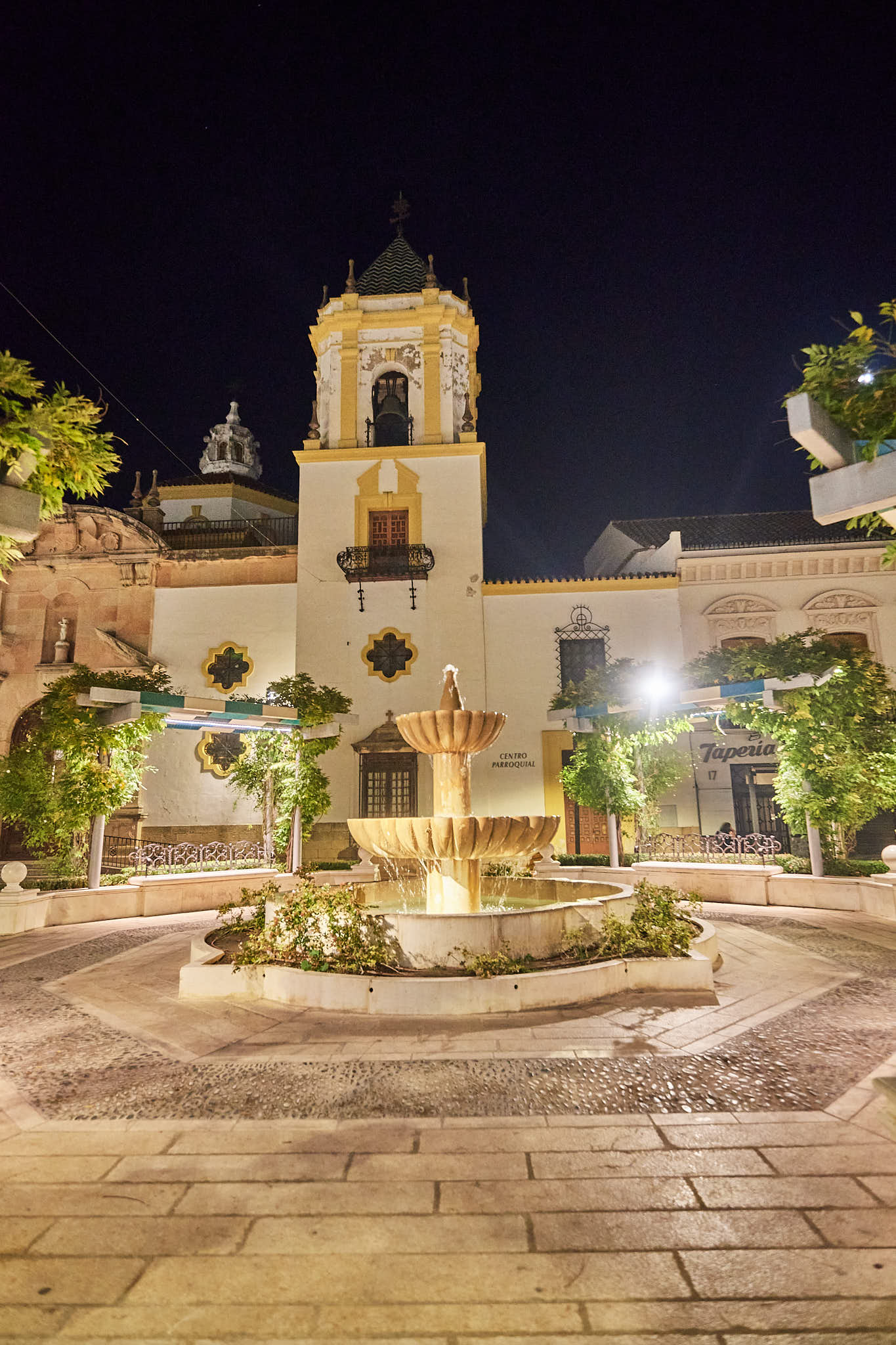
The quiet but beautiful Plaza del Soccoro in New town
We then made our way back to the New Bridge, crossing it for the second time in the day (stopping for a minute at the Mirador de Aldehuela for more photos of the Bridge) to return to the Moorish quarter in time for our dinner reservation at the Restaurante Las Tablas.
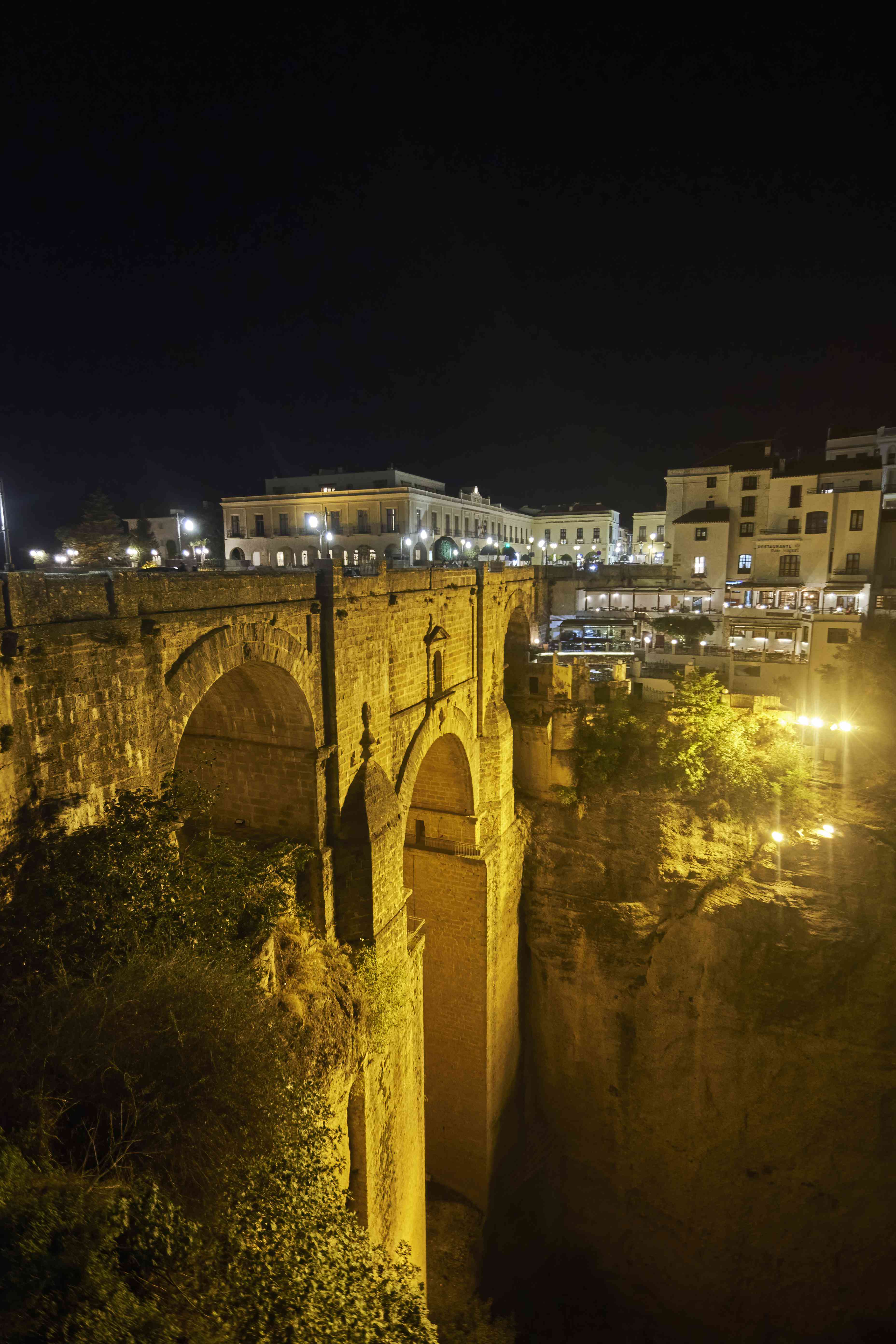
The New Bridge from the Mirador de Aldehuela
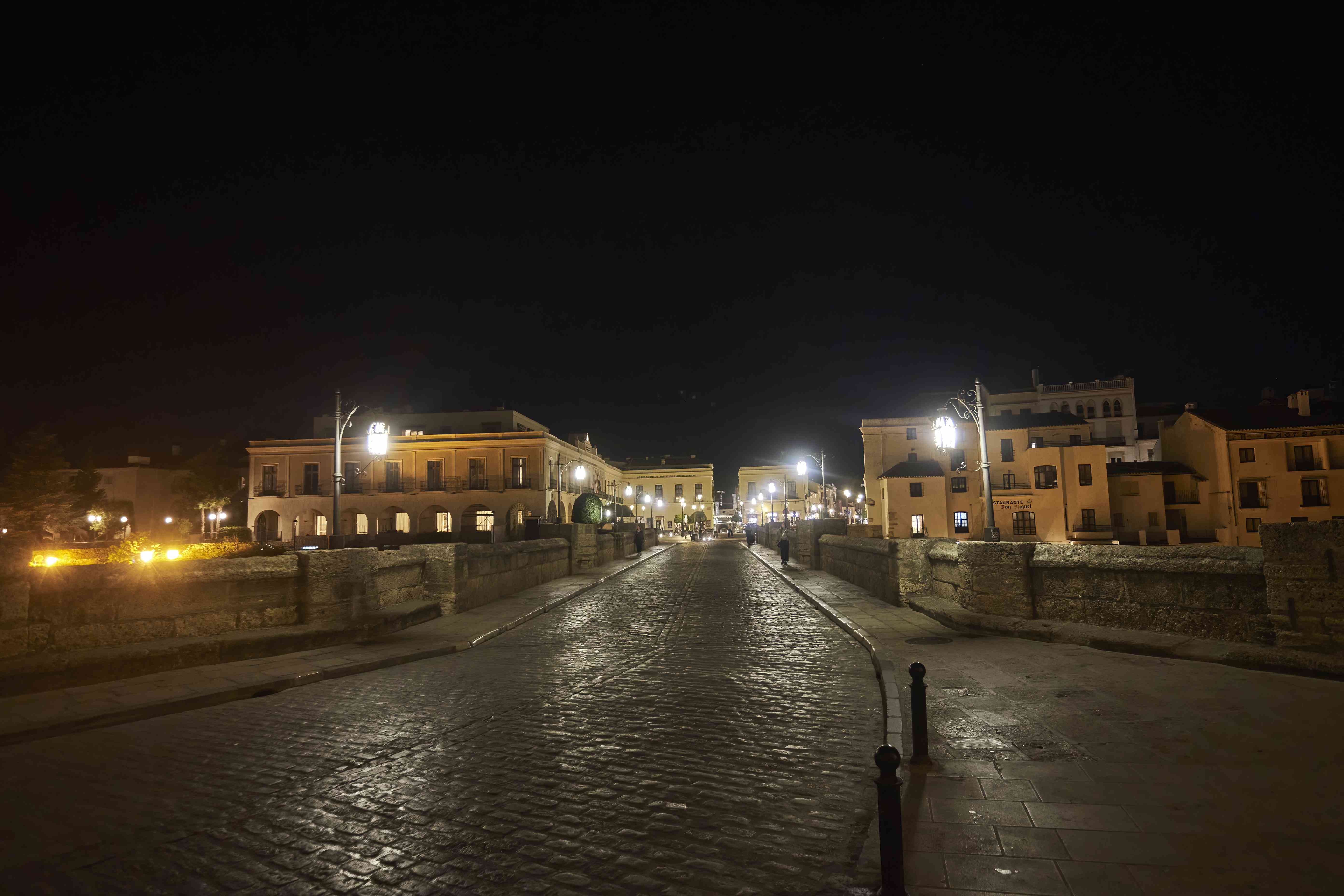
Looking back at the New town from across the New Bridge in Ronda
It had been a great day in a pretty hill town and we capped it off with a memorable dinner at the small but highly rated Restaurante Las Tablas. I had their highly recommended Steak with tempura vegetables while the better half ordered her Patatas Bravas which turned out to be the best potatoes we had on this trip. We also ordered a beer for myself and a lemonade for the better half. The small restaurant lived up to its reputation and ratings and we enjoyed our meal to the fullest.
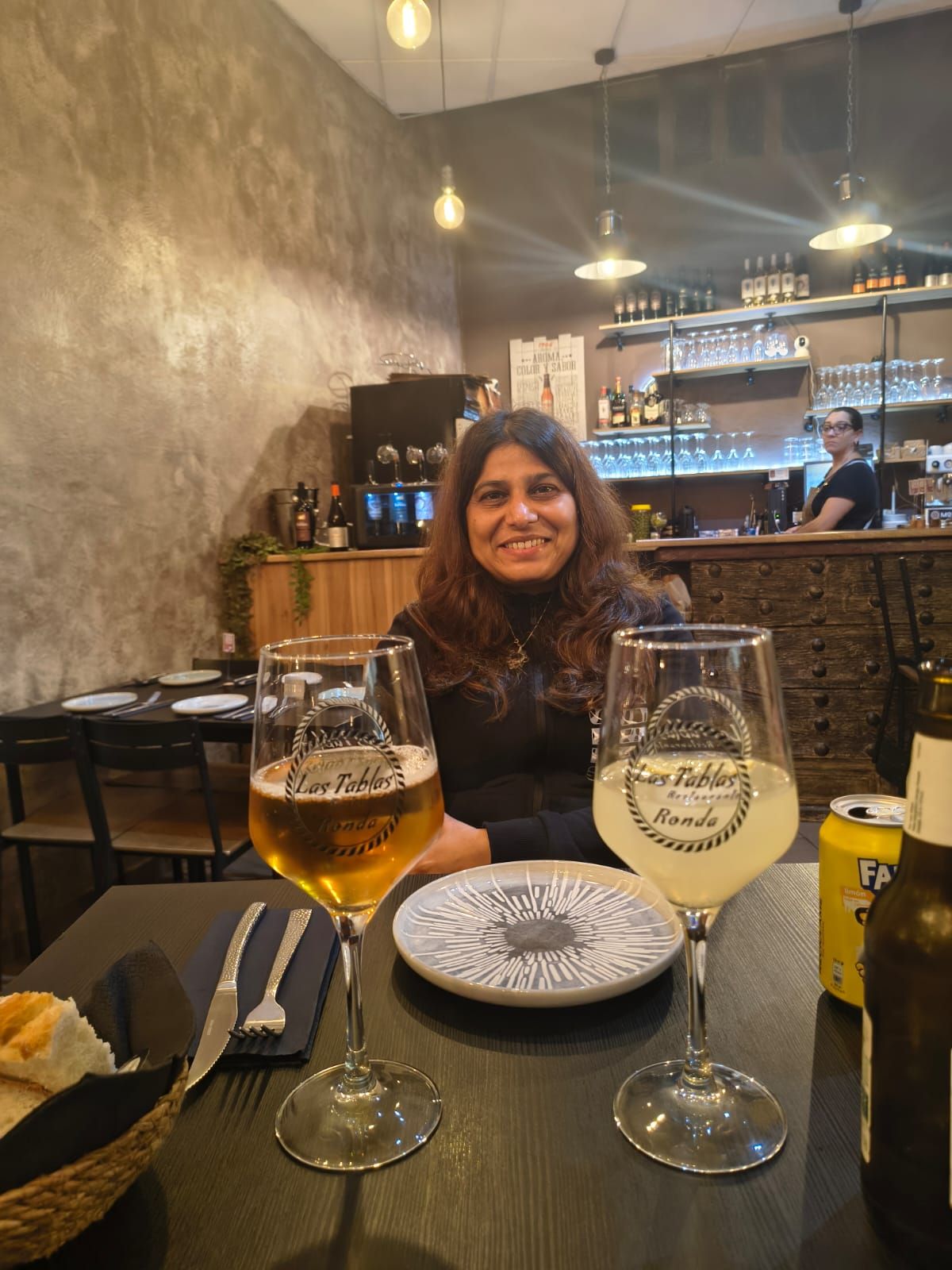
The better half with our drinks at the restaurante Las Tablas
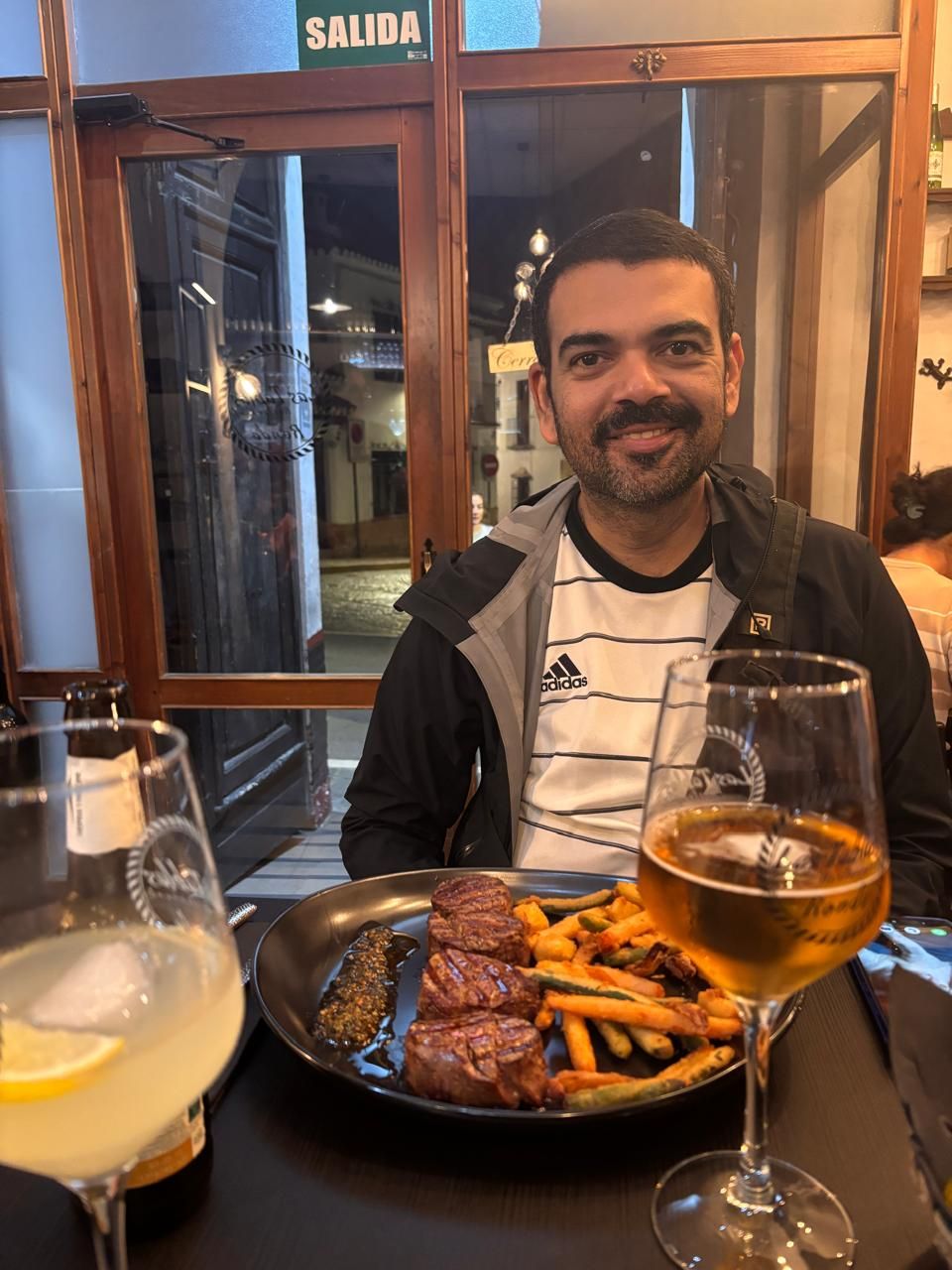
I am happy at getting great quality steak!
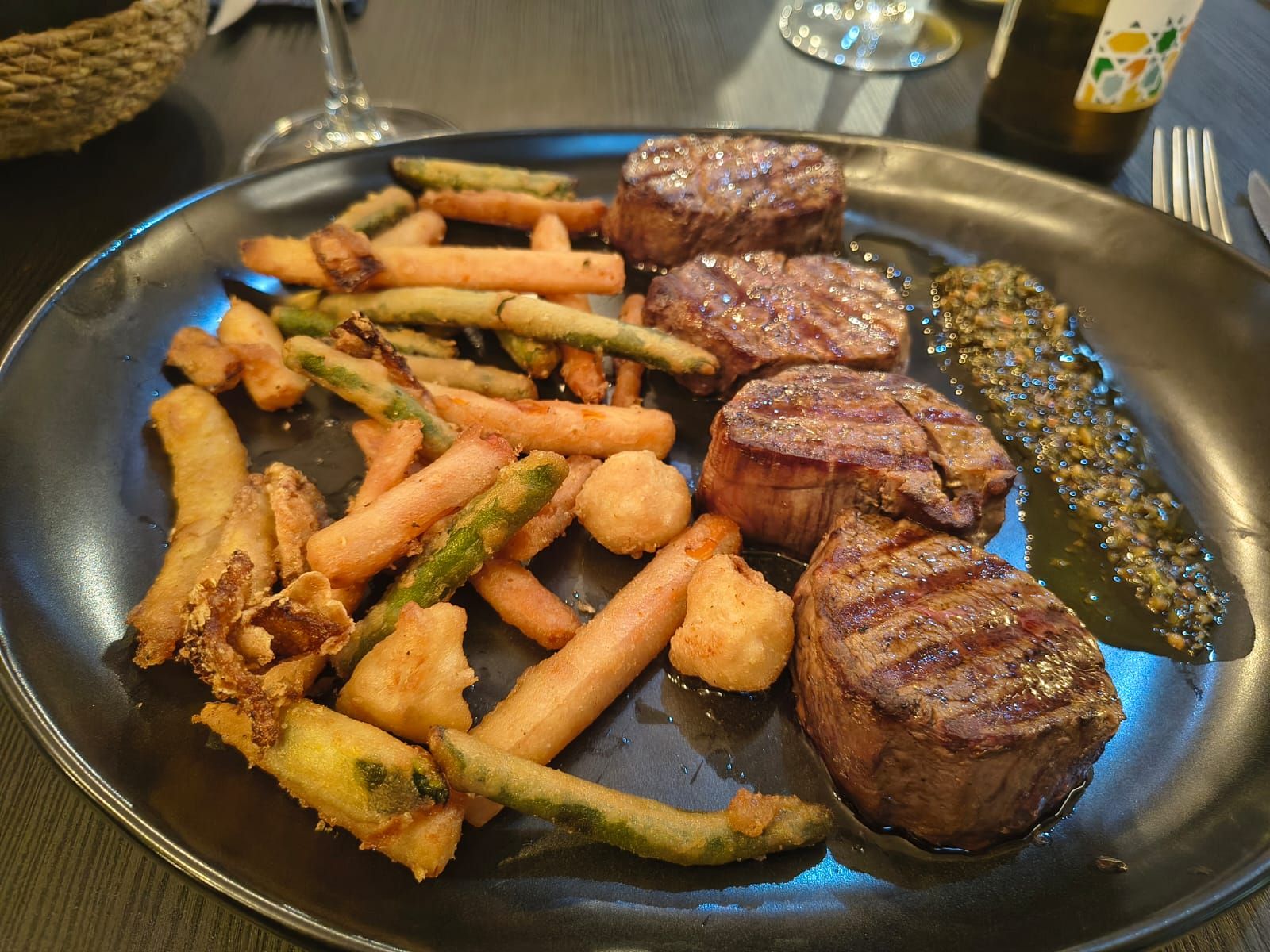
The most expensive but tastiest meal I had in Ronda
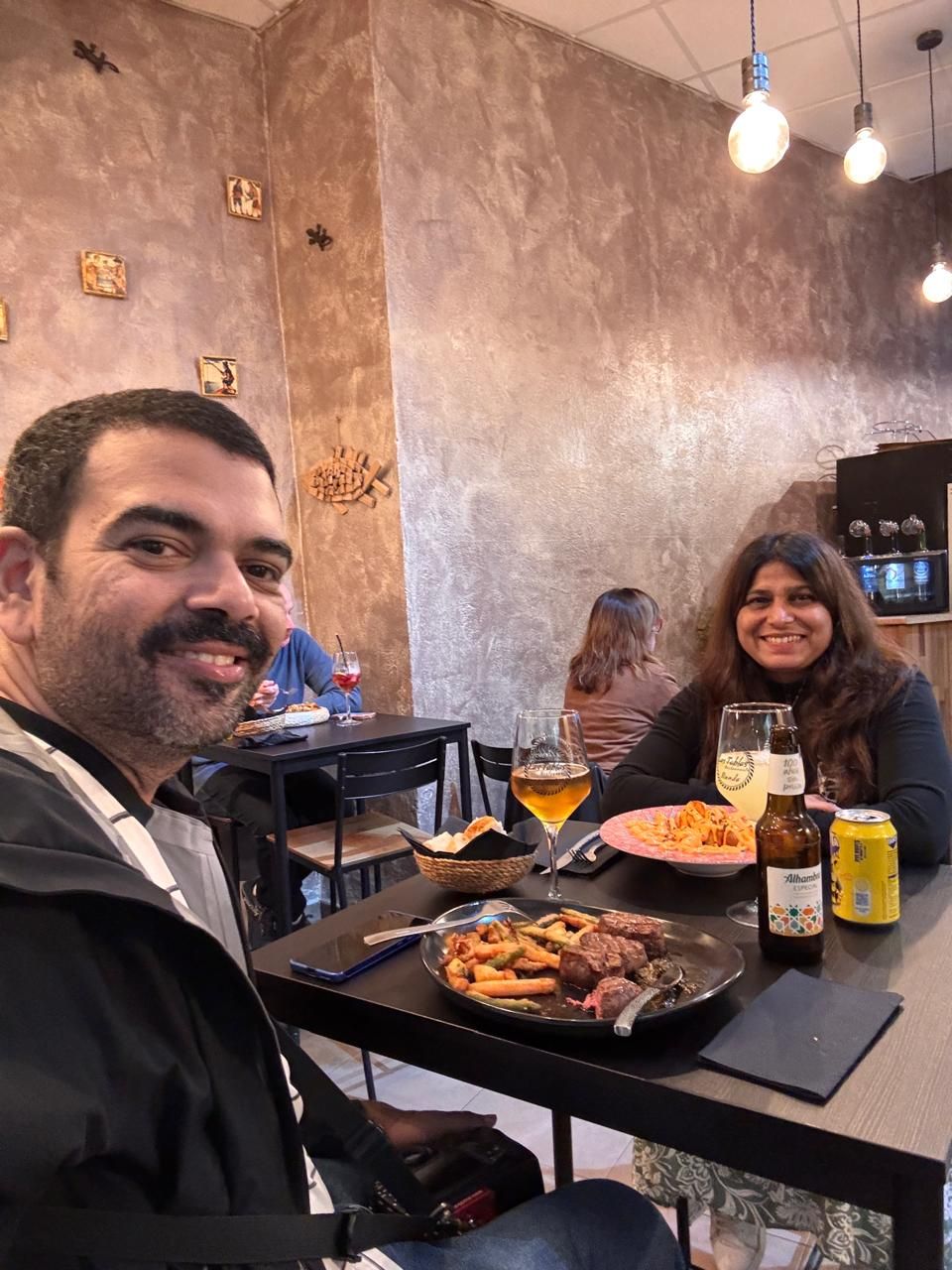
Capping off a great day in Ronda with a great dinner
We returned to our hotel with our tummies full and retired to a peaceful nights sleep. The next morning we would go for a walk on the walls of Ronda and go down to cross the only bridge we hadn’t crossed in Ronda yet – The Arab Bridge. We also had a scheduled visit to the famous Bullring of Ronda as it opened in the morning.
That is topic for the next post, some other time, some other day. There is no point apologising for the long posts as I seem to have made a habit of rambling on for too long.
Till next time,
Adios!
 yogictravel
Loved this post. Rhonda looks great. Those bridges and cliffs. Fabulous. The church and courtyard were amazing too.
LikeLike