
This post is the continuation of a series documenting our travels in eastern Sicily in the European spring of 2025. After 3 great days in the resort town of Taormina close to Mt Etna we were now in the island neighbourhood of Ortigia in the city of Siracusa. We had spent first evening just walking around the island ( Goodbye to Taormina & Hello to Ortigia – Exploring Eastern Sicily, Part 5 ) and had done our customary early morning walk on our first full day here to see the beautiful and historic island without any crowds around ( Morning walks around Ortigia – Exploring Eastern Sicily, Part 6 ).
We loved Ortigia so much that the only time we ventured onto the mainland part of Siracusa ( Other than to get to the train/ bus station on our way in & out) was to see the Neapolis Archaeological Park. This UNESCO World Heritage site is the only part of the Ancient Greek city of Syracuse that survives today. The Greek city of Syracuse at its peak in the 5th century BC was a dominant military power with a population that rivalled Athens. That city is now long gone and the immensity of that ancient city can be seen in the surviving structures inside the Archealogical Park.
We walked from our B & B to the Neapolis Archealogcal park which was about 2 km away since it was a nice sunny spring morning. We passed the statue of Archimedes, the most famous resident of Ortigia located right in between the two bridges that connect the island to the mainland. The rest of the walk was through modern day Siracusa. This part of town is a living, working city which goes about its day to day work without bothering about tourists.

The statue of Archimedes at the bridges joining Ortigia to the mainland
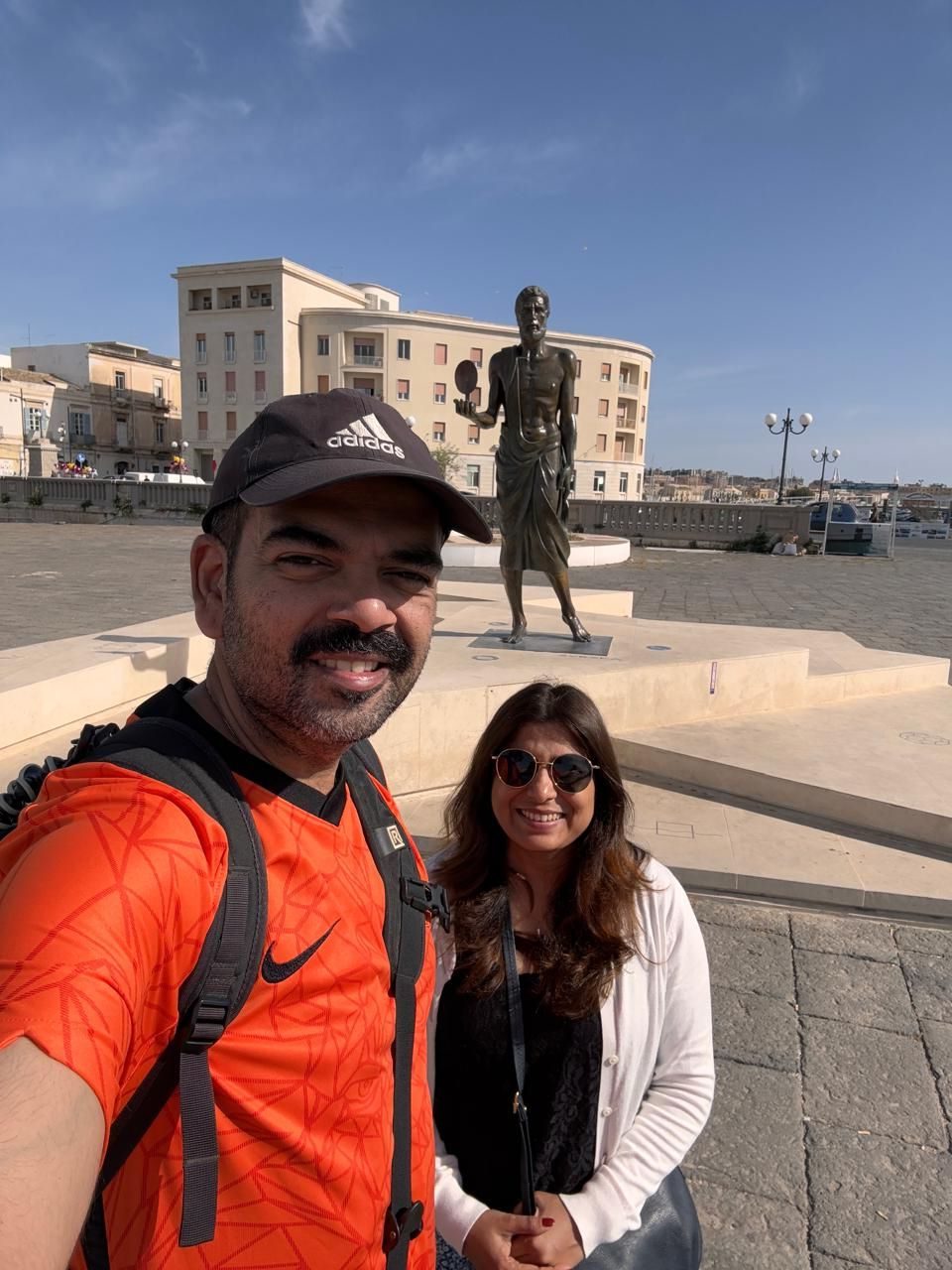
Taking a selfie with the great mathematician’s statue resisting the temptation to scream
” Eureka!”
We had a pleasant surprise waiting for us as we reached the ticket office for the site. As it was the first Sunday of the month, entry was free! So we saved 34 Euros by visiting the site on the free day incidentally. We then walked to the gates of the park where we expected huge crowds since it was free entry day. Thankfully there were only a handful of groups there that early in the morning and we would be able to visit the park without being jostled around.
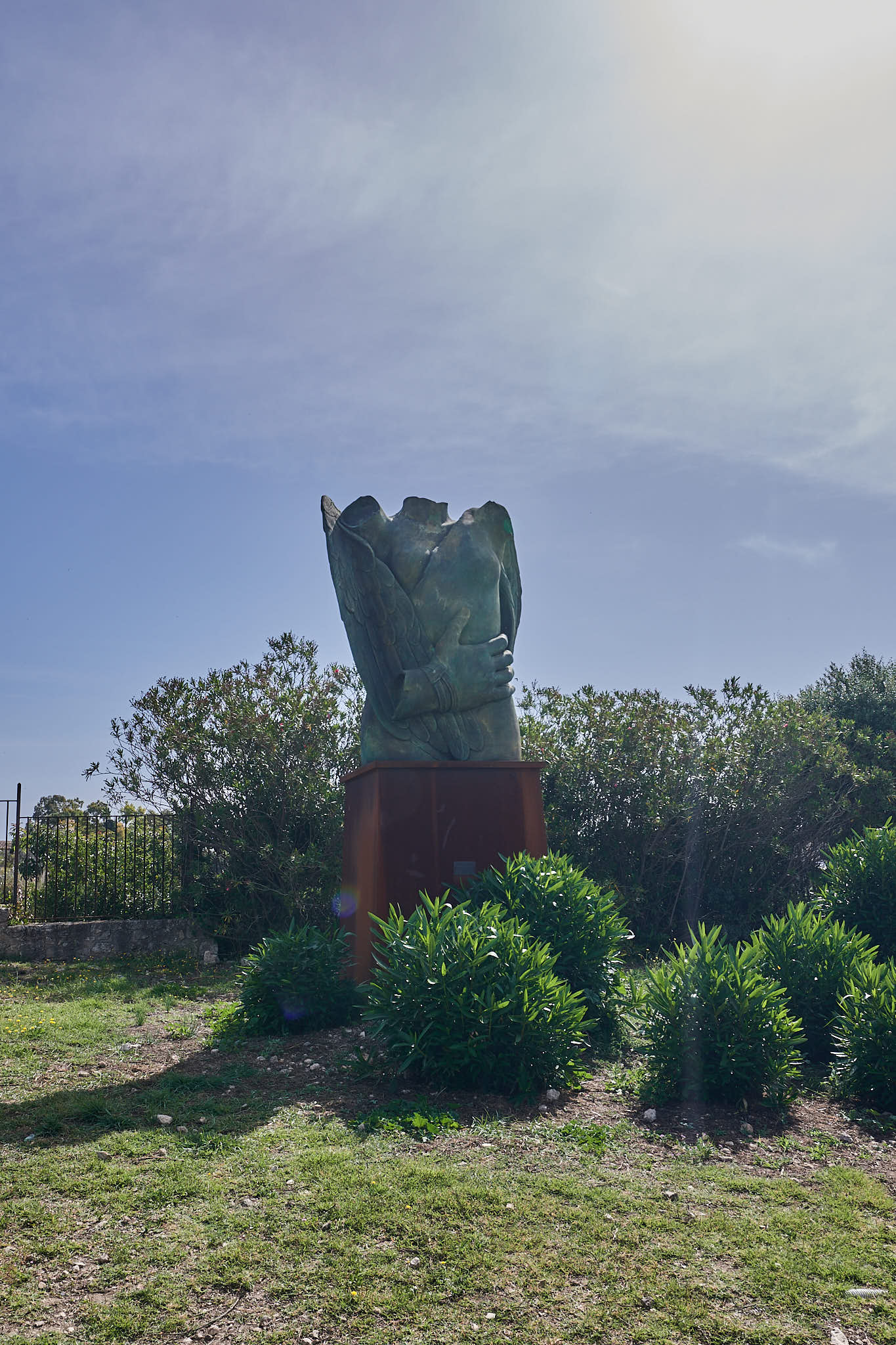
One of the numerous Icarus sculptures in the park which are modern
We got our tickets scanned and then made a beeline straight for the oldest and biggest single structure inside the park – the Greek Theatre. This huge theatre thought to seat 15000 people at its peak ( Syracuse had a population of 150000 then!) is cut out directly into the hillside with the seats cut directly from the stones on the hill side. Since there were no loudspeakers or amplifiers then acoustics were important – so there was a back wall to reflect the sound and a wooden roof above. Both of those are long gone, but the theatre is still in use today holding performances of greek plays and operas even today in the early summer (Mid May to Mid July). For that the original stone seats are covered by wooden seats to protect the stone. We were too early for theatre season but the preparations were well under way so we saw the theatre in its modern form with pristine wooden seats, a reconstructed stage area and modern lights and speakers being set up. So we couldn’t enter that steps part of the theatre and had to be satisfied with taking photos from the grassy terrace above.
While I would have loved to see the theatre without the modern embellishments, it was amazing to note that the spot was still hosting performances since 2500 years!
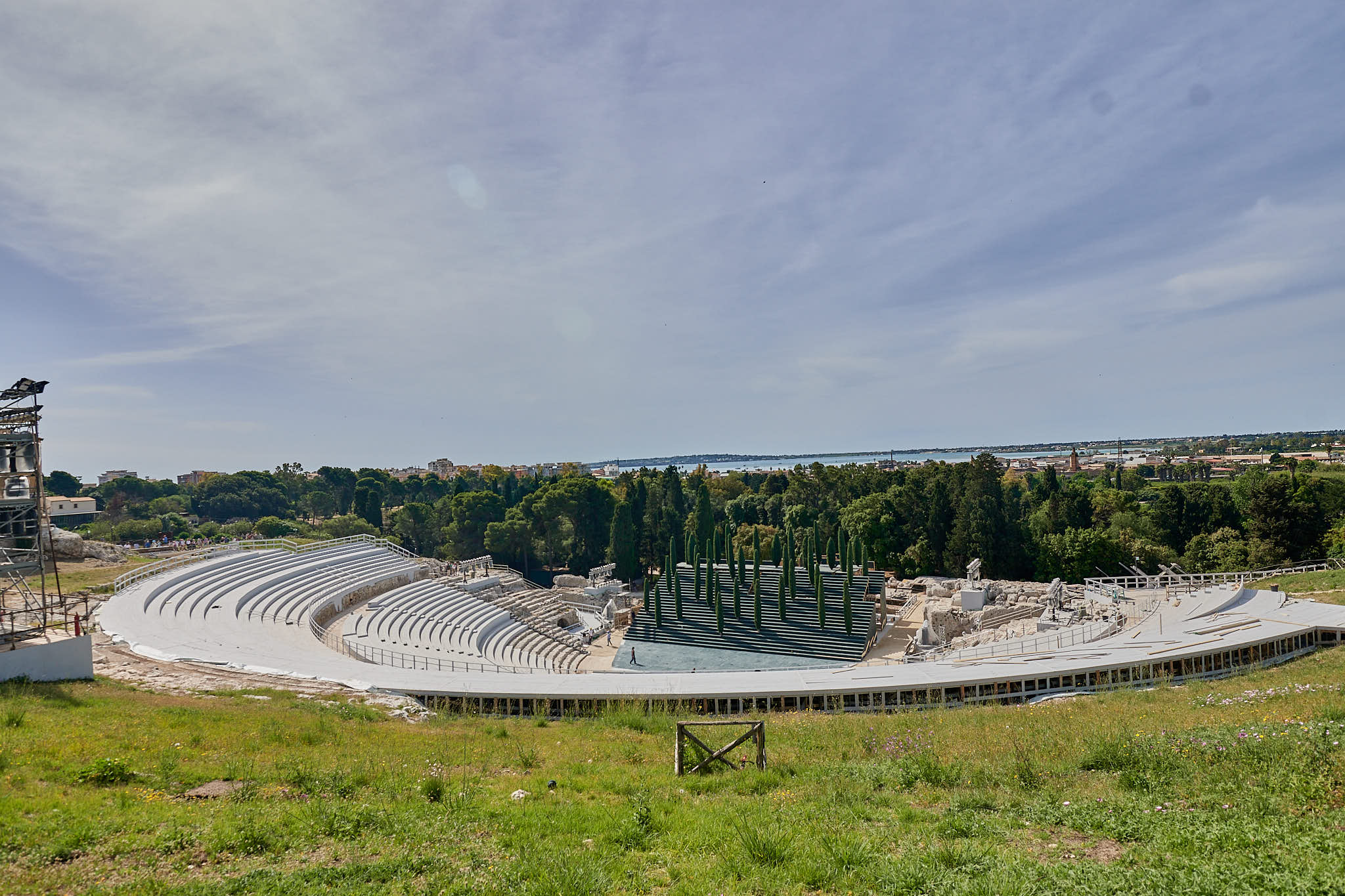
The Ancient Greek Theatre in Siracusa being prepared for the coming theatre season
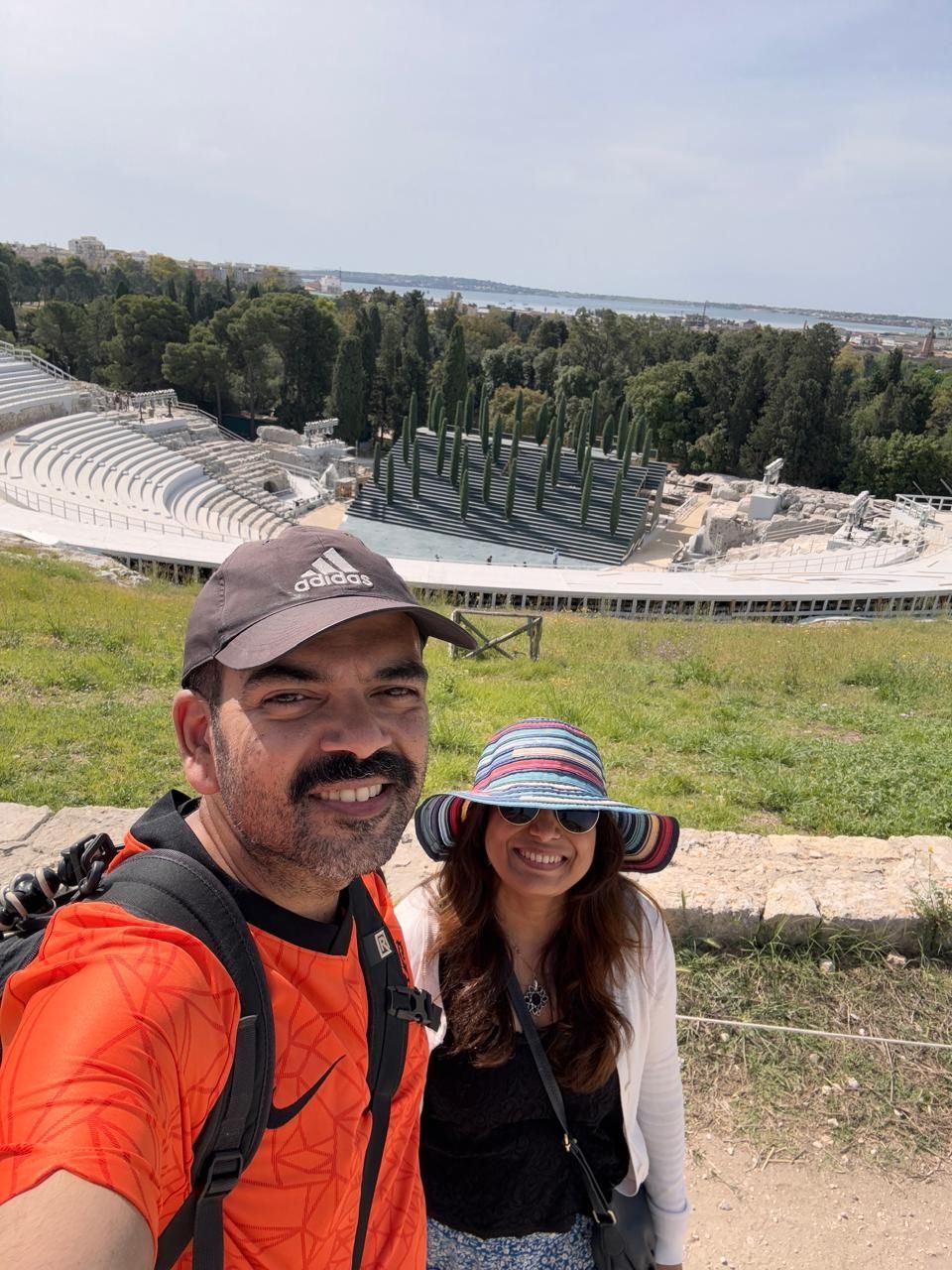
As close as we could get to the Greek Theatre because of the set up going on
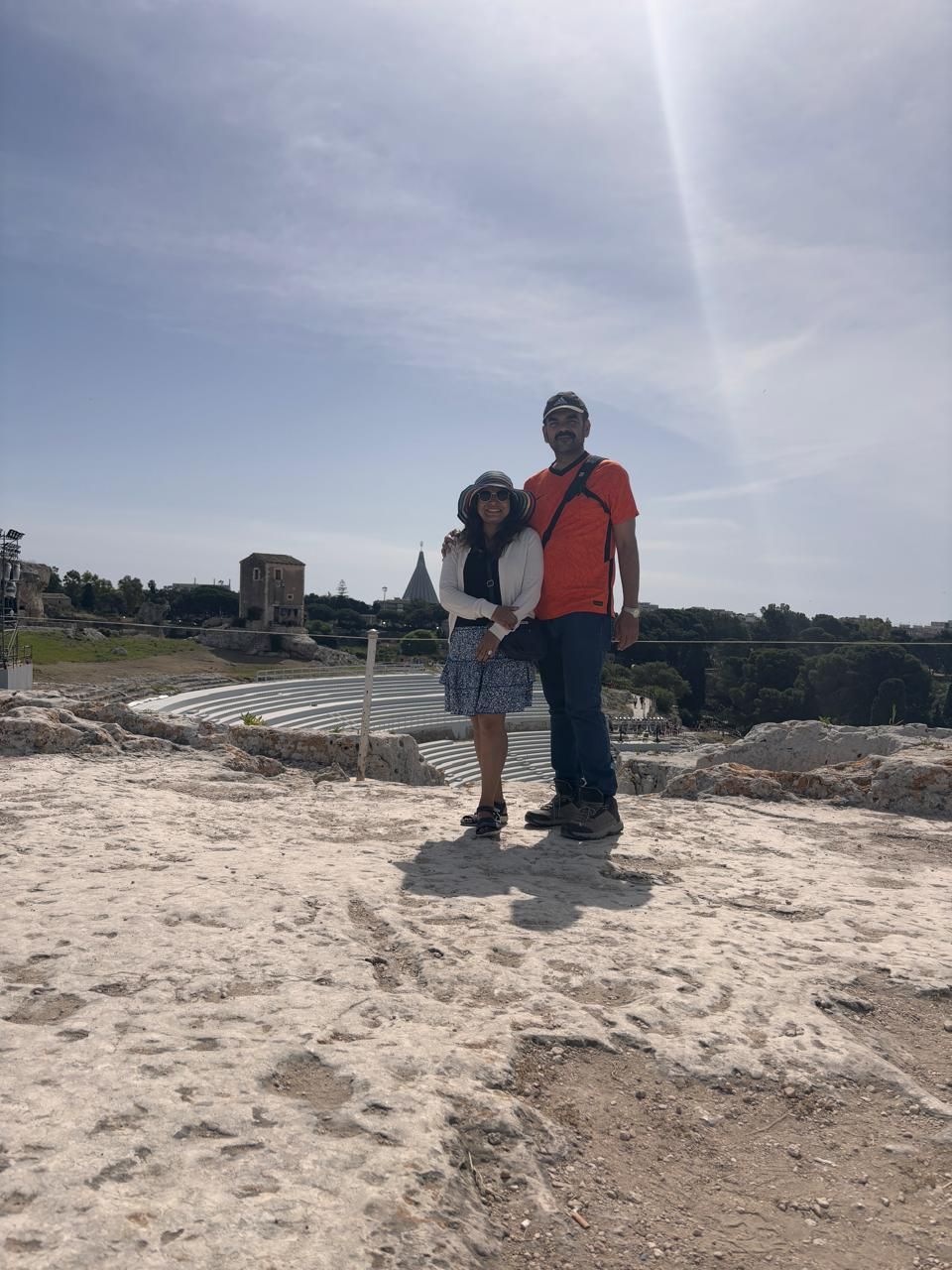
Using the tiny tripod to take a selfie at the Ancient Greek Theatre
We walked the entire length of the windy terrace above the theatre imagining how difficult it must have been to construct such an enormous structure without modern tools. It always amuses me that structures over 2500 years old are surviving and most modern buildings fall apart within a century of construction!

In awe of the 2500 year old Greek Theatre at Siracusa
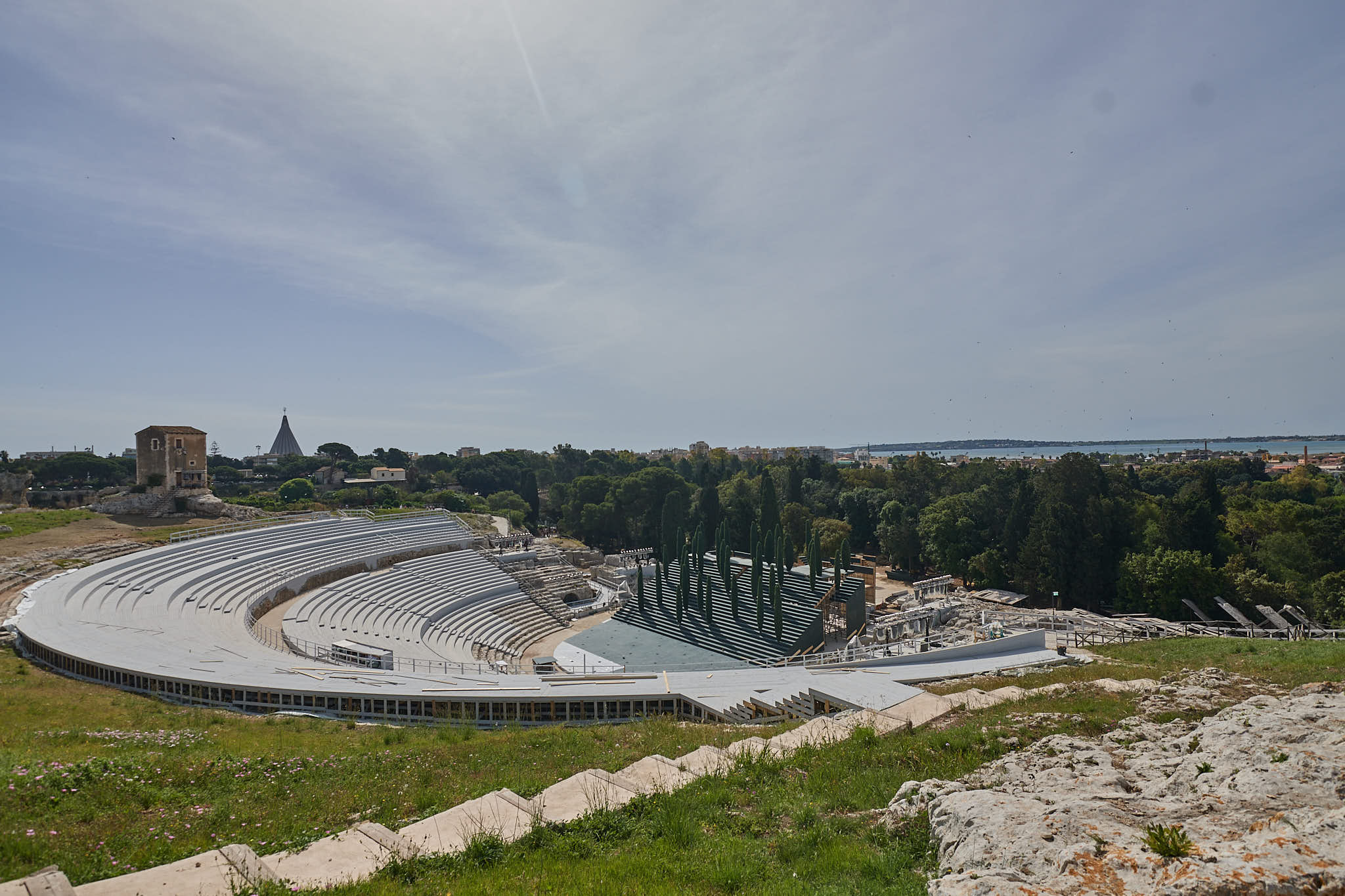
The Teatro Greco in Siracusa with the modern protective wooden seats
On the terrace where we were walking are also rooms excavated into the rock complete with niches in the walls that held decorative statues in its heyday.
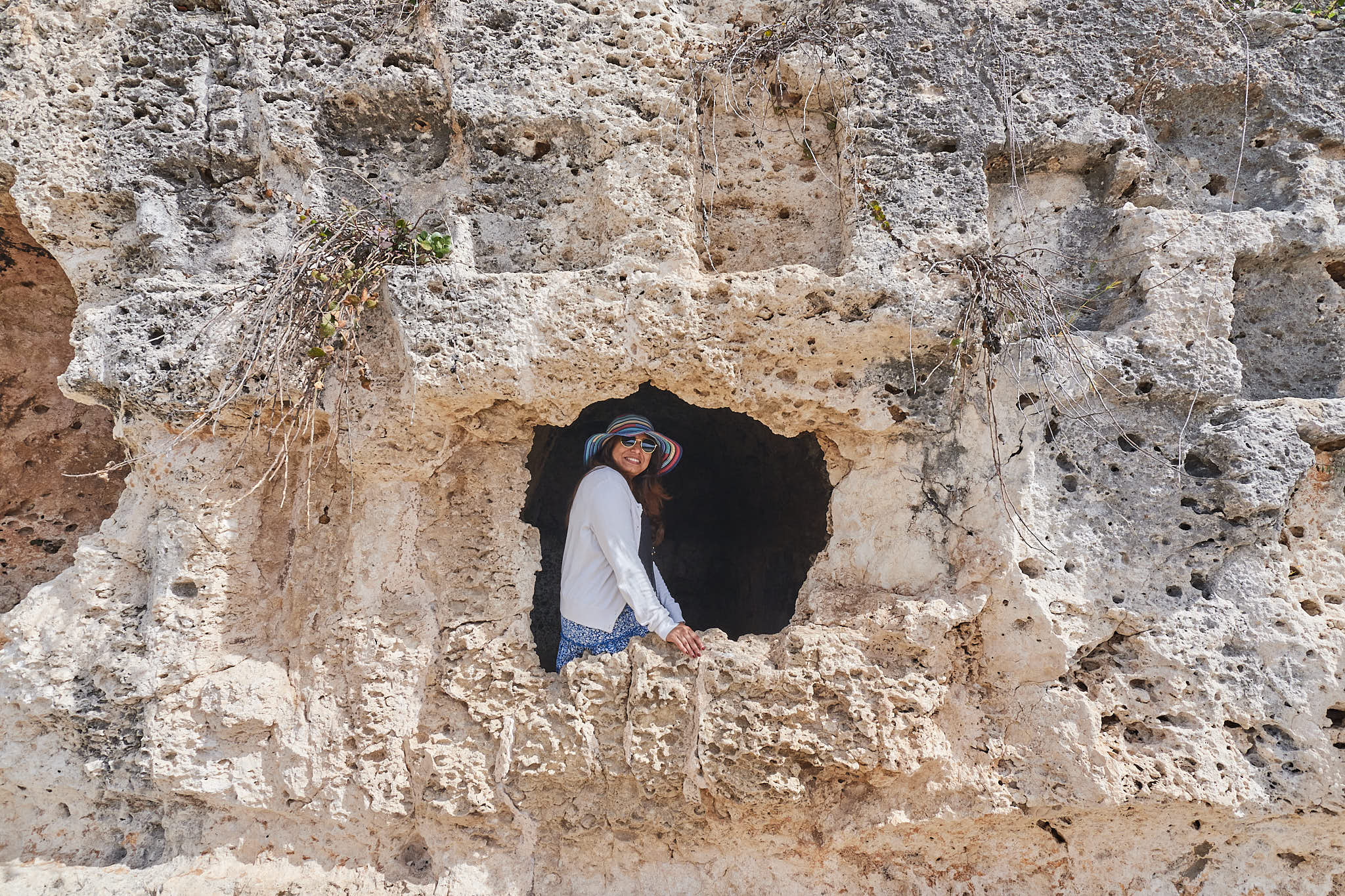
The better half poses at the window of an excavated room at the top of the theatre
In the middle of these rooms is another wonder of Ancient Greek architecture – A waterfall which is a part of an aqueduct carved from the rock allowing water to flow from a mountain spring more than 20 km away into the city! The Romans defeated the Greeks in the 3rd century BC and kept up the maintenance of this marvel till the 5th century AD when the Roman Empire fell and the site was abandoned and scavenged for stones for centuries till it was finally recognised for it’s historical importance in the 19th century, excavated and preserved for us to gawk at!
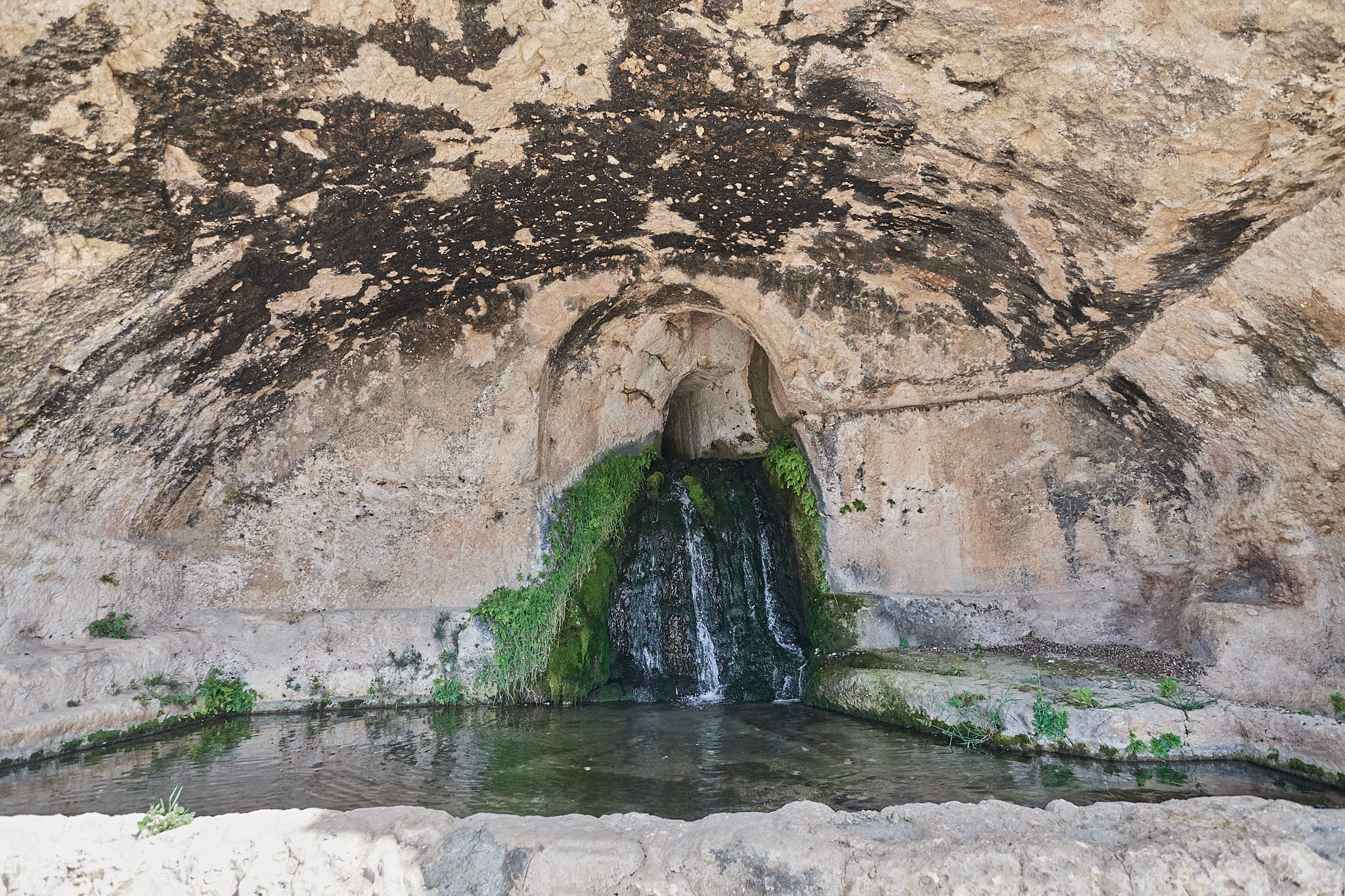
The waterfall carries water from a spring far away through man made carved rocks!
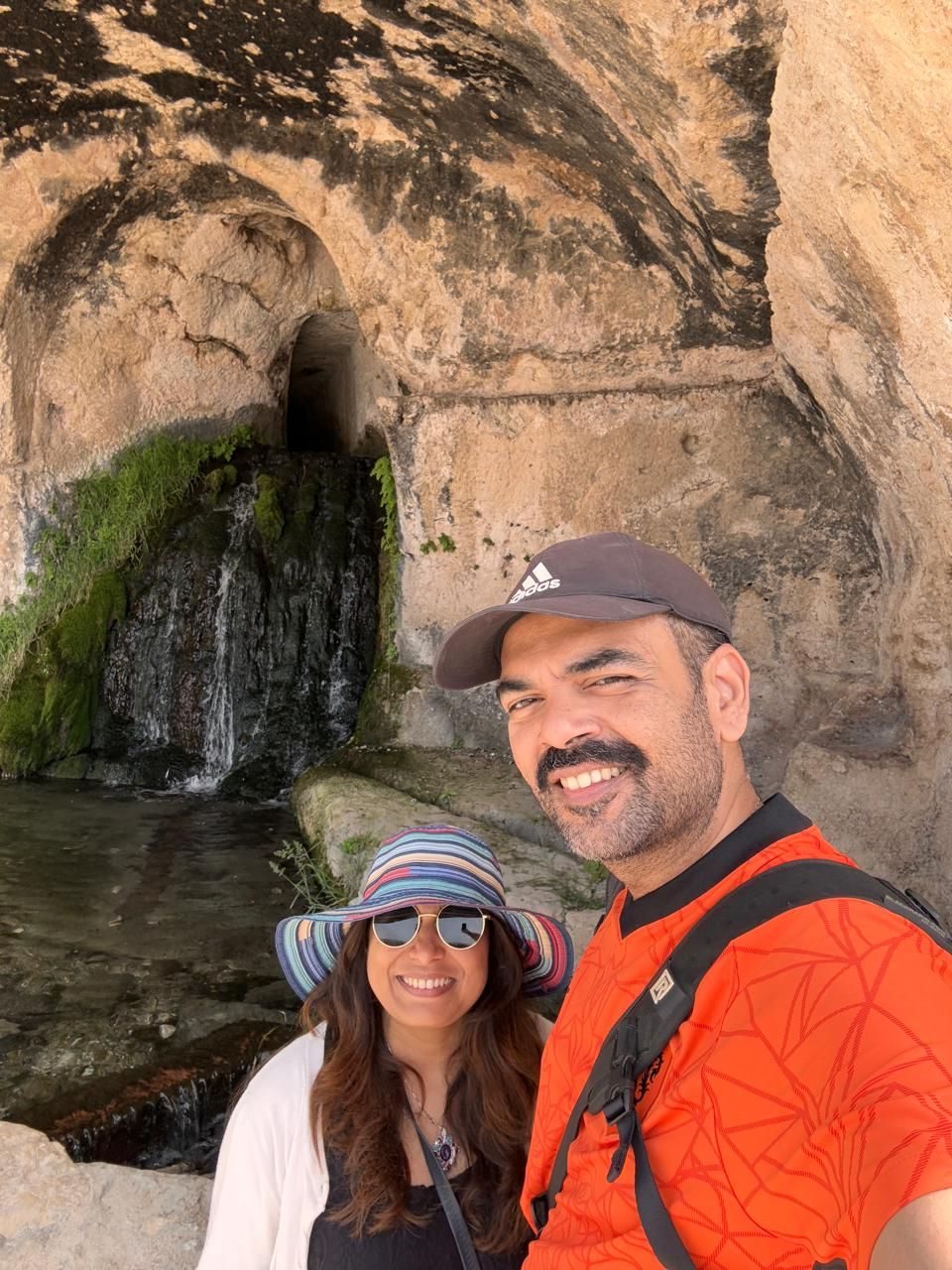
With the Ancient Greek Aqueduct at Siracusa
We then took some time out from the sun which was blazing in the sky by now and sat in the ancient rooms carved from the rocks for some time before resuming our walk through the park.
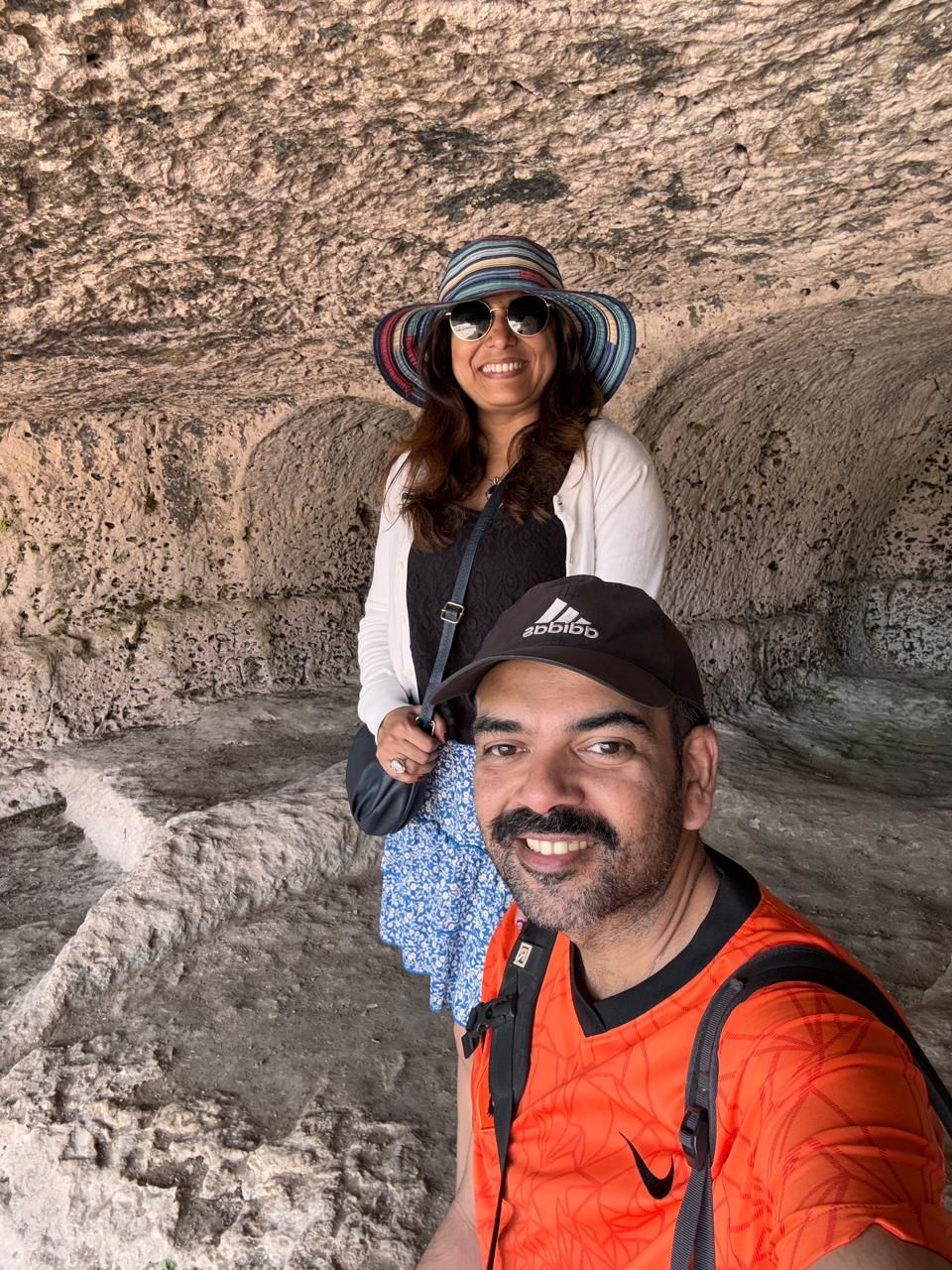
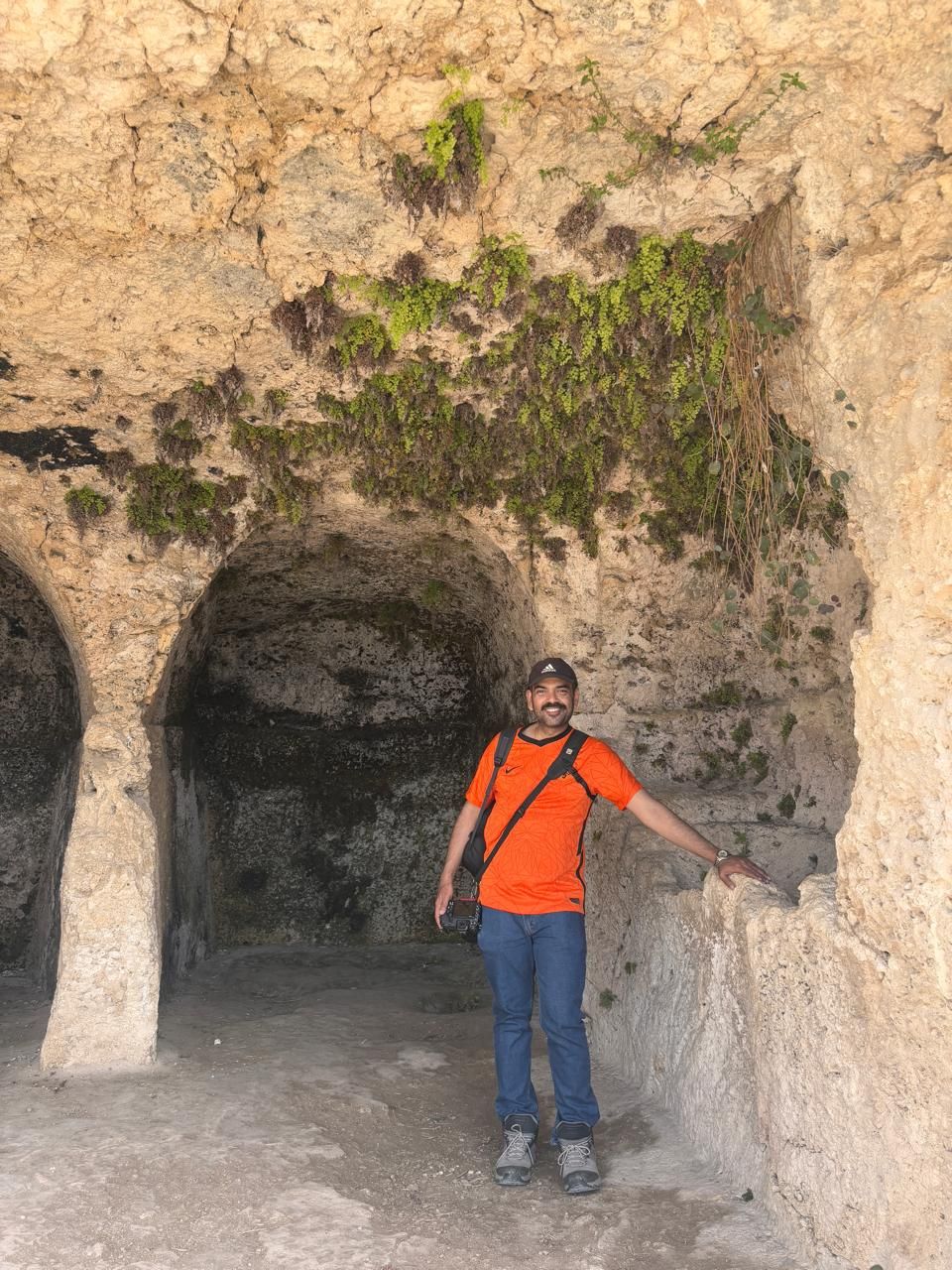
Inside the room carved out of the rock at the top of the Theatre
We then said goodbye to the Greek Theatre and went to see the Quarry of Paradise which was the other most interesting part of the park.

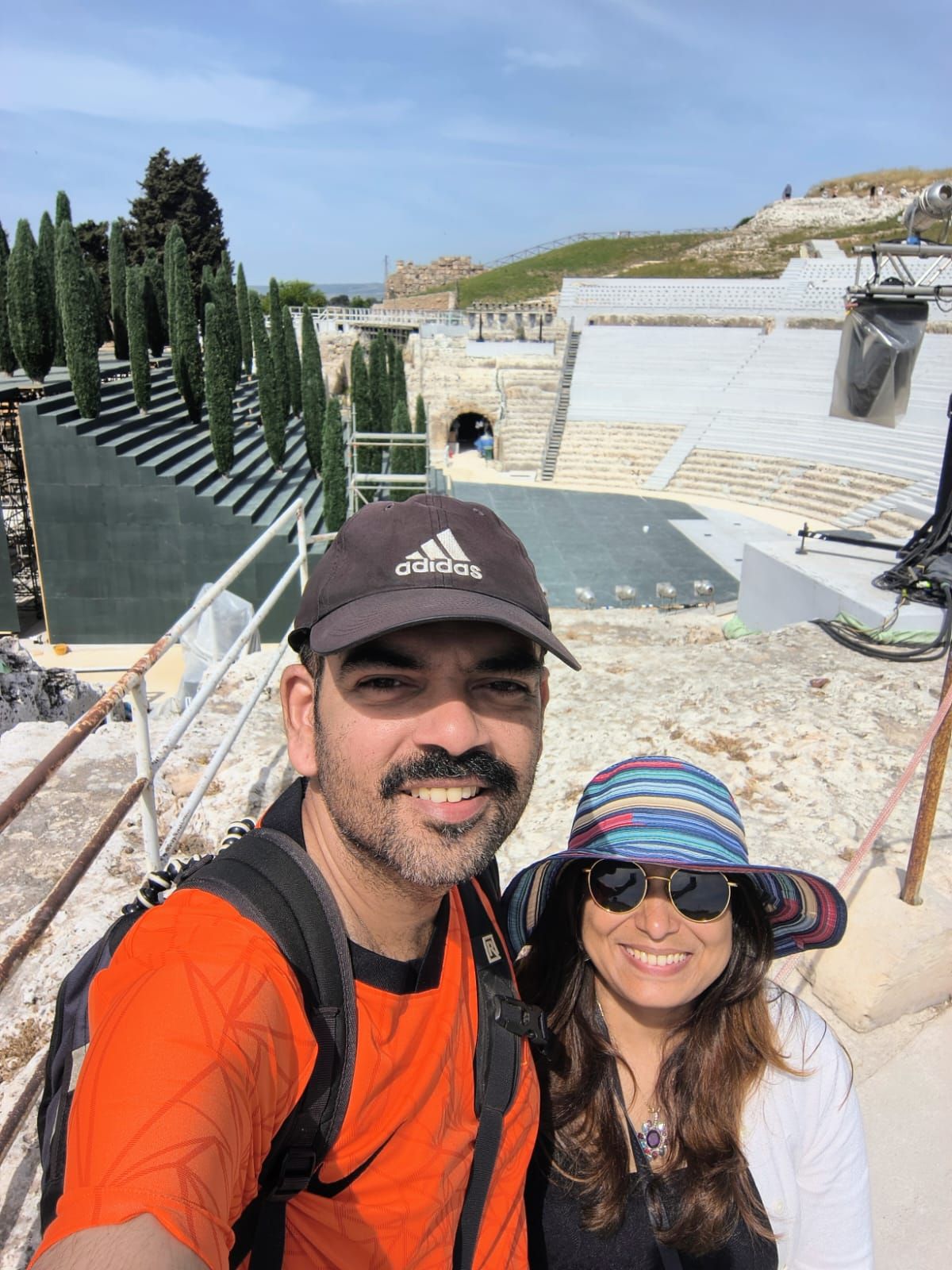
Saying goodbye to the Greek Theatre at Siracusa
While passing through the park we came across huge modern Bronze sculptures which are temporary exhibits in this ancient site. Most statues are of Icarus the Greek Mythological Character who lost his wax attached wings by flying too close to the sun – the most interesting were a group of 3 Icari (I know that’s not a word!) – One without wings, One with wings, One burnt after flying too close to the sun!

A modern bronze sculpture at the park
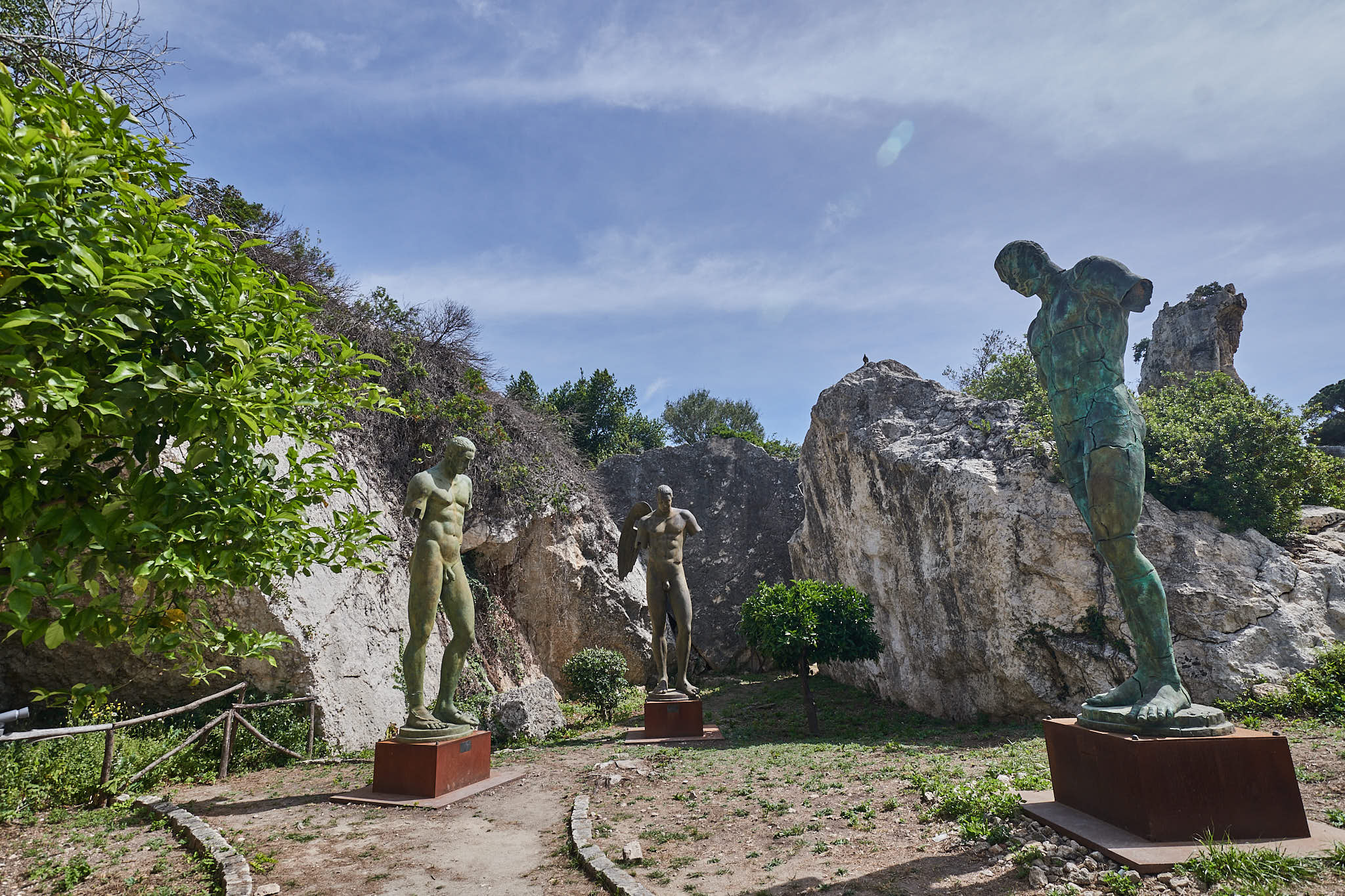

With the 3 various stages in Icarus’ life – without wings, with wings and crisp!
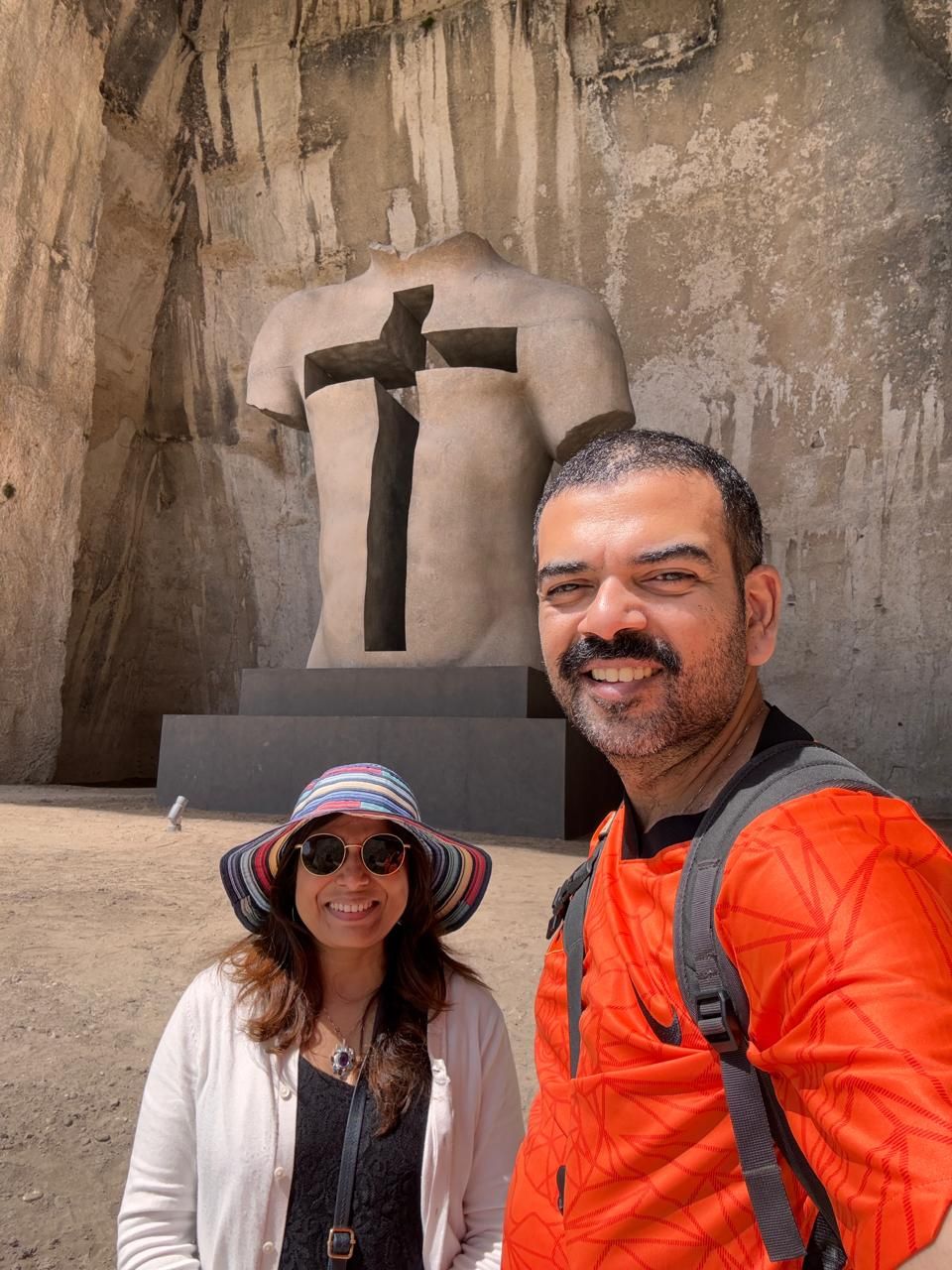
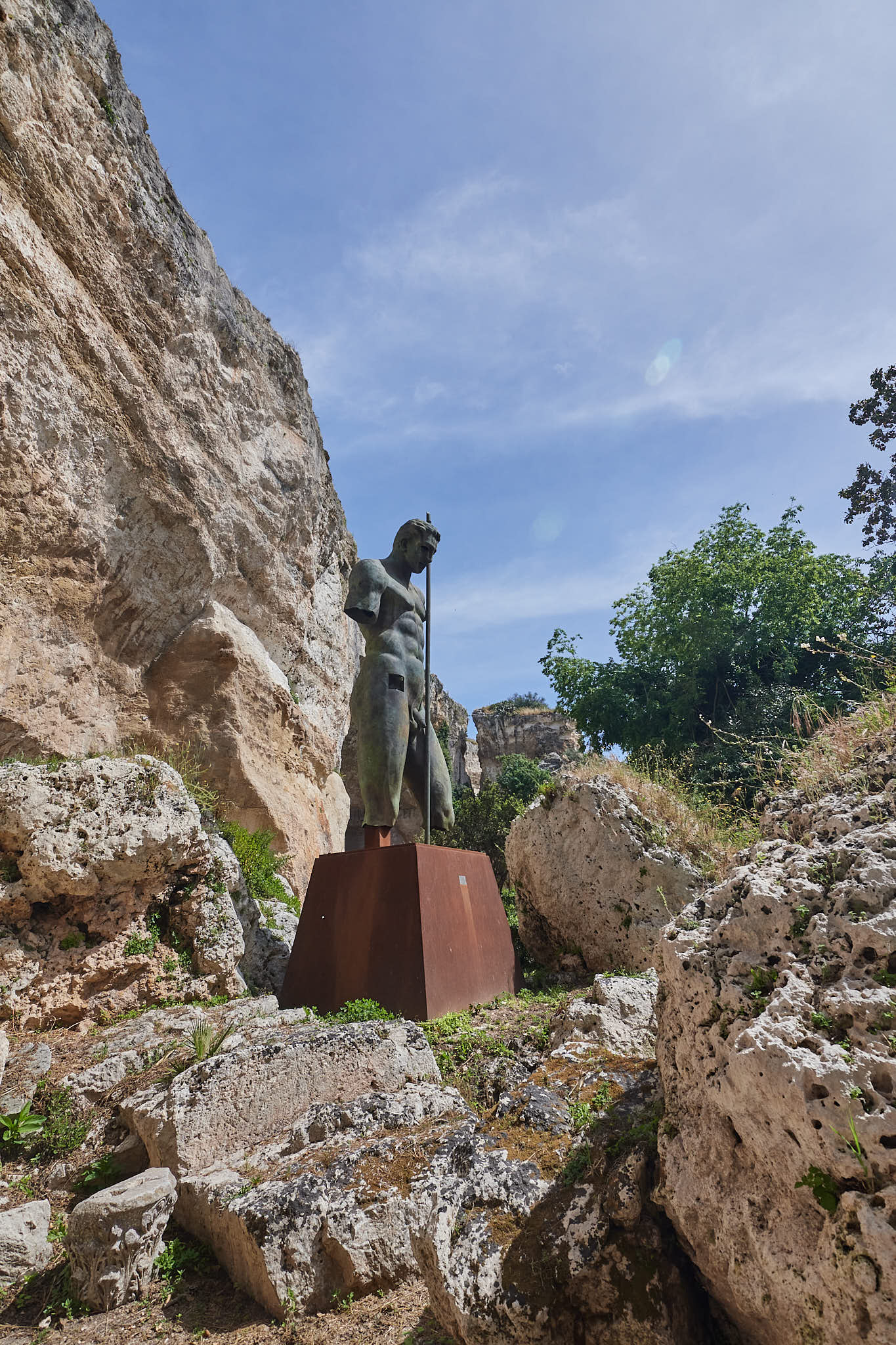
The Modern statues at the Ancient Archaeological Park is a strange but aesthetically pleasing choice
While marvelling at ancient temples and theatres it’s easy to forget that their construction was made possible by slaves. These slaves were often prisoners of war and worked endlessly till they died. The Quarry of Paradise in the Neapolis Archaeological park is the site of the huge quarry from where slaves endlessly carved blocks of stones to build the theatres and temples. What we walk through now is the floor of the quarry and the vastness of the site can be judged by the tall rock pillar still standing that held up the roof before it collapsed in an earthquake.
At one end of the Quarry of Paradise is a uniquely shaped cave called the ” Ear of Dionysius”. This cave was built by the tyrannical ruler of Syracuse in such a way that the acoustics would carry conversations between slaves in the quarry to the ruler in his room above. This would help him to eavesdrop on his slaves who were often political enemies!

The entrance of the ” Ear of Dionysius”
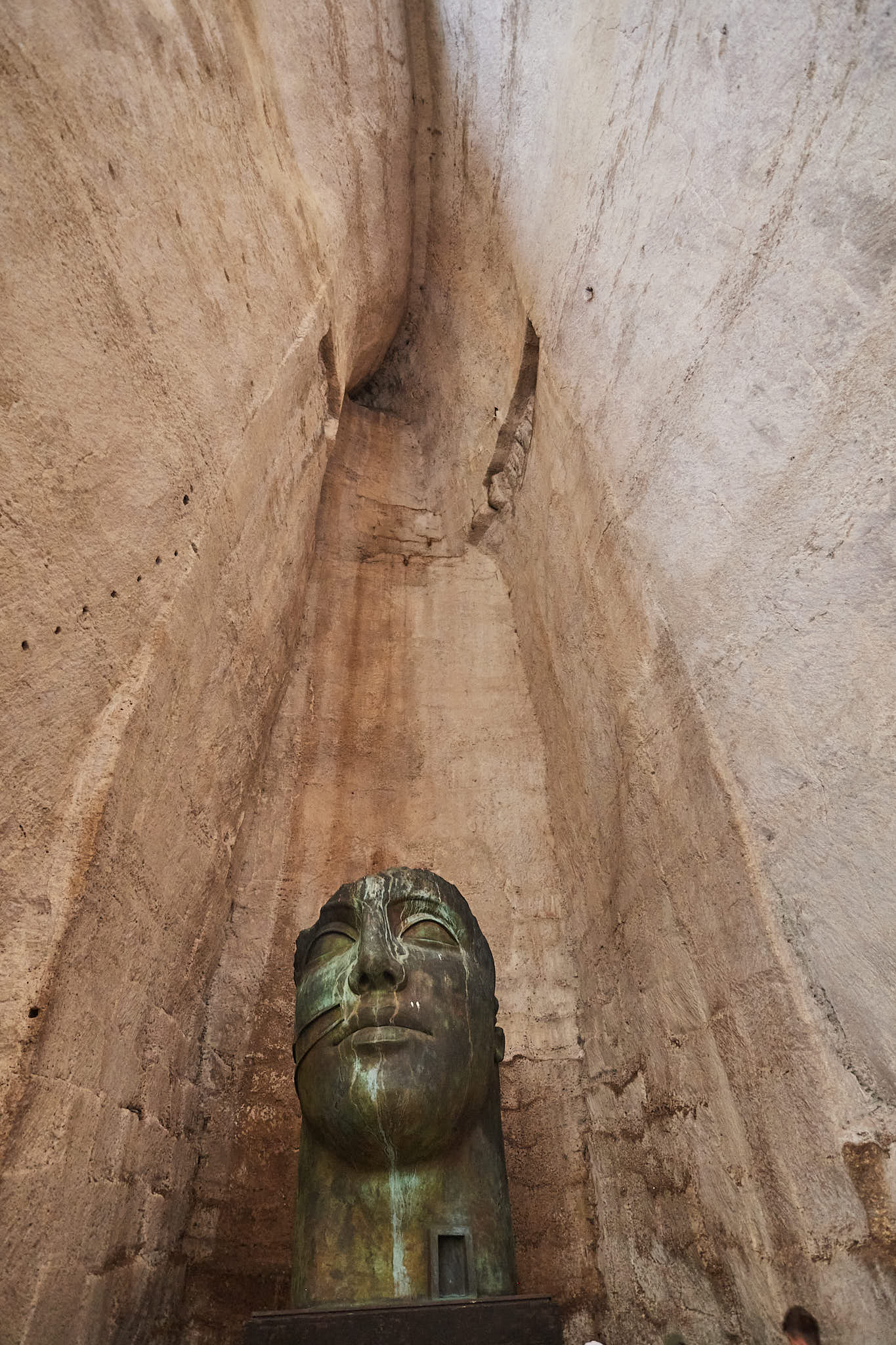
A modern bronze sculpture in the “Ear of Dionysius”

Hoping the Emperor doesn’t hear us mocking him
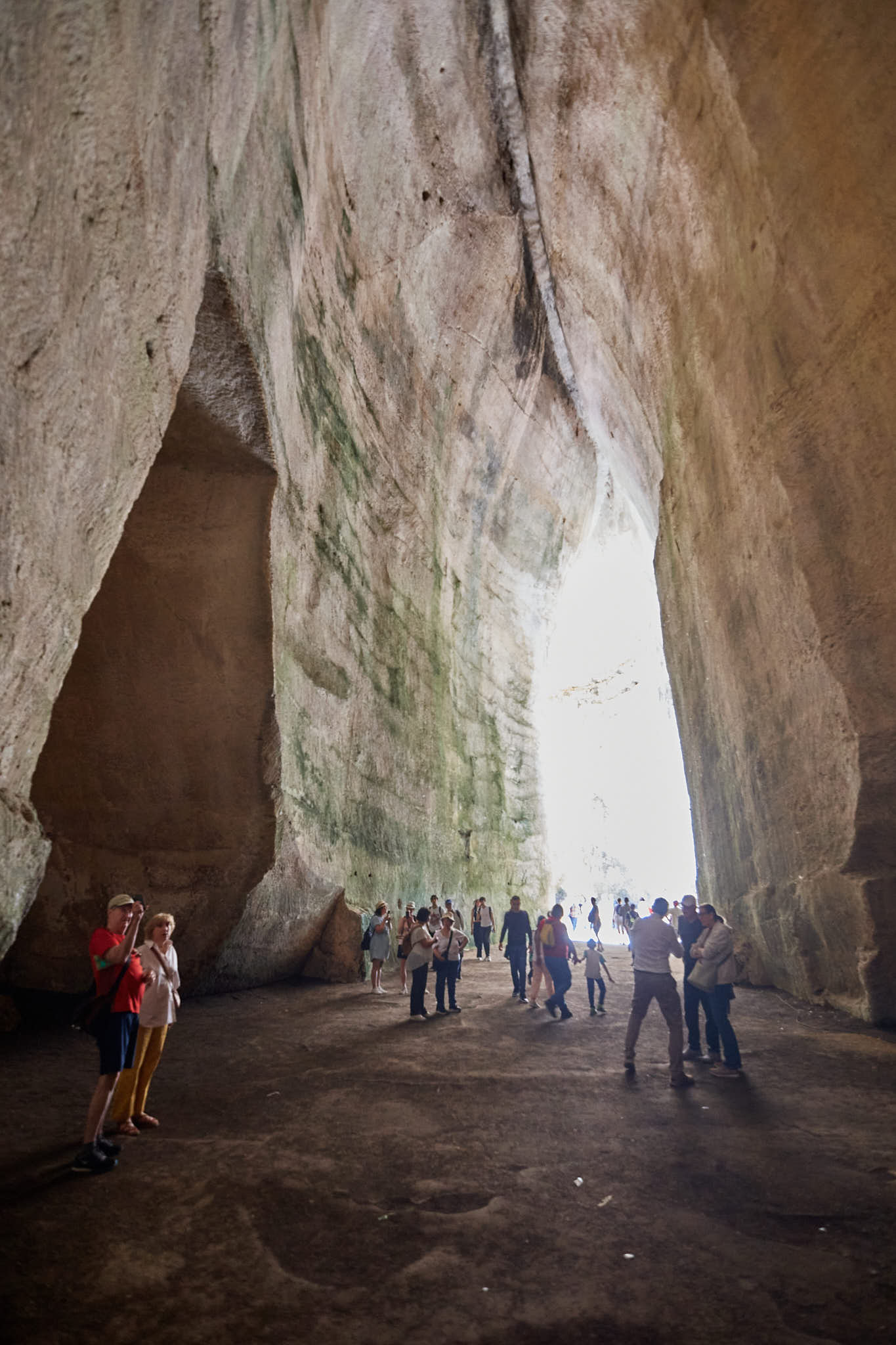
The uniquely shaped “Ear of Dionysius” in the Quarry of Paradise
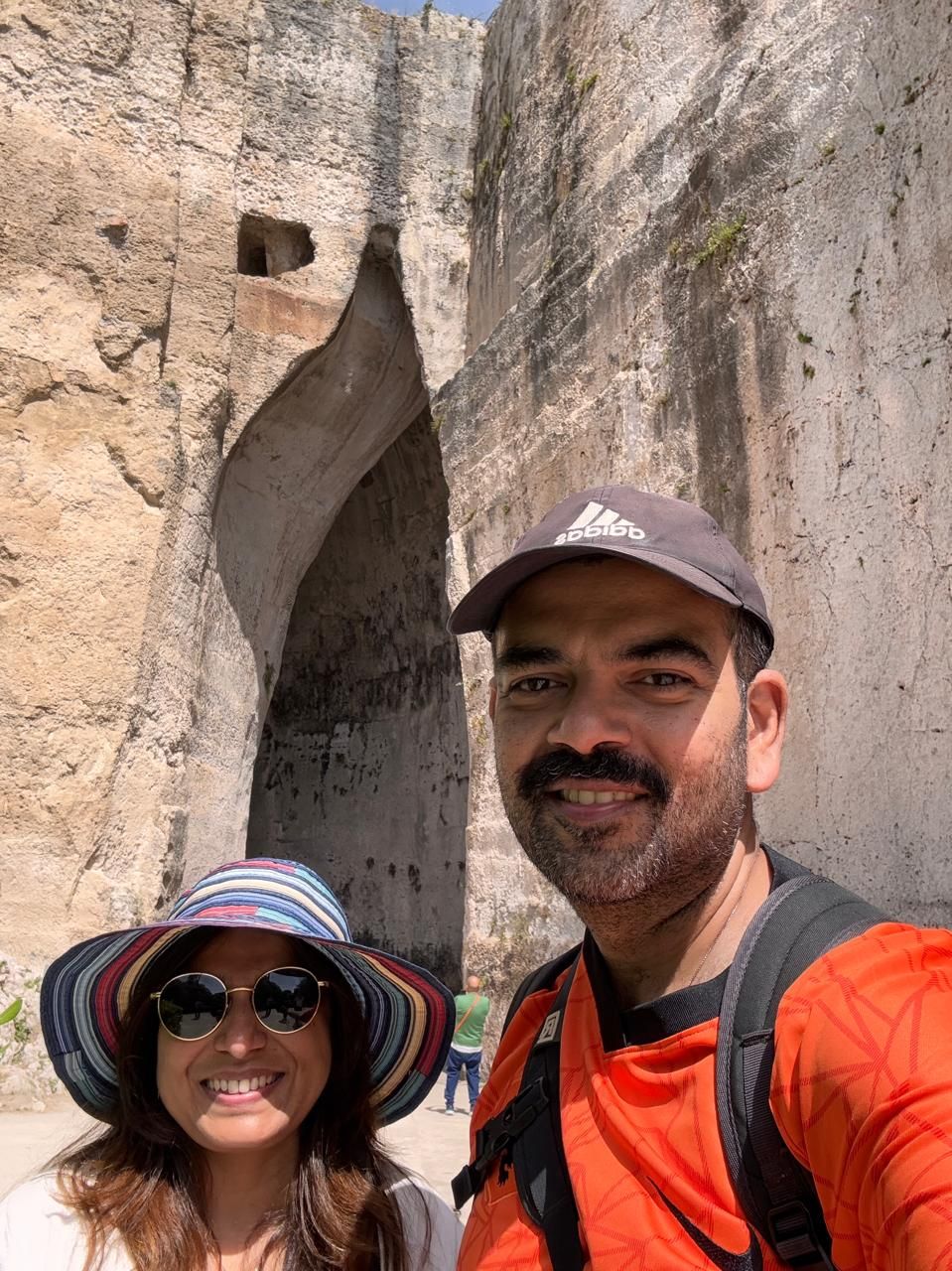
Outside the “Ear of Dionysius” after “enjoying” the people inside trying out its acoustics

Passing under a narrow part of a path through the Quarry of Paradise

A tour group passes through the floor of the Quarry – Mark on the side walls show how high the roof was
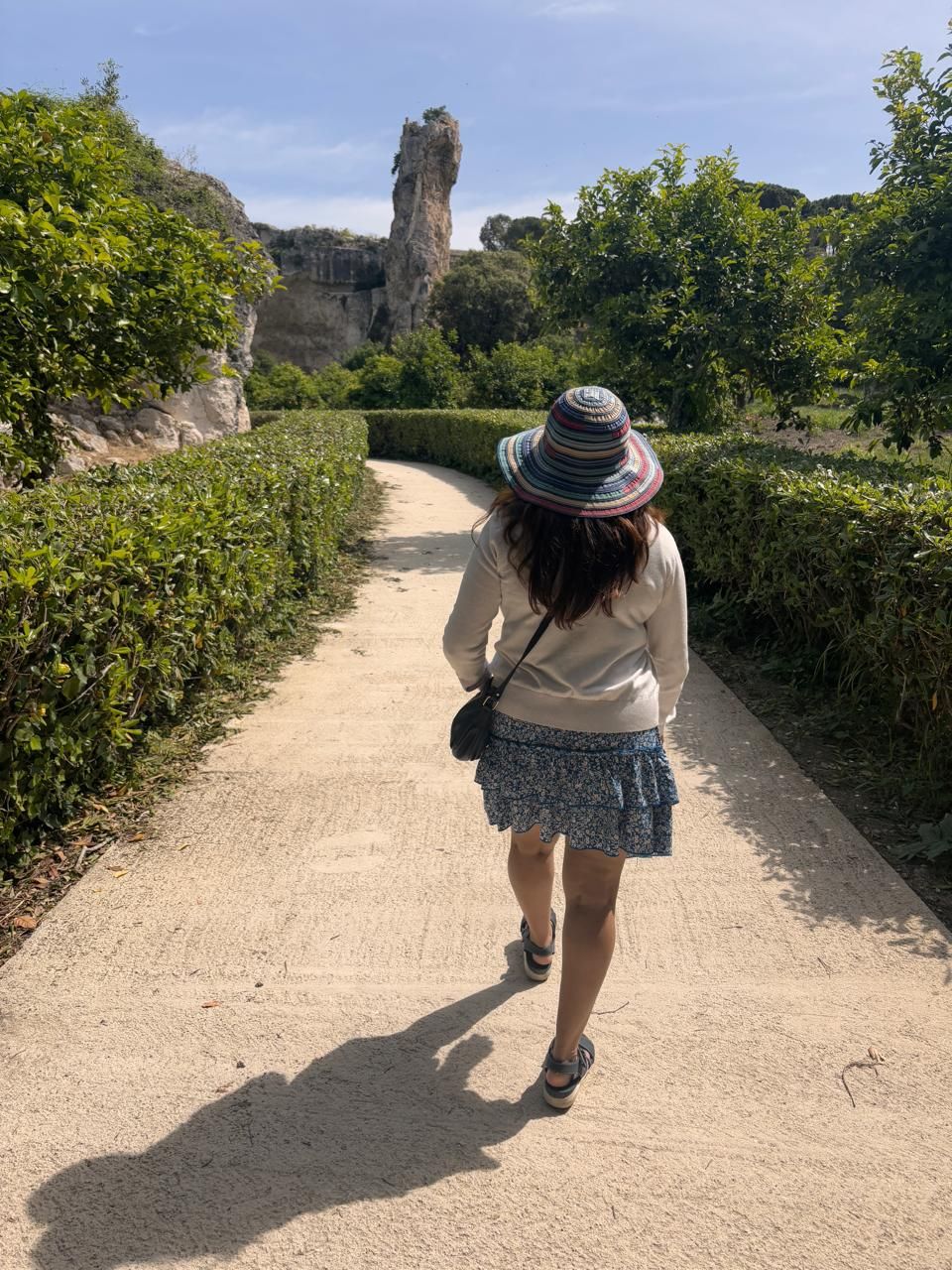
Lush gardens with fruit bearing trees where slaves laboured all day in ancient times
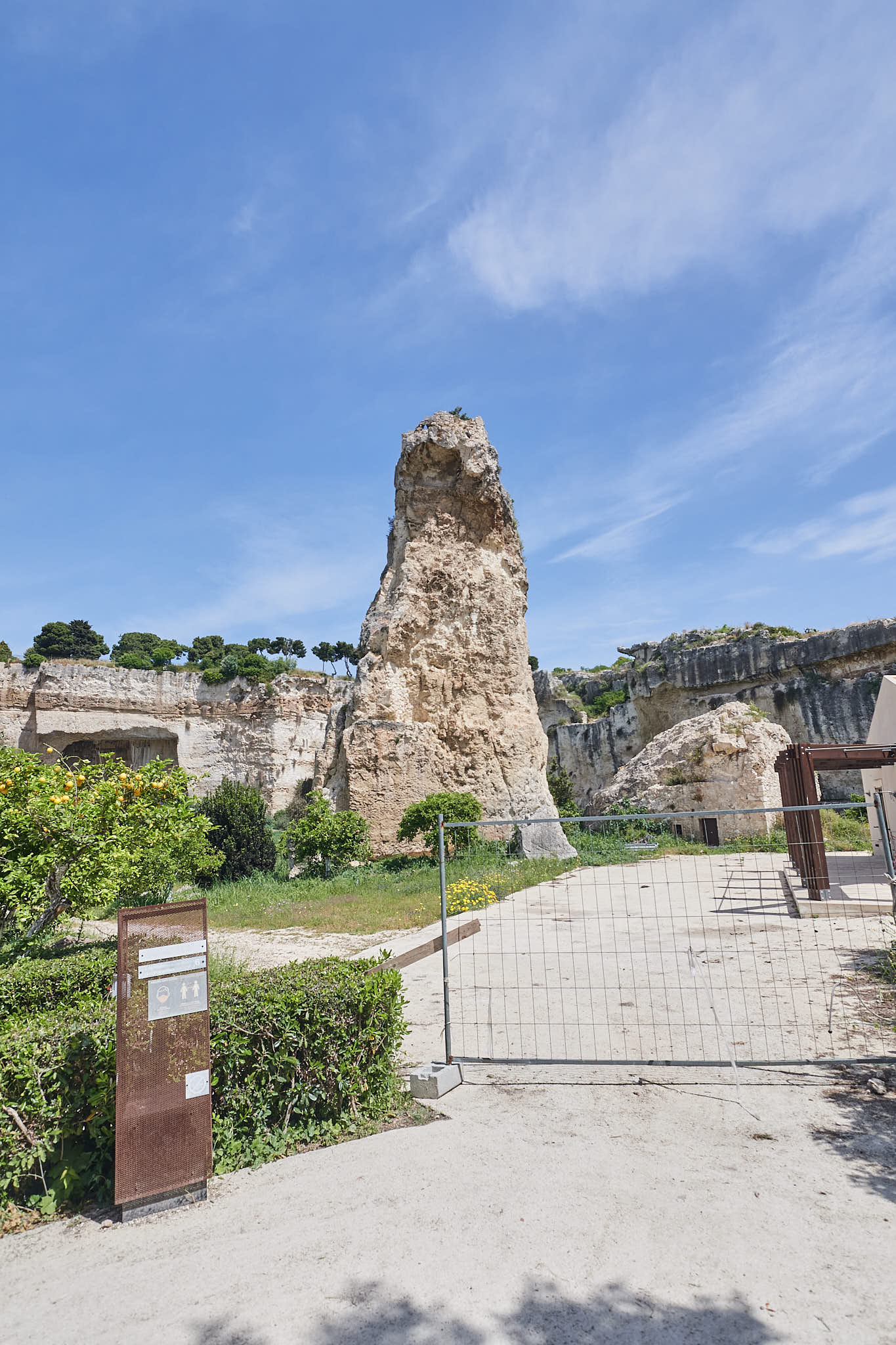
The surviving stone pillar which held up the roof of the Quarry
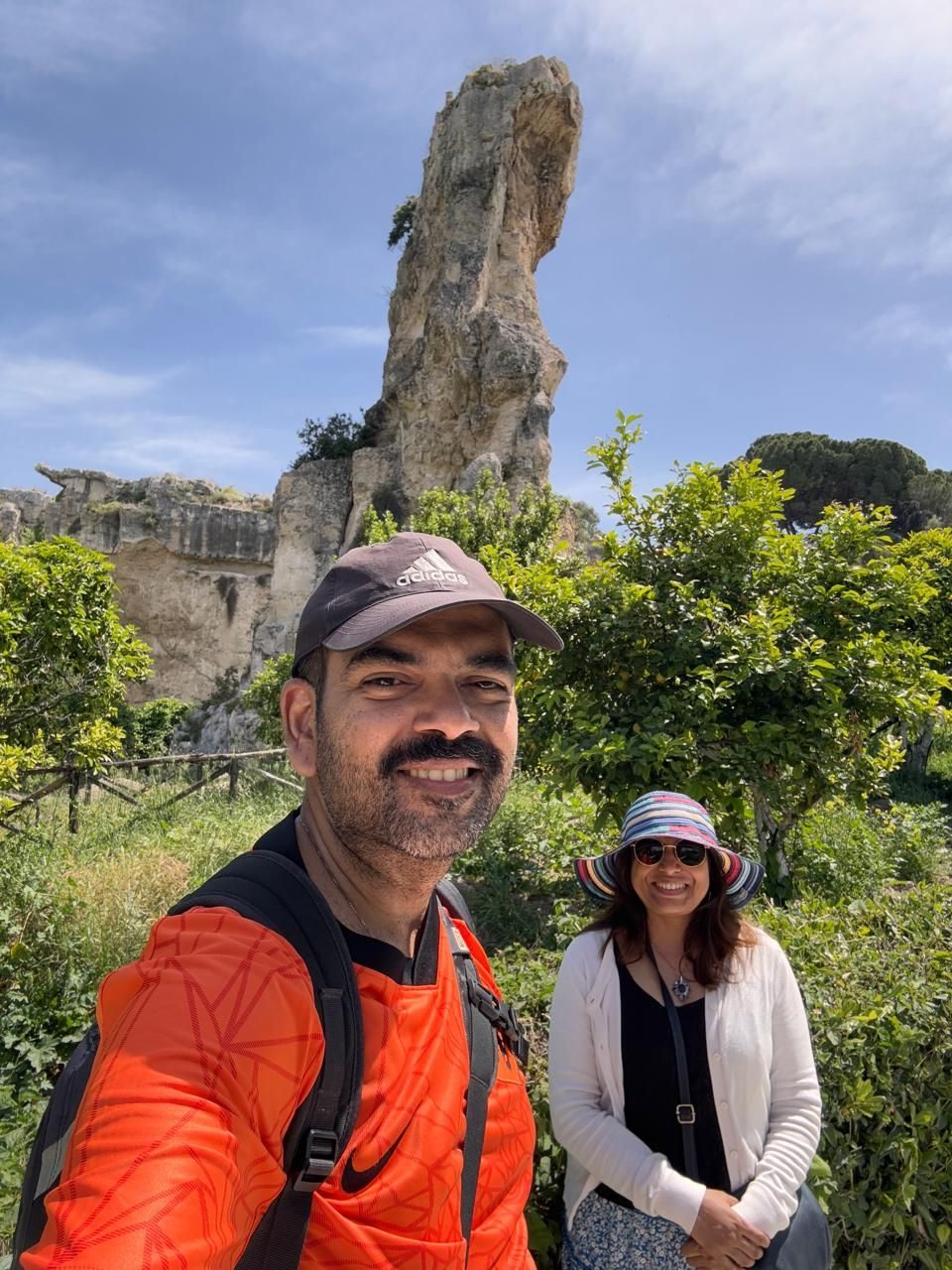
At the Quarry of Paradise in the Neapolis Archaeological Park, Siracusa
After passing through the simultaneously beautiful & poignant “Quarry of Paradise” we went to the huge Altar of Hieron II. This 3rd century BC altar is the longest altar ever built by the greeks. At the pinnacle of its existence 450 oxen were sacrificed here once a year to please the Greek God Zeus. It was yet one more super sized structure built in this site thanks to slave labour!


At the longest altar in the Greek World – The Altar of Hieron II from 3rd century BC
We reserved the most recently built of the structures at the park for the last. This was the Roman Amphitheatre built in the 1st century AD. While the Greek theatre was for plays and songs this Roman Amphitheatre was for the more violent spectacles – Gladiatorial fights! We circled round the Amphitheater noticing the differences from the Greek Theatre – this wasn’t carved into a hill but was free standing. It also had a few modern statues in it including a totally out of place bright blue Icarus statue.

The Roman Amphitheatre is almost hidden from view as you enter

Wild flowers growing at the Roman Amphitheatre in Siracusa
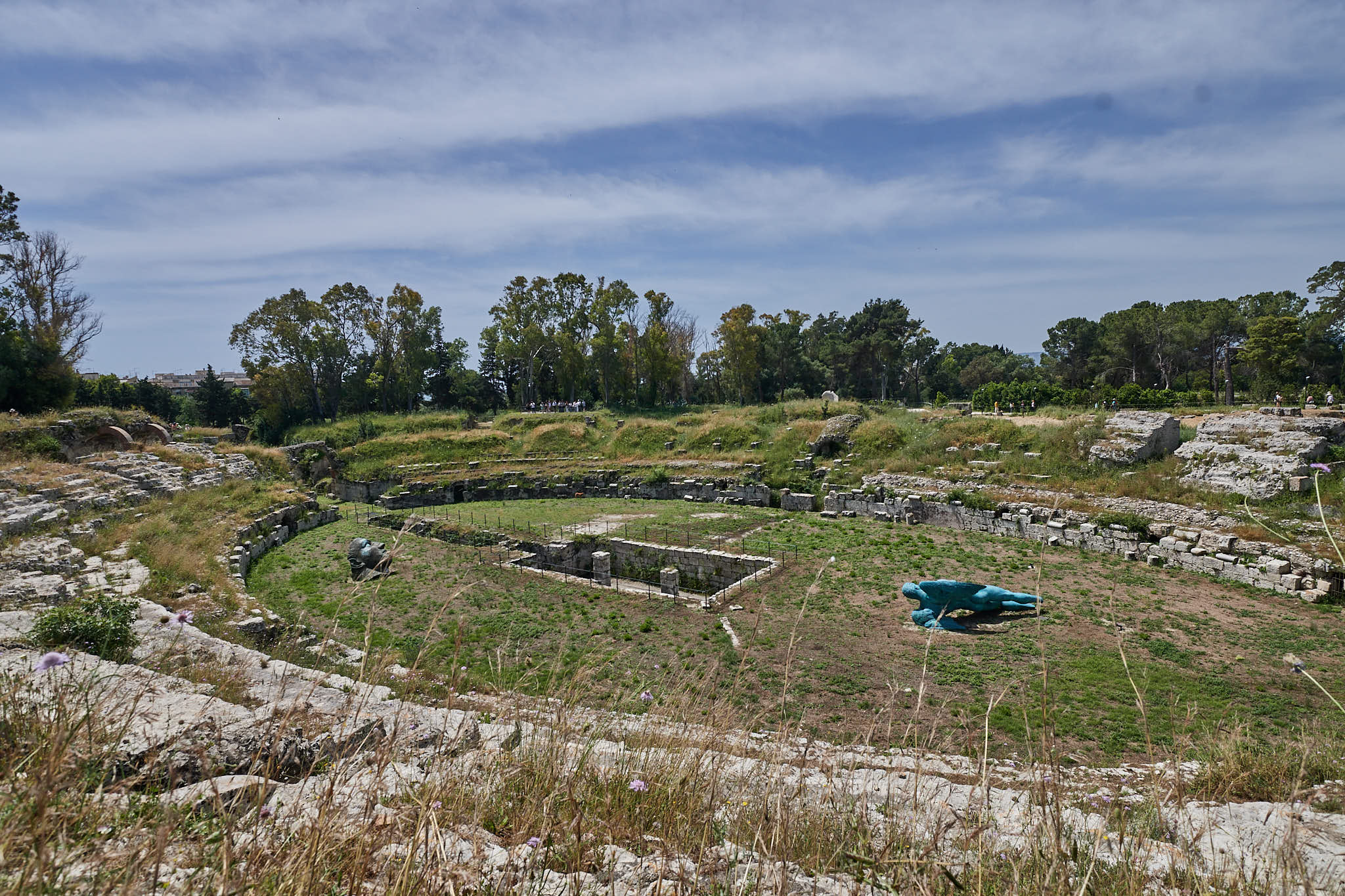
The best view of the 1st Century AD Roman Amphitheatre is from the far side
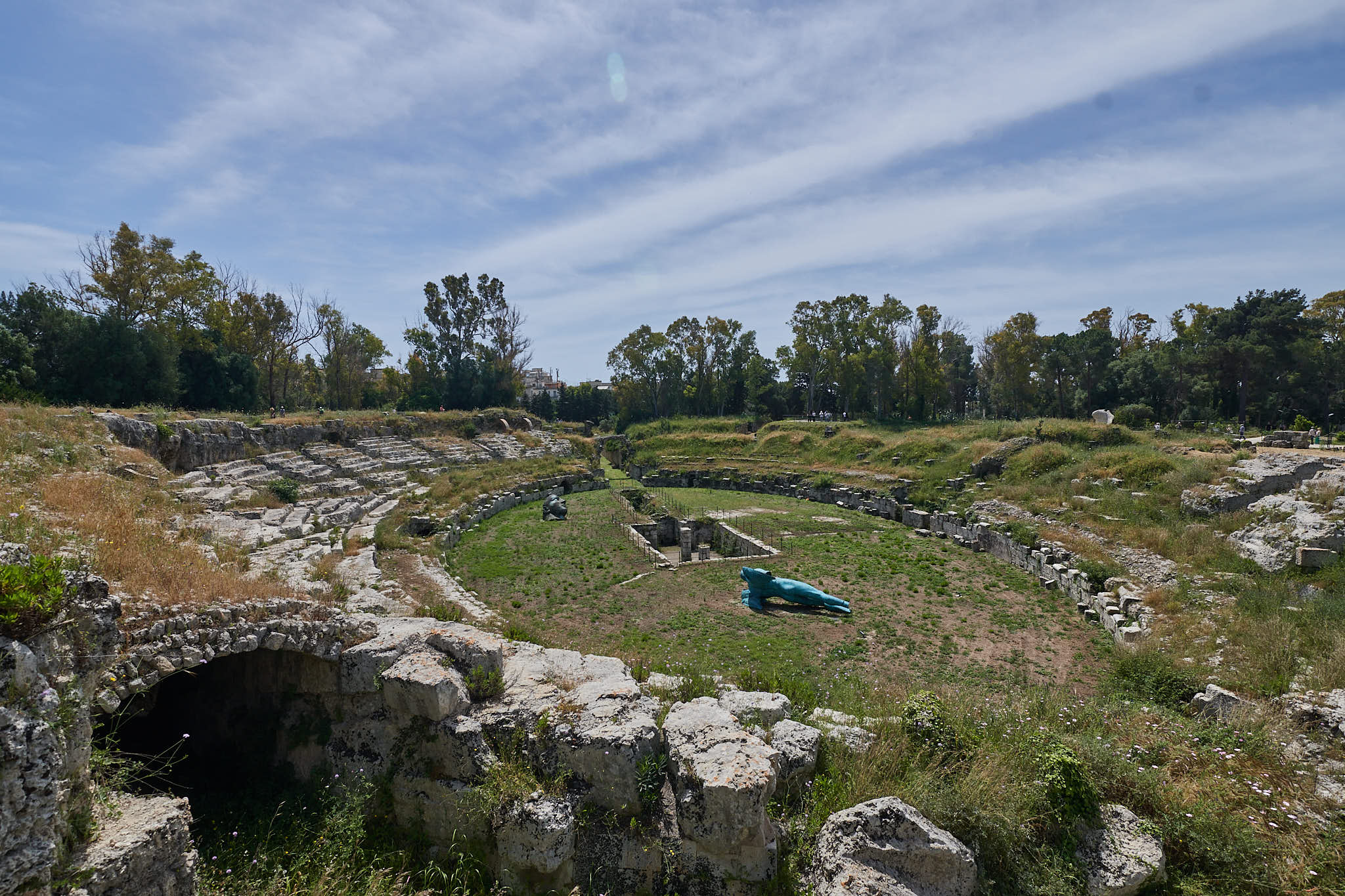
A complete view of the Roman Amphitheatre including the subterranean passages leading to the arena

At the Roman Amphitheatre in Siracusa
With that we finished our visit of the Neapolis Archaeological Park which had been as good as expected, and made even better by the fact that we had gotten free entry! We had been walking through the park for a good couple of hours and were now thirsty. So we decided to take a drinks break at the small cafe outside the park to stay hydrated before moving on.


Enjoying a drinks break after a couple of hours of walking in the sun
After we exited the park we decided to visit the Sanctuary of the Madonna of tears church in the mainland which was only a short detour on our way back to Ortigia. Being a Sunday we knew that the interiors of the Church which is modern (1953) would be out of bounds due to Sunday Mass at that time. I just wanted to see this uniquely shaped church since we were so close to it anyway. We reached the church and sure enough Sunday services were going on, so we walked around the compound and took photos of the exteriors before returning to Ortigia.
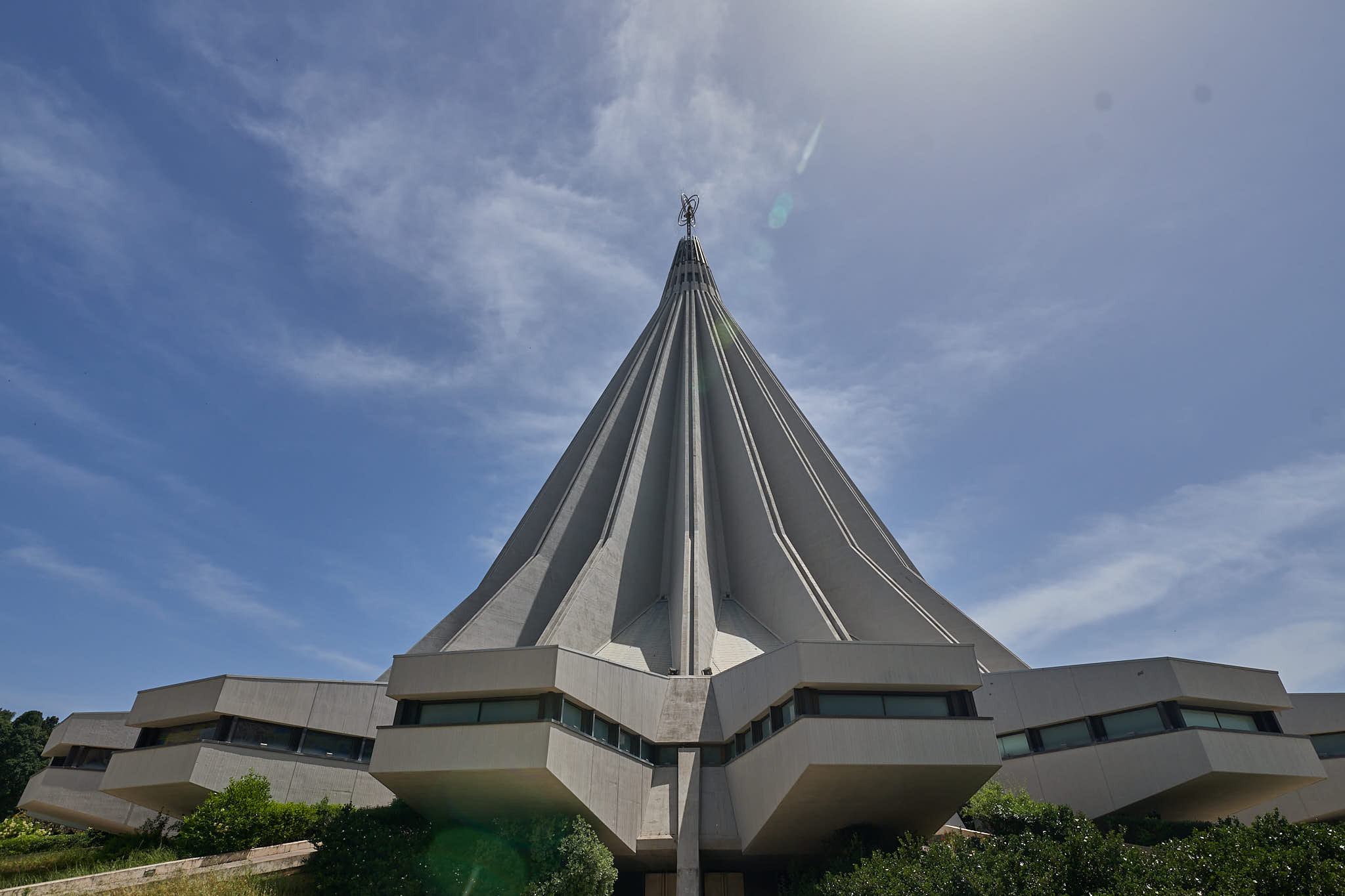
The uniquely shaped “Sanctuary of the Madonna of Tears”
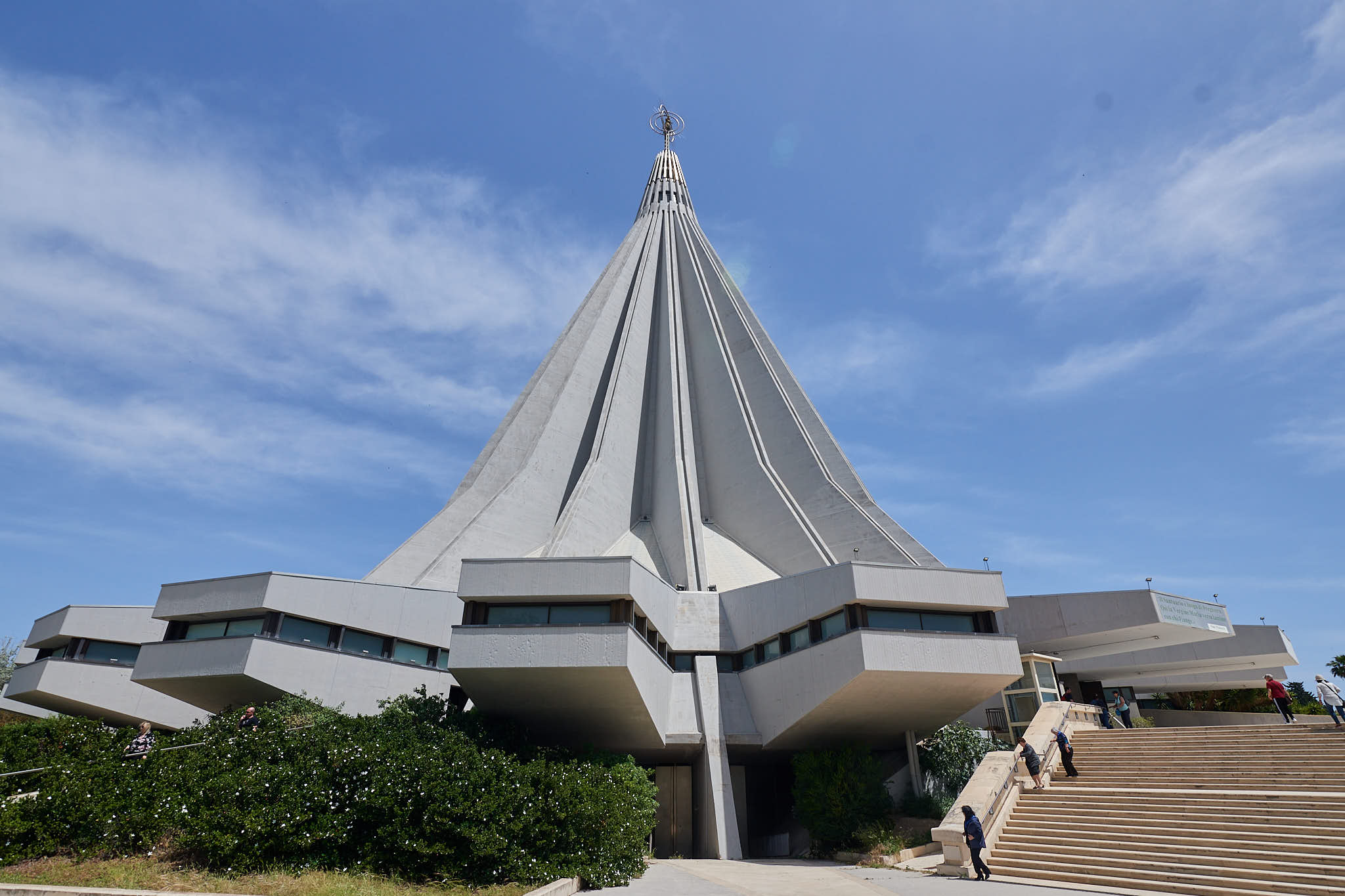
People exiting the Sunday services at the Church
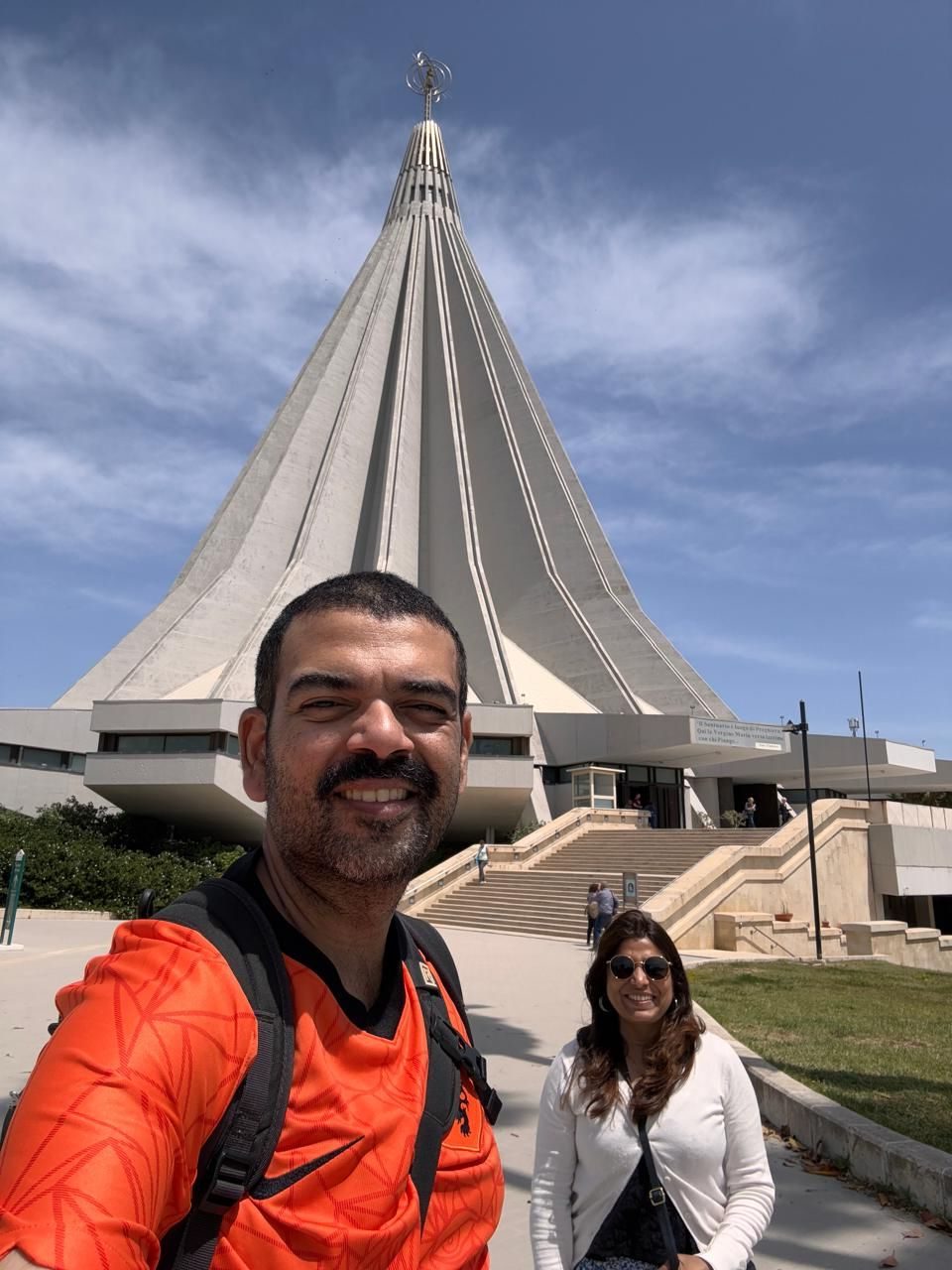
Outside the Sanctuary of the Madonna of Tears in Siracusa
It was lunchtime now and the sumptuous breakfast was long digested and our tummies were crying out for replenishment. So we decided to enjoy Sicilian Burgers at the Pizzeria Schiticchio which were as famous for their huge burgers as their pizzas, plus they had a vegetarian burger for the better half! I had their Spicy Sicilian Burger with a bottle of artisanal beer called La Grigna.
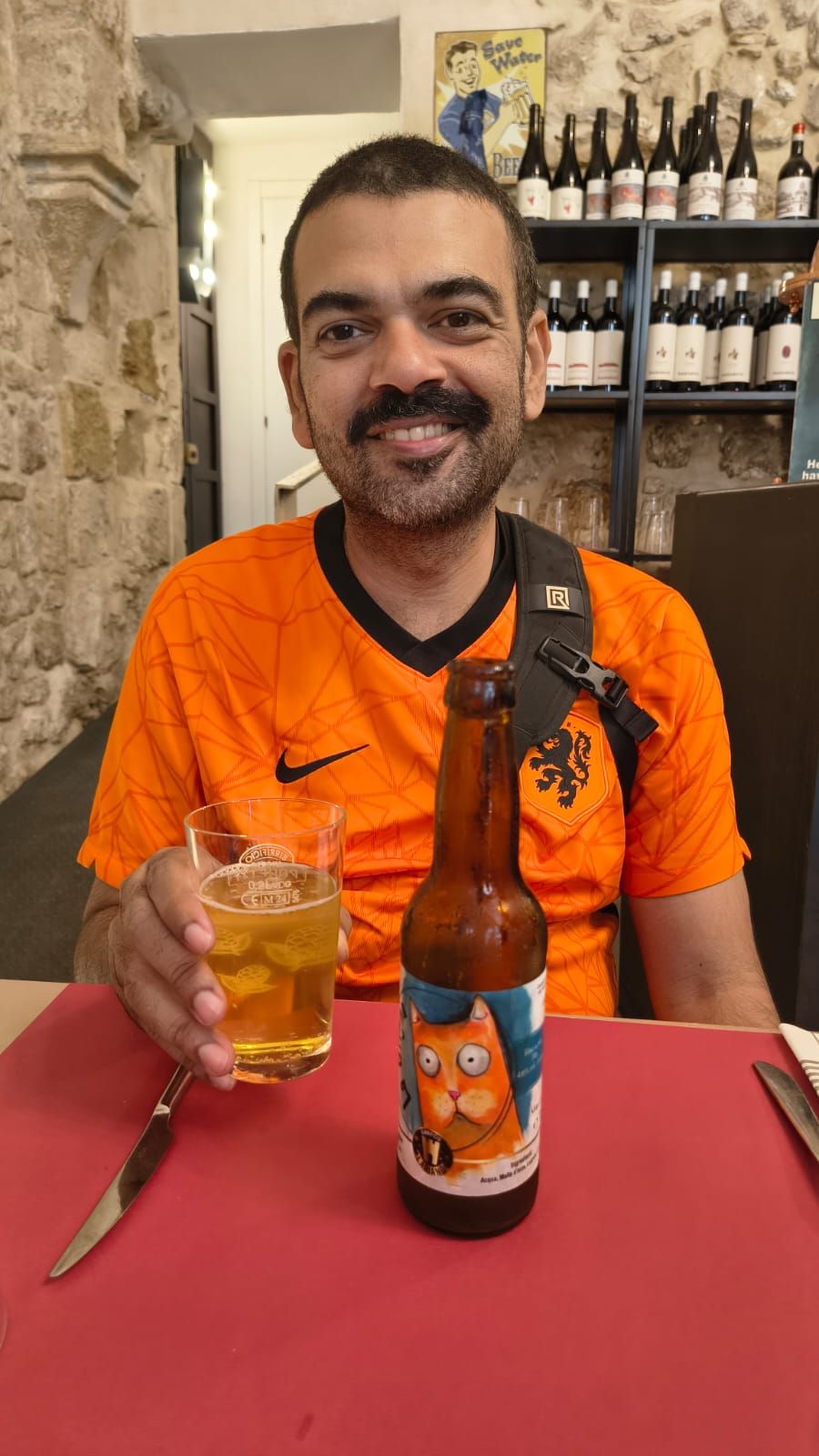
The La Grigna – one of the best beers I had all trip
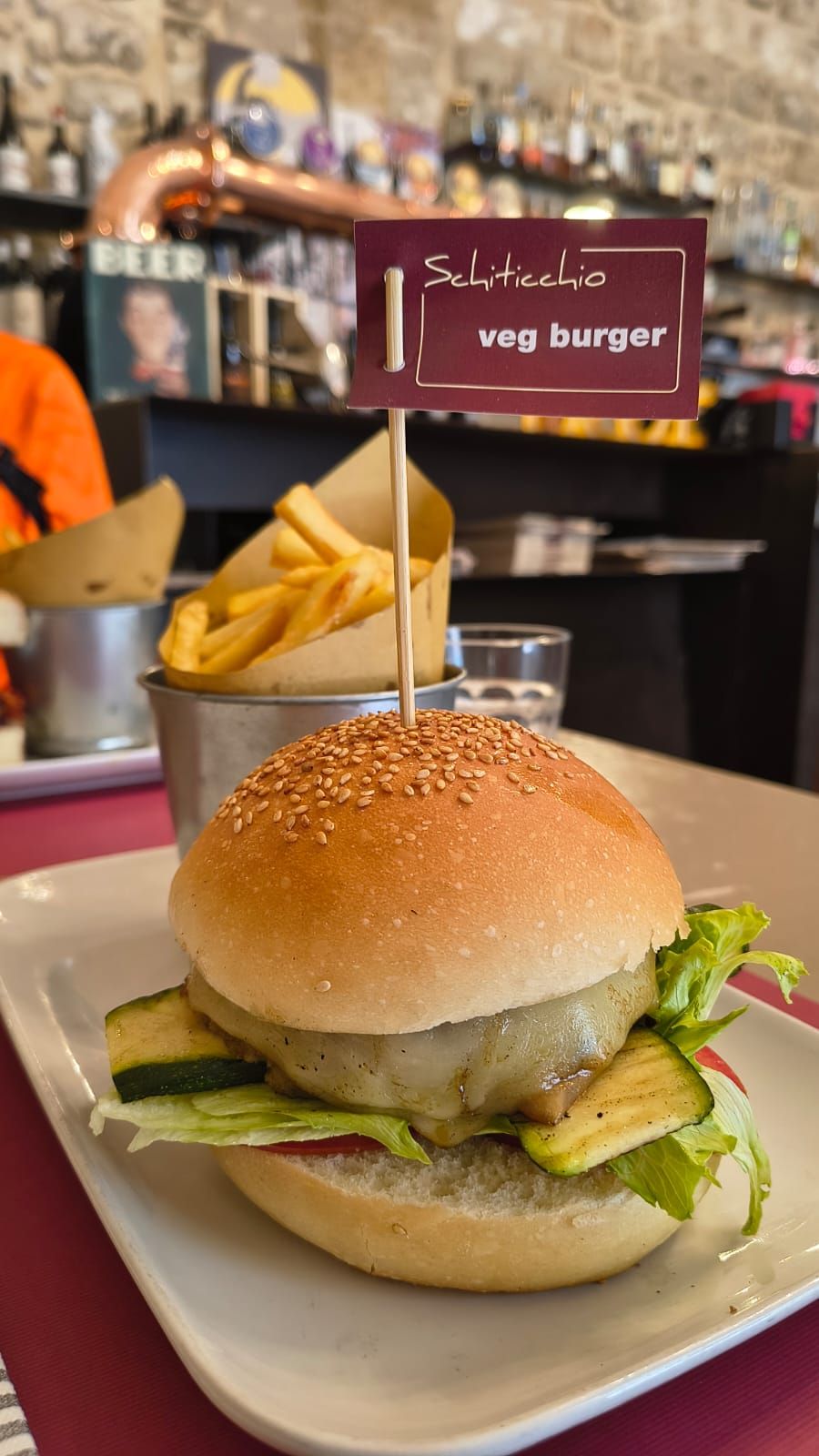
The better half’s huge vegetarian burger with fries

Enjoying our lunch at the Pizzeria Schiticchio in Ortigia
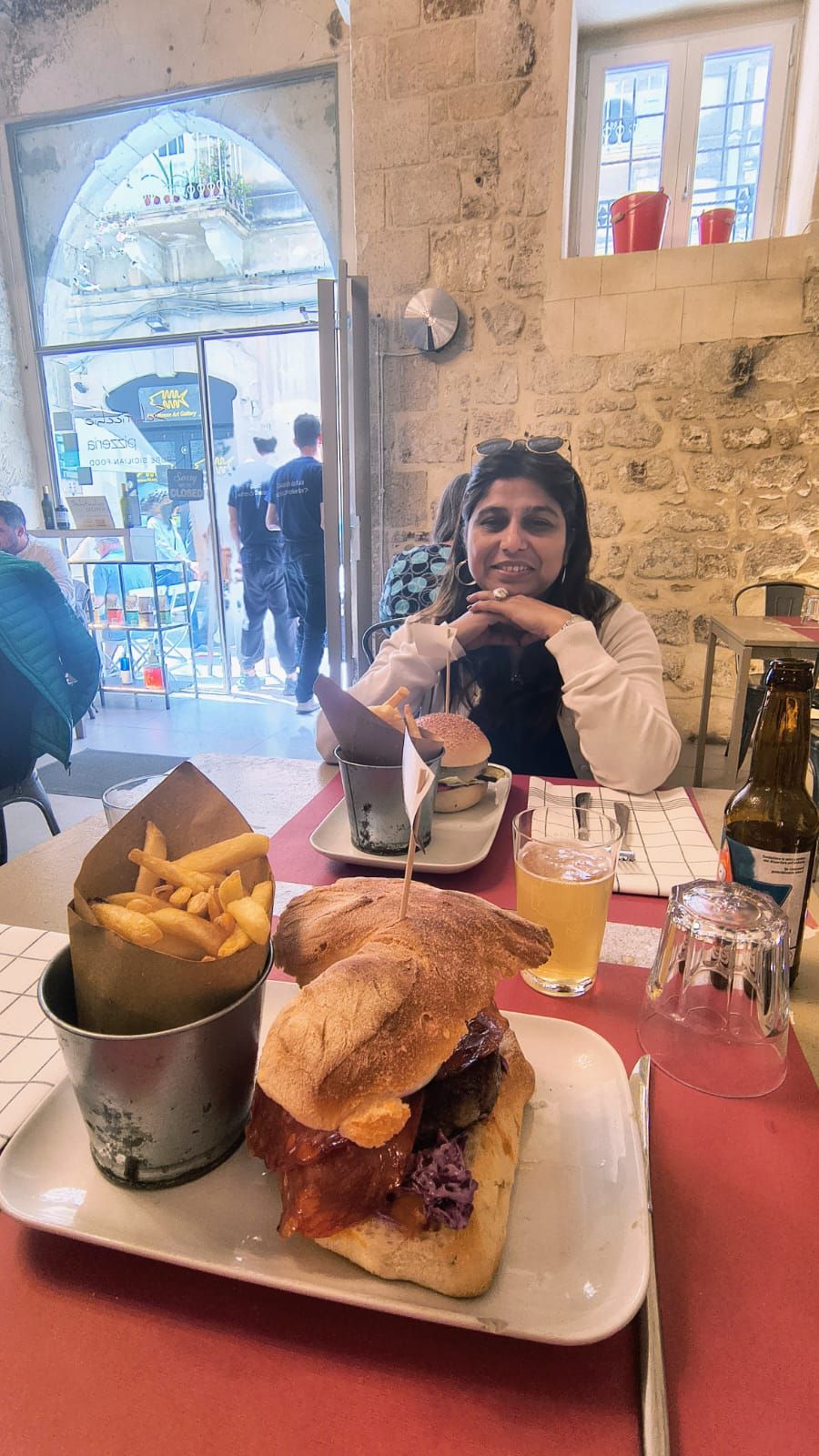
My burger was so huge that I had to cut and eat it!
That lunch was so heavy that we had to do the Sicilian thing and go back to our B & B for an afternoon siesta.
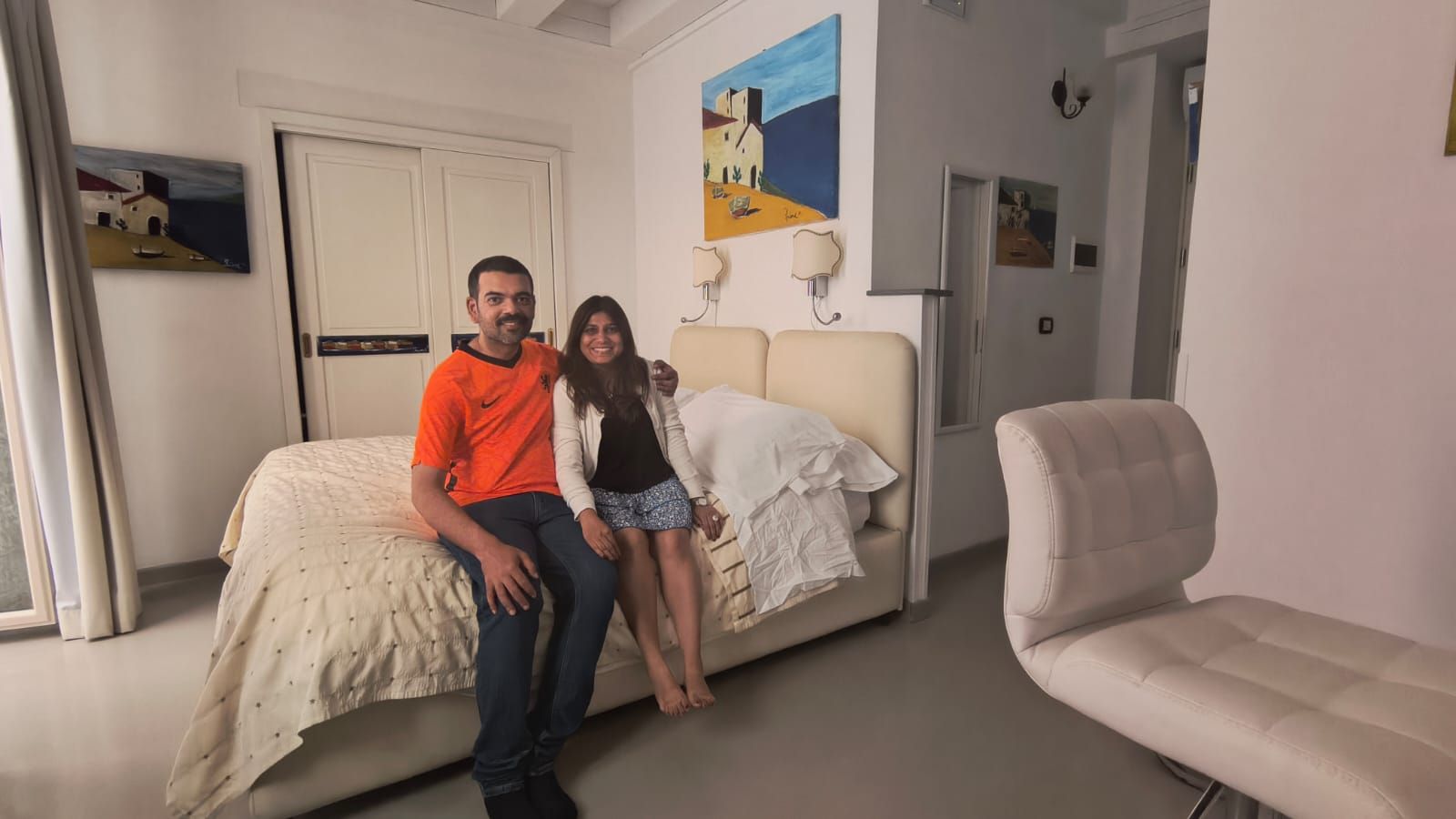
In our room at the Aretusa Vacanze B&B in Ortigia
We would wake up refreshed in the evening and do the activity I would remember Ortigia the most for – Peaceful walks along the waterfront on pedestrian paths that go around the entire island. We would start our evening walks at the wider path that started at the Fountain of Arethusa near our B&B and make our way to the bridges connecting Ortigia to the mainland via the broader cafe lined waterfront with docked luxury yachts, cross over to the opposite side of the island which has quieter walkway that is narrower and seemed to be only popular with locals (It became our favourite too!). After walking around the entire island we would reach our favourite spot at the southern tip overlooking the Castello Maniace and enjoy the sky becoming a riot of colours at sunset before returning back to the B&B. We would do this on each of our 2 remaining evenings in Ortigia and will remain one of my fondest memories the trip as a whole.

The waterfront path along the Fountain of Arethusa

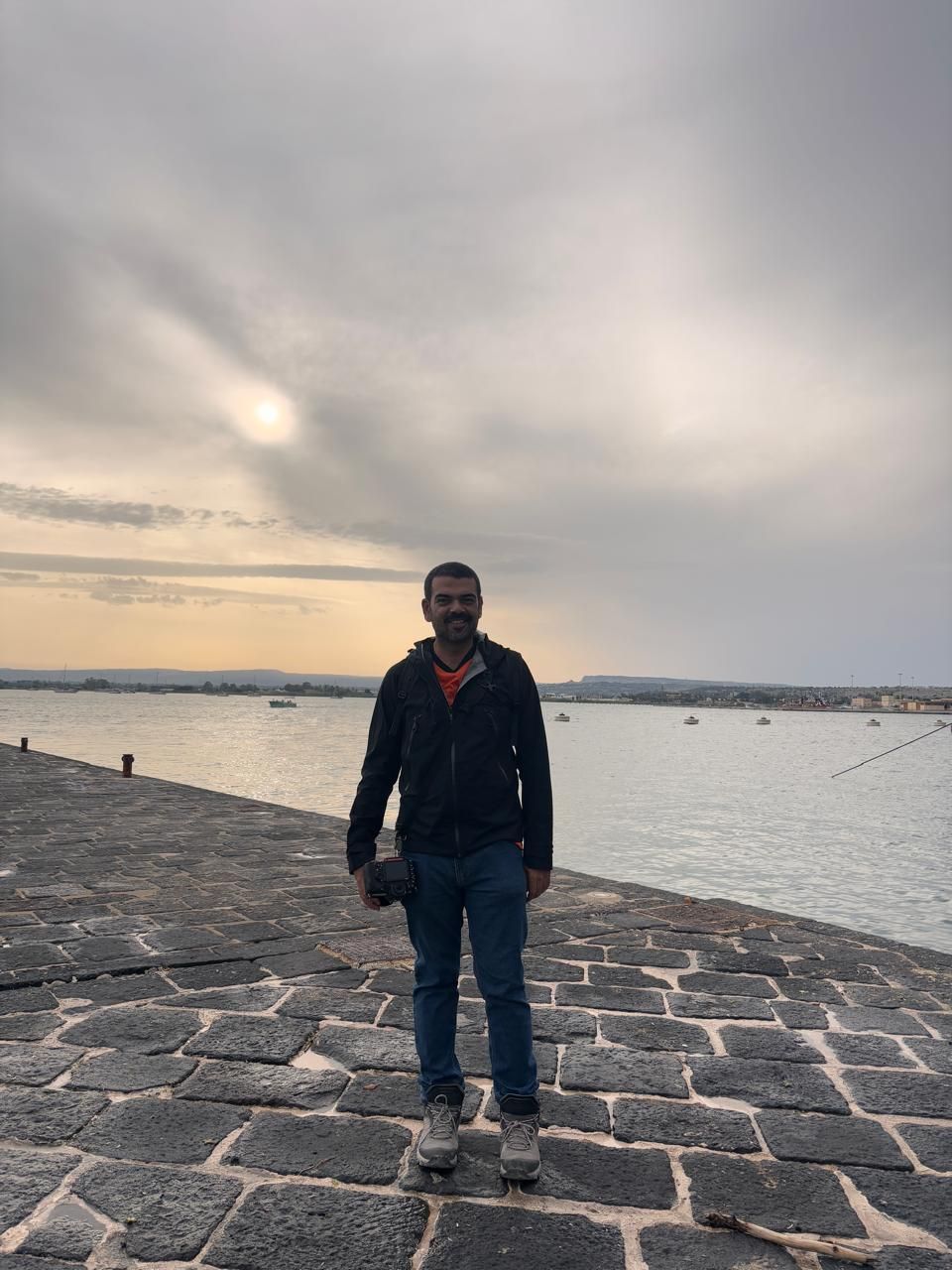

At the small pier extending out into the sea with the beautiful colours of sunset
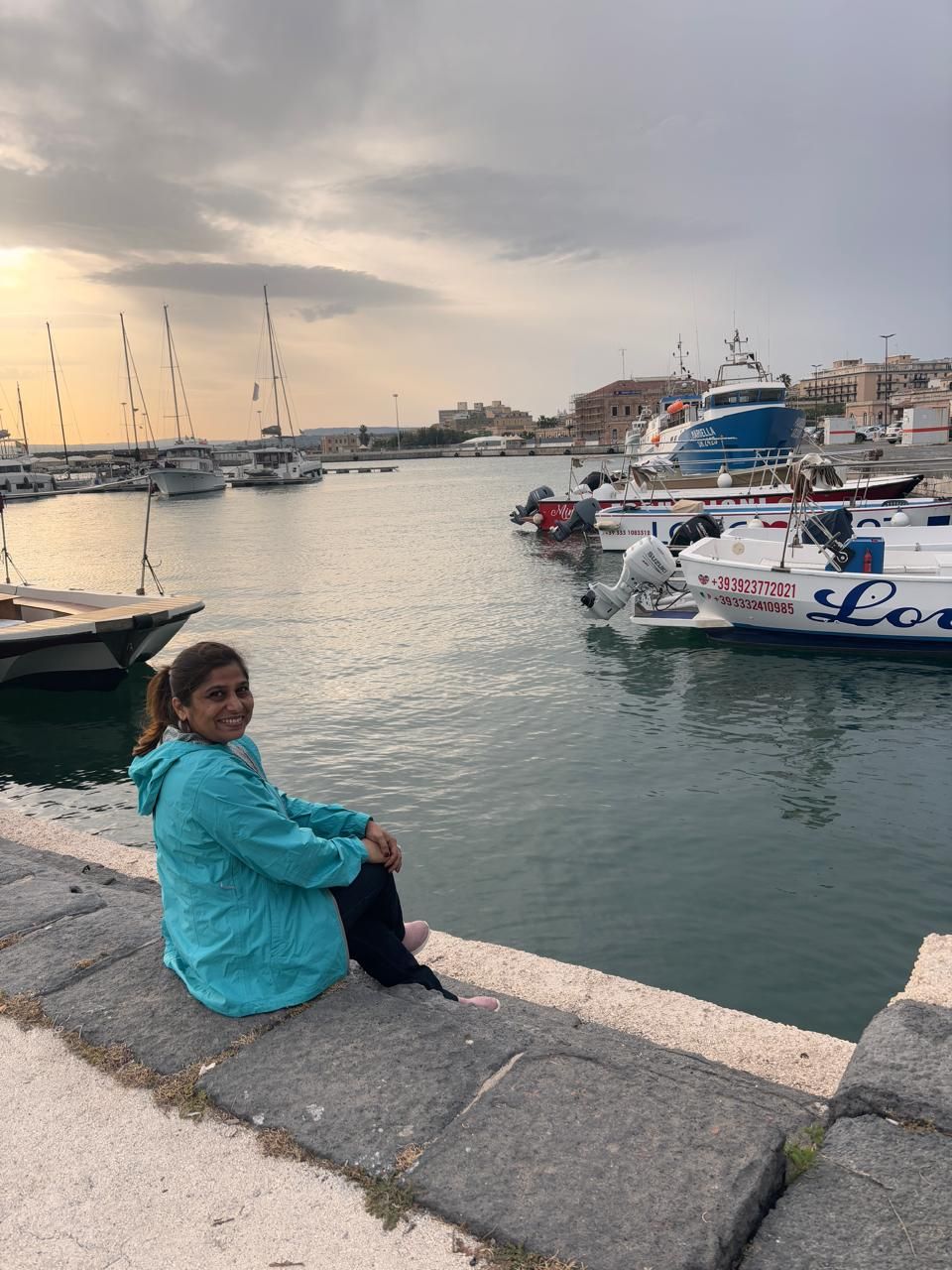
The peaceful waterfront on the mainland side of Ortigia with docked yachts
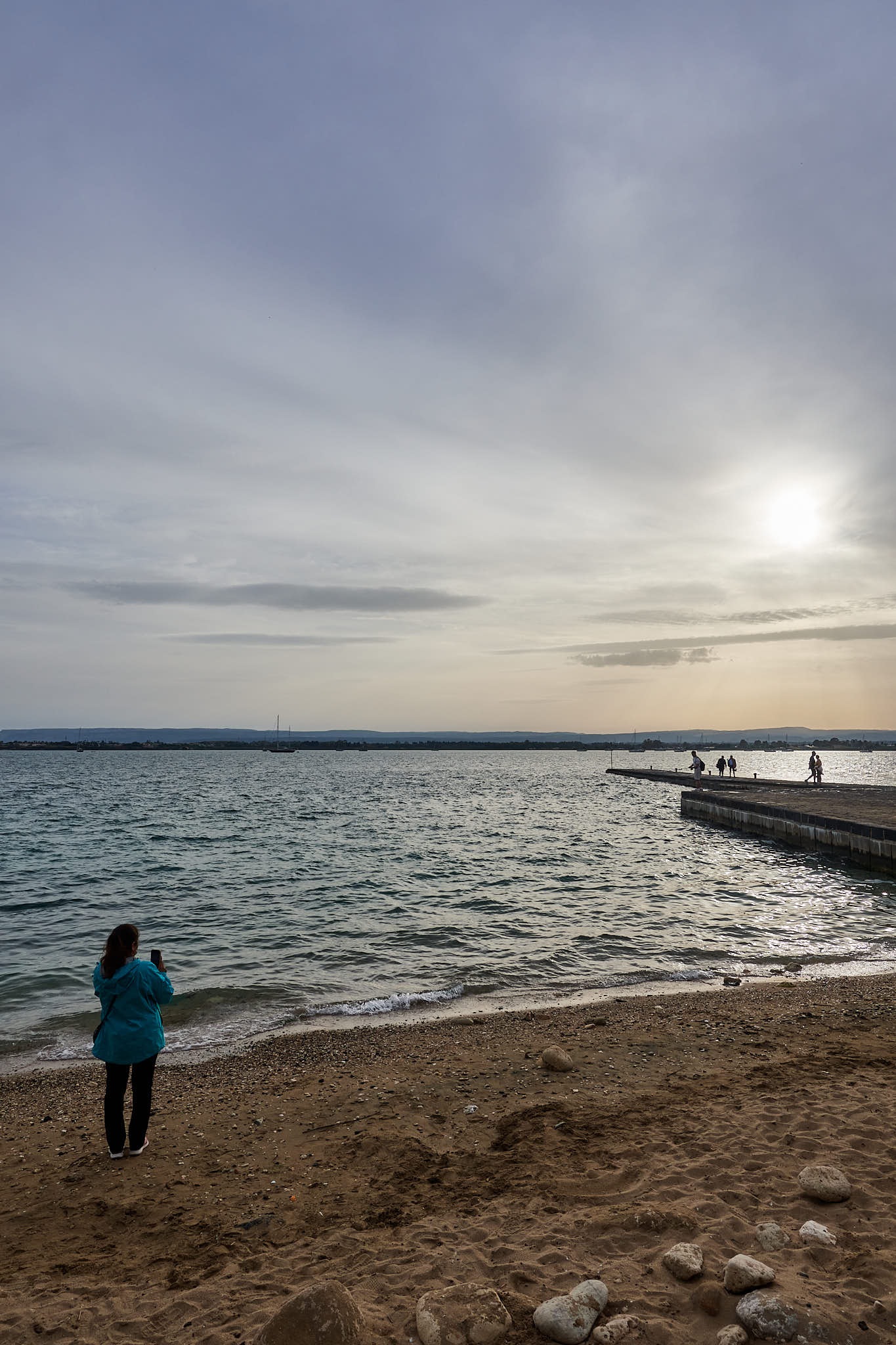
A small sandy beach at the waterfront

The wide more popular waterfront path with cafes and bars on the mainland side
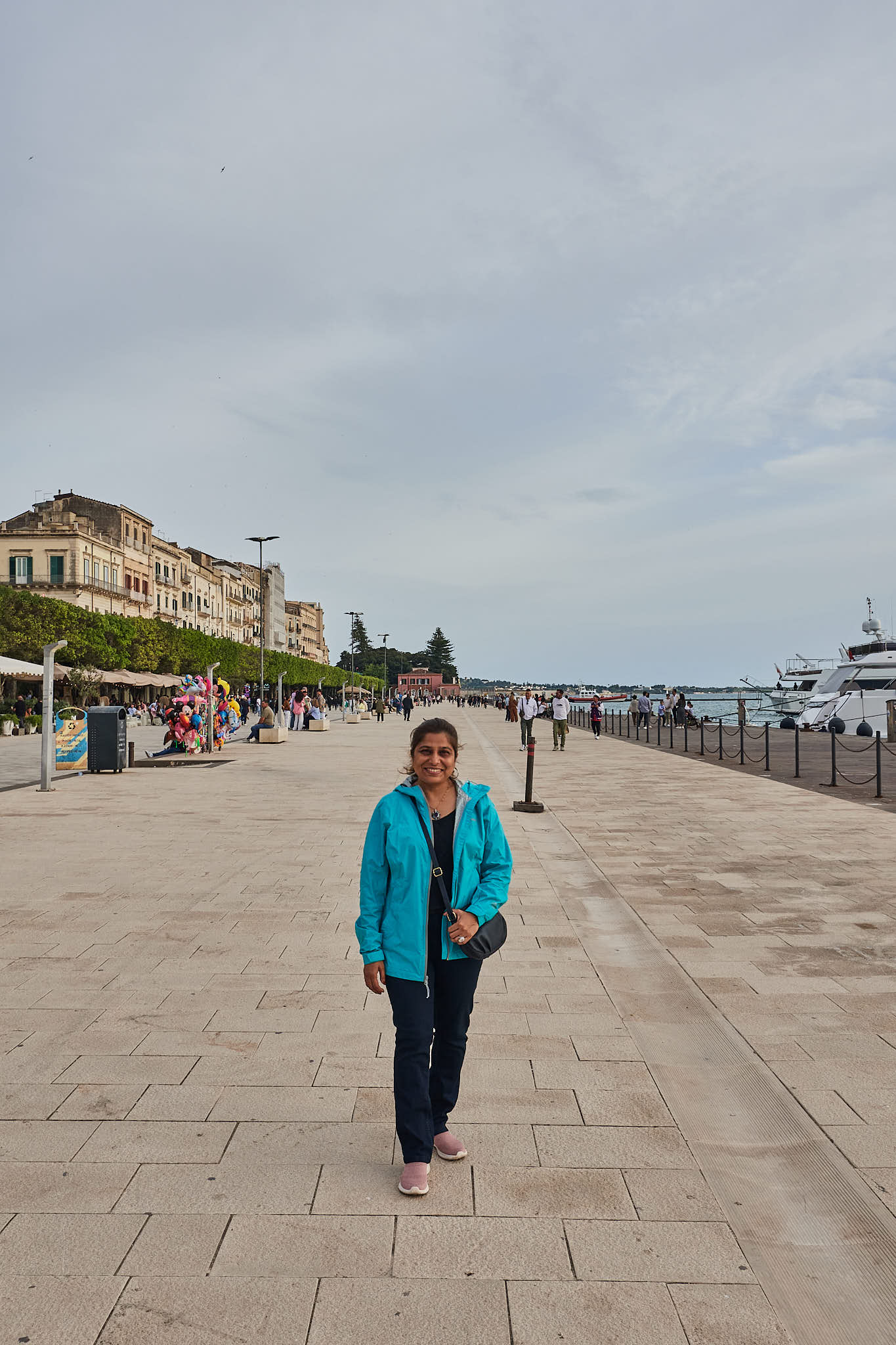
The better half poses on the waterfront pedestrian path at Ortigia

Mainland Siracusa from the waterfront on the less popular sea side of Ortigia
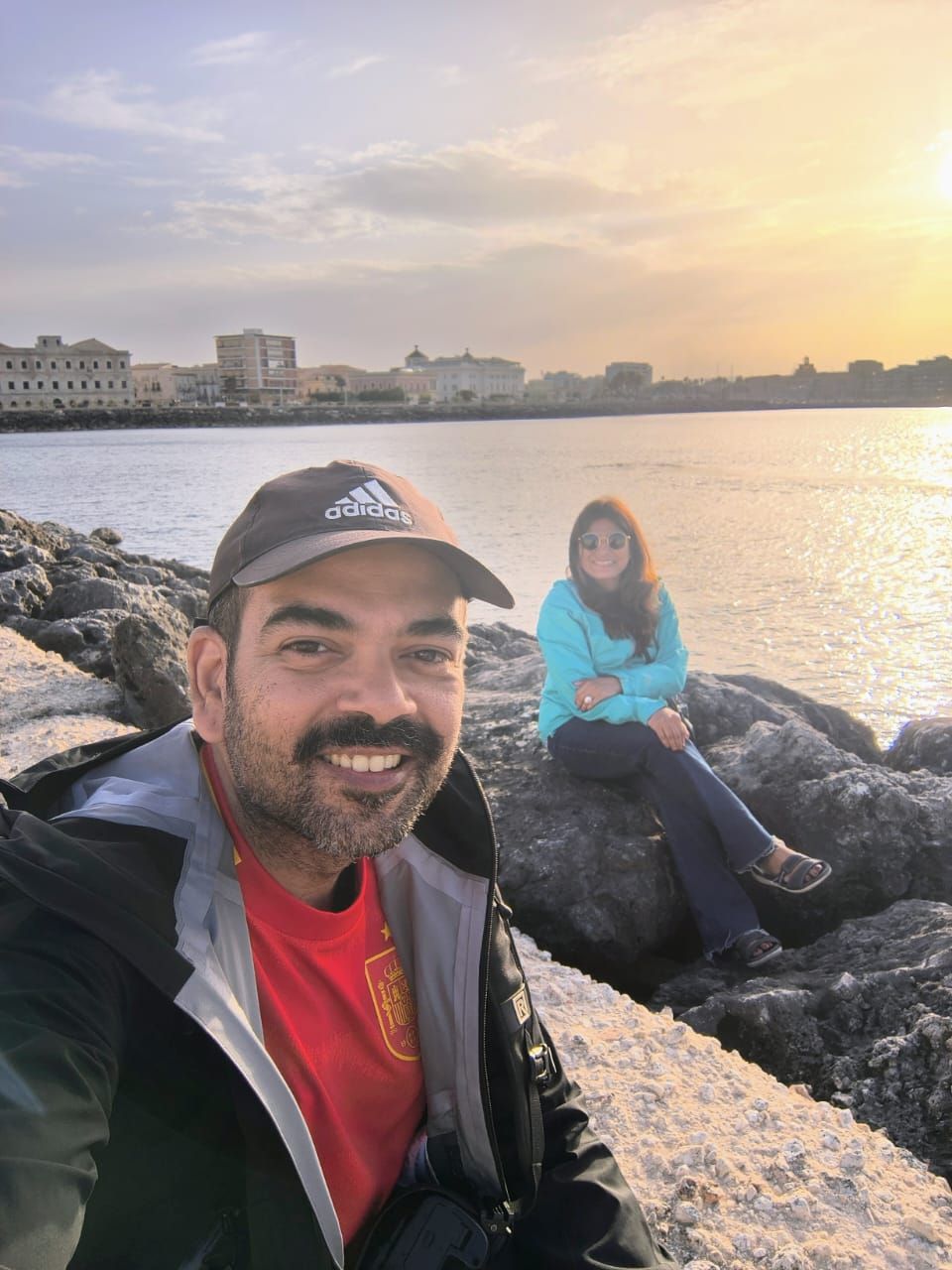
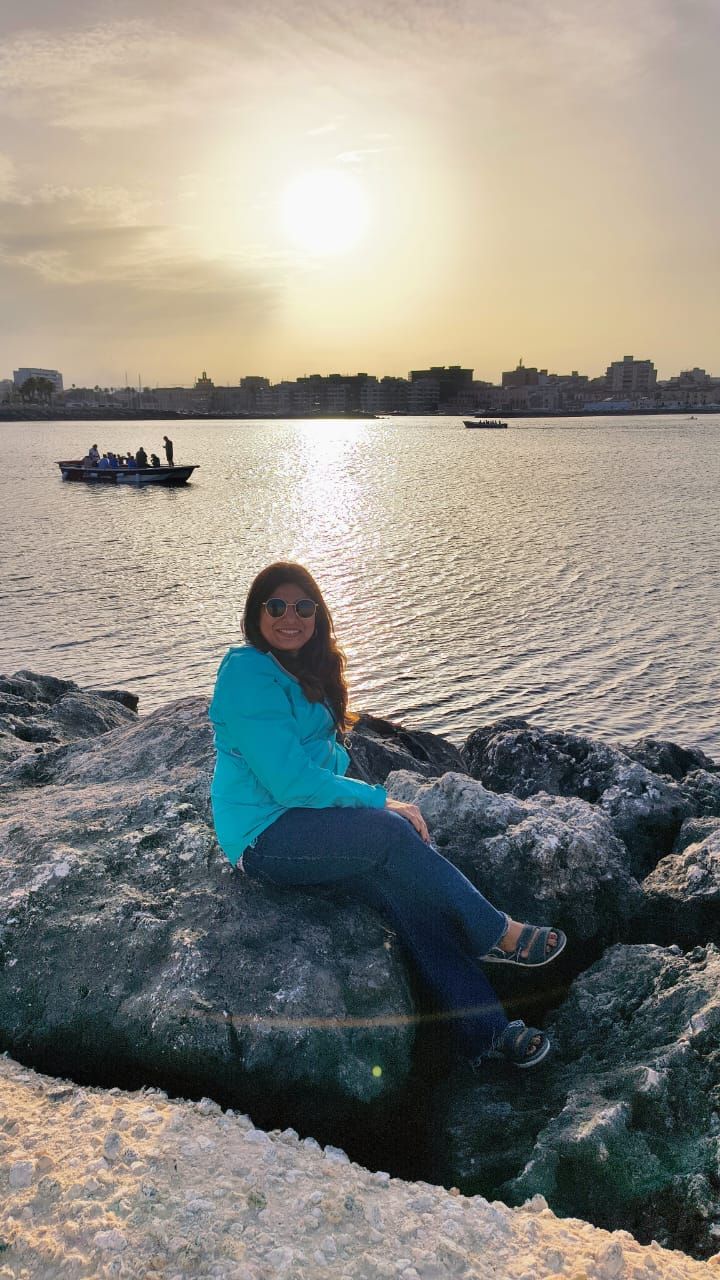
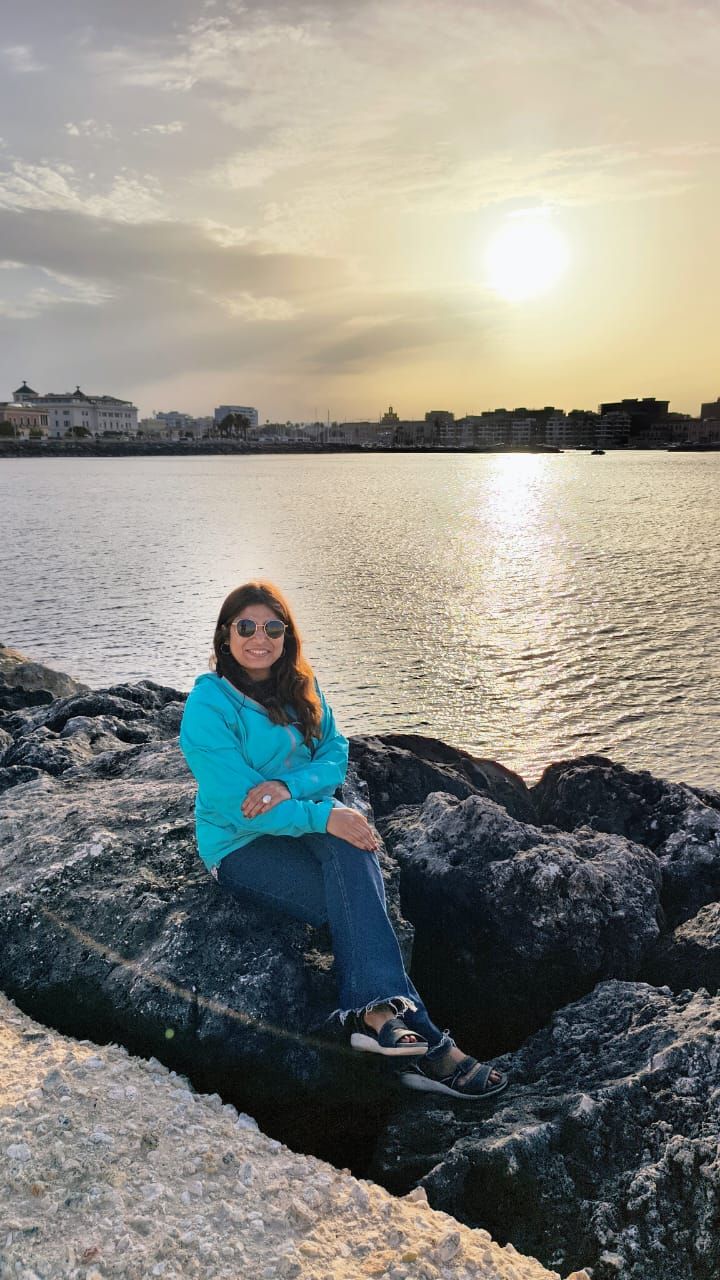
Enjoying a peaceful seaside resting spot on the far side of Ortigia

The colours of the sky at Sunset at Ortigia
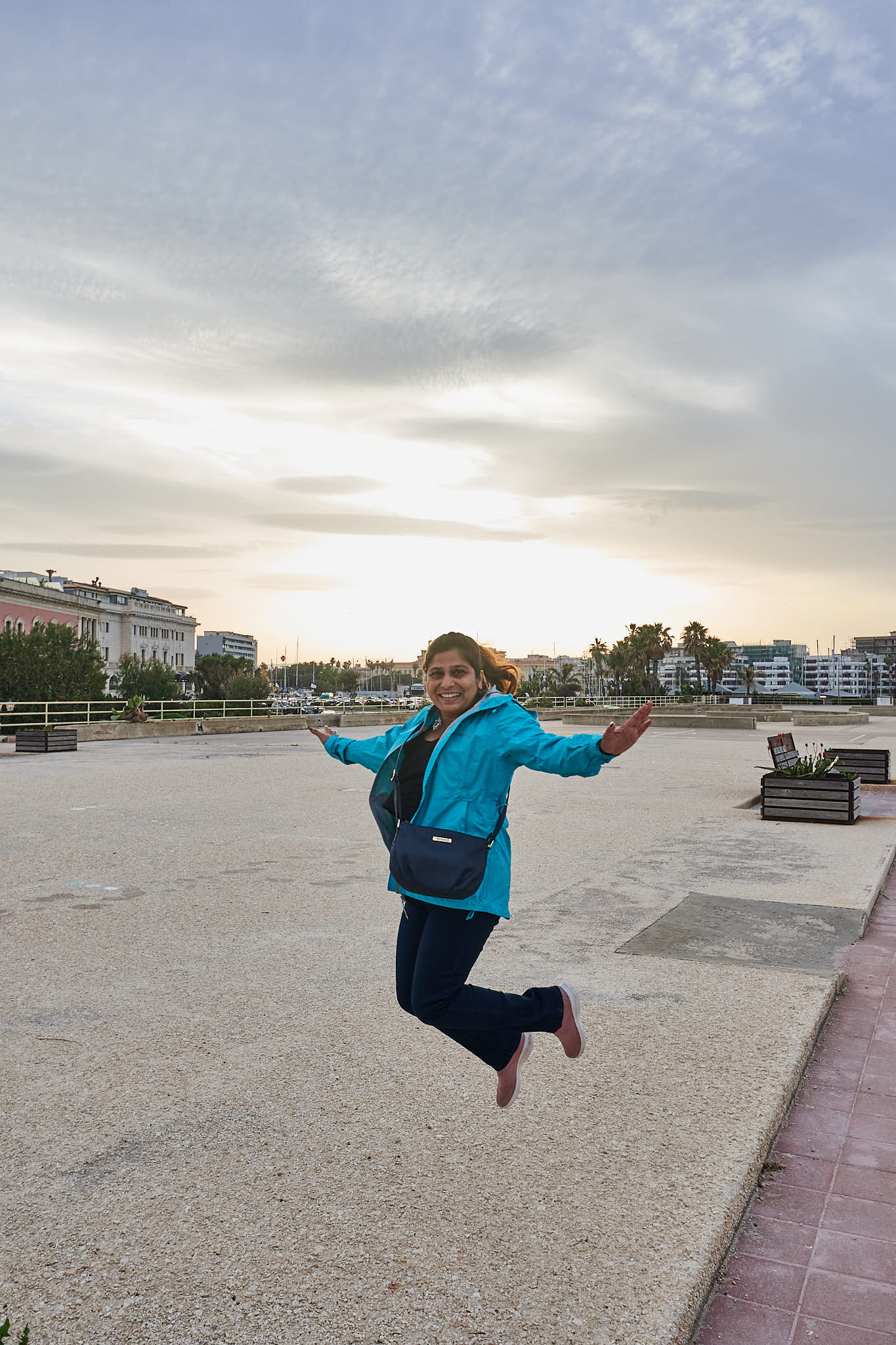
The better half jumps in pleasure at the waterfront path
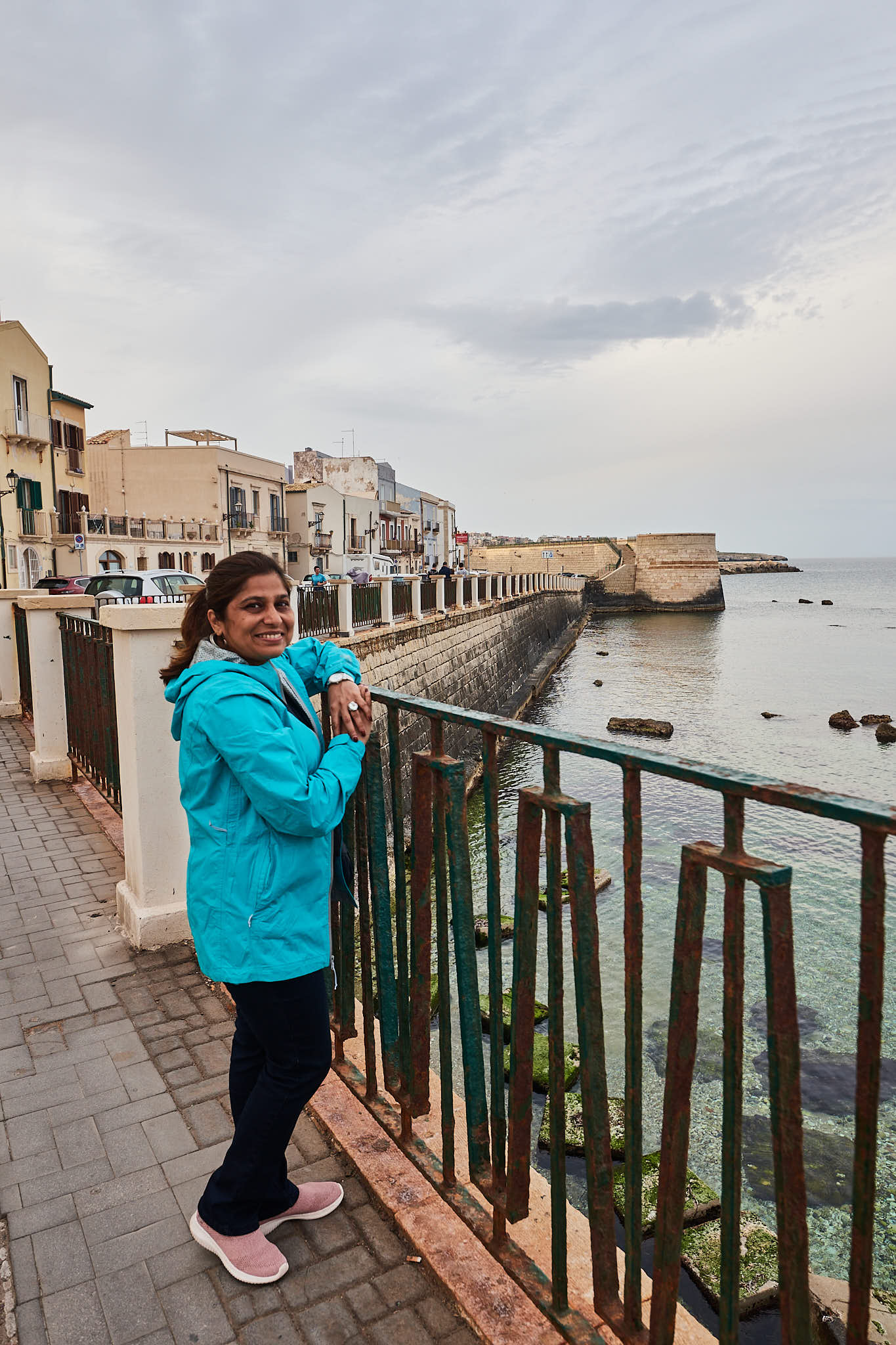
The narrow far side seaside walkway with only locals for company

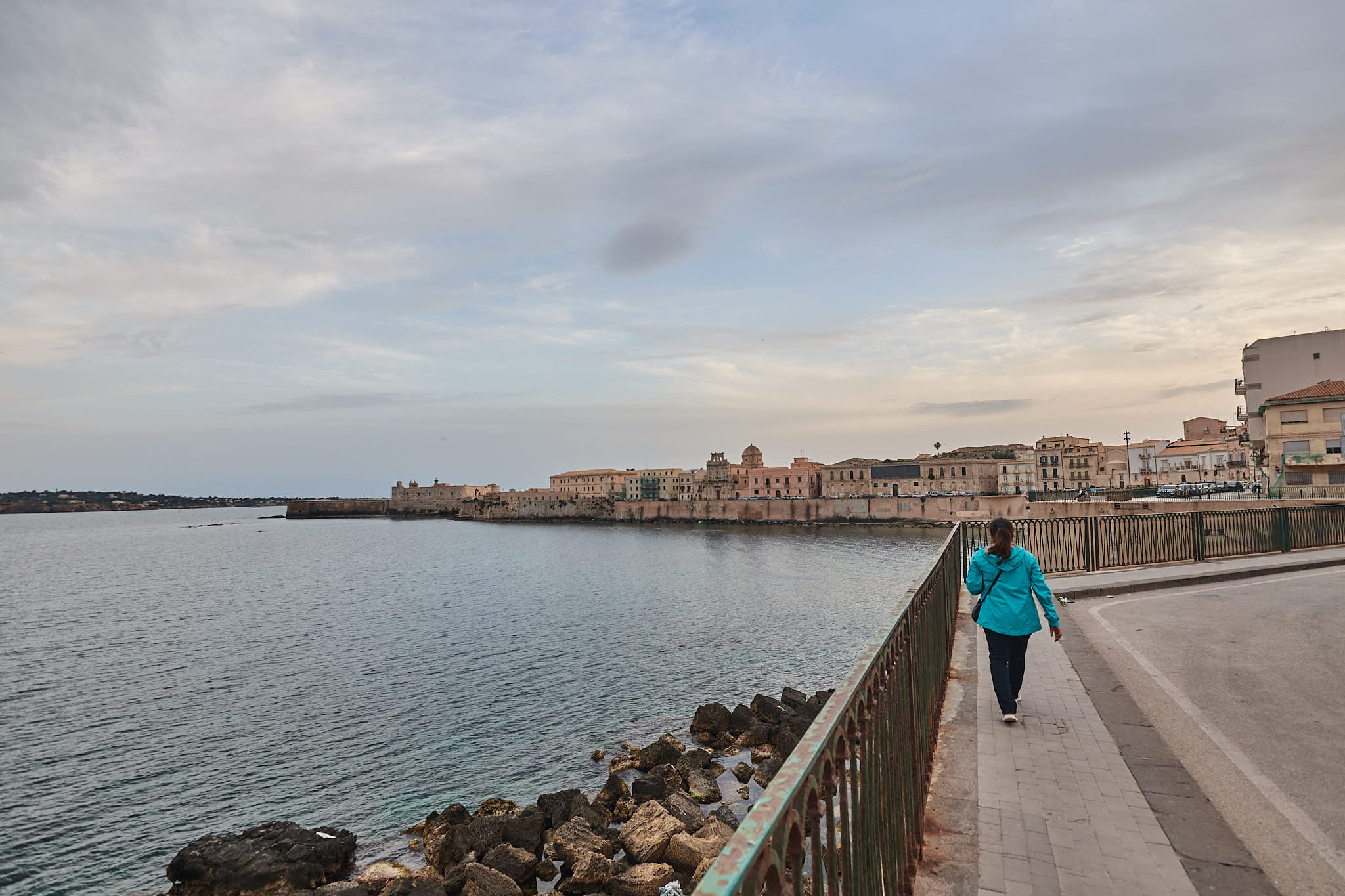
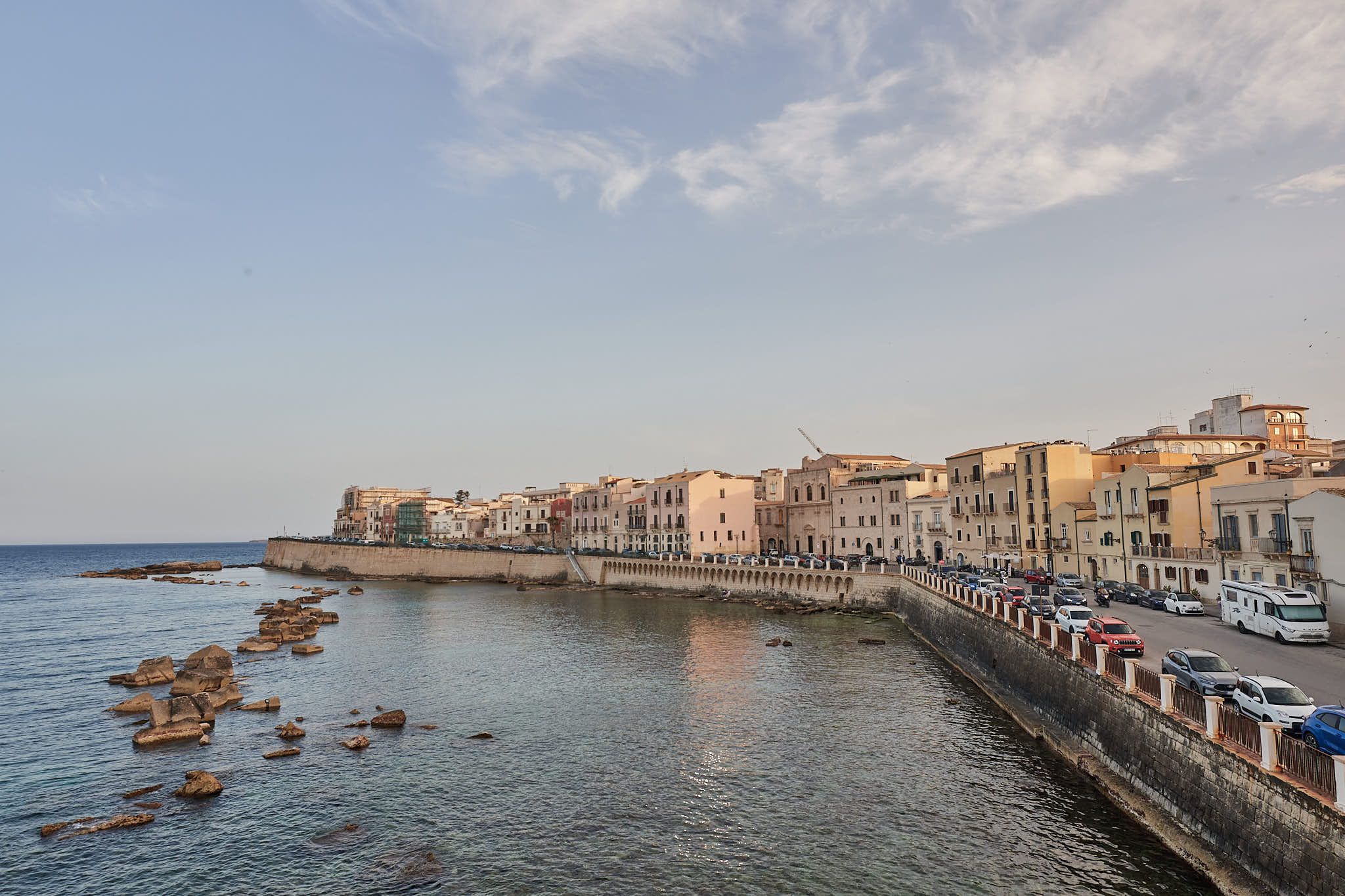

Our favourite thing to do in Ortigia – evening walks along the seaside pedestrian walkway
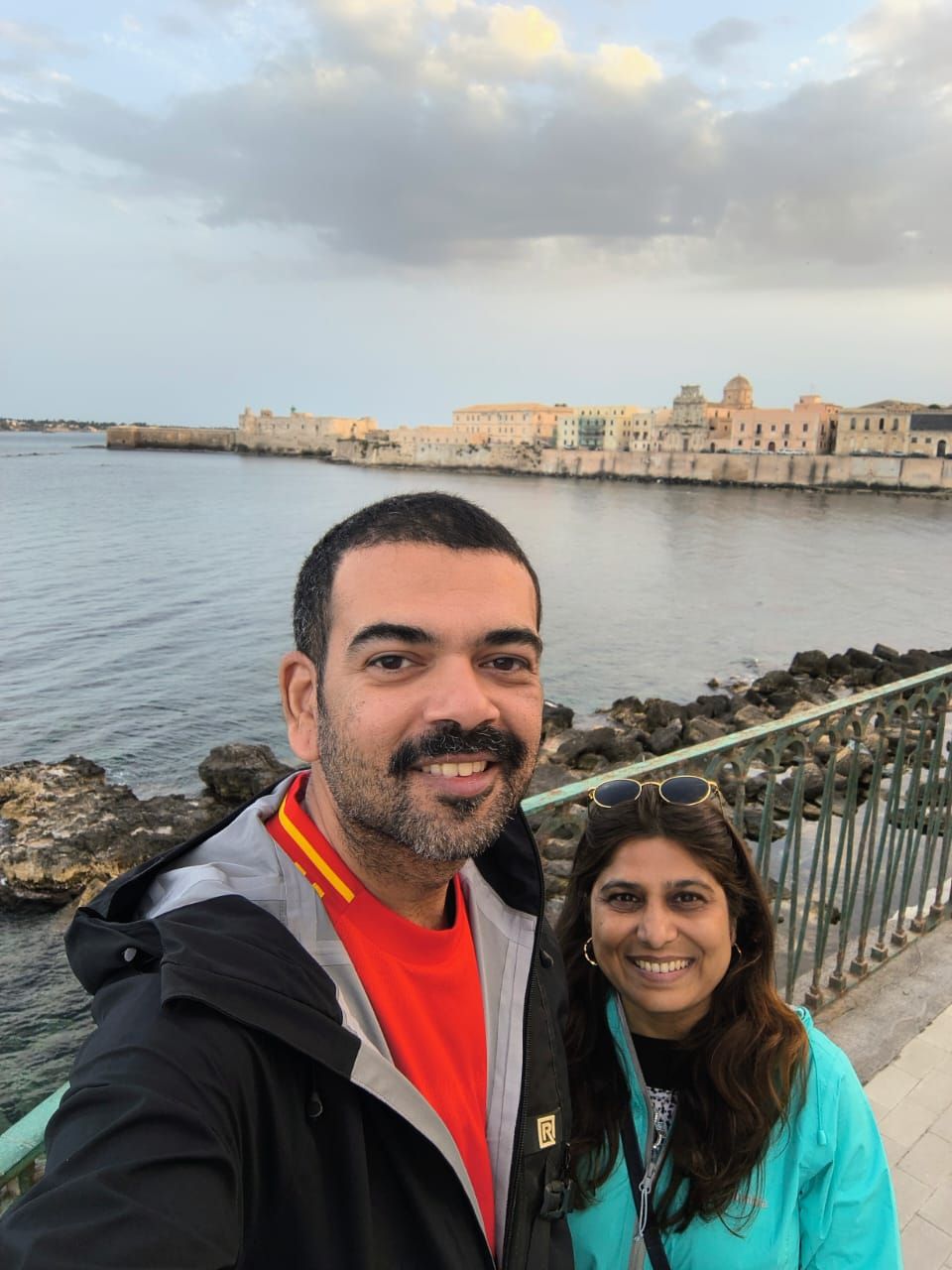
At our favourite spot in Ortigia
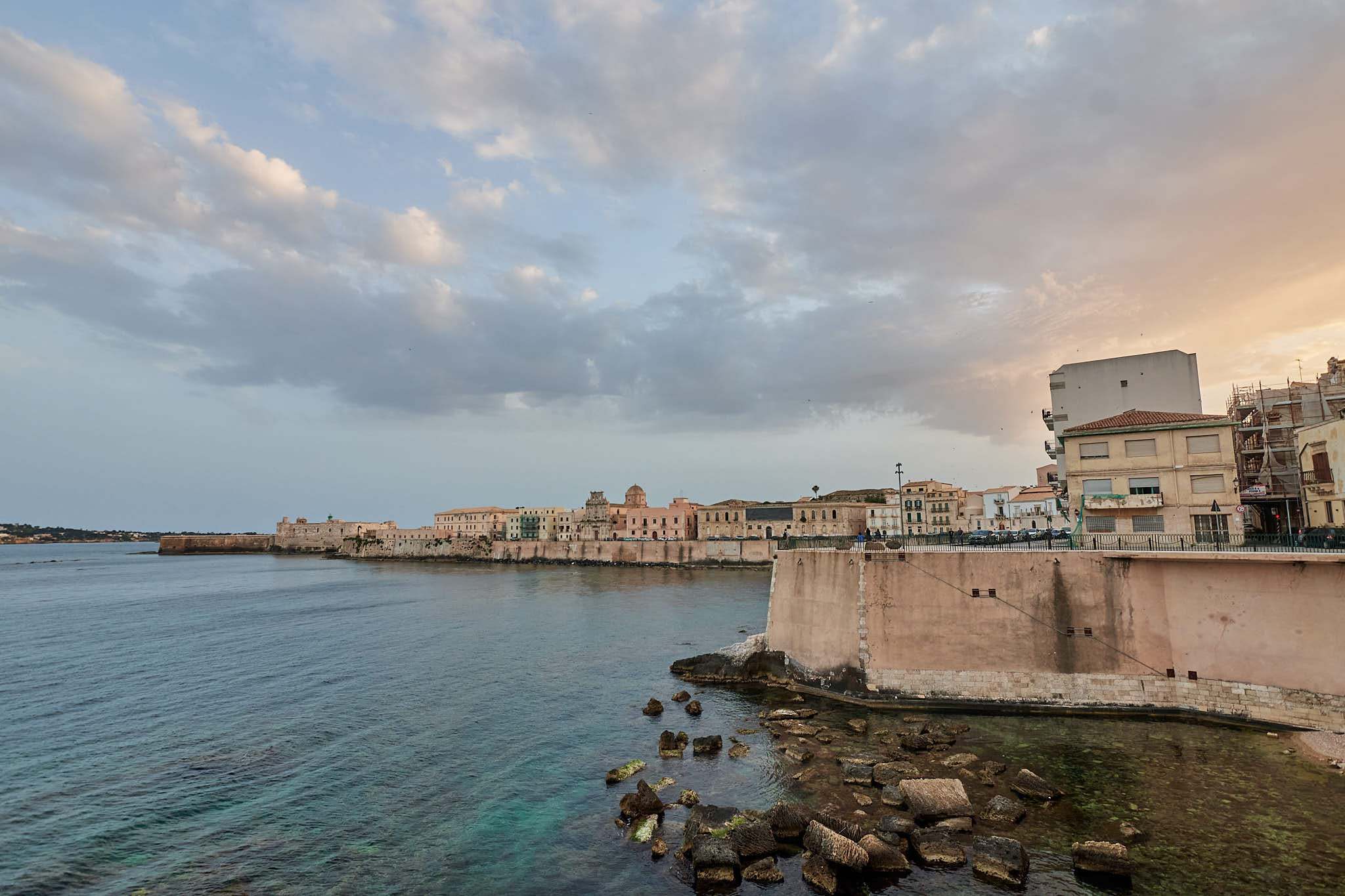
Watching the sky become a riot of colours at sunset in Ortigia
We would visit the Castello Maniace and the interiors of the Duomo and other churches in Ortigia on the next day. But that is topic for another post, some other time, some other day.
Till then,
Ciao!
PS – I realise that my posts have become longer as this series goes on, will get back to my usual shorter post length when the material permits. Thanks for reading!
 yogictravel
These people are obsessed with icarus! I found it a very sad story though.
Ortigia is amazing. That’s waterfront is beautifully designed. I’m not surprised that you spent all your evenings there.
LikeLiked by 1 person